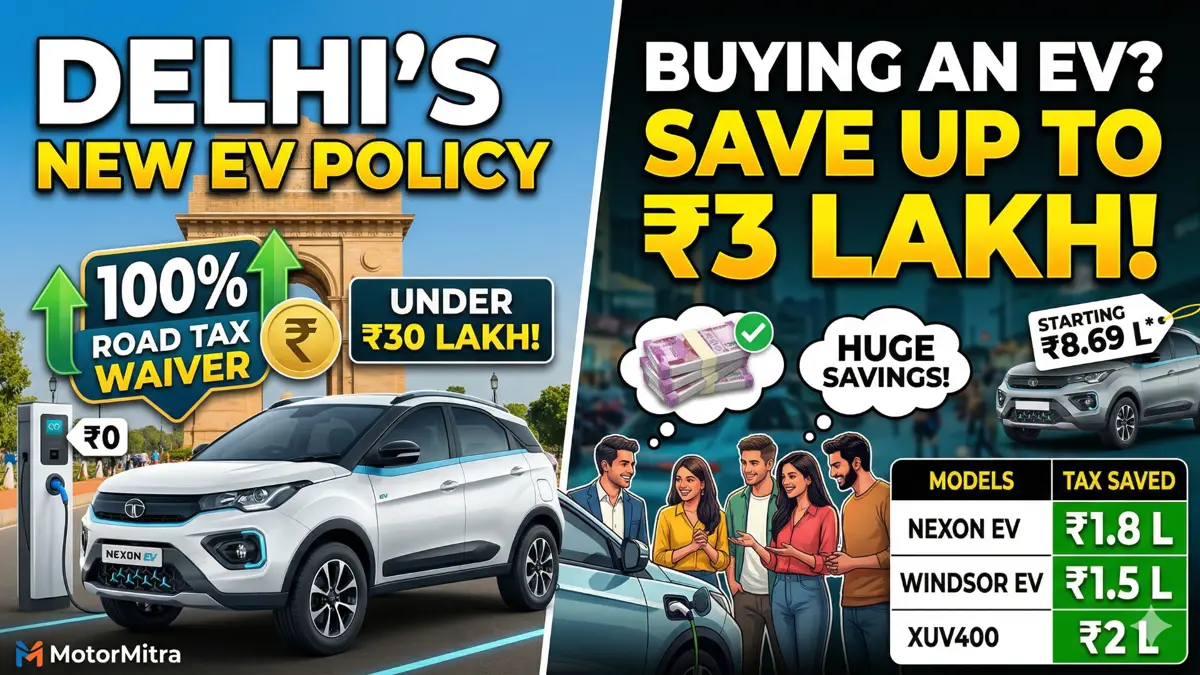
Buying an electric car in Delhi could soon become much cheaper than you expect. The government has introduced its new Delhi EV Policy 2026–2030 draft, and it comes with one major promise—substantial savings for EV buyers.
And this is not a small change. If this policy gets implemented, the car you are planning to buy today could cost much less in the coming months. That is exactly why this update deserves your attention.
Why This Matters
- You could save up to ₹3 lakh just by timing your purchase
- Hybrid cars are finally getting real benefits
- This policy could directly change your buying decision
100% Tax Waiver for Cars Under ₹30 Lakh
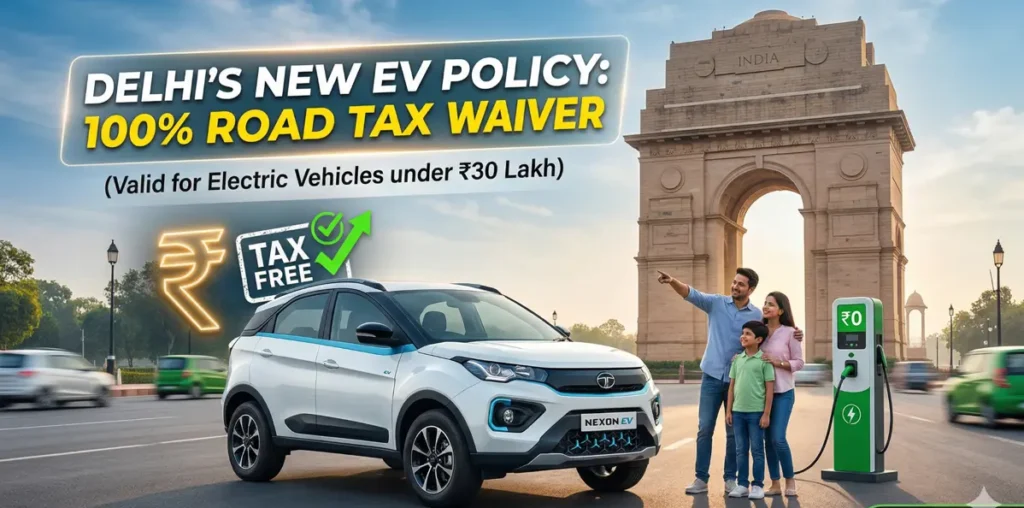
According to the draft policy, all electric cars priced up to ₹30 lakh (ex-showroom) will receive full exemption from road tax and registration fees. This makes it one of the most impactful incentives proposed for EV buyers in Delhi.
Also Read:- EVs Battery Failed? You Could Lose ₹10 Lakh, But This Brand Saves You!
The benefit will remain valid until 31 March 2030, offering long-term savings for those planning to switch to electric vehicles. And this is where things become more relevant—it applies to popular, real-world cars.
Models like Tata Nexon EV, MG Windsor EV, and Mahindra XUV400 could see direct savings of around ₹1.5 lakh to ₹3 lakh. That is a significant price reduction without any discount.
📊 Estimated Savings on Popular EVs
| Model | Approx Price Range | Estimated Savings |
|---|---|---|
| Tata Nexon EV | ₹15–20 lakh | ₹1.5–2 lakh |
| MG Windsor EV | ₹18–25 lakh | ₹2–2.5 lakh |
| Mahindra XUV400 | ₹16–22 lakh | ₹1.5–2.5 lakh |
And this is where things start to get even more interesting.
No Benefit for Premium EVs Above ₹30 Lakh
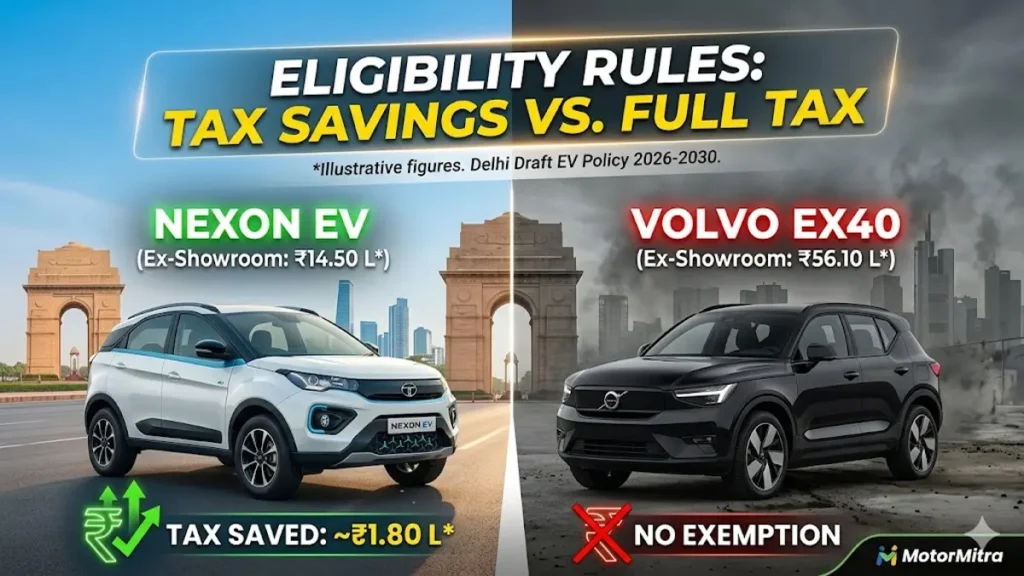
There is, however, a clear limitation. If you are planning to buy an electric car priced above ₹30 lakh, this policy will not offer any benefit. These vehicles will continue to attract standard road tax and registration charges.
Cars such as the Hyundai Ioniq 5, Kia EV6, and Volvo electric models fall into this category. This shows that the policy is focused on mass adoption rather than premium buyers.
Good News for Hybrid Buyers
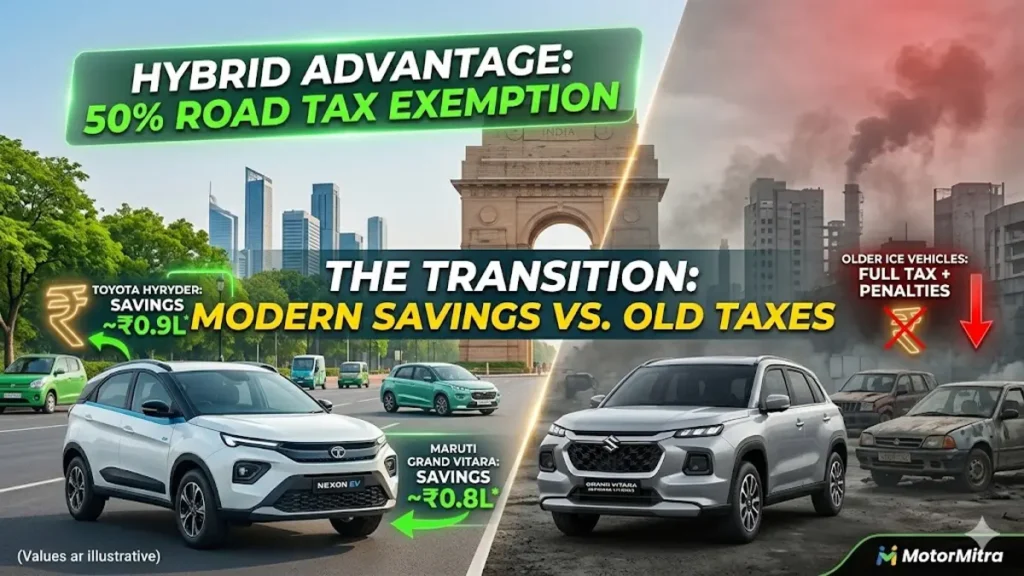
For the first time, strong hybrid vehicles are also being considered under Delhi’s EV policy. The draft proposes a 50% road tax exemption for such models.
This includes cars like the Toyota Hyryder and Maruti Grand Vitara. While the benefit is not as high as for EVs, it still makes hybrids a more practical option for many buyers.
Also Read:- Delhi Just Dropped a Bomb! Get Up To ₹1 Lakh to Scrap Your Old Car & Switch to EVs
Key Policy Changes You Should Know
The policy goes beyond tax savings and introduces structural changes that could reshape the market. These changes are aimed at accelerating EV adoption across segments.
From 1 January 2027, only electric three-wheelers will be allowed for new registrations in Delhi. This marks a major step toward electrifying urban mobility.
In addition, scrapping an old BS-IV or older petrol/diesel vehicle could provide an extra incentive of up to ₹1 lakh when purchasing a new EV.
The government also plans to install 18,000 charging stations by the end of 2026. And this is where the ecosystem begins to support mass EV adoption.
Final Verdict: Should You Buy Now or Wait?
The policy is currently in draft stage, and the government has invited public feedback for 30 days. Once officially notified, these benefits will come into effect.
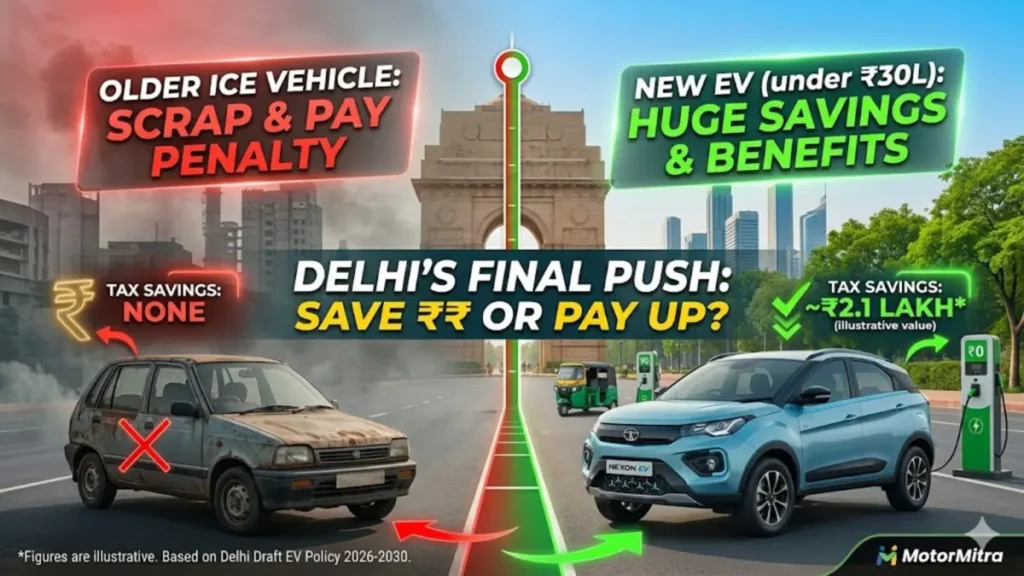
But the key question remains—should you buy now or wait? If your budget is under ₹30 lakh, waiting could lead to significant savings.
And here’s the real risk. Ignore this update now, and you might end up paying more for the same car later. Because once this policy is implemented, paying full price for an EV might feel like a costly mistake.