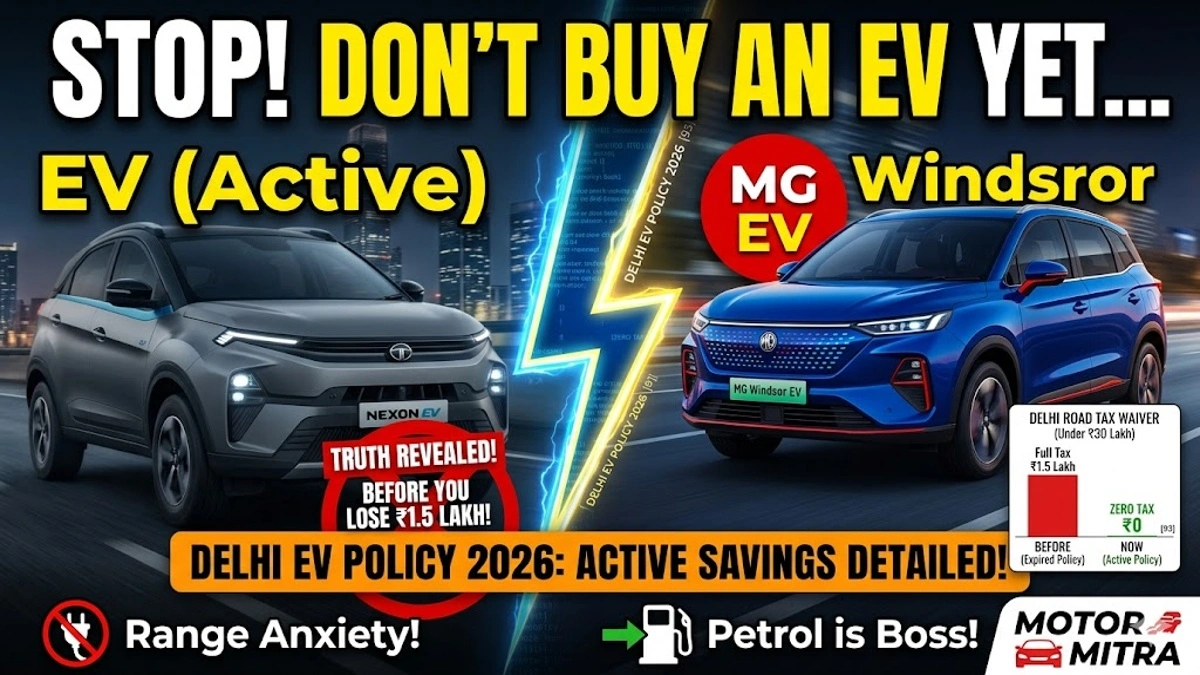
The Delhi government has extended its aggressive EV push with the 2026 Delhi EV Policy, aiming for 25% of all new vehicle registrations to go electric very soon. But for buyers, this is not just about sustainability—it is about saving serious money at the time of purchase.
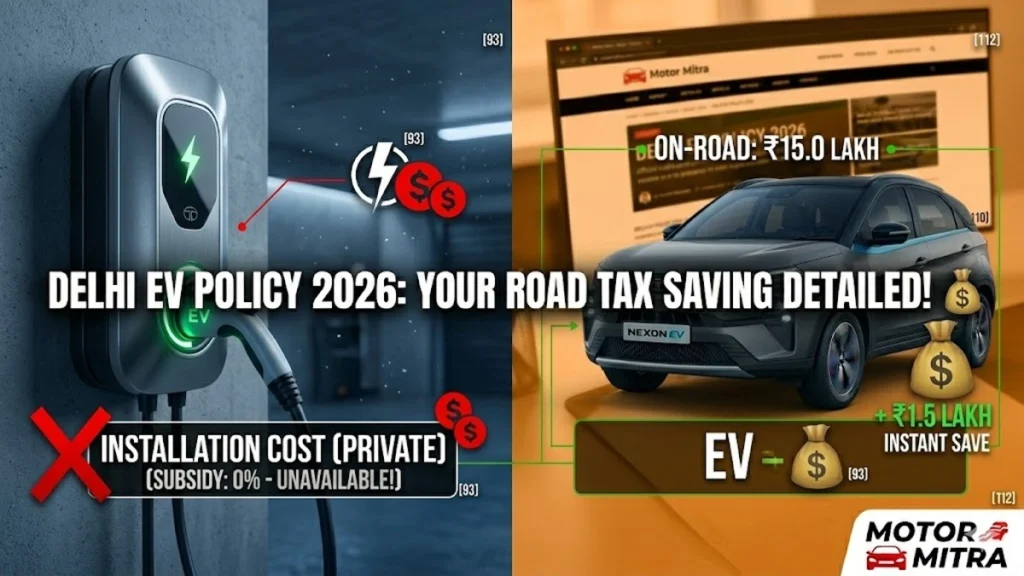
If you are planning to buy an EV in Delhi right now, this Delhi EV Policy can directly reduce your on-road cost by up to ₹1.5 lakh instantly. And if you miss this benefit, you could end up paying the same amount extra for no reason.
Why This Matters
- You can save up to ₹1.5 lakh instantly on purchase
- Buying at the wrong time can make you lose this benefit completely
- One small mistake can increase your on-road cost significantly
The ₹1.5 Lakh Advantage: Road Tax & Registration Waiver
The biggest hidden cost in any car purchase is road tax and registration. Under the Delhi EV Policy 2026, EVs priced under ₹30 lakh get a 100% waiver on both, which instantly reduces the total cost.
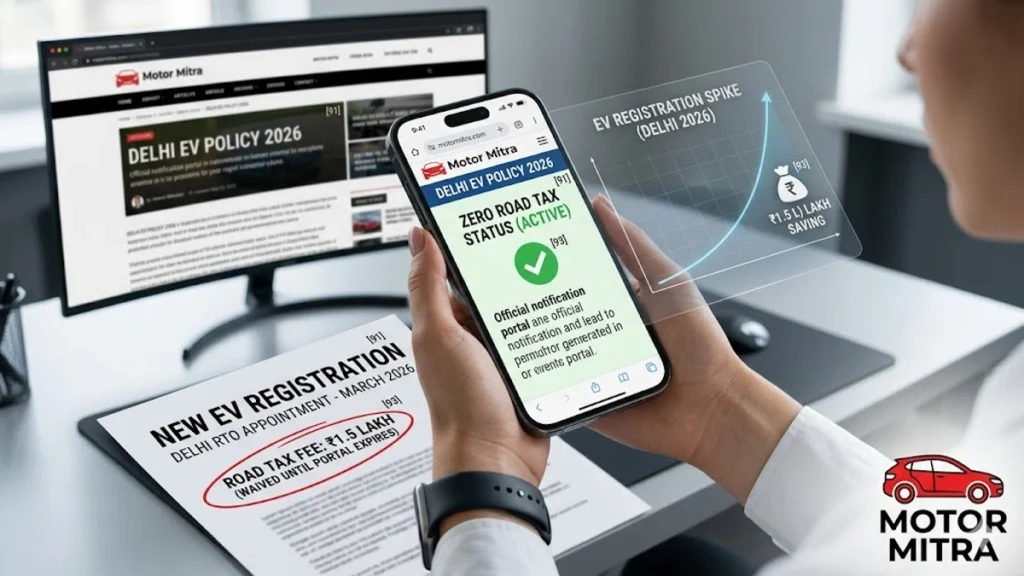
Also Read:- Buying an EV? Delhi’s New EV Policy Removes Road Tax Under ₹30 Lakh – Huge Savings
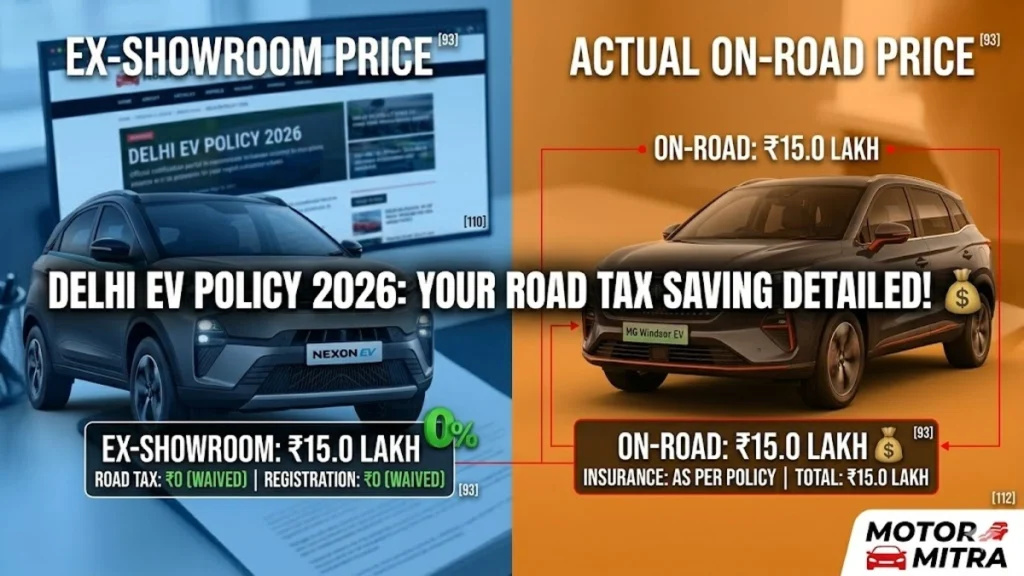
For popular models like the Tata Nexon EV or MG Windsor EV, this tax usually ranges between ₹1.2 lakh to ₹1.6 lakh. With the policy active, this entire amount becomes zero, meaning you are effectively paying almost the ex-showroom price plus insurance.
👉 This is one of the biggest instant savings you can get in the Indian auto market today.
EV Cost Breakdown: With vs Without Policy
| Cost Component | Without Policy | With Delhi EV Policy 2026 |
|---|---|---|
| Ex-showroom Price | Same | Same |
| Road Tax | ₹1.2L – ₹1.6L | ₹0 |
| Registration | ₹10K – ₹20K | ₹0 |
| Total Savings | — | Up to ₹1.5L (Instant) |
👉 This is not a discount—it’s a direct government-backed cost elimination.
Extra Savings: Scrappage Bonus Benefit
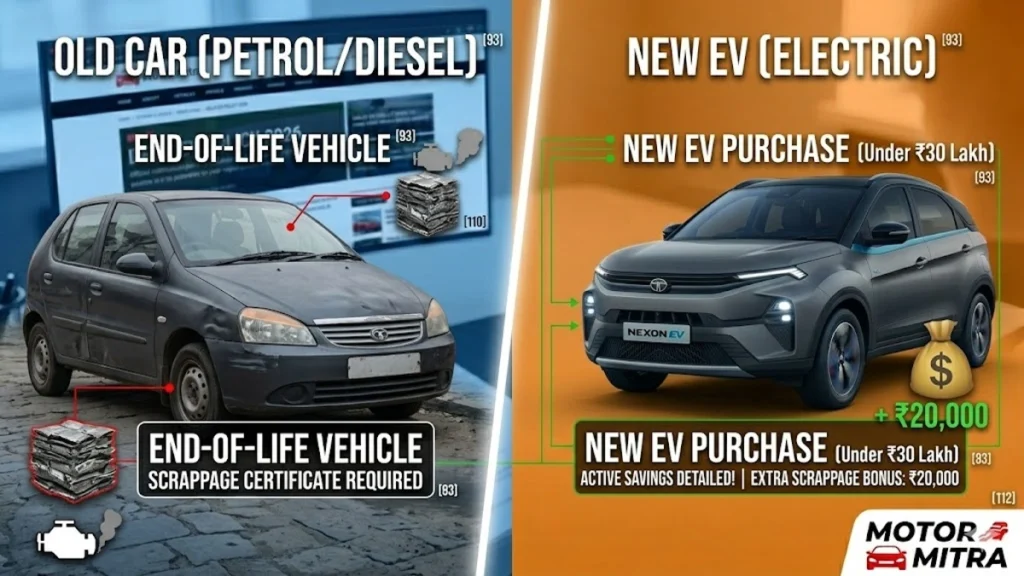
If you are upgrading from an old petrol or diesel car, the Delhi EV Policy gives you another advantage. Owners of end-of-life vehicles can receive a scrappage certificate, which adds an extra ₹15,000 to ₹20,000 benefit on top of your deal.
This amount comes in addition to your car’s exchange value, making the upgrade feel significantly cheaper than expected and more financially sensible.
The Biggest Risk: Policy Timing Trap
Here is where most buyers make a costly mistake. EV policies sometimes have short gaps between expiry and reactivation at the RTO level, and this can directly affect your purchase.
If you register your vehicle during a policy lapse period, you may end up paying full road tax without any benefit. Many buyers lose this saving simply because they do not verify this step before booking.
👉 Always confirm with your dealer that the policy is actively applied in the RTO system before making the payment.
Also Read:- EVs Battery Failed? You Could Lose ₹10 Lakh, But This Brand Saves You!
Charging Subsidy: Hidden Benefit for Homeowners
The Delhi EV Policy 2026 also supports private charging infrastructure. The first 30,000 charging points are eligible for a subsidy of up to ₹6,000 per unit.
This is a hidden saving that most buyers ignore, but it can reduce your setup cost significantly, especially if you are planning a home charging solution.
MotorMitra Verdict: The “Golden Window”
If your dealer confirms that the road tax waiver is currently active, buying an EV right now makes complete financial sense. Saving ₹1.5 lakh on a ₹15 lakh car is not just a discount—it is a rare financial advantage.
However, if you are considering a premium EV above ₹30 lakh, it may be worth waiting. Future updates to the policy may introduce partial benefits for higher-priced vehicles.
The truth is simple. In Delhi, an EV is not just about sustainability—it is a smart financial move. But only if you time your purchase correctly.
Don’t rush your EV purchase—because one wrong step here can literally cost you lakhs.