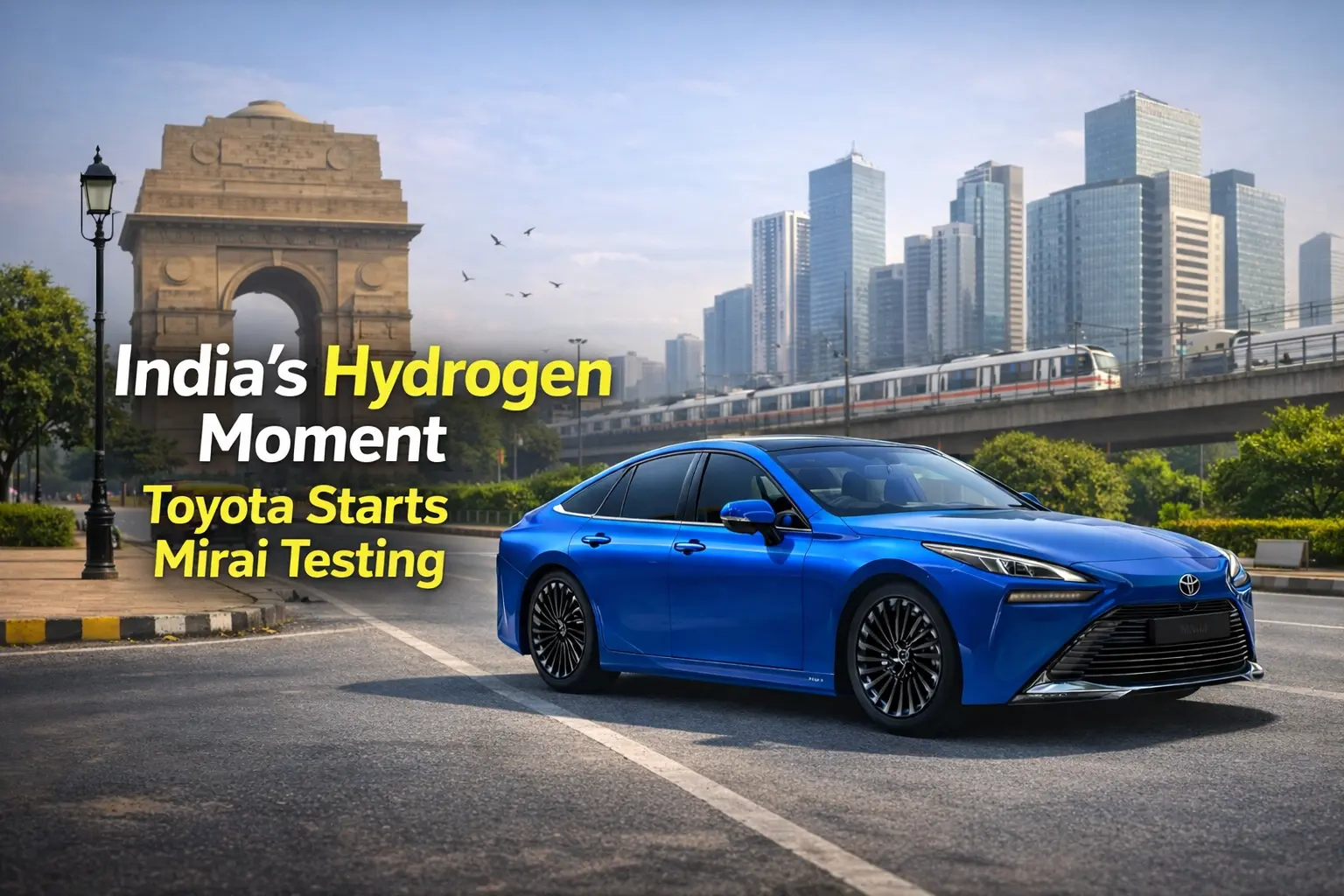
Toyota Kirloskar Motor kicks off India’s first structured hydrogen fuel-cell passenger car trials with the second-generation Mirai, handing over the zero-emission sedan to the National Institute of Solar Energy (NISE) under a landmark MoU with the Ministry of New and Renewable Energy (MNRE). Launched December 11, 2025, at MNRE headquarters in New Delhi, this two-year pilot tests the Mirai’s real-world viability across India’s chaotic traffic, scorching heat, dusty highways, and rugged terrains—emitting only water vapor while chasing 650km range on a 5-minute refuel. Union Minister Pralhad Joshi hailed it as “Energy Aatma Nirbharta’s” next frontier, aligning with the National Green Hydrogen Mission to slash fossil imports and electrify mobility beyond batteries.
Thank you for reading this post, don't forget to subscribe!Mirai Tech Breakdown: Hydrogen Heart Meets Indian Hustle
The second-gen Mirai packs Toyota’s advanced fuel-cell stack—hydrogen reacts with oxygen to generate electricity, powering a 182PS electric motor with 300Nm torque. No rare-earth magnets, seamless FWD delivery: 0-100kmph in 9 seconds, top speed 180kmph. Key specs shine for India:
Also Read- Tata Sierra vs Maruti Victoris 2025: New-Age SUV Battle That Could Shock Indian Buyers!
- Range: 650km on 5.2-5.4kg compressed H2 (700bar).
- Refuel: Under 5 minutes—faster than petrol.
- Efficiency: 5.5-6km/kWh equivalent.
- Emissions: Pure H2O tailpipe.
NISE’s gauntlet evaluates drivability, cold starts (-10°C Himalayan chills), 50°C Rajasthan roasts, dust ingress, monsoon floods (IP67-rated), and urban crawl efficiency amid Delhi jams. Data targets H2 infrastructure viability—stations, supply chains, cost parity with EVs/diesel.
| Parameter | Mirai Claim | Indian Test Focus |
|---|---|---|
| Range | 650km | Hwy/rural loads |
| Refuel Time | <5 min | Station scarcity |
| Efficiency | 76% stack | Heat/dust degradation |
| Cold Start | -30°C | Mountains/monsoon |
| Payload | 4 passengers | Family + luggage |
Strategic MoU: Toyota-NISE Alliance Fuels Green Hydrogen Push
Toyota’s India play builds on prior wins: Fuel-cell stacks powered Ashok Leyland bus prototypes (2023), stationary power for IoT sites. Mirai handover—first H2 passenger car trial—gathers proprietary data on BS6+ compliance, local H2 quality (impurities?), and retrofits for pothole-proofing. NISE, under MNRE’s Solar Energy Centre, leads with IoT telemetry, lab-stack analysis, and multi-city fleets (Delhi-NCR, Gujarat, Karnataka).
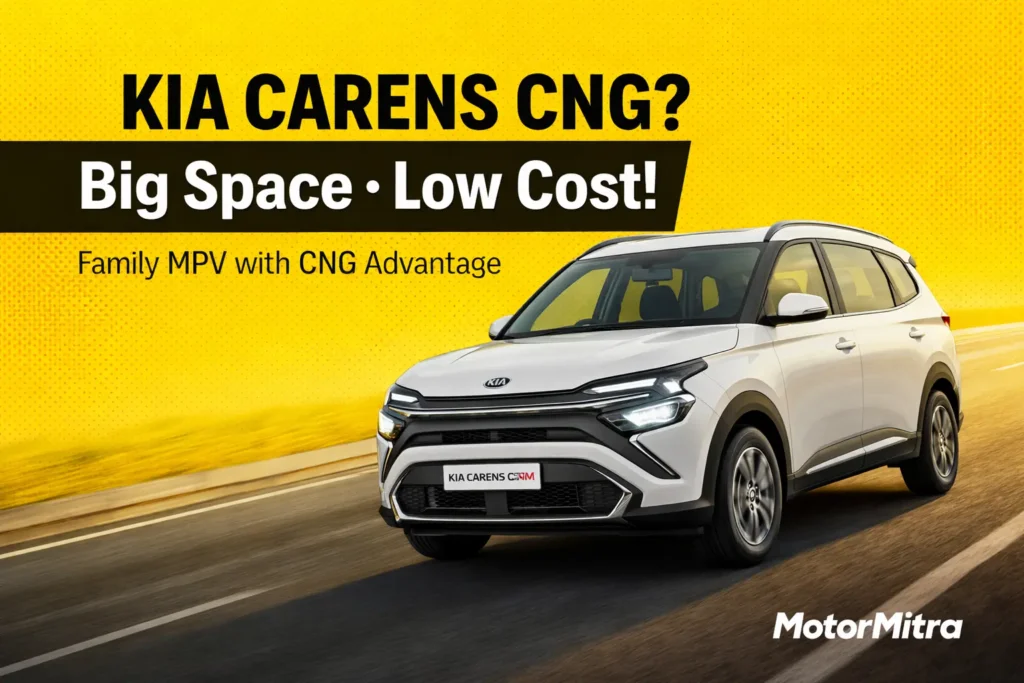
Also Read- Kia Carens CNG Is Here? Price, Mileage & Who Should Buy It: 2025
Abhay Bhakre (MNRE Mission Director): “From heavy-duty pilots to passenger cars—renewable H2 replaces imports.” Toyota’s Sudeep Dalvi: “Indian conditions will benchmark global FCEV scalability.” Pilot feeds Strategic Interventions for Green Hydrogen Transition (SIGHT) scheme—₹19,744cr outlay for 5MTpa production by 2030.
India’s H2 Mobility Roadmap: Mirai as Trailblazer
National Green Hydrogen Mission (2023) eyes H2 as EV complement: Batteries falter on long-haul trucks (range anxiety, charge times), aviation/shipping need density. India produces 6MT H2 annually (mostly grey), targets 46MT green by 2030 via electrolysers (5GW capacity). Mirai trials precede:
- Trucks/Buses: Tata-Ashok Leyland H2 pilots (2026).
- Stations: 30 planned by 2028 (Gujarat hubs first).
- Exports: H2 ammonia to Japan/EU.
Challenges loom: H2 costs ₹300-400/kg (vs. petrol ₹100 equiv.); stations nil outside pilots. Mirai’s 5kg fill = ₹1,500-2,000 vs. ₹800 diesel. Subsidies (₹4,400cr) and green electrolysis (RE-powered) aim parity by 2028. Global edge: Toyota’s 20+ years (21k Mirai sold Japan/US), Hyundais Nexo.
Global Context: H2’s Quiet Revolution vs. EV Dominance
Toyota bets multi-path: Mirai alongside bZ4X EV, hybrids. Japan: 200+ stations, 1,000 Mirai. California: Incentives push 100k FCEVs. Europe: Hyundais fleet trials. India lags—EV share 2.5% (Oct 2025)—but H2 suits 70% highway freight. Vs. BEVs:
- Pros: Instant refuel, cold-weather reliability, lifecycle CO2 edge (if green H2).
- Cons: Infrastructure lag, efficiency (60% well-to-wheel vs. BEV 80%).
Pilot success? Commercial Mirai imports (₹1.5-2cr est.) by 2028, localized stacks via TN plant.

Also Read- Hero Vida Dirt.E K3 Launch: ₹69,990 Electric Dirt Bike Revolutionizes Kids’ Off-Road Riding
Hurdles & Opportunities: Paving H2 Highway
Challenges:
- Infra Vacuum: No public stations; NTPC pilots first.
- Supply: Green H2 at ₹150/kg target (current ₹350).
- Safety: H2 flammability myths—Mirai’s sensors proven.
- Cost: Mirai ₹65 lakh global; India duties spike.
Upsides:
- Diverse Use: Stationary gensets, steel/fertilizer decarbon.
- Jobs: 6 lakh by 2030 (MNRE est.).
- Export: H2 derivatives to energy-hungry Asia.
Two-year data shapes policy: Incentives mirror EV PLI? Local assembly?
Verdict: Mirai Signals H2 Dawn in World’s 3rd Largest Auto Market
Toyota Mirai’s Indian odyssey—Delhi dust to Himalayan heights—tests clean mobility’s holy grail. Success accelerates H2 trucks (Hyundai-BL pilot next?), stations (Reliance-IoCL), and policy (FAME-H2?). Failure? EV monopoly strengthens. Joshi’s vision: “H2 replaces fossils across sectors.” Toyota’s multi-tech mantra positions India as H2 testbed—watch NISE dashboards for breakthroughs. Green roads ahead?
For more such updates and latest news on cars and bikes stay connected to motormitra.in
Thank you ..