Fuel prices are no longer just rising—they are forcing real buying decisions. For anyone planning a practical 7-seater, the biggest confusion has always been simple: go for CNG and compromise on space, or keep practicality and deal with rising fuel costs. This trade-off has defined the segment for years, and most buyers quietly accepted it because there was no real alternative.
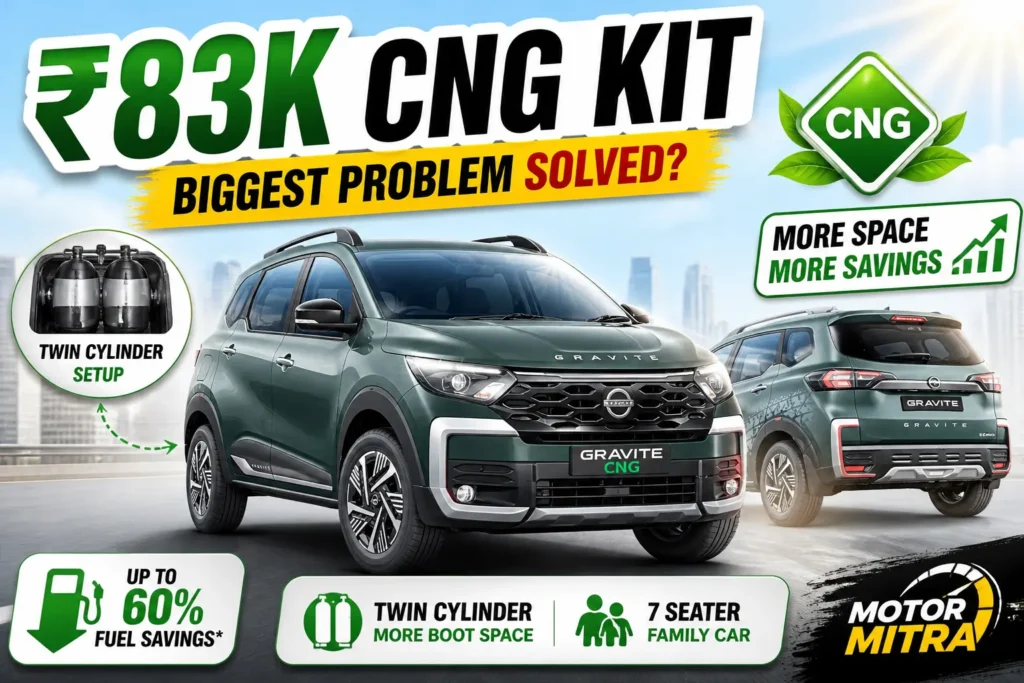
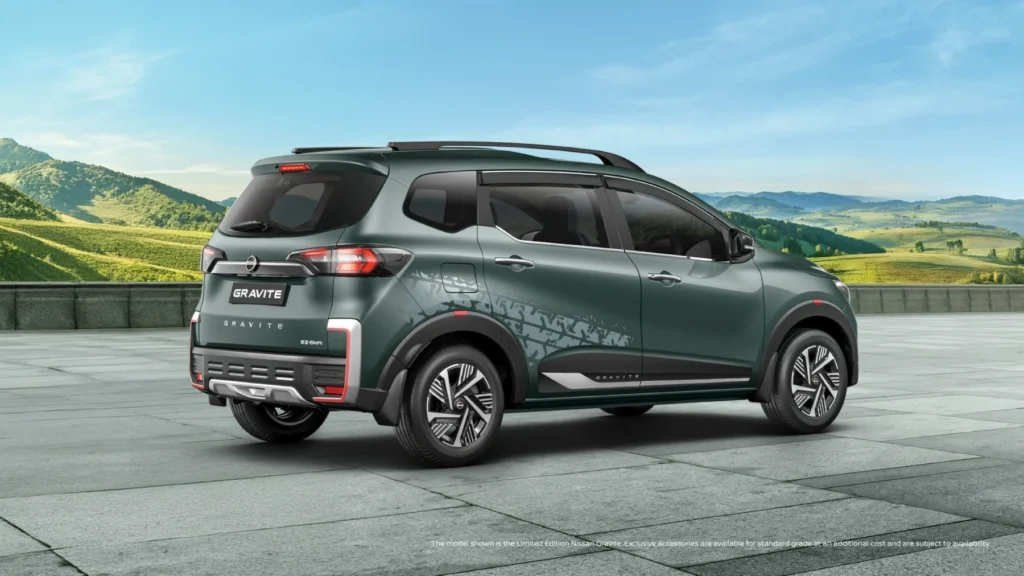
Now, Nissan Gravite CNG kit at ₹83,000 arrives at a time when that compromise is no longer acceptable. With its twin-cylinder setup, this update goes beyond just reducing fuel expenses and directly targets the biggest frustration buyers face in everyday usage. If this setup performs as expected in real-world conditions, it has the potential to change how buyers look at CNG family cars altogether.
Why This Matters
- Rising fuel costs are forcing 7-seater buyers to seriously consider CNG over petrol
- Twin-cylinder setup solves the biggest deal-breaker: losing usable boot space
- ₹83,000 pricing makes it a low-risk upgrade that directly improves daily practicality
Also Read:- India’s Top 20 CNG Cars FY2026 — Ertiga & Nexon Dominate, But Most Buyers Will Still Pick Wrong
This One Change Fixes the Biggest CNG Problem
Traditional CNG kits rely on a single large cylinder that consumes almost the entire boot space, instantly reducing the practicality of a 7-seater. For families who actually use all three rows, this turns into a daily inconvenience rather than a small compromise, especially during regular city use or longer trips.
Nissan’s twin-cylinder approach changes that experience by splitting the storage into two compact cylinders placed more efficiently. This allows usable luggage space to remain intact, which significantly improves real-world usability. It may sound like a small engineering change, but for buyers, it directly impacts how comfortable and practical the vehicle feels every day.
Quick Breakdown of the CNG Kit
| Feature | Details |
|---|---|
| Kit Price | ₹83,000 |
| Setup Type | Twin Cylinder |
| Seating Compatibility | 7-Seater Friendly |
| Boot Space Impact | Minimal vs traditional CNG |
| Target Buyers | Family + High Running Users |
This positioning clearly shows that the focus is on balancing cost, practicality, and usability without forcing buyers into unnecessary compromises.
This Is Where Most Buyers Finally Get Clarity
On paper, most CNG setups promise fuel savings, but real value is always defined by daily usability. In real-life scenarios like school runs, office commutes, or weekend travel, space flexibility becomes just as important as cost savings, and that is where traditional setups often fall short.
With this twin-cylinder layout, the overall ownership experience changes in a meaningful way. You are no longer forced to choose between luggage space and fuel efficiency, and the vehicle starts behaving like a proper 7-seater again instead of a compromised one. However, buyers should also understand that splitting the cylinder into two units can slightly influence how fuel capacity translates into usable range, which means expectations around driving range should be set realistically before making a decision.
This is exactly where most buyers regret their decision later.
Traditional vs Twin Cylinder – The Real Difference
| Factor | Traditional CNG | Twin Cylinder CNG |
|---|---|---|
| Boot Space | Almost gone | Partially usable |
| Practicality | Low for families | Much better |
| Daily Comfort | Compromised | Balanced |
| Ownership Feel | Restrictive | Flexible |
This comparison highlights that the Gravite’s update is not just about adding a feature, but about solving a long-standing usability problem that directly affects everyday ownership.
Also Read:- Kia Carens CNG vs Maruti Ertiga CNG: Price, Mileage & Power
The Decision Point Most Buyers Will Face
At ₹83,000, the upgrade may look like an easy decision at first glance, but the real answer depends entirely on usage patterns. Buyers with high daily running and consistent fuel expenses will find this setup far more valuable, as it combines lower running costs with improved practicality in daily life.
On the other hand, if usage is limited or the third row is rarely used, the urgency to upgrade reduces significantly. In such cases, this becomes more of a convenience-focused upgrade rather than an essential one, and waiting or evaluating other options could be a smarter approach.
Who Should Buy and Who Should Wait
This upgrade makes the most sense for buyers who have high daily running, regularly use all seven seats, and want to reduce fuel expenses without sacrificing usability. For such users, the twin-cylinder setup offers a more balanced ownership experience compared to traditional CNG solutions.
However, buyers with occasional usage, minimal dependence on boot space, or plans to upgrade their vehicle in the near future may not find this upgrade immediately necessary. In those scenarios, waiting and reassessing future options would be the more practical choice.
The Bigger Impact No One Is Talking About
This update is not just limited to the Nissan Gravite, as it has the potential to influence the broader affordable SUV segment. If buyers respond positively to this twin-cylinder setup, other manufacturers may be forced to rethink how CNG systems are integrated into their vehicles.
Such a shift could move the segment away from compromise-driven solutions and toward more practicality-focused designs, ultimately benefiting buyers who have been waiting for a more balanced alternative.

Final Verdict: Smart Upgrade or Just Hype
At ₹83,000, the Nissan Gravite CNG kit feels like a well-planned response to a real-world problem rather than an experimental add-on. It directly addresses one of the biggest pain points buyers have faced for years and offers a solution that improves both usability and cost efficiency.
While it is not entirely free from trade-offs, it delivers enough practical value to make it a strong consideration for the right type of buyer. And if you are planning a 7-seater with daily usage in mind, ignoring this now could mean choosing a less practical setup when a smarter option was already available.