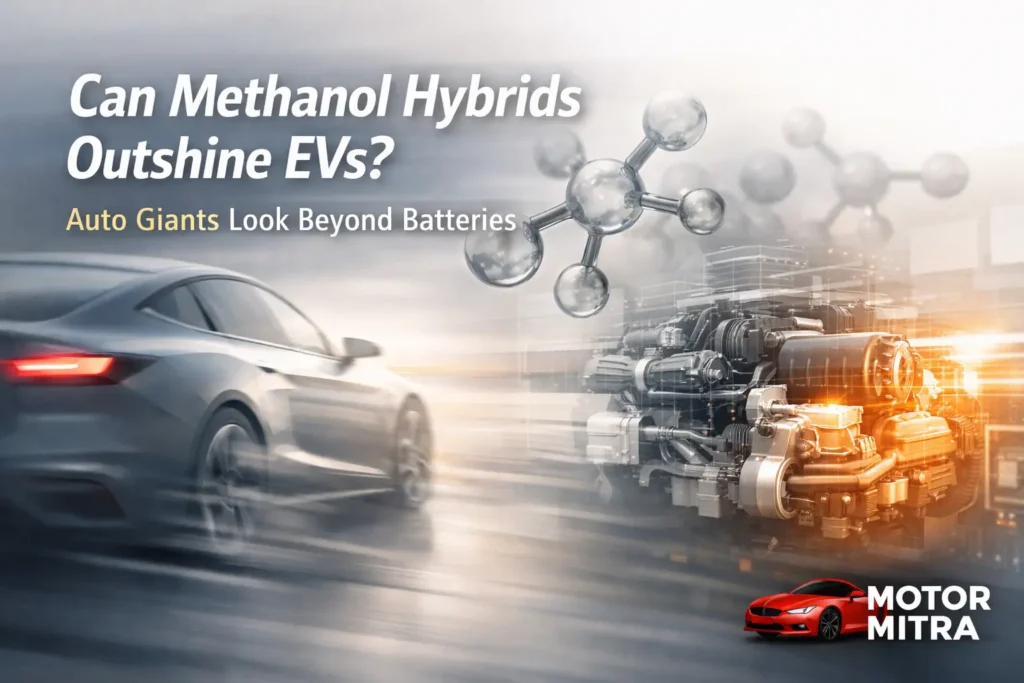
Electric vehicles were meant to be the clean, inevitable future. But rising costs, charging anxiety, and slowing adoption in key markets are forcing automakers to rethink that assumption. Methanol hybrid technology is suddenly back in conversations that matter — inside boardrooms, regulatory filings, and long-term powertrain strategies. This isn’t nostalgia. It’s a calculated hedge.
Why This Matters
- EV growth is showing early signs of fatigue in price-sensitive markets
- Methanol hybrids promise lower emissions without full EV dependency
- Carmakers may be buying time before full electrification becomes truly viable
Are Automakers Losing Patience With the EV-Only Strategy?
For the last decade, the industry narrative has been simple: EVs will replace everything. Reality is turning out to be more complex. Battery costs remain volatile, charging networks are uneven, and mass-market buyers are still hesitant. In response, manufacturers are no longer treating EVs as the only solution — they are diversifying.
Hybrids never really left. What’s changed is the fuel.
Also Read:- How Emission Concession Debate Could Shape India’s Future Emission Norms & EV Push- 2025 News
Methanol, once seen as niche or transitional, is being re-evaluated because it can be produced from cleaner sources, stored easily, and integrated into existing hybrid architectures without the massive infrastructure overhaul EVs demand.
What Exactly Makes Methanol Hybrids Different?
Unlike conventional petrol hybrids, methanol hybrids use methanol as a primary fuel source paired with electric assistance. Methanol is considered cleaner than petrol in terms of particulate emissions, and it can be synthesized from renewable sources, including captured carbon.
From an engineering perspective, this is attractive. Carmakers don’t need to redesign platforms from scratch. Existing hybrid systems can be adapted, which reduces cost and development time.
Industry estimates suggest methanol hybrid systems could be significantly cheaper than full EV powertrains, especially in markets where battery localisation remains weak.
Also Read:- Big BMW Surprise? F 450 Supersport Test Mule Caught Testing on Indian Roads
Why Carmakers Are ‘Quietly’ Betting on This Tech
This shift isn’t being shouted from marketing stages — and that’s intentional. EV commitments are public, political, and often tied to government targets. Methanol hybrids, on the other hand, are strategic backups.
They allow manufacturers to meet near-term emission norms, keep vehicles affordable, reduce dependence on charging infrastructure, and stay flexible as policy and consumer sentiment evolve.
Several global players have already tested or filed methanol-compatible hybrid systems, signalling that this is more than an experiment. It’s a contingency plan.
Could Methanol Hybrids Solve What EVs Still Can’t?
For many buyers, especially outside major urban centres, EV ownership still comes with compromises. Long charging times, range anxiety, and upfront costs remain barriers.
Methanol hybrids address these pain points differently. Refuelling time mirrors conventional cars. Range remains predictable. And because hybrids rely less on large battery packs, costs may stay under control.
This doesn’t make methanol hybrids a replacement for EVs — but it does make them a practical bridge.
Also Read:- Cheaper Jaguars & Land Rovers Ahead? Tata’s Chennai Move Changes Everything
Is This a Temporary Fix or a Long-Term Play?
That depends on how quickly EV ecosystems mature. If charging infrastructure expands rapidly and battery prices fall faster than expected, methanol hybrids may remain limited to select regions.
However, if EV adoption continues to face friction, methanol hybrids could scale faster than many expect. Some analysts believe this technology could buy the industry a critical 5–10 year transition window, allowing cleaner mobility without forcing premature electrification.
What This Means for the Future of Mobility
The future is no longer a single-lane road to EVs. It’s turning into a multi-path transition where different technologies coexist. Methanol hybrids represent one of those paths — quieter, less flashy, but strategically important.
For buyers, this could mean more choice. For automakers, it means risk management. And for the industry as a whole, it signals a subtle but meaningful shift: electrification is inevitable, but how we get there is still up for debate.
EVs are still the endgame. But methanol hybrids may become the industry’s smartest interim move — especially in markets where cost, infrastructure, and realism matter more than idealism
For more such updates and latest news on cars and bikes stay connected to motormitra.in
Thank you ..
auto.motormitra
Latest Auto News and Trends

Also Read:- MARUTI SUZUKI ने 2025 में रचा इतिहास: 3.95 लाख गाड़ियाँ निर्यात का रिकॉर्ड, भारत का ऑटो निर्यात चमक रहा!
ऐसी ही और ताज़ा खबरों और अपडेट्स के लिए जुड़े रहें Auto.MotorMitra के साथ।
धन्यवाद!
Times Mitra
Latest bytes of news.

For more such updates and latest news on cars and bikes stay connected to times.motormitra.in
Thank you ..