
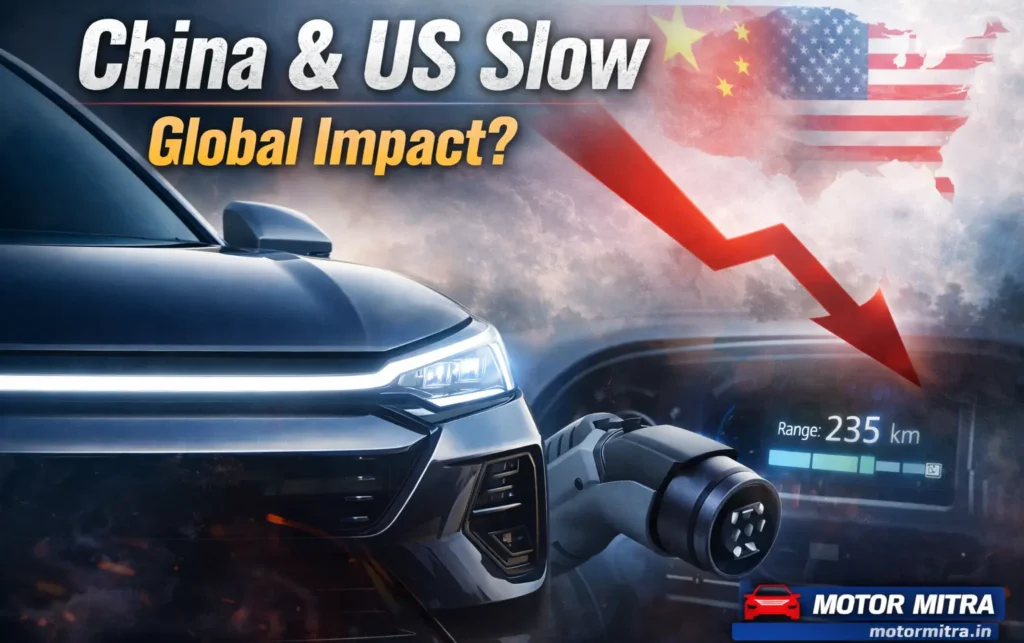
Global EV sales may have just flashed the first real caution signal of 2026. January 2026 data indicates that EV sales slowed noticeably across key markets, particularly in China and the United States. For an industry that has been defined by double-digit growth and aggressive expansion targets, even a temporary dip raises important questions.
Is this a normal seasonal correction — or the first sign that the electric growth curve is stabilising faster than expected?
Why This Matters
- China and the US account for a major share of global EV sales
- Slowdown in these markets can influence global production strategy
- Pricing, subsidies and demand sentiment may now face recalibration
EV sales have been climbing aggressively for years — which is why this slowdown stands out. But transitions rarely move in a straight line.
What Exactly Happened in January?
Preliminary figures show that EV sales growth decelerated sharply compared to previous months. In China — the world’s largest EV market — demand softened significantly. The US also recorded a notable slowdown.
While some seasonal effects are normal after year-end sales pushes, the scale of the dip has sparked debate among analysts.
A cooling in the two largest markets automatically impacts global sentiment.
Also Read:- MG Motor Shines in Nov 2025 With 3,658 EV Sales & 25% Market Share
Is China’s Slowdown a Structural Signal?
China has been the backbone of EV expansion. Government incentives, strong domestic brands and rapid charging infrastructure growth supported explosive adoption.
A slowdown there could indicate:
- Subsidy adjustments influencing short-term demand
- Inventory realignment after aggressive 2025 sales pushes
- Increasing competition compressing margins
If demand in China stabilises rather than accelerates, global EV production forecasts may need recalibration.
Why Did US EV Sales Ease?
The US EV market has faced its own headwinds. Interest rates remain elevated, and affordability remains a key barrier. While EV adoption has grown steadily, buyer hesitation around pricing and charging accessibility persists in several states.
If US EV sales plateau temporarily, manufacturers may focus more on incentive-led marketing and financing strategies to revive demand.
Momentum shifts often begin subtly.
Is This Just a Temporary Pause?
The EV industry has experienced short-term corrections before. January traditionally sees slower retail movement in several markets due to post-holiday spending fatigue.
It is also possible that:
- Consumers delayed purchases ahead of expected new launches
- Subsidy framework adjustments caused timing shifts
- Inventory cycles distorted monthly data
One month alone may not define the trend — but simultaneous slowdowns across major markets are harder to dismiss.
However, when multiple major regions show simultaneous moderation, the signal becomes harder to ignore.
Could Pricing Pressure Increase?
If EV sales growth slows, pricing strategy becomes critical.
Manufacturers may respond with:
- Targeted incentives
- Feature upgrades without major price hikes
- Short-term promotional campaigns
At the same time, battery costs and supply chain realities continue to influence pricing floors. The market cannot rely indefinitely on subsidy-led growth.
For buyers, this could mean selective opportunities — but not necessarily widespread price cuts.
Also Read:- Festive Boom Ends, EV Sales Fall — Tata, MG, Mahindra Also Hit 2025
Is the ‘Electric Boom’ Maturing?
Rapid early growth phases are often followed by consolidation. As early adopters complete their transition, the next wave of buyers typically requires stronger value justification.
Mainstream adoption depends on:
- Improved charging infrastructure
- Competitive pricing
- Confidence in resale value
If EV sales growth slows temporarily, it may simply reflect a market entering its next maturity stage rather than declining.
What Should Buyers Watch Now?
For consumers considering an EV purchase, the current situation presents both caution and opportunity.
If manufacturers increase incentives to stabilise EV sales momentum, near-term buyers could benefit. However, waiting for dramatic price drops may not align with supply chain cost realities.
Market shifts can create brief windows of value — but they rarely last long.
The January 2026 EV sales dip does not automatically signal the end of electric growth. But it does suggest that the pace of expansion may be entering a more measured phase.
And in rapidly evolving industries, measured phases often shape long-term direction more than explosive spikes.
The electric revolution may not be stalling — but the pace clearly looks different from last year’s surge.
If manufacturers adjust pricing, incentives or launch timelines in response, this January dip could become more than a seasonal pause.
And in markets driven by momentum, even small slowdowns can reshape buyer confidence faster than expected.
For more such updates and latest news on cars and bikes stay connected to motormitra.in
Thank you ..
auto.motormitra
Latest Auto News and Trends

Also Read:- Hero Vida VX2 Go 3.4 kWh लॉन्च – 100km रेंज, ₹1.02 लाख कीमत, BaaS मॉडल ₹60,000 से शुरू!
ऐसी ही और ताज़ा खबरों और अपडेट्स के लिए जुड़े रहें Auto.MotorMitra के साथ।
धन्यवाद!
Times Mitra
Latest bytes of news.

Also Read:- Samsung CES 2026- Next-Gen AI Innovation to Break Cover
For more such updates and latest news on cars and bikes stay connected to times.motormitra.in
Thank you ..