Bajaj Auto Hit With ₹34 Crore Tax
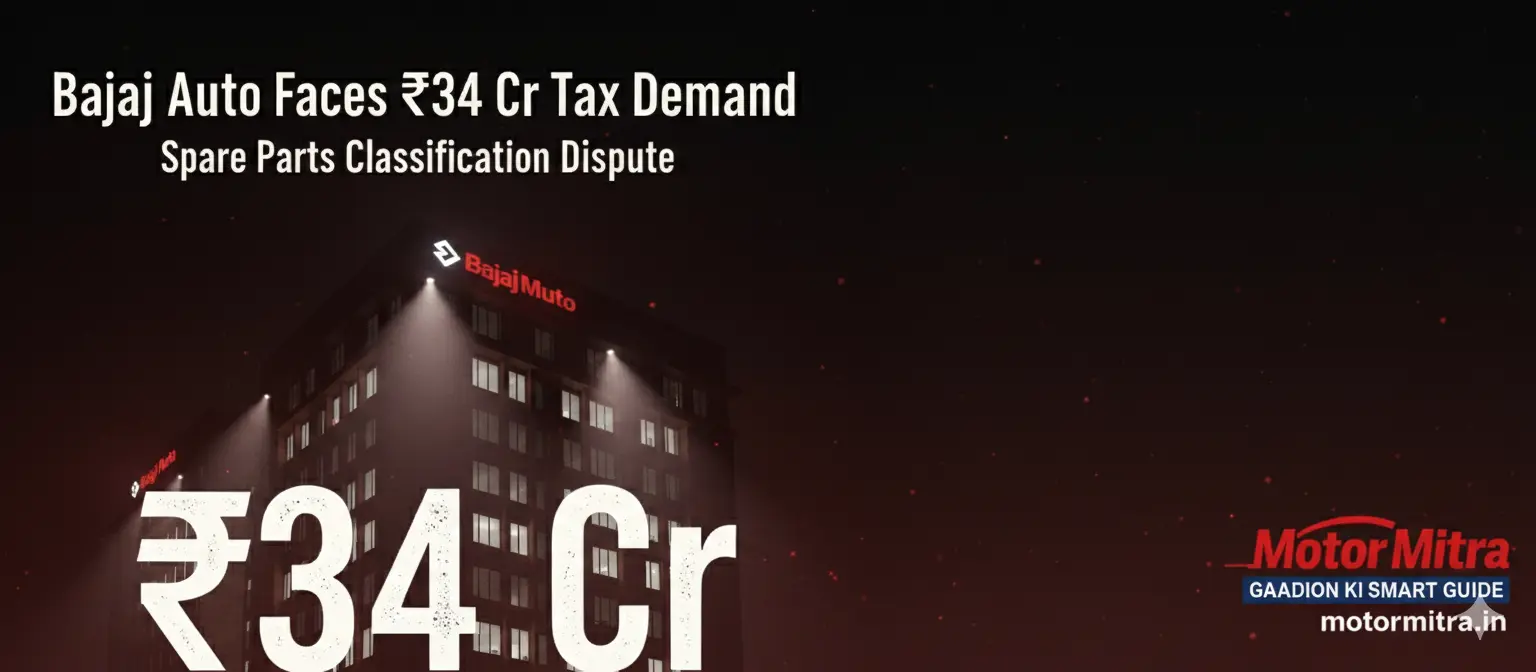
Bajaj Auto has been issued a tax demand of around ₹34 crore by the GST authorities, linked to a dispute over the classification of certain imported components used for its motorcycles and commercial vehicles. The notice has sparked discussions across the auto industry, as disputes over part classification have become increasingly common in recent years. times.motormitra.in
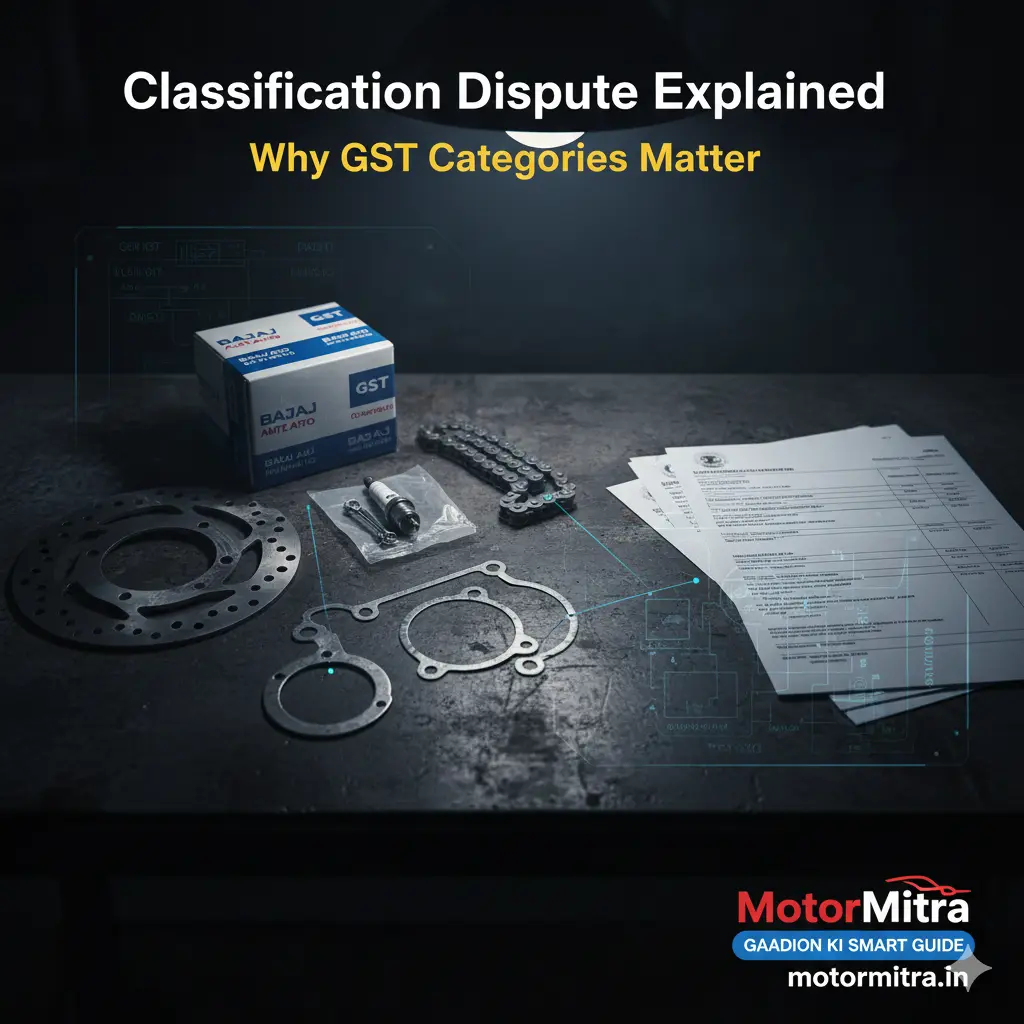
Thank you for reading this post, don't forget to subscribe!According to the available details, the dispute centers on how Bajaj Auto classified specific spare parts, which affects the tax rate applicable to the import. Auto.MotorMitra The authorities claim that the company applied a lower tax rate by classifying the parts under a different category, while the department believes a higher slab should have been used.
Bajaj Auto, on its part, has stated that it will challenge the demand and pursue the matter through the legal process, maintaining that its classification is industry-standard and fully compliant with the rules. motormitra.in
Dispute Rooted in Part Classification — A Common Industry Issue
The auto industry frequently deals with classification challenges because thousands of different components are imported every month, and many fall into overlapping categories. Even small differences in classification can lead to major differences in taxation.
In Bajaj Auto’s case, the parts involved reportedly include items used in after-sales servicing and periodic maintenance.
Authorities argue they fall under a category with a higher duty, while Bajaj maintains they belong to a lower-rate classification based on their material and usage. Auto.MotorMitra
Such disputes arise because:
- Some parts are versatile and can fit multiple HS code categories.
- Interpretation of GST and customs rules varies between companies and officers.
- Imported components often differ slightly from domestically produced ones.
- EV and new-tech components are creating new classification challenges.
Because of this, classification disagreements have become routine for auto OEMs as well as suppliers. motormitra.in

Also Read:- MG Motor Shines in Nov 2025 With 3,658 EV Sales & 25% Market Share
Bajaj Auto Maintains Its Stand
Bajaj Auto has responded by saying the notice does not have an immediate financial impact, as it has the right to challenge the order and secure relief.
The company has clarified that this is a demand notice, not a penalty or final order, and therefore the matter is still open for dispute resolution. times.motormitra.in
Industry analysts believe Bajaj is likely to contest the demand for several reasons:
- The company has used the same classification for years.
- Similar classifications are used across the two-wheeler industry.
- There is precedent for such disputes being overturned.
- Bajaj believes its interpretation falls within GST norms.
Companies often prefer litigation or appellate proceedings because these disputes depend heavily on interpretation rather than wrongdoing. motormitra.in
No Impact on Daily Operations or Supply Chain
Despite the magnitude of the tax demand, Bajaj Auto’s production, sales, and exports remain unaffected.
The company has confirmed that the notice is purely related to tax documentation and categorisation—not to shipments, imports, or supply chain activities.
This means:
- No slowdown in factory operations
- No delay in spare part supply
- No effect on dealerships or after-sales operations
- No change in pricing for customers
For a large manufacturer like Bajaj Auto, a dispute of this scale is significant but not disruptive in the short term. Auto.MotorMitra
Why Spare Parts Classification Matters So Much
Classification determines the tax rate, which affects:
- Import costs
- Total landed cost of parts.
- Final MRP of spare parts
- Dealer margins
- Service centre profitability
A small percentage difference in duty, when multiplied across lakhs of components, can lead to massive totals — which is why authorities monitor them closely.
A dispute worth ₹34 crore indicates a significant volume of components over an extended period. motormitra.in
What Happens Next? Expected Legal Path
The next steps will likely include:
- Bajaj Auto is filing a formal appeal against the tax demand.
- Independent hearings where both sides present classification arguments
- Review of past rulings and technical interpretations
- Possible escalation to Tribunals or High Court if needed
Such cases often take months or even years before a final decision is made.
Until then, Bajaj Auto is not required to pay the full amount unless a final order upholds the demand.
Know More: Bajaj Auto Faces Rs. 34 Crore Tax
Also Read:- Festive Boom Ends, EV Sales Fall — Tata, MG, Mahindra Also Hit 2025
Broader Industry Impact
This dispute once again highlights how India’s GST and customs system is still evolving, especially for the automotive sector. times.motormitra.in
With new technologies, EV components, hybrid parts, sensors, and electronics entering the market, classification grey zones are becoming more common.
Many OEMs—including two-wheeler, passenger car, and commercial vehicle players—have faced similar situations over the years.
Industry experts emphasize the need for:
- Clearer guidelines
- Updated categorisation for EV and hybrid parts
- Standardisation across OEMs
- Simplified GST slabs
Until then, disputes like Bajaj Auto’s are likely to continue. Auto.MotorMitra
Bajaj Auto’s ₹34 crore tax dispute highlights a larger structural challenge within India’s auto taxation system, where classification of parts continues to create conflicting interpretations. While the demand is substantial, it is unlikely to affect Bajaj’s business operations, sales, or customer services. The matter will now move into the appellate phase, where the final outcome will depend on technical interpretation rather than intent. motormitra.in
Bajaj Auto remains firm on its stand and is expected to contest the demand fully, making this yet another case that shines a light on the complex relationship between the auto sector and India’s evolving tax framework.
For more such updates and latest news on cars and bikes stay connected to motormitra.in
Thank you ..
auto.motormitra
Latest Auto News and Trends

Also Read:- बाज़ार में झटका: मारुति ने 2.29 लाख बिक्री के साथ सभी को पीछे छोड़ा
ऐसी ही और ताज़ा खबरों और अपडेट्स के लिए जुड़े रहें Auto.MotorMitra के साथ।
धन्यवाद!
Times Mitra
Latest bytes of news.

Also Read:- Android 16 Accessibility Hype? Gemini Features Fall Short for Real Users
For more such updates and latest news on cars and bikes stay connected to times.motormitra.in
Thank you ..