Rising two-wheeler prices over the last few years have squeezed first-time buyers and daily commuters. Inflation, stricter safety and emission rules, and higher input costs nudged many entry-level motorcycles and scooters out of impulse-buy territory. For millions who depend on sub-100cc and 110cc machines for work and errands, a genuinely low-cost, reliable bike would be a major relief — and the 2026 product plans from India’s volume makers suggest a close race to deliver one.
Thank you for reading this post, don't forget to subscribe!Industry chatter points to three contenders in particular: Hero MotoCorp, Bajaj Auto and TVS Motor Company. Each has strengths that could be decisive if the goal is the “cheapest practical bike” rather than the cheapest toy.
Opening: entry buyers are feeling the pinch
Nominal sticker prices mask total ownership. Insurance, registration, and rising fuel costs matter — but so do perceived value (build, reliability, service) and the brand’s distribution reach. For someone who rides 15–30 km daily, even a small reduction in purchase price or running cost can shift the long-term economics by thousands of rupees a year. That’s why a volume player targeting sub-100cc or 110cc buyers must get the pricing right and maintain acceptable quality and dealer support.
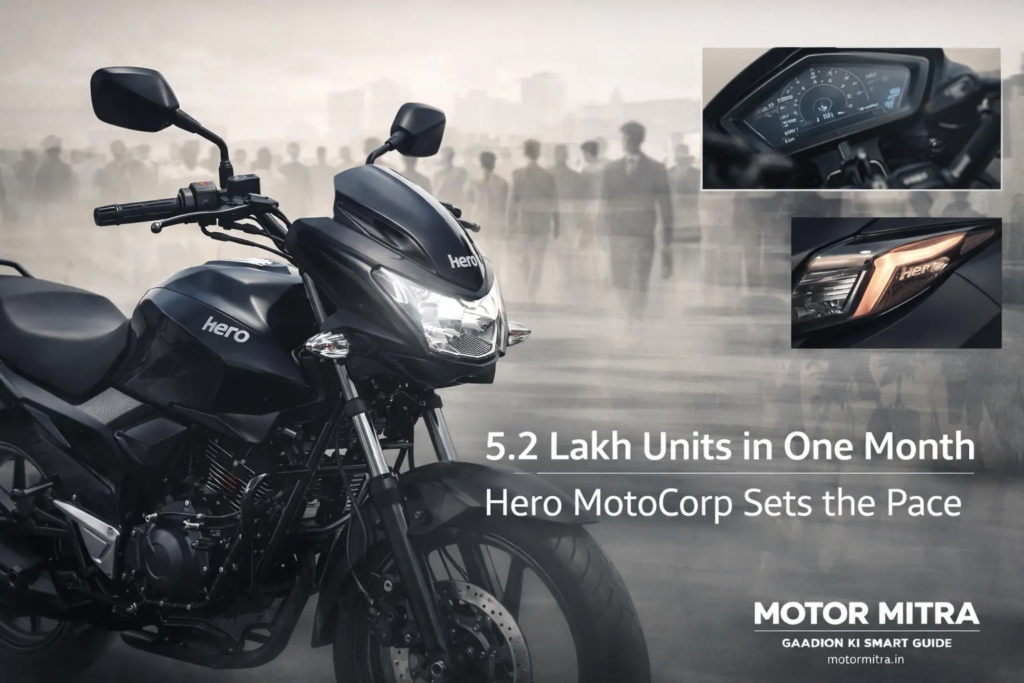
Also Read- Hero MotoCorp Explodes Past 5.2 Lakh Sales in Jan 2026, Growth Jumps 26%
What each brand is planning in sub-100cc & 110cc segments
Hero MotoCorp
Hero’s strength is scale and an unrivalled dealer/service network. The company can squeeze costs through huge volumes and tried-and-tested localised manufacturing. Rumours point to Hero revisiting its entry portfolio with a stripped-back 100cc commuter that focuses on low running cost and maintenance simplicity — minimal electronics, a basic but robust steel frame, and a small, fuel-efficient 100–110cc single. Expect Hero to position such a model as a no-nonsense workhorse for rural and small-town customers.
Bajaj Auto
Bajaj is lean, engineering-driven and comfortable with frugal but clever packaging. The company has historically targeted riders who want value with a bit of technology (efficient engines, competitive gearboxes). Bajaj could launch a competitively priced 110cc commuter tuned to extract high real-world mileage, likely with a focus on lightweight construction and optimized gearing. Bajaj’s advantage: it can undercut rivals on cost per kilometre by matching a simple engine to aggressive price points.
TVS Motor Company
TVS sits between Hero’s volume muscle and Bajaj’s engineering thrift. TVS has been experimenting with modular platforms and efficient manufacturing; it also tends to be slightly more feature-forward even in budget bikes (better brakes, slightly higher spec switches). If TVS goes after the cheapest title, it may trade a few features for price but keep a perceived quality edge — better ergonomics and a softer ride — to lure urban commuters who still care about comfort.
Expected price range & launch timeline
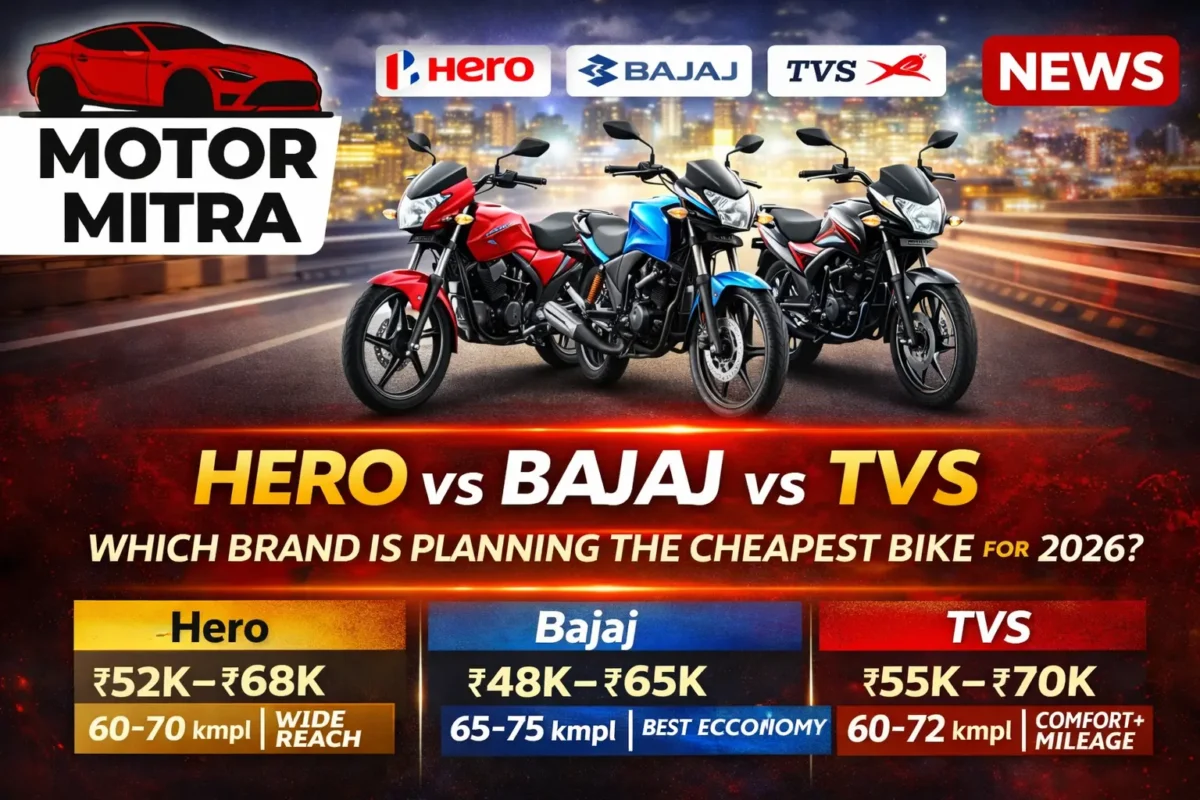
- Price band to watch: ₹48,000–₹68,000 (ex-showroom) for clean, competitive sub-100cc/110cc offerings in 2026.
- Timing: prototypes and teasers could appear in late 2025; mass launches and dealer rollouts are likeliest in the first half of 2026 as brands aim to capture the new fiscal year demand and festival season buying windows.
Why this matters for daily commuters
A sub-₹70k bike that returns true 60–75 kmpl in real traffic, needs only basic maintenance, and has wide service coverage would change commuting choices — reducing dependence on congested public transport or higher-running scooters. For gig economy riders, delivery partners and small business owners, the difference between a ₹65k and a ₹78k machine across three years of use can be decisive. Moreover, an affordable, well-spec’d commuter bike can blunt the push to second-hand markets and keep lifetime ownership costs predictable.
| Brand | Likely Segment (2026) | Expected Price Band (Ex-Showroom) | Real-World Mileage (Expected) | Key Pros for Buyers |
|---|---|---|---|---|
| Hero MotoCorp | 100cc / 110cc commuter | ₹52,000 – ₹68,000 | 60–70 kmpl | Widest service network, low maintenance, strong resale, ideal for rural & small-town buyers |
| Bajaj Auto | 110cc commuter | ₹48,000 – ₹65,000 | 65–75 kmpl | Most aggressive pricing, best cost-per-km, efficient engines, lightweight design |
| TVS Motor | 100cc / 110cc commuter | ₹55,000 – ₹70,000 | 60–72 kmpl | Better ride comfort, refined engine feel, urban-friendly ergonomics, balanced value |
Other factors buyers should consider
- Fuel economy vs. outright price: the cheapest upfront machine may not be the cheapest to run. Look at real-world economy and gearing suited to your commute.
- Service network: Hero’s reach is unmatched; Bajaj and TVS are close but check local coverage.
- Resale & parts availability: low-spec bikes sell well in volume but only if spares are cheap and common.
- Safety & comfort: even entry bikes should meet minimum safety (good brakes, reliable lights); tiny savings aren’t worth cutting fundamentals.
Verdict: Who looks most aggressive on pricing?
If the race is strictly for the lowest practical on-road price with acceptable ownership economics, Bajaj looks like the brand that could be most aggressive — its engineering focus and past success with cost-effective commuters give it an edge. Hero can undercut on dealer/volume economics and will likely focus on reliability and network-led value. TVS may choose a slightly different route: not the absolute cheapest headline price, but a small-premium product that promises better refinement and perceived value.
For a commuter who wants the absolute lowest cost today, watch Bajaj closely; for those who prioritise service reach and conservative ownership, Hero remains the safe bet; for buyers wanting a little more comfort without a big price hit, TVS is the middle ground.
For more such updates and latest news on cars and bikes stay connected to motormitra.in
Thank you ..