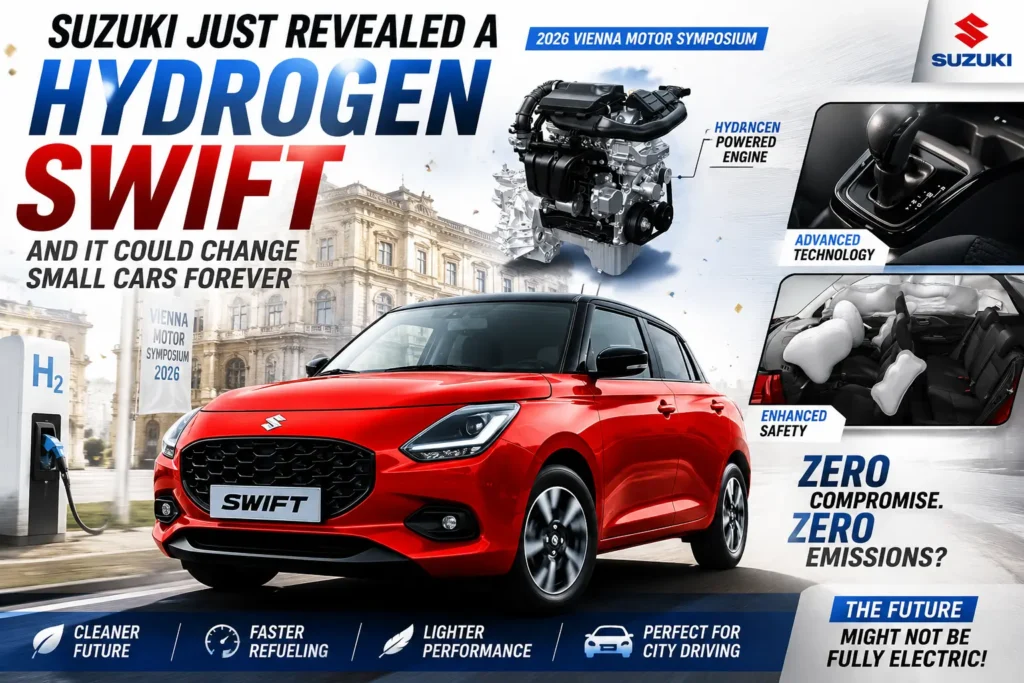
Just when the auto industry seemed completely locked into the EV future, Suzuki revealed something that instantly grabbed attention at the Vienna Motor Symposium. The company showcased a hydrogen-powered version of the Suzuki Swift, and the reveal is already sparking fresh debate about whether small cars of the future really need to depend only on batteries.
At first glance, it may look like just another experimental showcase built to create headlines. But the bigger message behind this Swift Hydrogen prototype feels far more important. While most automakers are aggressively moving toward fully electric vehicles, Suzuki appears to be exploring a parallel path instead of putting all its focus into one technology. That approach alone makes this one of the most interesting compact-car reveals of 2026.
Why This Matters
- Suzuki is exploring hydrogen technology alongside EVs
- The Swift Hydrogen could hint at a lighter and cleaner future for small cars
- Affordable hatchbacks may eventually evolve without depending entirely on large battery packs
Also Read:- 35 KMPL Swift Coming? Maruti’s Hidden Hybrid Tech Could Cut Your Fuel Cost Big Time!
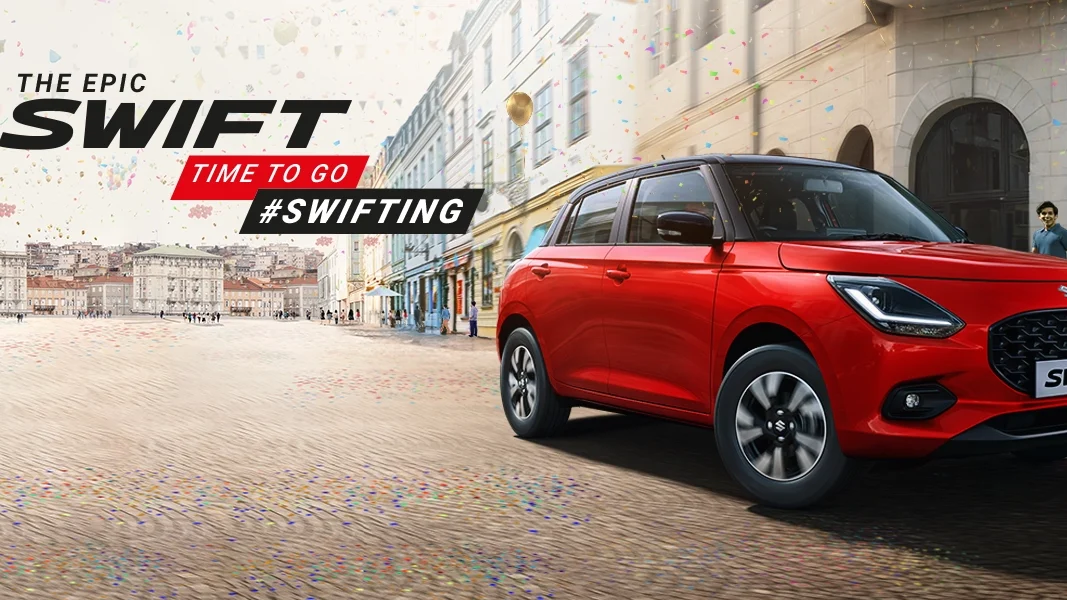
The showcased prototype is based on the latest-generation Swift, but underneath the familiar hatchback body lies a completely different engineering direction. Suzuki has reportedly adapted the car to run on hydrogen fuel, signaling that the company is actively researching future mobility solutions beyond traditional battery-electric systems.
That matters because compact hatchbacks have always been built around simplicity, efficiency, and affordability. Large battery packs can increase vehicle weight and manufacturing costs significantly, which becomes a major challenge in small-car segments where pricing and practicality matter the most. Hydrogen technology, at least in theory, offers the possibility of cleaner mobility without completely changing the lightweight character that makes hatchbacks like the Swift so popular worldwide.
| Quick Highlights | Details |
|---|---|
| Vehicle | Suzuki Swift Hydrogen Prototype |
| Showcase Event | 2026 Vienna Motor Symposium |
| Fuel Type | Hydrogen |
| Purpose | Alternative future mobility research |
| Segment | Compact Hatchback |
Suzuki’s Strategy Feels Different From Everyone Else
Most futuristic concepts shown at global events disappear quietly after generating temporary excitement. But this Swift Hydrogen prototype feels different because Suzuki has a long history of focusing on practical mobility solutions for everyday buyers instead of building unrealistic showcase machines.
That changes the entire context of this reveal. Instead of testing hydrogen technology inside an ultra-expensive luxury car, Suzuki is exploring whether cleaner alternative fuel systems can realistically work in affordable hatchbacks used by millions of people daily. If the technology eventually becomes scalable and infrastructure improves globally, the long-term impact could be far bigger than many people currently expect.
The timing of this showcase also feels incredibly important. Around the world, manufacturers are investing billions into EV development, yet concerns about charging infrastructure, battery replacement costs, raw material dependency, and charging time still continue to grow. Suzuki’s hydrogen experiment almost feels like a reminder that the future of mobility may not have only one clear answer.
And that is exactly why this small Swift prototype suddenly feels much more important than a normal auto-show concept.
Also Read:- Buying a Maruti This Month? You Could Save BIG — May 2026 Discounts Revealed
The Biggest Challenge Still Cannot Be Ignored
As exciting as the idea sounds, hydrogen technology still faces serious real-world limitations. Refueling infrastructure remains extremely limited in most countries, hydrogen production is expensive, and large-scale adoption still looks years away. These challenges are exactly why EVs continue dominating the global conversation around future mobility today.
However, Suzuki may not be trying to replace electric vehicles overnight. The company could simply be preparing for a future where multiple technologies coexist depending on market needs, affordability, and regional infrastructure. In developing markets especially, lightweight hydrogen-powered hatchbacks could eventually become an interesting alternative if the ecosystem improves over time.
That possibility alone makes this reveal worth paying attention to.
Hydrogen vs EV: Why This Debate Is Suddenly Back Again
| Hydrogen Cars | Electric Cars |
|---|---|
| Faster refueling potential | Longer charging times |
| Lightweight setup possibility | Heavy battery packs |
| Limited infrastructure today | Charging network expanding rapidly |
| Cleaner emissions potential | Zero tailpipe emissions |
| Expensive fuel technology currently | Battery costs gradually reducing |
The Swift Hydrogen showcase also arrives at a time when competition in the affordable mobility space is becoming more intense than ever. Every major manufacturer is now trying to define what the next generation of practical city cars should look like, and Suzuki clearly does not want to depend entirely on one future strategy.
Should Buyers Get Excited About Hydrogen Cars Already?
Right now, the Swift Hydrogen remains a showcase prototype rather than a confirmed production-ready model, so buyers expecting an immediate launch should keep expectations realistic. Mainstream hydrogen-powered hatchbacks are still far from becoming an everyday reality.
Still, the bigger takeaway from this reveal feels impossible to ignore. Suzuki has officially entered the future-fuel conversation in a serious way, and the humble Swift has unexpectedly become part of a much larger discussion about what affordable mobility could look like in the next decade.
If hydrogen technology eventually becomes practical and accessible for mass-market cars, this Vienna showcase may one day be remembered as the moment Suzuki quietly hinted at a very different future before most people saw it coming.