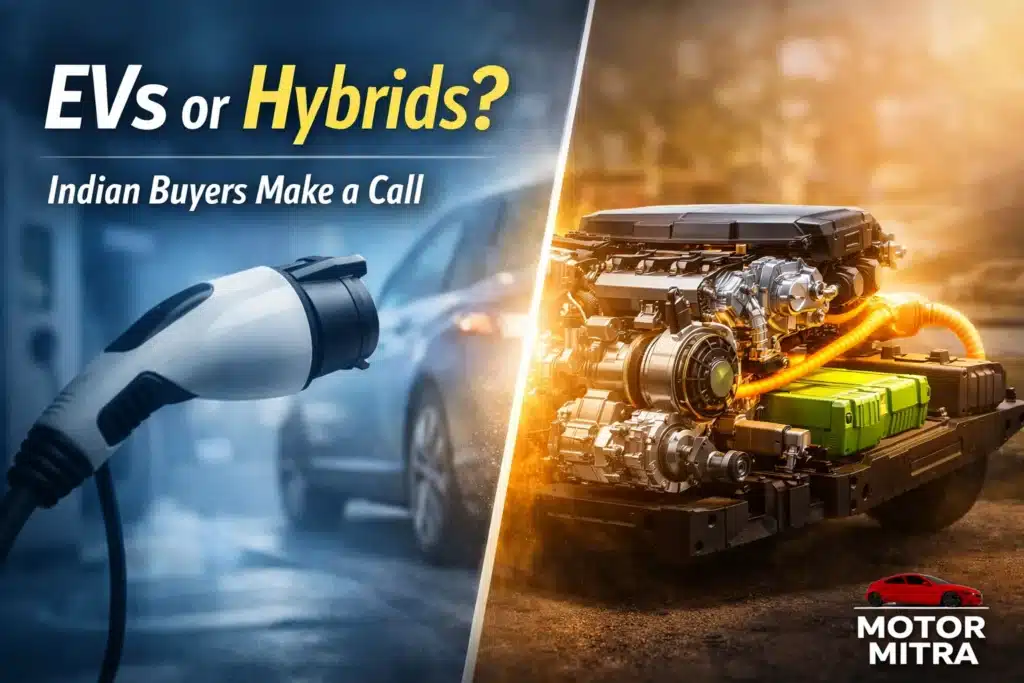
For the past few years, electric vehicles dominated the conversation around India’s automotive future. Policy push, incentives, and global narratives made EVs feel inevitable. But on the ground, something quieter and more practical is happening. Indian car buyers are no longer torn between technologies — they are increasingly gravitating toward hybrids as the more realistic choice for everyday ownership.
This shift is not driven by ideology. It is driven by experience.
Why This Matters
- Buyer behaviour is changing faster than policy narratives
- Hybrids are benefiting from EV hesitation without opposing electrification
- Automakers are adjusting strategies based on real demand signals
What Buyers Are Actually Choosing Today
Across urban and semi-urban markets, hybrids are emerging as a comfort zone between petrol cars and full EVs. Buyers who want better fuel efficiency and lower emissions, but are unwilling to change their driving habits completely, are finding hybrids easier to live with.
Also Read:- Can Methanol Hybrids Outshine EVs? Inside the Tech Auto Giants Are Quietly Betting On
Charging anxiety remains a concern for EVs. Even in large cities, charging access is inconsistent, and long-distance usability is still a question mark for many families. Hybrids avoid this problem entirely while still offering some level of electrification.
For many buyers, that balance is proving decisive.
Why EV Interest Isn’t Translating Into Equal Sales
EV awareness in India is high, but awareness does not always convert into purchases. Upfront costs remain higher, resale value is still uncertain, and charging infrastructure growth is uneven across regions.
Fleet buyers and early adopters continue to back EVs, but private buyers — especially first-time car owners and upgraders — are more cautious. The idea of being dependent on charging networks, software updates, and battery health over the long term is still uncomfortable for a large section of the market.
Hybrids, by comparison, feel familiar. They ask less of the buyer.
Also Read:- JSW’s First Passenger SUV Leaked– Jetour T2-Based Hybrid With 139 km EV Range
The Hybrid Advantage in Real-World India
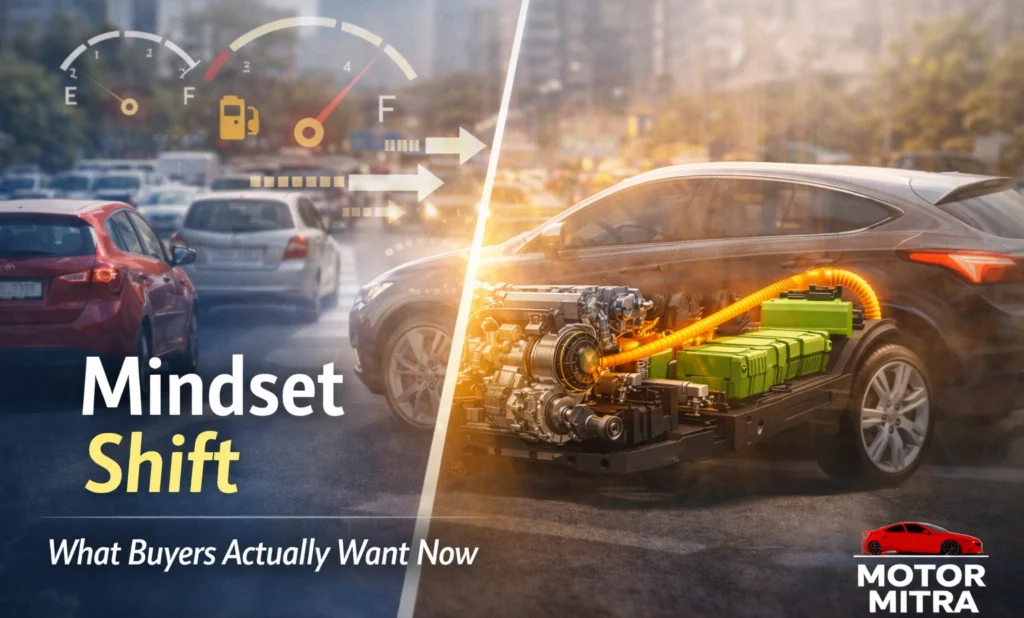
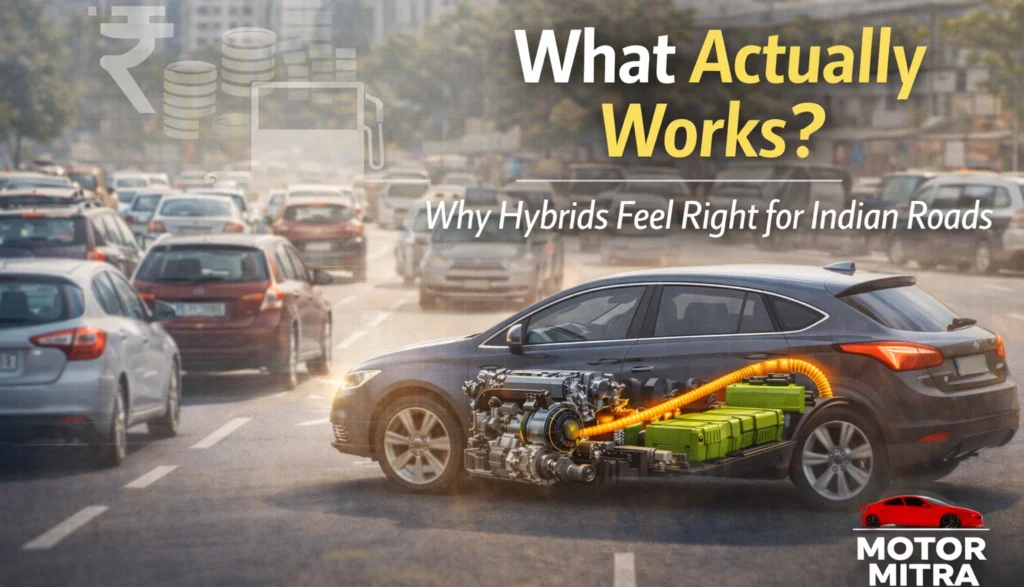
Hybrids fit neatly into India’s usage patterns. They perform well in stop-and-go traffic, deliver tangible fuel savings without behavioural change, and do not demand new infrastructure.
From a cost perspective, hybrids often sit closer to premium petrol cars rather than full EVs. When buyers evaluate total ownership costs instead of just showroom prices, hybrids begin to make sense — especially for those planning long-term ownership.
This practical logic is becoming more influential than future promises.
How Automakers Are Reading the Signals
Car manufacturers are watching buyer behaviour closely. Several brands are slowing aggressive EV-only timelines while expanding hybrid portfolios. This is not a rollback of electrification plans, but a recalibration.
Hybrids allow automakers to reduce fleet emissions, protect margins, and scale volumes without betting everything on EV adoption speed. In a market as complex as India, that flexibility matters.
Some manufacturers are now positioning hybrids as the mainstream solution, with EVs playing a supporting role rather than leading the charge.
Also Read:- Porsche Admits EV-Only Macan Was a Mistake, Petrol & Hybrid SUVs Coming Back | 2026
What This Means for EVs in India
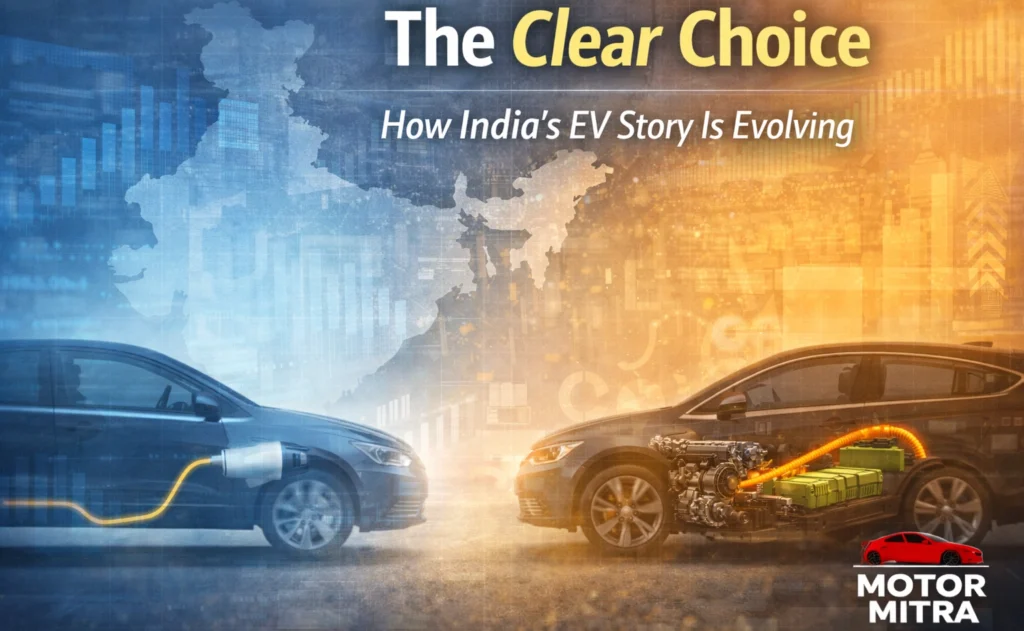
This shift does not spell the end of EVs. Instead, it highlights that adoption will be phased, not abrupt. EVs will continue to grow in cities, fleets, and specific use cases where charging access is reliable.
But for mass-market buyers, hybrids are emerging as the more comfortable stepping stone toward electrification. They reduce emissions today without demanding lifestyle changes.
In many ways, hybrids are buying the ecosystem time to mature.
The Price and Trust Factor
Price sensitivity still defines India’s car market. Buyers want visible value, predictable costs, and long-term reliability. EVs promise lower running costs, but concerns around battery replacement, resale value, and technology ageing persist.
Hybrids benefit from trust. Proven petrol engines combined with electric assistance feel less risky, especially for conservative buyers. That trust gap is shaping decisions more than marketing campaigns.
Also Read:- Toyota GR GT & GR GT3 Hybrid Supercars Break Cover— AMG GT Rival Revealed
Is This Choice Permanent?
Probably not. As charging infrastructure improves, battery costs fall, and resale markets stabilise, EV adoption will accelerate. But for now, buyers are voting with their wallets — and the vote favours hybrids.
This moment reflects realism, not resistance. Indian buyers are choosing what works today, not what might work perfectly tomorrow.
The Bigger Picture
India’s transition to cleaner mobility is not failing — it is finding its natural pace. Hybrids are not competing against EVs; they are complementing the journey.
For policymakers and automakers alike, the message is clear: solutions that respect current infrastructure, buyer psychology, and affordability will scale faster than idealistic timelines.
Bottom line:
Indian car buyers are no longer confused because experience has clarified priorities. Right now, hybrids offer the balance that most households are comfortable with — and that clarity is shaping the market more than any policy push.
For more such updates and latest news on cars and bikes stay connected to motormitra.in
Thank you ..
auto.motormitra
Latest Auto News and Trends
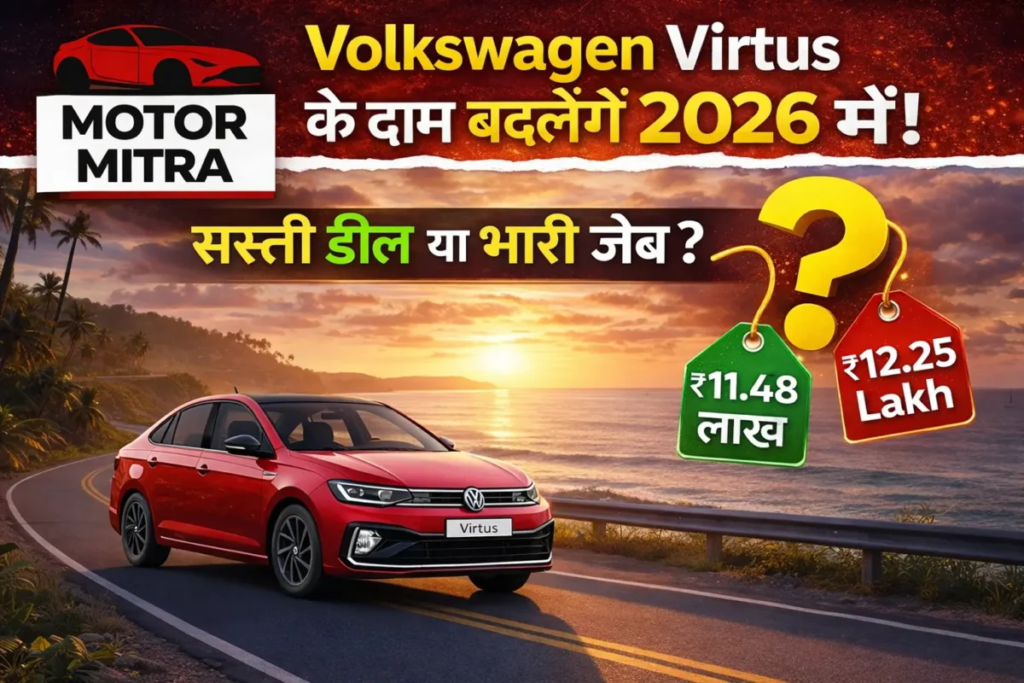
Also Read:- 2026 में Volkswagen Virtus खरीदना हुआ आसान या मुश्किल? जानें नई कीमतें और वेरिएंट्स में हुए बड़े बदलाव!
ऐसी ही और ताज़ा खबरों और अपडेट्स के लिए जुड़े रहें Auto.MotorMitra के साथ।
धन्यवाद!
Times Mitra
Latest bytes of news.

Also Read:- Indian Navy Set for Historic Expansion: 19 Warships to Join the Fleet in 2026
For more such updates and latest news on cars and bikes stay connected to times.motormitra.in
Thank you ..