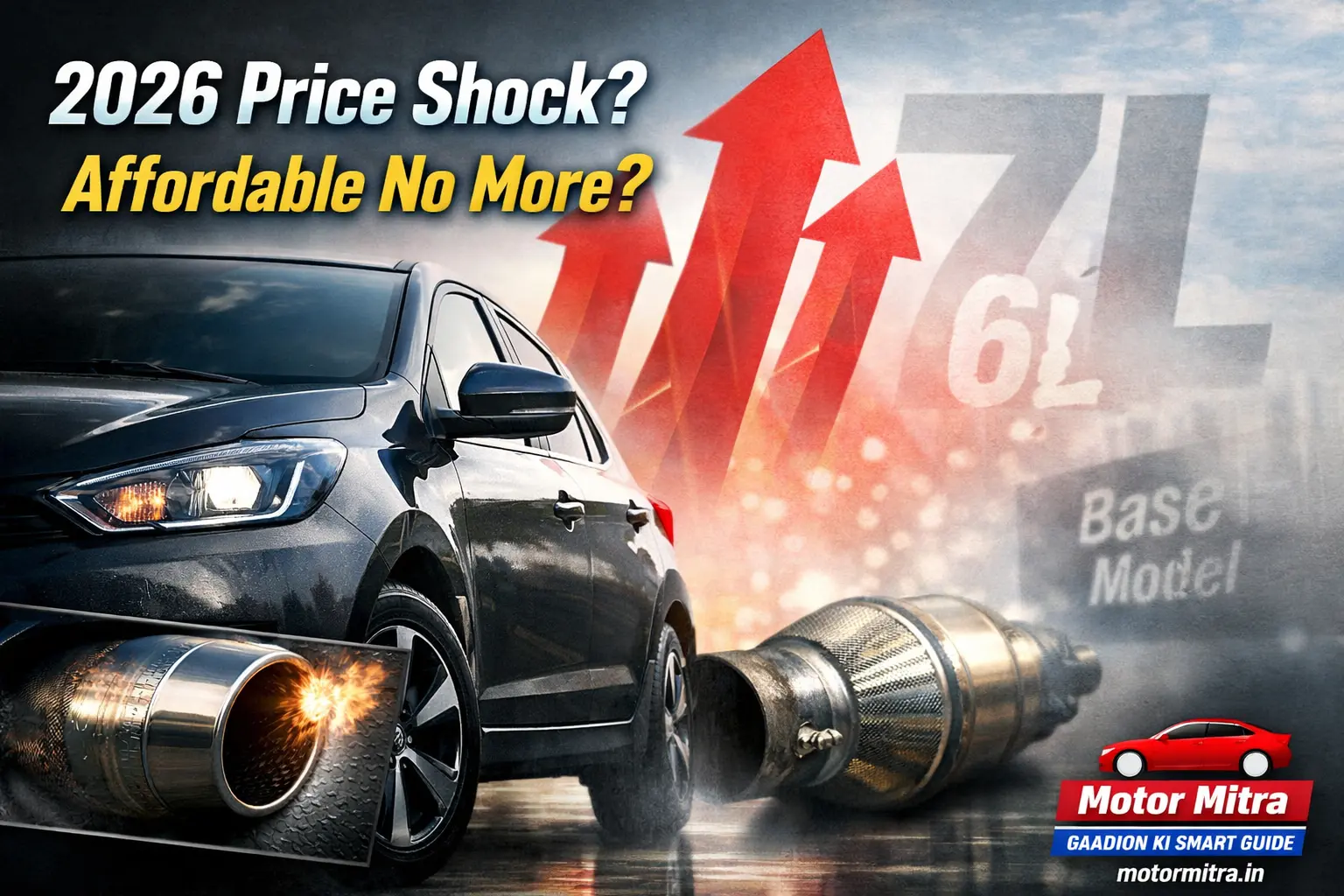
Affordable small cars are standing at a turning point. As stricter 2026 emission norms approach, the entry price of car ownership may shift upward faster than many buyers expect. What feels within budget today could look noticeably different once the next compliance cycle resets pricing across showrooms.
Thank you for reading this post, don't forget to subscribe!This is not just another compliance update. For budget-focused buyers, it could redraw the starting line of car ownership.
Why This Matters
- Entry-level prices may jump enough to alter buying decisions overnight
- Base variants could quietly vanish from showroom floors
- First-time buyers may be pushed toward used cars or entry EVs
India has already witnessed how regulatory transitions reshape the market. The shift from BS4 to BS6 increased vehicle costs significantly. BS6 Phase 2 tightened real-world emission testing and added further complexity. Each upgrade made cars cleaner — but also more expensive.
The expected 2026 tightening may again raise compliance standards. And the smallest, most affordable cars typically absorb the biggest impact because their margins are already thin.
Is 2026 About to Redraw the Affordability Line for First-Time Buyers?
Small hatchbacks are built on volume, not massive profit margins. They attract first-time buyers, young professionals, and families upgrading from two-wheelers. Pricing sensitivity in this segment is extremely high.
Stricter emission rules usually mean:
- Advanced catalytic systems
- Additional onboard sensors
- More precise engine calibration
- Higher development and validation costs
Even if the manufacturing cost rises by ₹40,000–₹70,000, that increase cannot be absorbed easily in a ₹5–6 lakh car. Eventually, it reflects in the final ex-showroom price.
Also Read:- 2026 MG Majestor Set To Be Unveiled Today — Fortuner Rival Launch!
For many middle-class families calculating monthly EMIs carefully, even a ₹50,000 increase can change the final decision. A higher upfront cost often translates into longer loan tenure, tighter household budgeting, and hesitation at the dealership.
When entry prices move upward, hesitation follows quickly. In a segment built entirely on affordability, even a small pricing shift can slow demand and delay upgrade decisions. For budget buyers, the margin for error is narrow — and regulatory cost increases rarely reverse once implemented.
When the entry price shifts upward, the psychological barrier shifts with it.
Are Carmakers Reprioritising Profit Over Entry Access?
Over the past few years, manufacturers have already rationalised several low-margin offerings. Diesel engines disappeared from many small cars because compliance costs did not justify the investment. Certain entry variants were discontinued during earlier emission transitions.
If 2026 norms demand further upgrades, companies may reassess portfolio priorities again.
Compact SUVs, crossovers, and premium hatchbacks offer better margins. Electrification roadmaps also demand large capital allocation. In that equation, ultra-affordable petrol hatchbacks may not receive top priority.
For some manufacturers, the numbers may no longer favour heavily investing in the lowest-priced trims. The shift may not be announced loudly — it may simply appear as fewer variants, higher starting prices, or silent discontinuations.
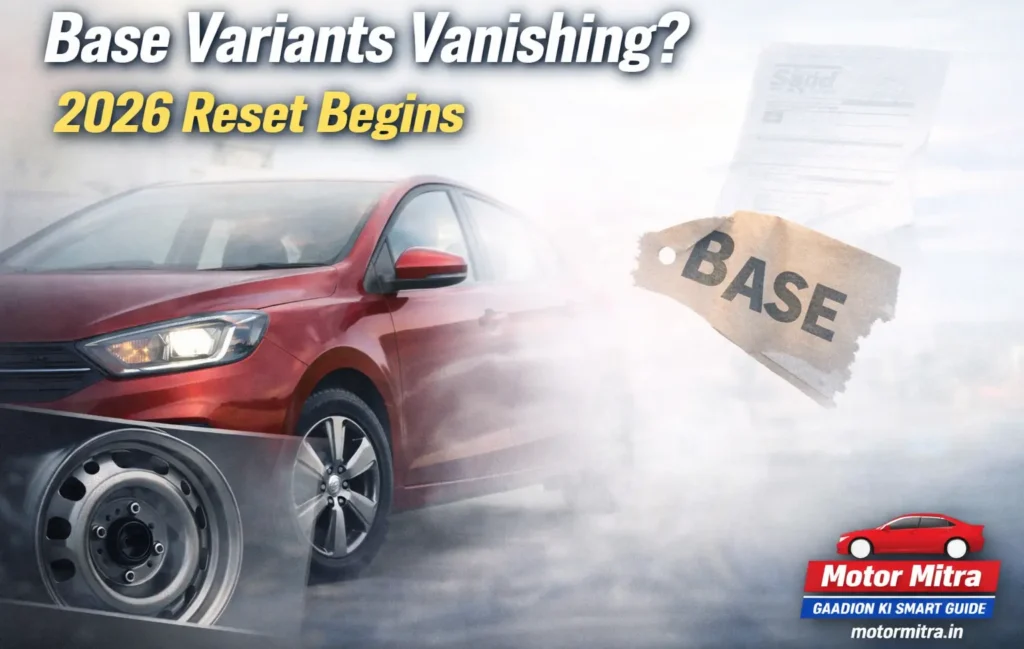
Will Base Variants Slowly Disappear From Showrooms?
Changes in the small car segment often happen gradually.
Brands may choose to:
- Remove entry trims
- Limit manual transmission availability
- Reduce production of low-profit versions
- Consolidate platforms to save development costs
The outcome is subtle but meaningful: fewer “budget-first” options on display.
Tier-2 and Tier-3 city buyers, who rely heavily on affordability and fuel efficiency, may feel this change more directly. When base models become harder to find, the entry barrier moves higher without dramatic headlines.
Also Read:- Big EV Bottleneck Ahead? India’s Auto Leaders Hold High-Level Talks
Is the Pressure on Petrol Hatchbacks Just Beginning?
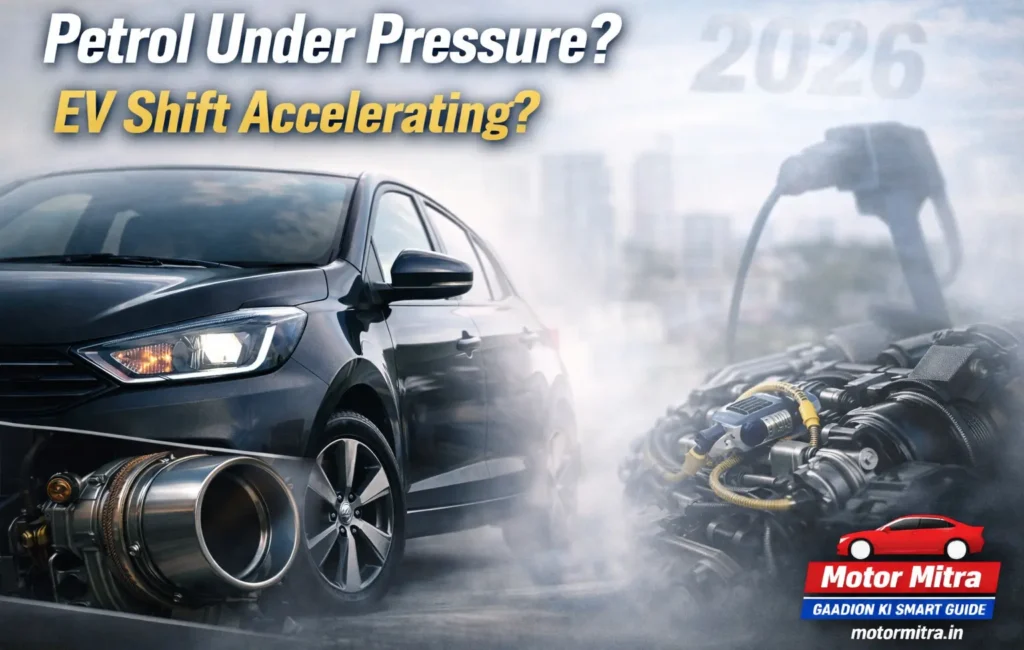
While there is no direct move to eliminate small petrol cars, tighter emission rules naturally increase internal combustion engine costs.
At the same time, electric vehicle development is accelerating. If petrol hatchbacks grow more expensive due to compliance upgrades, entry-level EVs may begin to appear comparatively reasonable in urban markets — especially if incentives and charging infrastructure improve.
This creates a market-driven transition rather than an official mandate.
The pressure may not ban small petrol cars — but it may make them less financially attractive to produce and buy.
Is This the Quiet End of Ultra-Cheap Cars?
There was a time when entry-level cars started below ₹4 lakh. Today, many begin closer to ₹6 lakh or higher. With another compliance cycle approaching, the starting point could edge even further upward.
Once regulatory costs increase, prices rarely move backward.
Small cars are unlikely to disappear entirely. India remains a price-sensitive market with strong demand for compact vehicles. However, the meaning of “affordable” may evolve.
Future small cars may offer:
- Better emission control systems
- Improved fuel efficiency
- More onboard technology
- Higher base prices
The trade-off becomes clearer: cleaner mobility at a higher entry cost.
For first-time buyers, this shift is significant. When entry points move upward, purchase decisions slow down. Some may turn to the pre-owned market. Others may delay upgrading from two-wheelers. A few may explore early-stage electric options.
The structure of demand could gradually change.
Once stricter emission standards take effect, prices rarely return to earlier levels. Compliance resets tend to become permanent.
Small cars may continue to exist, but the meaning of “cheap” could evolve faster than expected.
The real shift may not be dramatic overnight. Yet by the time buyers fully recognise the change, the affordability line may already have moved higher than planned.
For more such updates and latest news on cars and bikes stay connected to motormitra.in
Thank you ..
auto.motormitra
Latest Auto News and Trends

Also Read:- दिसंबर 2025 में भारत की टॉप सेलिंग टू-व्हीलर्स: Splendor और Activa का दबदबा बरकरार
ऐसी ही और ताज़ा खबरों और अपडेट्स के लिए जुड़े रहें Auto.MotorMitra के साथ।
धन्यवाद!
Times Mitra
Latest bytes of news.

Also Read:- Samsung CES 2026- Next-Gen AI Innovation to Break Cover
For more such updates and latest news on cars and bikes stay connected to times.motormitra.in
Thank you ..