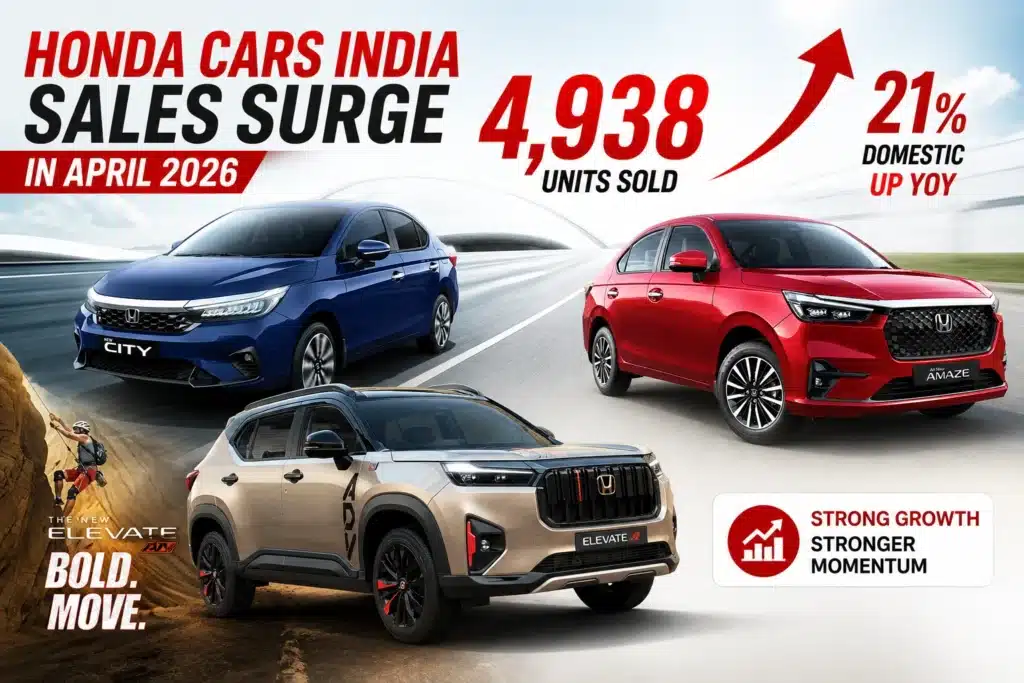
While most headlines focus on high-volume leaders, this number quietly tells a different story. Honda Cars India has recorded 4,938 units in April 2026, marking a 21% year-on-year jump in domestic sales that reflects a clear shift in momentum.
The real takeaway is not just the number itself, but what it represents. At a time when competition is intensifying and buyer preferences are rapidly evolving, Honda Cars India’s steady growth suggests that the brand is regaining confidence and relevance in a changing market.
Why This Matters
- Honda records strong 21% domestic growth
- Indicates improving buyer confidence
- Could influence upcoming product strategy
Also Read:- Honda Exits South Korea: Is the Japanese Giant Leaving India Too in 2026?
What the Numbers Really Indicate
Honda Cars India sold 4,938 units in April 2026 compared to 4,082 units in April 2025, resulting in a 21% year-on-year increase. While the absolute number may not match segment leaders, the growth percentage highlights a more important trend.
This is where the real story begins to show. While the volume may seem moderate, the growth rate highlights a clear shift in momentum that cannot be ignored in a competitive market.
Quick Sales Snapshot
| Metric | April 2026 | April 2025 | Growth |
|---|---|---|---|
| Domestic Sales | 4,938 units | 4,082 units | +21% YoY |
This performance underlines how percentage growth can redefine perception. Even without leading volumes, a strong upward trend can signal stability and long-term potential.
It also suggests that Honda’s strategy is starting to deliver results. Instead of chasing short-term spikes, the brand appears to be building a more consistent and reliable growth path.
What’s Driving Honda’s Growth
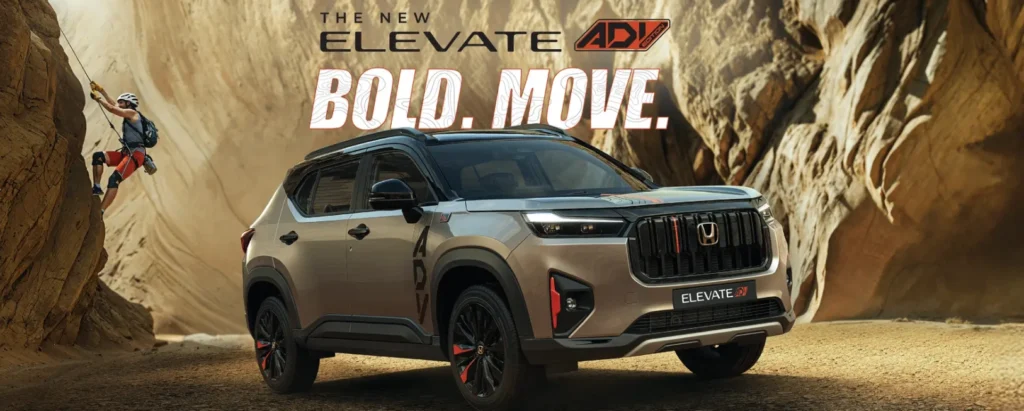
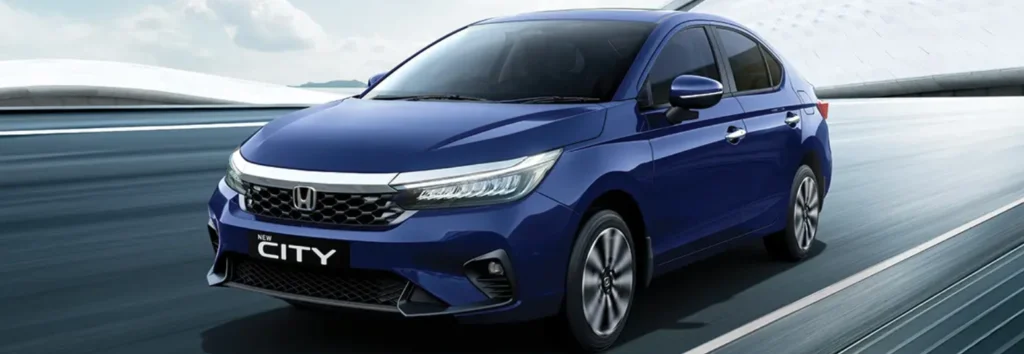
A key factor behind this performance is the continued demand for models like the Honda City and Honda Elevate, which appeal to buyers prioritizing refinement, comfort, and long-term ownership value.
Alongside this, Honda’s focus on hybrid technology and steady product improvements has helped maintain interest in its lineup. Buyers looking for efficiency without compromising driving quality are increasingly drawn toward these offerings.
Market Position: Stability Over Volume
Honda’s current approach appears less focused on aggressive volume expansion and more on consistent, sustainable growth. This strategy allows the brand to maintain a strong identity without diluting its core strengths.
At the same time, this measured progress creates a foundation for future expansion. Stability today often becomes the base for stronger positioning and improved competitiveness tomorrow.
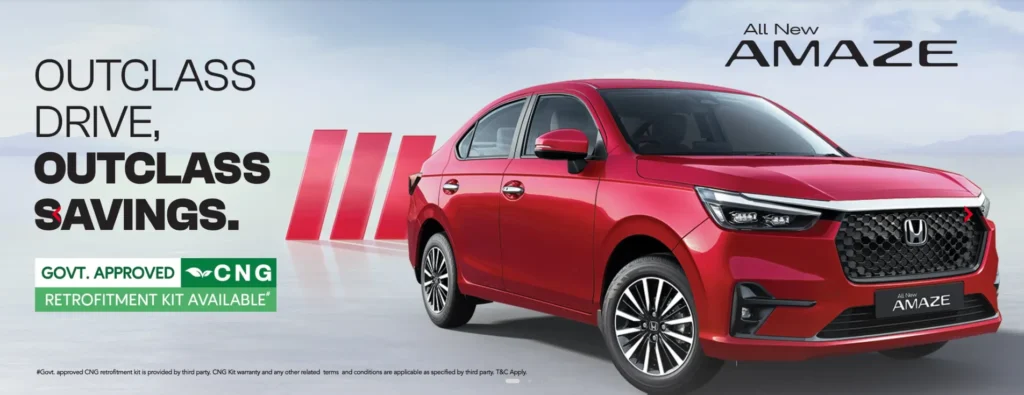
Also Read:- Honda Car Just Dropped Massive Discounts – Amaze, City & Elevate Now Much Cheaper
Comparison Insight: Where Honda Stands
| Factor | Honda Position |
|---|---|
| Growth Rate | Strong (21% YoY) |
| Volume | Moderate |
| Strategy | Stability + Premium Focus |
| Strength | Reliability & Refinement |
This comparison highlights that Honda’s strength lies in consistency rather than scale. It shows a balanced approach where growth is supported by strong fundamentals instead of aggressive expansion.
It also reflects how controlled progress can build long-term trust. Over time, this can translate into stronger brand loyalty and a more stable customer base.
Buyer Decision: Should You Consider Honda Now
For buyers looking for dependable, refined, and value-driven cars, Honda’s lineup currently offers a strong and stable option. The recent growth indicates that the brand is regaining traction and maintaining relevance in a competitive market.
If you are planning to buy in this segment right now, Honda becomes a safer and more stable choice. Waiting could bring updates, but current models already offer a balanced package that many competitors struggle to match.
MotorMitra Verdict
Honda Cars India’s April 2026 performance may not appear massive at first glance, but the 21% growth signals a brand that is quietly rebuilding strength. It reflects a focused strategy that prioritizes consistency over sudden spikes.
If this momentum continues, missing this phase could mean entering later at a less favorable time when demand and competition increase. For buyers, this is a moment where paying attention can lead to a smarter decision