Introduction: A Detailed Look News
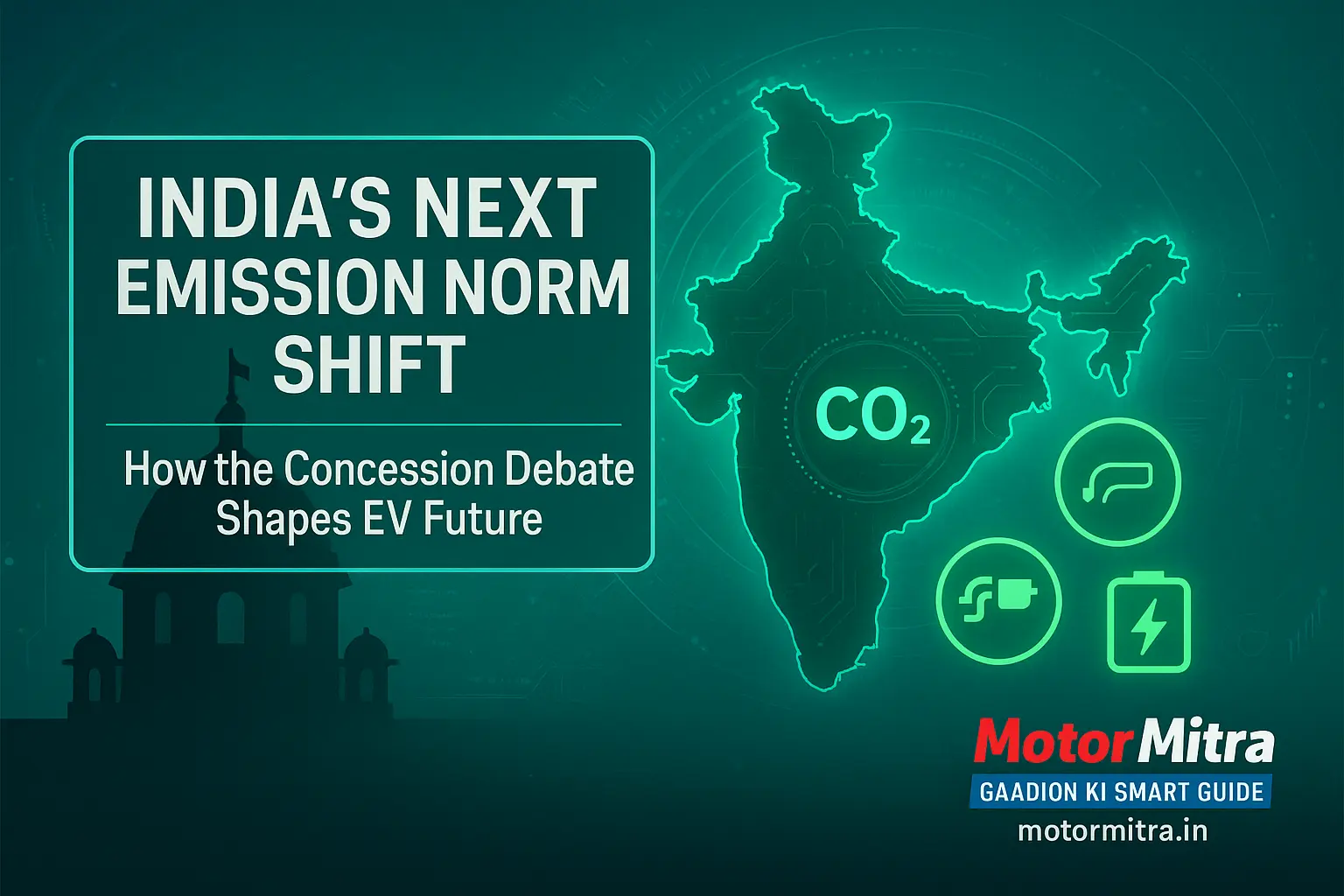
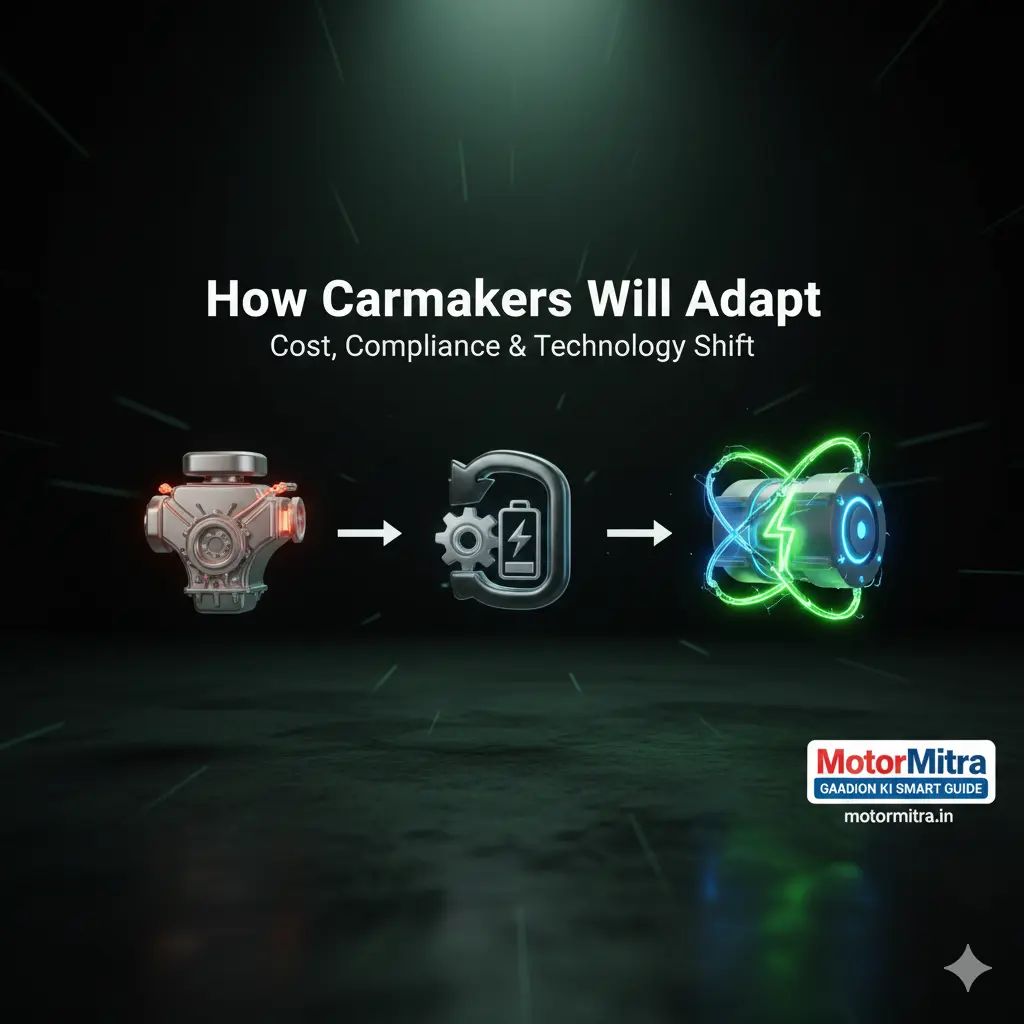
The recent clash between Hyundai, Tata Motors and the government over fuel-emission concessions allegedly favouring Maruti Suzuki has triggered a larger debate within India’s auto industry. times.motormitra.in While the first wave of news focused on “fair competition,” the deeper question is this: How will this fight influence India’s future emission norms and its long-term shift toward electric mobility?
Thank you for reading this post, don't forget to subscribe!As India prepares for cleaner air targets, green mobility and stricter fuel-efficiency frameworks, this issue may become a turning point. Here’s an easy breakdown of what this means for the road ahead. motormitra.in
Why These Concessions Matter Beyond Competition
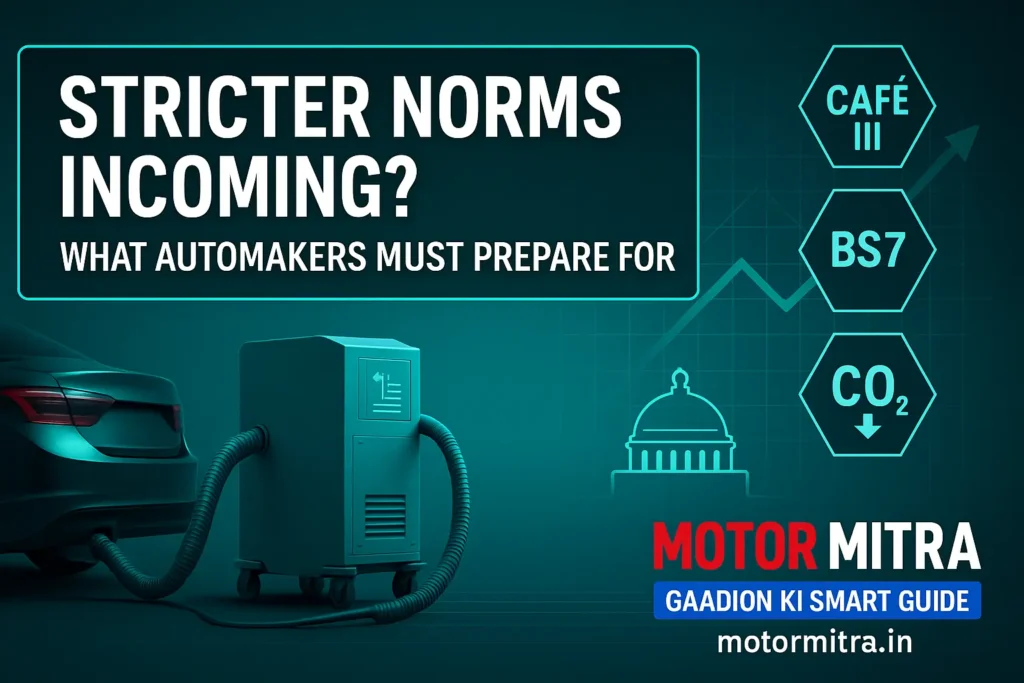
On the surface, Hyundai and Tata’s complaint appears to be about an unfair regulatory advantage given to Maruti. But the backdrop is bigger — India is entering a phase where upcoming emission rules (CAFÉ III, Real Driving Emissions updates, BS7 preparations) will reshape car development costs. times.motormitra.in
Any concessions offered today directly influence:
- How fast companies adopt cleaner technologies
- How much do they invest in hybrid/EV development?
- How vehicle prices shift for buyers
- How India meets its climate goals
So this isn’t just a corporate rivalry — it’s a fight over who will pay the next big bill of green compliance. motormitra.in
Future Emission Norms: Will Rules Get Stricter Faster?
Experts believe that this policy dispute could accelerate the government’s shift toward uniform, tighter norms.
1. The government may rethink “flexible concessions”
Hyundai and Tata’s complaint draws attention to the side effects of selective benefits. If policymakers conclude that concessions distort the market, India may push for:
- Equal emission deadlines for all manufacturers
- Reduced room for exemptions
- A “one standard, one timeline” policy going forward
This would increase compliance pressure — especially on companies heavily dependent on small petrol engines. times.motormitra.in
2. CAFÉ III and BS7 could get a stronger push
India’s Corporate Average Fuel Efficiency (CAFÉ) norms are designed to reduce CO₂ emissions. The next phase — CAFÉ III — is expected to be tougher.
The current controversy gives the government more reason to:
- Harden CO₂ limits
- Reduce the gap years between new phases.
- Push OEMs to shift from pure ICE to hybrid or EV portfolios.
BS7 (whenever notified) will also require new hardware, real-time monitoring and expensive after-treatment systems. Companies benefiting from concessions today may struggle later if rules become uniform and stricter. Auto.MotorMitra
3. Strong chances of penalties for non-compliance
If regulators remove concessions and speed up implementation, automakers may face:
- Higher financial penalties
- Mandatory fleet corrections
- Pressure to bring cleaner tech faster
This could reshape the competitive order among India’s top carmakers. motormitra.in
Also Read:- Mahindra Racing Confirmed as GEN4 Manufacturer— Electric Future Through 2030
Impact on India’s Electric Vehicle Push
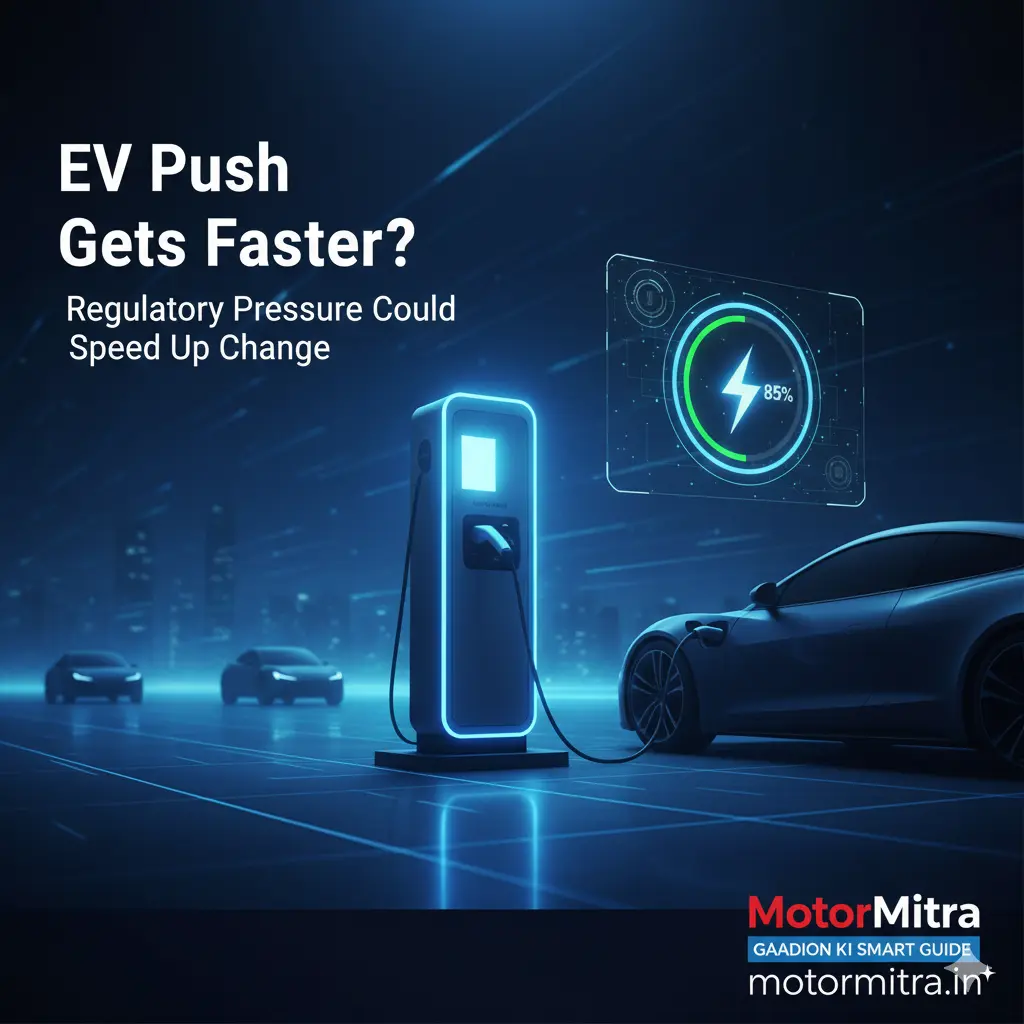
Surprisingly, this emission-benefit controversy might actually speed up India’s EV transition.
1. Stricter ICE norms push companies toward EVs
As ICE engines get more expensive to upgrade, EV development becomes a more attractive solution. The more India tightens BS norms and CAFÉ rules, the more manufacturers will shift their investments towards:
- Battery-EVs
- Strong hybrids
- Plug-in hybrids
- Fuel-cell prototypes
Tata is already India’s largest EV maker. Hyundai is preparing new EV launches from 2025. Regulatory pressure could push them to accelerate even more. times.motormitra.in
2. Maruti Suzuki may finally feel EV urgency
Maruti has relied heavily on small petrol cars and mild hybrids. If concessions get removed in the future and emissions rules tighten:
- Their petrol engines will need costly upgrades.
- Hybrid systems will need to improve.
- EV development may become a necessity, not an option.
This fight could indirectly trigger Maruti’s long-awaited EV push, especially since its first mass-market EV is not expected before 2025–26. Auto.MotorMitra
3. Investment shift toward local EV supply chains
If emission concessions disappear, manufacturers might redirect funds to:
- Battery manufacturing
- Domestic motor and controller production
- EV-specific platforms
- Charging infrastructure partnerships
This aligns with India’s long-term goal of reducing EV component imports. motormitra.in
For Consumers: What Changes?
1. Cleaner cars, but slightly more expensive
Stricter norms increase production costs. Without concessions:
- Entry-level petrol cars may get pricier.
- Hybrids may expand but cost more.
- EVs may become more common in cities.
But long-term benefits include lower emissions, better air quality and improved fuel efficiency. times.motormitra.in
2. More hybrid and EV options
Companies facing uniform emission deadlines might launch:
- City EVs
- Range-focused hybrids
- Affordable commuter EVs
- Performance EVs (mid-segment)
The market could see more variety than today’s EV lineup. Auto.MotorMitra
3. Faster phase-out of older tech
Some manufacturers may drop older, small petrol engines entirely if upgrading them becomes uneconomical. motormitra.in
Will the Government Act?
Insiders suggest that policymakers may take a middle path:
- Gradual removal of benefit schemes
- Uniform norms with longer transition windows
- Incentives for hybrids & EVs to offset costs
- Stricter monitoring of fleet-wide emissions
Instead of a sudden disruption, the government may prefer a phased approach to avoid consumer price shock. motormitra.in
Official Links
Know More: Hyundai
Know More: Tata
Final Word: A Turning Point for India’s Green Mobility Story
Hyundai and Tata’s push against emission concessions isn’t just a fight about Maruti Suzuki — it may reshape India’s entire emission-norm roadmap. times.motormitra.in
If India tightens regulations and removes selective advantages:
- Competition becomes fairer
- Cleaner technology comes faster.
- EV adoption accelerates
- Consumers get access to more green mobility options. Auto.MotorMitra
The controversy could eventually turn into a catalyst for India’s next wave of clean-mobility reform — from better emission rules to a more aggressive EV strategy. motormitra.in
For more such updates and latest news on cars and bikes stay connected to motormitra.in
Thank you ..
auto.motormitra
Latest Auto News and Trends
ऐसी ही और ताज़ा खबरों और अपडेट्स के लिए जुड़े रहें Auto.MotorMitra के साथ।
धन्यवाद!
Times Mitra
latest bytes of news.
For more such updates and latest news on cars and bikes stay connected to times.motormitra.in
Thank you ..