
For buyers tracking luxury cars closely, this possible policy shift could be a decisive moment. That could be about to change. A potential shift in India’s import and duty framework is quietly setting the stage for one of the biggest price corrections the luxury car segment has ever seen, with savings that could cross ₹25 lakh on certain models.
Thank you for reading this post, don't forget to subscribe!This isn’t about discounts or festive offers. This is about structure.
Why Luxury Cars Are So Expensive in India to Begin With
The Indian luxury car buyer doesn’t just pay for the Luxury Cars. They pay for layers of taxation.
Fully built imported vehicles (CBUs) attract steep import duties, followed by additional cesses, GST, and state-level charges. By the time a premium SUV or performance sedan reaches the showroom, its price often doubles compared to global markets.
That’s why:
- Entry-level luxury cars feel overpriced
- Flagship models jump into eight-figure territory
- Volumes stay limited despite strong interest
The system has protected local manufacturing—but at a cost.

Also Read:- BMW Leads Global Luxury Car Market in 2025 as Mercedes, Audi Follow
What Exactly Is Changing Now
Recent policy discussions and global trade recalibration have reopened a sensitive topic: import duty rationalisation on premium vehicles.
While nothing is officially notified yet, the direction is clear. Authorities are examining:
- Lower duties on select imported vehicles
- Adjustments linked to engine capacity or value slabs
- Incentives tied to localisation commitments
If implemented, these changes could dramatically shrink the price gap between India and overseas markets.
That’s where the ₹25 lakh figure starts to make sense.
Which Cars Could Benefit the Most
Among luxury cars, the biggest winners wouldn’t be entry-level sedans. They would be:
- High-end luxury SUVs
- Performance-oriented imports
- Flagship EVs brought in as CBUs
On such vehicles, import duties alone can add tens of lakhs. A correction—even partial—would reflect directly on ex-showroom prices.
For buyers who’ve been sitting on the fence, this could be the moment they’ve been waiting for.
Why This Is Not a Sudden Decision
This possible shift isn’t happening in isolation. India’s auto policy is under pressure from multiple directions:
- Growing premium demand among urban buyers
- Global brands pushing for market access
- India’s EV ambitions needing premium tech exposure
Luxury cars, once seen as non-essential, are now part of a broader ecosystem—technology transfer, brand investment, and global competitiveness.

Also Read:- Which Kia Cars Sold the Most in December 2025? Sonet, Seltos and Carens Break Down
Cheaper luxury imports don’t just benefit buyers. They reshape the market.
What About Locally Assembled Luxury Cars?
This is where things get interesting.
If imported luxury cars become significantly cheaper:
- Locally assembled (CKD) models may need repricing
- Feature levels could increase to justify pricing
- Brands may accelerate localisation to protect margins
In short, competition would intensify—and that’s good news for consumers.
The luxury market, long insulated from price wars, may finally feel real pressure.
Will Brands Pass on the Full Benefit?
That’s the big question.
Even if duties are reduced, brands still control pricing strategy. Some may:
- Pass on most of the benefit to drive volumes
- Retain a portion to protect margins
- Use price cuts selectively on slow-moving models
Market response will decide how aggressive brands get. But even conservative adjustments would be hard to ignore at this price level.

Also Read:- SHOCKING! 5 Lakh Kia Cars in India Are Now Connected– Here’s Why It Matters
Timing: When Could Buyers See the Impact?
Policy changes don’t translate overnight. If approved, the impact would likely roll out in phases:
- First on newly imported batches
- Then across refreshed or updated models
- Gradually influencing the broader luxury lineup
This means 2025–26 could be a turning point period rather than a single moment.
Why This Could Redefine Luxury Car Buying in India
For years, Indian buyers have accepted inflated Luxury Cars prices as a given. That mindset may finally be challenged.
If premium Luxury Cars become genuinely competitive:
- Buyers may upgrade earlier
- New segments could open up
- Brand volumes could rise without discounts
More importantly, the idea that India is an “overpriced Luxury Cars market” could slowly fade.
Official updates and any formal notification on import duty structure will eventually come from the Ministry of Finance, while the broader policy framework impacting automotive imports continues to be shaped in coordination with the Ministry of Commerce and Industry.
For now, the possibility is real—and the impact could be massive. If the numbers align, India’s luxury car market may be on the brink of its biggest reset yet.
For more such updates and latest news on cars and bikes stay connected to motormitra.in
Thank you ..
auto.motormitra
Latest Auto News and Trends
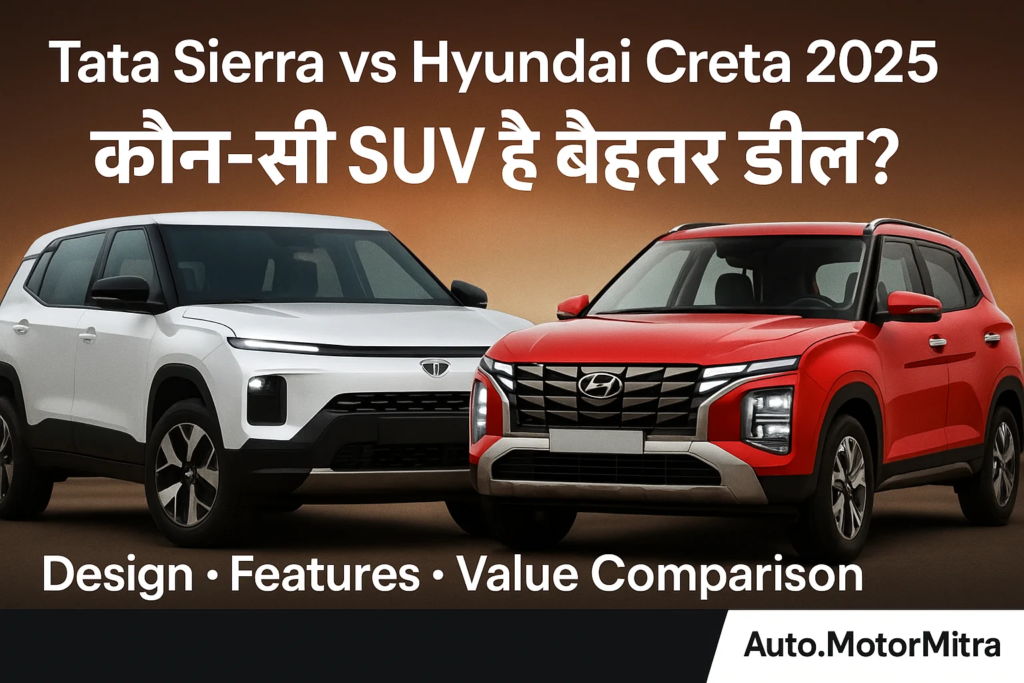
Also Read:- Tata Sierra vs Hyundai Creta: 2025 में कौन-सी SUV है बेहतर डील?
ऐसी ही और ताज़ा खबरों और अपडेट्स के लिए जुड़े रहें Auto.MotorMitra के साथ।
धन्यवाद!
Times Mitra
Latest bytes of news.

Also Read:- India’s New Phone Boom: Wobble One and Lava Agni 4 Challenge Global Giants
For more such updates and latest news on cars and bikes stay connected to times.motormitra.in
Thank you ..