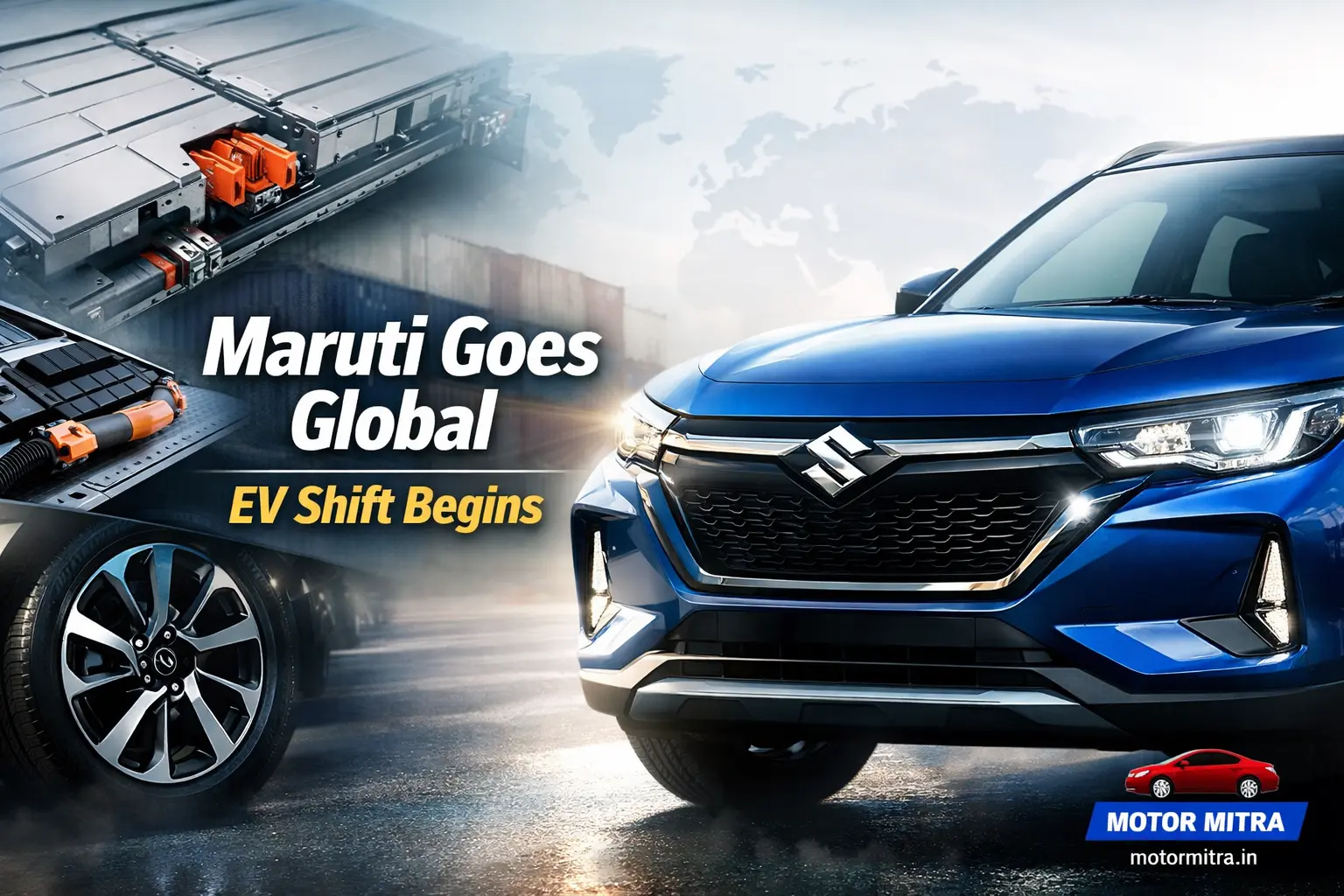
India’s largest carmaker is making its boldest electric move yet. As global EV demand recalibrates and competition intensifies, Maruti Suzuki is stepping onto the world stage with its export push.
Thank you for reading this post, don't forget to subscribe!This isn’t just another EVs rollout. It’s a test of whether India’s biggest automotive brand can compete beyond home ground.
And in a tightening global EV market, timing like this is never accidental.
Why This Matters
- India is expanding its EV manufacturing footprint
- Maruti Suzuki is entering global EV competition
- Export growth could redefine India’s role in the electric supply chain
When a domestic leader begins exporting EVs internationally, it reflects scale confidence — not experimentation.
Why Is Maruti Suzuki Entering the Global EV Market Now?
Timing is everything.
While global EV growth has shown signs of moderation in some regions, long-term electrification plans remain intact across Europe, Asia, and select emerging markets. Governments continue setting ambitious targets for EV adoption, even if short-term momentum fluctuates.
For Maruti Suzuki, entering the export game now may allow the company to position itself early in markets seeking affordable, scalable electric options.
Rather than waiting for domestic EV saturation, the automaker appears to be building export capability alongside its local rollout.
Also Read:- Union Budget 2026-27: Big EV Push — or a Hidden Price Shock for Buyers?
Is This a Strategic Shift for Maruti Suzuki?
Historically, Maruti Suzuki has been conservative in new powertrain transitions. The company focused heavily on fuel-efficient petrol vehicles while competitors accelerated early EV launches.
Now, that conservative playbook is being rewritten.
Exporting EVs suggests:
- Confidence in production scale
- Readiness to meet international compliance norms
- Competitive cost positioning
Global markets demand strict safety, emissions, and software integration standards. Meeting those benchmarks requires more than just volume — it requires ecosystem readiness.
If Maruti Suzuki is pushing EV exports now, it signals structural preparedness.
How Big Is the Export Opportunity?
India’s automotive exports have steadily grown, but EV exports introduce a new category entirely.
Global EV buyers — especially in price-sensitive markets — are increasingly evaluating cost-to-range ratios. If Maruti Suzuki can leverage its manufacturing efficiency to offer competitively priced EVs, it may carve out a strategic niche.
Export growth also reduces over-dependence on domestic demand cycles.
In a volatile EV cycle, that diversification could be a critical hedge.
What Does This Mean for India’s EV Ambition?
India has positioned itself as an emerging EV manufacturing hub. Government incentives, battery assembly investments, and policy support have strengthened local capacity.
Maruti Suzuki’s global EV move reinforces that ambition.
If the country’s largest passenger car manufacturer scales EV exports successfully, India could shift from being primarily a domestic EV growth market to becoming a supply-side contributor in the global electric ecosystem.
That transformation changes perception.
Also Read:- Ashok Leyland’s Global EV Push — Commercial Vehicle Shake Up Ahead?
Can Maruti Suzuki Compete Internationally in EVs?
Global EV competition is intense. Chinese brands dominate cost segments. European and American brands focus on performance and software integration.
Maruti Suzuki’s advantage lies in:
- Cost engineering
- High-volume manufacturing discipline
- Proven supply chain efficiency
However, global EV buyers also evaluate technology ecosystems, charging integration, battery reliability, and digital features.
The company’s ability to align with these expectations will determine whether its export push scales or stabilizes And in global EV markets, scaling is survival — stabilizing is stagnation.
Is This the Start of a Broader Electric Expansion?
Exporting EVs is rarely a standalone move.
It typically reflects:
- Platform scalability
- Long-term product roadmap alignment
- Commitment to electric growth
If Maruti Suzuki builds consistent global demand, this could accelerate further electric platform development and international partnerships.
What begins as an export experiment could evolve into a broader strategic footprint.
What Should the Market Watch Next?
The next signals will matter:
- Export volumes
- Market reception
- Pricing competitiveness
- Long-term production allocation
If initial traction is strong, this move may validate India’s role in the global EV supply equation.
If not, it may remain a calculated expansion with limited scale.
Maruti Suzuki entering the global EV market doesn’t guarantee dominance. But it does signal intent.
If export traction builds, India’s EV narrative shifts from potential to participation.
If it stalls, the global EV race moves on without waiting.
In electrification, hesitation compounds fast — and execution decides everything.
For more such updates and latest news on cars and bikes stay connected to motormitra.in
Thank you ..
auto.motormitra
Latest Auto News and Trends
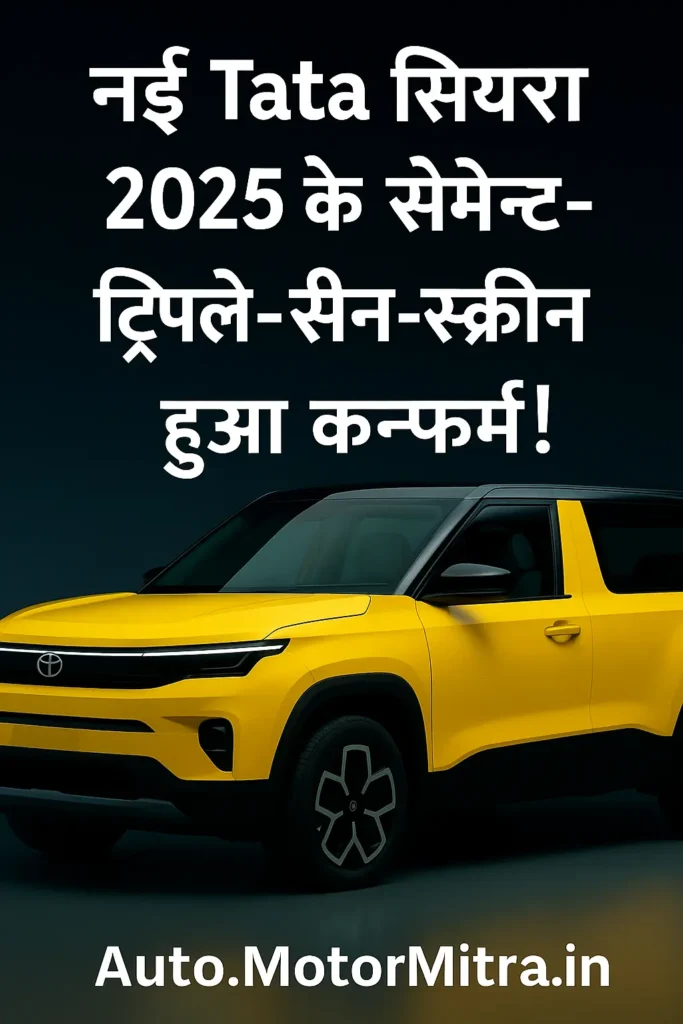
Also Read:- नई Tata Sierra 2025 – सेगमेंट-फर्स्ट ट्रिपल स्क्रीन सेटअप!
ऐसी ही और ताज़ा खबरों और अपडेट्स के लिए जुड़े रहें Auto.MotorMitra के साथ।
धन्यवाद!
Times Mitra
Latest bytes of news.

For more such updates and latest news on cars and bikes stay connected to times.motormitra.in
Thank you ..