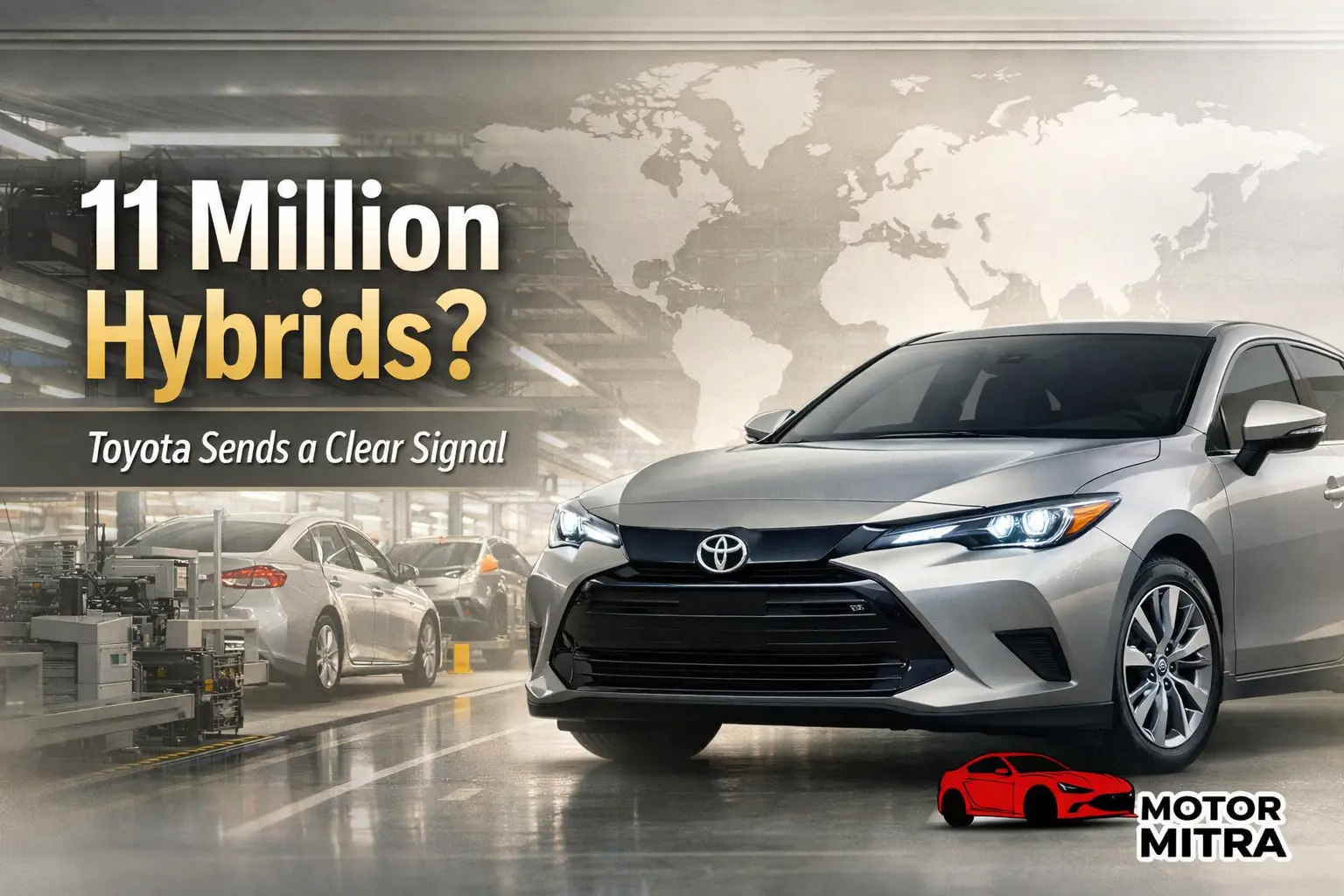
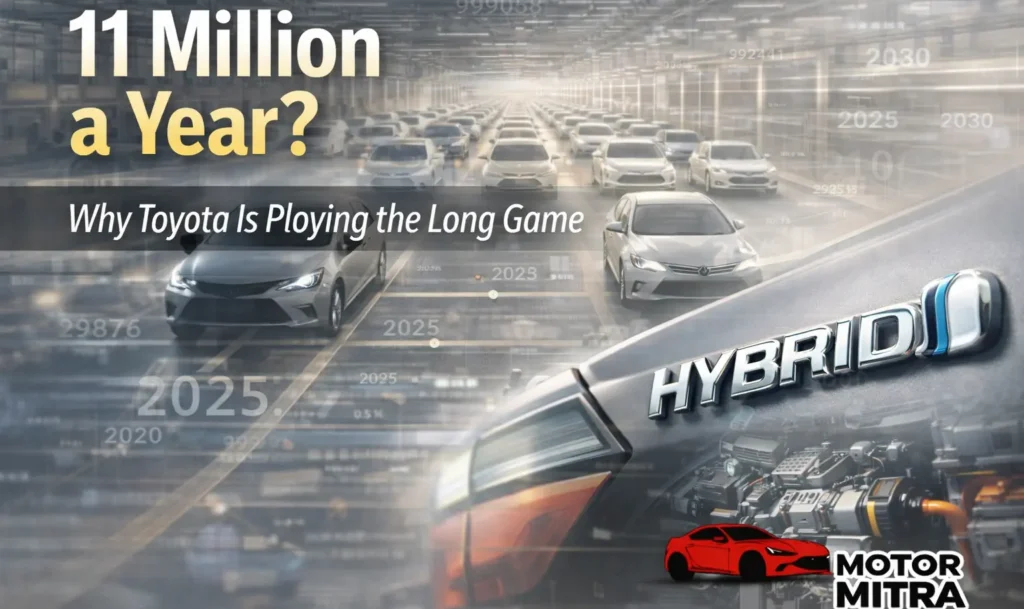
Toyota has never been the loudest voice in the EV race — and its latest move makes that clear again. While much of the auto industry continues to project an all-electric future, Toyota is choosing a different path. A massive plan to scale hybrid vehicle production to around 11 million units annually sends a quiet but powerful signal: electrification may not be a one-size-fits-all journey.
Thank you for reading this post, don't forget to subscribe!This isn’t a retreat from EVs. It’s a strategic recalibration.
Why This Matters
- Toyota is prioritising scale, affordability, and real-world adoption
- Hybrids remain central to Toyota’s emission strategy across markets
- The move challenges the idea that EVs alone will dominate the near future
Why Toyota Is Still Backing Hybrids at This Scale
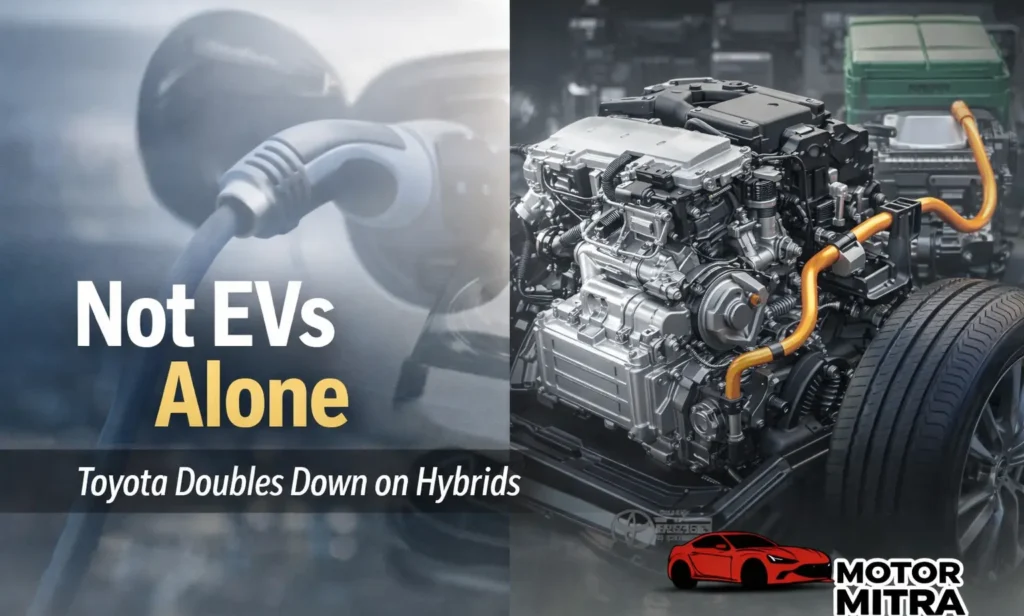
Toyota has spent decades refining hybrid technology, long before EVs became mainstream. That experience now gives the company a unique advantage. Hybrids allow Toyota to reduce emissions without depending entirely on charging infrastructure, battery supply chains, or rapid policy shifts.
Also Read:- Upcoming Car Launches in Feb 2026: Maruti, Tata, MG, Toyota & Nissan Ready to Strike
In many regions, charging networks are still uneven, electricity grids are under pressure, and EV affordability remains a concern. Hybrids sidestep several of these issues, offering incremental electrification without forcing buyers into a full lifestyle change.
This approach aligns closely with Toyota’s long-held belief that multiple powertrains must coexist during the transition to cleaner mobility.
What the 11-Million-Car Number Really Tells Us
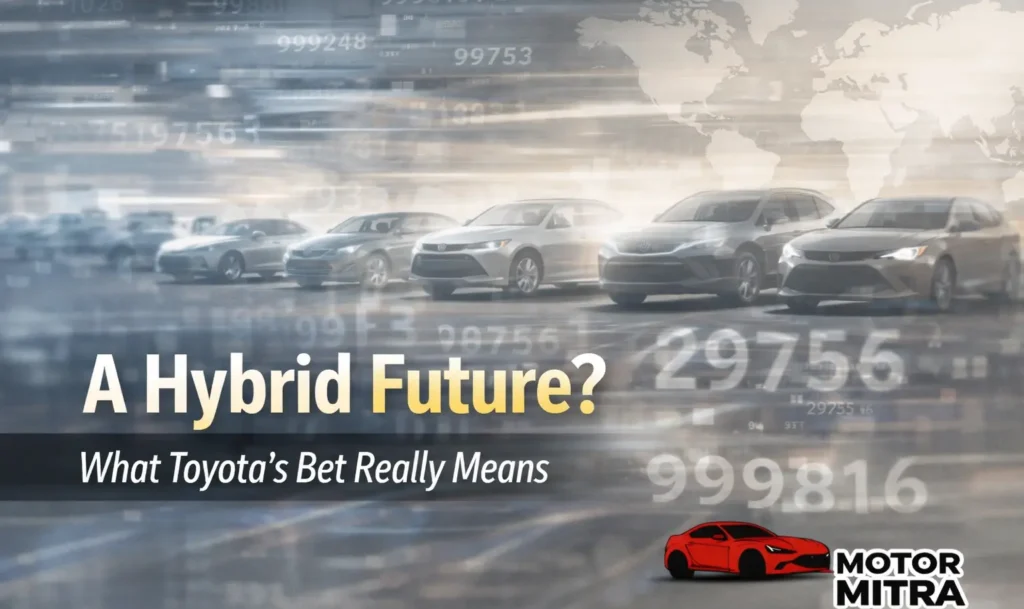
The scale itself is the story. Producing hybrids in such volumes suggests confidence — not caution. Toyota appears convinced that demand for hybrids will remain strong well into the next decade, especially in emerging markets and cost-sensitive regions.
Industry observers suggest this level of hybrid output could help Toyota maintain profitability while competitors absorb heavy EV development costs. Hybrids offer better margins than full EVs in several markets, partly because they rely on mature supply chains and smaller battery packs.
In simple terms, Toyota is betting on what sells consistently, not just what sounds futuristic.
Also Read:- Toyota Hikes Prices in Feb 2026: Hyryder, Taisor, Rumion, Glanza Get Costlier by Up to ₹21,000
How This Fits Into Toyota’s EV Strategy
This hybrid push does not mean Toyota is abandoning EVs. Instead, it reflects a phased approach. EVs continue to be developed and expanded where conditions support them, while hybrids act as the backbone of Company’s global portfolio.
By doing so, Toyota reduces risk. If EV adoption accelerates faster than expected, it can scale up. If adoption slows, hybrids ensure stability. This flexibility is something many EV-only strategies lack.
The message is subtle but clear: technology should follow market readiness, not the other way around.
What This Means for Buyers
For consumers, especially outside major urban centres, this strategy could be reassuring. Hybrids offer better fuel efficiency, lower emissions, and familiar refuelling habits. There’s no range anxiety, no dependency on charging availability, and often a lower upfront cost compared to EVs.
As hybrid volumes grow, prices could become more competitive, further strengthening their appeal. For many buyers, hybrids may continue to represent the most practical step toward cleaner mobility.
Also Read:- 2026 Toyota Urban Cruiser Ebella Variant Breakdown- Features That Change the Buying Decision
A Signal to the Industry
Toyota’s move also sends a message to rivals. The transition away from internal combustion engines is real — but the timeline is flexible. Betting everything on EVs may not be the only smart strategy, especially in a world where infrastructure, policy, and consumer behaviour evolve at different speeds.
By doubling down on hybrids, Company is positioning itself as a stabilising force in an industry navigating uncertainty.
The Bigger Picture
Electrification is inevitable, but the route to get there remains open. Company’s 11-million-hybrid plan highlights an uncomfortable truth for the EV narrative: progress does not always move in straight lines.
Hybrids may not grab headlines like EVs, but they are quietly shaping the present — and possibly buying the industry time to get the future right.
Bottom line:
Toyota isn’t resisting change. It’s choosing control. And in a transition as complex as this, that choice may prove decisive.
For more such updates and latest news on cars and bikes stay connected to motormitra.in
Thank you ..
auto.motormitra
Latest Auto News and Trends

ऐसी ही और ताज़ा खबरों और अपडेट्स के लिए जुड़े रहें Auto.MotorMitra के साथ।
धन्यवाद!
Times Mitra
Latest bytes of news.

Also Read:- ARSENAL OVERCOME INJURY-HIT PORTSMOUTH IN FA CUP THIRD ROUND CLASH
For more such updates and latest news on cars and bikes stay connected to times.motormitra.in
Thank you ..