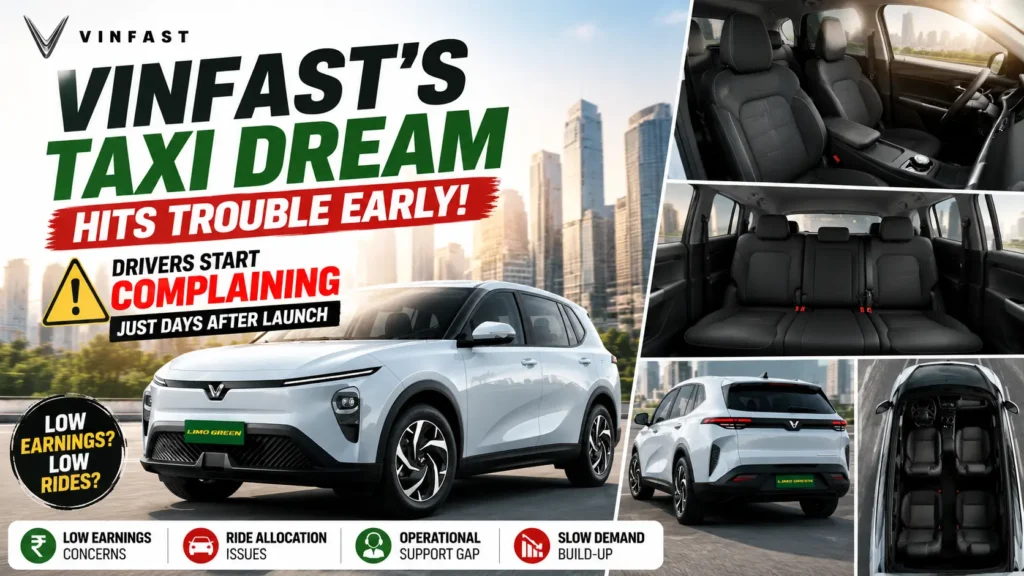
VinFast Green SM taxi service was expected to begin its India journey with momentum and optimism. Backed by one of the fastest-growing electric vehicle brands in the world, the EV-only mobility platform entered the market promising a cleaner, technology-focused alternative to conventional ride-hailing services. However, within days of launch, reports of driver dissatisfaction have started surfacing, raising questions about whether the ambitious project is facing its first major operational challenge sooner than expected.
The concerns are particularly noteworthy because Green SM is not just another taxi service. Unlike traditional ride-hailing platforms, the company is attempting to build a fully integrated electric mobility ecosystem centered around EVs, charging infrastructure and dedicated fleet operations. That makes driver confidence even more critical. In any mobility business, customers may generate revenue, but drivers ultimately determine whether the service can scale successfully.
While the platform remains in its early stages and operations are still expanding, the emergence of complaints so quickly after launch has attracted significant attention across the mobility sector. Industry observers are now watching closely to see whether these issues prove to be temporary growing pains or the beginning of a more significant challenge for VinFast’s India ambitions.
Also Read:- This New EV Taxi Could Create A ₹40,000 Opportunity For Drivers — And India Is Watching Closely
What Exactly Are Drivers Complaining About?
According to reports circulating shortly after launch, several Green SM drivers have expressed concerns regarding income expectations, ride allocation patterns, operational support and overall earning predictability. While the company has not publicly indicated any major structural issues with the platform, some drivers reportedly believe that actual operating conditions have not fully matched the expectations created during onboarding and recruitment.
For professional drivers, daily earnings remain the most important factor when evaluating any mobility platform. Vehicle technology, brand image and long-term vision matter, but consistent income ultimately determines whether drivers remain committed. If ride demand takes longer than expected to build or if earnings fluctuate significantly during the launch phase, dissatisfaction can emerge rapidly. Importantly, most of the concerns currently being discussed do not appear to be related to the electric vehicles themselves. Instead, the complaints are largely centered around operational expectations, earning potential and the practical realities of working within a newly launched mobility ecosystem. That distinction is important because it suggests the challenges may be solvable through execution improvements rather than requiring fundamental changes to the business model.
The challenge becomes even greater for a new entrant because drivers compare every opportunity against established alternatives already operating in the market. If expectations and real-world experience fail to align, concerns can spread quickly through driver communities, especially during the critical early weeks of a platform’s rollout.
Why Driver Confidence Could Decide VinFast Green SM’s Future
Many expected VinFast’s biggest challenge in India to come from established ride-hailing competitors. However, the early feedback suggests that driver retention and satisfaction may become an equally important battleground. Building a successful mobility platform requires far more than simply deploying vehicles and launching an app. It depends on creating an ecosystem where drivers feel supported, financially secure and confident about long-term opportunities.
India’s mobility sector has repeatedly shown that driver sentiment can directly influence platform growth. Satisfied drivers generally contribute to better customer experiences, improved vehicle availability and stronger service reliability. On the other hand, prolonged dissatisfaction can create operational friction, increase attrition and slow expansion efforts.
For Green SM, maintaining trust during the launch phase may prove just as important as attracting customers. The company still has time to address concerns, refine operational processes and strengthen communication with drivers before the platform reaches larger scale.
The Real Test Is Whether The Business Model Can Deliver
The emergence of complaints has also sparked broader discussion around EV-focused taxi ecosystems. Unlike traditional ride-hailing services that operate primarily as technology platforms, Green SM is attempting to create a vertically integrated electric mobility network. This strategy offers potential advantages including lower operating costs, improved fleet management and stronger control over service standards.
However, the same model also introduces additional complexity. Driver earnings, vehicle uptime, charging accessibility, fleet utilization and customer demand must all work together efficiently. If one part of the ecosystem struggles, the effects can quickly spread across the entire operation.
That is why the current situation matters beyond a handful of complaints. The coming weeks will provide the first real indication of whether Green SM’s operating model can deliver the balance between driver satisfaction, customer experience and business sustainability that is necessary for long-term success in India.
Also Read:- MG Windsor Taxi Version ‘Commute’ Launched at ₹13.49 L – This Changes Everything!
Where Green SM Stands After Its First Week
| Complaint Area | What Drivers Expected | What Is Being Reported | Potential Impact On Green SM |
|---|---|---|---|
| Daily Earnings | Stable and predictable income | Concerns around earning consistency | Driver retention pressure |
| Ride Allocation | Regular trip availability | Questions regarding ride frequency | Lower platform confidence |
| Operational Support | Smooth onboarding and assistance | Requests for stronger support systems | Satisfaction concerns |
| Platform Growth | Rapid customer adoption | Early demand-building challenges | Slower expansion |
| EV Ecosystem | Lower operating costs | Need for better ecosystem execution | Long-term sustainability test |
| Driver Confidence | Clear long-term opportunity | Expectations vs reality mismatch | Higher attrition risk |
The table highlights an important reality. Most concerns currently being discussed are not related to the electric vehicles themselves. Instead, they focus on execution, earnings confidence and operational efficiency. That distinction matters because these are areas where timely intervention can potentially produce meaningful improvements.
For VinFast, the immediate challenge is ensuring that drivers view the current situation as a temporary adjustment period rather than a sign of deeper structural issues. The longer confidence remains strong, the easier it becomes to scale the platform and attract additional participants.
VinFast’s First Real Test Has Already Begun
The launch of Green SM was supposed to mark the beginning of VinFast’s next major mobility expansion. Instead, the company now finds itself navigating an early challenge that could prove just as important as attracting riders. While launch-phase complaints are not uncommon in the mobility industry, the speed with which concerns have emerged means the company has little room for complacency.
Launching an electric taxi service is the easy part. Building a platform that consistently satisfies drivers, attracts customers and delivers sustainable economics is where the real battle begins. For VinFast, the coming weeks could determine whether Green SM becomes India’s next major EV mobility success story or another ambitious platform struggling to earn trust at the ground level.
One thing is already becoming clear: Green SM’s future in India will depend far less on the vehicles themselves and far more on its ability to keep drivers satisfied. If VinFast can quickly address concerns and strengthen confidence during these early stages, the current complaints may eventually be remembered as little more than launch-phase growing pains. If not, they could become the first major obstacle in the company’s ambitious mobility expansion plans.