Omega Seiki Mobility, one of India’s most prominent homegrown electric commercial vehicle manufacturers, has successfully raised Rs 50 crore in fresh capital through its latest strategic funding round. The investment was co-led by domestic financial advisory firm Securocorp Securities, with aggressive participation from high-net-worth individual investors and family offices including Sangeeta Pareekh, Saket Aggarwal Family Office, and Vanshika Sharma. This capital infusion comes at a time when the company’s pre-IPO valuation has swelled to between Rs 1,775 crore and Rs 2,833 crore, signalling strong institutional confidence in OSM’s position within India’s rapidly expanding electric commercial vehicle ecosystem and its trajectory toward an eventual public market debut.
The New Delhi-headquartered company, founded in 2018 with a mission to deliver world-class sustainable transport solutions from India, has evolved from an ambitious startup into a profitable enterprise serving some of the country’s largest logistics and e-commerce operators. With FY26 revenue of Rs 333 crore, a Profit After Tax of Rs 7.3 crore, and an EBITDA margin of 7.7 percent, Omega Seiki has demonstrated something that very few electric vehicle startups in India have managed – the ability to grow aggressively while maintaining financial discipline and bottom-line profitability. In a sector littered with companies burning through investor capital with no clear path to profitability, OSM’s financial performance stands as a testament to its operational efficiency and business model sustainability.
Capital Deployment Strategy – Scaling Operations and R&D
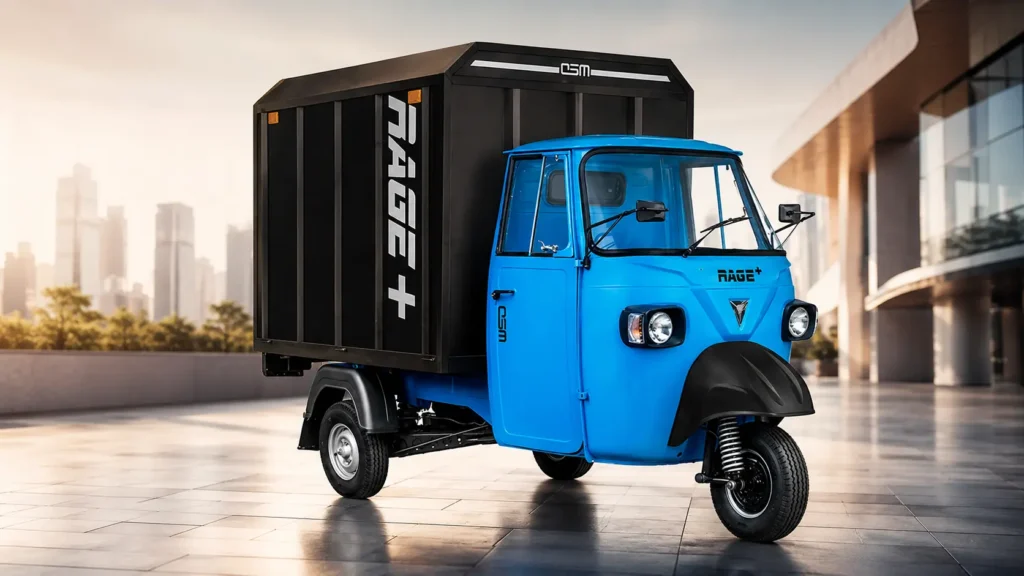
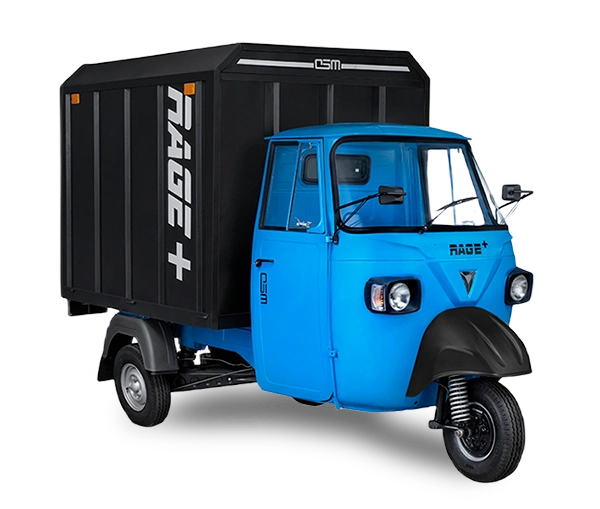
The fresh Rs 50 crore capital injection will be deployed across multiple strategic priorities that collectively aim to accelerate OSM’s growth trajectory. A significant portion will fund the scaling of core manufacturing operations at the company’s existing facilities in Faridabad and Pune, where advanced assembly lines cater to a diversified product portfolio spanning heavy-duty cargo three-wheelers, urban commuter passenger vehicles, premium electric two-wheelers, and custom-built electric light commercial vehicles designed specifically for last-mile delivery operations.
Investment in native Research and Development cycles represents another critical allocation of the fresh capital. The electric commercial vehicle space is evolving rapidly, with improvements in battery technology, motor efficiency, and vehicle telematics creating opportunities for manufacturers who can innovate faster than their competitors. OSM’s R&D investment will focus on developing next-generation high-efficiency electric mobility platforms that deliver better range, lower operating costs, and improved payload capacity – the three metrics that matter most to commercial fleet operators making purchasing decisions.
The expansion of nationwide dealership networks and post-sales service infrastructure is equally important for OSM’s growth ambitions. Commercial vehicle buyers, particularly large fleet operators, require reliable after-sales support to maintain vehicle uptime and minimise operational disruptions. A vehicle that cannot be serviced quickly is a vehicle that costs money every hour it sits idle, and OSM recognises that service infrastructure is as important as product quality in winning and retaining enterprise customers.
Manufacturing – Faridabad and Pune Operations
Omega Seiki currently operates advanced manufacturing and assembly facilities in two of India’s key automotive clusters – Faridabad in the National Capital Region and Pune in Maharashtra. These locations provide strategic advantages in terms of proximity to component suppliers, access to skilled automotive labour, and connectivity to major consumption markets across North and West India.
The Faridabad facility serves as the primary production hub, handling the majority of OSM’s three-wheeler and light commercial vehicle output. With logistics companies actively transitioning from internal combustion engines to electric vehicles to meet corporate sustainability mandates, order volumes have been growing consistently. The incoming capital is expected to increase monthly production run-rates at the Faridabad unit, enabling the company to clear existing order backlogs and fulfill larger fleet supply commitments from enterprise aggregators who require hundreds of vehicles delivered within tight timelines.
The Pune facility adds geographic diversification and additional capacity, ensuring that OSM is not dependent on a single manufacturing location. This dual-facility approach provides resilience against localised disruptions – whether from weather events, regulatory changes, or supply chain bottlenecks – and positions the company to serve customers across India with reduced logistics costs and faster delivery timelines.
Financial Performance – Profitable Growth in a Loss-Making Sector
The financial metrics that Omega Seiki reported for FY26 deserve particular attention because they are exceptional in the context of India’s electric vehicle industry. An annual operational revenue of Rs 333 crore demonstrates meaningful scale – this is not a company selling a handful of vehicles to generate headlines, but a genuine manufacturing enterprise with consistent production and delivery volumes.
More impressive than the topline is the bottom-line profitability. A Profit After Tax of Rs 7.3 crore in FY26 places OSM in an extremely select group of Indian EV companies that have achieved profitability. The vast majority of electric vehicle startups in India continue to report significant losses as they invest heavily in product development, manufacturing setup, and market creation. OSM’s ability to generate profit while simultaneously growing its business suggests a fundamentally sound business model with healthy unit economics.
The EBITDA margin of 7.7 percent is particularly noteworthy for a manufacturing business in the electric vehicle space. This margin indicates that OSM’s core operations – manufacturing vehicles and selling them to customers – generate healthy cash flows before accounting for interest, taxes, depreciation, and amortisation. For financial analysts evaluating the company ahead of its planned IPO, a positive and improving EBITDA margin is one of the strongest indicators of operational efficiency and long-term business viability.
Pre-IPO Valuation and Market Debut Plans
The pre-IPO valuation band of Rs 1,775 crore to Rs 2,833 crore, as circulated in institutional research reports, reflects the market’s assessment of OSM’s current performance and future potential. At the upper end of this range, the company would be valued at approximately 8.5 times its FY26 revenue – a multiple that is reasonable for a profitable, growing electric vehicle manufacturer in a sector with significant long-term tailwinds.
The planned Initial Public Offering represents the next major milestone in OSM’s corporate journey. An IPO would provide the company with access to public market capital for further expansion, create liquidity for early-stage investors and promoters, and establish a market-determined valuation that reflects the company’s true worth. For retail investors, an OSM IPO would represent one of the few opportunities to invest in a profitable Indian electric vehicle manufacturer at a relatively early stage of the industry’s growth cycle.
The timing of the IPO, while not officially announced, appears strategically sound. India’s electric vehicle market is entering a phase of accelerated adoption, government policies continue to favour electrification of commercial transport, and public market appetite for EV stocks remains strong despite broader market volatility. An IPO in this environment could attract significant institutional and retail interest, potentially commanding a premium valuation that rewards early investors for their patience and conviction.
Also Read: 2026 Tata Nexon CAMO Edition Launched – ADAS, Dashcam & New Styling From Rs 10 L To Rs 14 L
Enterprise Client Portfolio – India’s Logistics Giants
Omega Seiki’s commercial client portfolio reads like a who’s who of India’s logistics and e-commerce ecosystem. The company serves as a primary EV fleet partner to Amazon India, Flipkart, Zomato, BigBasket, Porter, Maersk, and Nestlé – enterprises that collectively represent billions of dollars in annual logistics expenditure and millions of daily deliveries across India. These are not experimental pilot programmes or small trial orders; they are large-volume B2B fleet contracts where companies commit to multi-year vehicle supply agreements to electrify their delivery operations.
The business model is compelling for both parties. For enterprise clients, electric three-wheelers from OSM provide a massive reduction in daily running costs compared to conventional diesel or CNG delivery vehicles. The per-kilometre operating cost of an electric three-wheeler is a fraction of its ICE equivalent, which means fleet operators can achieve significant savings on their largest variable cost – fuel. Additionally, electric vehicles help these companies meet their publicly stated sustainability goals and ESG commitments, which are increasingly important for brand reputation and investor relations.
For OSM, enterprise fleet sales provide revenue visibility and predictability that consumer-facing businesses cannot match. Large fleet orders are typically contracted months in advance, allowing the company to plan production schedules, manage inventory, and optimise supply chain operations with confidence. The recurring nature of fleet replacement cycles also means that satisfied enterprise customers become repeat buyers, creating a compounding revenue base that grows with each contract renewal.
The Anglian Omega Group Legacy – 55 Years of Manufacturing
One of OSM’s most significant competitive advantages is its backing by the Anglian Omega Group, a conglomerate with 55 years of heavy manufacturing heritage. This is not a venture-capital-funded startup operating out of a co-working space – it is an electric vehicle company built on the foundation of decades of industrial experience in steel fabrication, precision tool manufacturing, and component engineering.
This legacy provides OSM with immediate access to established supply chains that newer competitors spend years building. When OSM needs high-quality steel for chassis fabrication, precision-machined components for drivetrain assemblies, or specialised tooling for production lines, it can leverage the Anglian Omega Group’s existing relationships and capabilities rather than starting from scratch. This structural advantage has allowed the company to localise its vehicle platforms rapidly, achieving cost efficiencies that pure-play startups cannot match in their early years.
The manufacturing DNA also manifests in product quality and reliability – critical factors for commercial vehicles that operate 12 to 16 hours daily in demanding conditions. Fleet operators cannot afford vehicles that break down frequently or require excessive maintenance, and OSM’s industrial heritage ensures that its vehicles are engineered for durability and longevity rather than just aesthetic appeal.
Leadership and Vision
At the helm of Omega Seiki Mobility is Founder and Executive Chairman Dr. Uday Narang, a seasoned business operator with over two decades of global experience spanning heavy automotive manufacturing and global energy trading. His MBA in Finance from Stony Brook University in New York provides the financial acumen necessary to navigate complex capital allocation decisions, while his manufacturing background ensures that operational excellence remains the company’s core focus.
Reflecting on the successful capital raise, Dr. Narang stated that the investment validates the deep structural confidence that institutional investors place in OSM’s operational vision, ground execution, and long-term business strategy. His emphasis on manufacturing excellence, product innovation, and financial discipline as the three pillars of the company’s growth strategy provides clarity on how the fresh capital will be deployed and what outcomes investors can expect.
India’s EV Commercial Vehicle Opportunity
The timing of OSM’s capital raise coincides with a structural inflection point in India’s commercial vehicle electrification journey. Government policies including FAME subsidies, state-level EV incentives, and increasingly stringent emission norms are creating powerful tailwinds for electric commercial vehicle adoption. Major logistics companies have publicly committed to electrifying significant portions of their fleets by 2030, creating a demand pipeline that manufacturers like OSM are positioned to capture.
The last-mile delivery segment, where OSM has its strongest presence, is expected to be the fastest-growing segment of India’s electric vehicle market over the next five years. The economics of electric three-wheelers for delivery operations are already compelling, and as battery costs continue to decline and charging infrastructure expands, the total cost of ownership advantage of electric over ICE will only widen. For OSM, this means a growing addressable market, increasing order volumes, and the opportunity to scale production and revenue significantly in the coming years.
FAQ
1. What is Omega Seiki Mobility’s valuation?
OSM’s pre-IPO valuation is estimated between Rs 1,775 crore and Rs 2,833 crore, according to institutional research reports. This reflects strong market confidence in the company’s profitable growth trajectory and position in India’s EV commercial vehicle market.
2. What is Omega Seiki Mobility’s revenue?
OSM reported annual operational revenue of approximately Rs 333 crore for FY26 (fiscal year ending March 2026), with a Profit After Tax of Rs 7.3 crore and an EBITDA margin of 7.7%.
3. When is Omega Seiki Mobility IPO?
While no official date has been announced, OSM is actively laying the foundation for an eventual public listing. The recent funding round and growing valuation suggest the IPO could materialise within the next 12-18 months.
4. Who are Omega Seiki Mobility’s clients?
OSM serves major enterprise clients including Amazon India, Flipkart, Zomato, BigBasket, Porter, Maersk, and Nestlé as a primary EV fleet partner for last-mile delivery operations.
5. Who founded Omega Seiki Mobility?
Dr. Uday Narang is the Founder and Executive Chairman of OSM. He has over 20 years of global experience in automotive manufacturing and energy trading, with an MBA in Finance from Stony Brook University, New York.
6. What products does Omega Seiki Mobility make?
OSM manufactures heavy-duty cargo three-wheelers, urban commuter passenger vehicles, premium electric two-wheelers, and custom-built electric light commercial vehicles (e-LCVs) for last-mile delivery operations.
For more such updates on latest cars, bikes and EVs stay connected to MotorMitra. #gaadiyonkismartguide