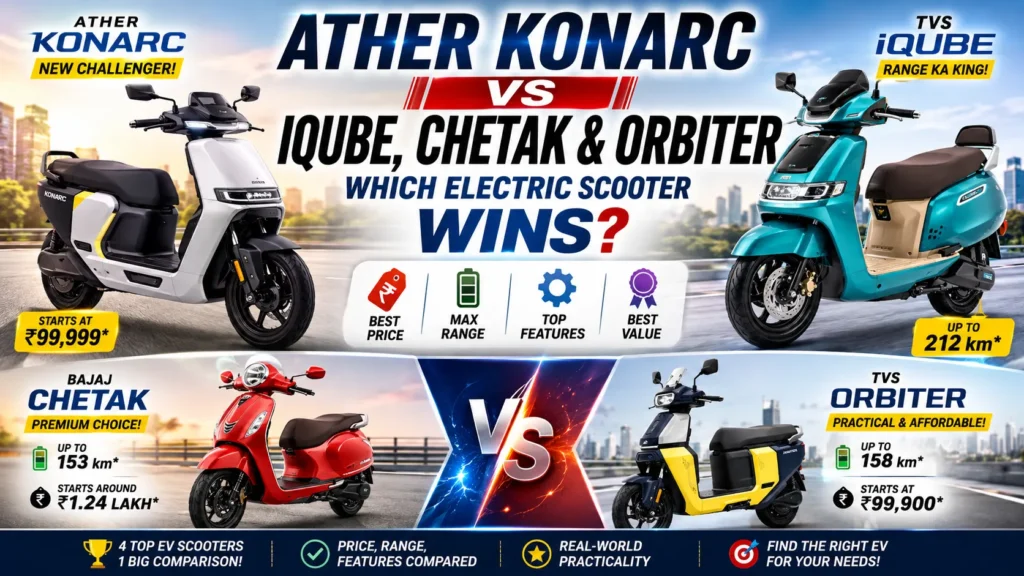
Ather has entered the family electric scooter space with the all-new Konarc, and its aggressive pricing makes the segment even more competitive. Starting at ₹99,999, the Konarc combines a metal body, 14-inch front wheel, practical storage and Ather’s technology ecosystem in a package designed for everyday urban riding.
The competition, however, is already strong. The TVS iQube offers multiple battery options and up to 212 km of claimed IDC range, the Bajaj Chetak 35 Series focuses on premium design and solid construction, while the TVS Orbiter targets buyers looking for practical and affordable city commuting. So, which electric scooter offers the best combination of price, range and features?
Ather Konarc vs Rivals: Price, Range & Key Numbers
These four scooters appeal to slightly different buyers, making the comparison more interesting than a simple price-versus-range battle. Prices can vary by city, variant, subsidy and applicable offers, so the figures below should be treated as indicative effective/ex-showroom prices.
| Electric Scooter | Starting Price* | Maximum Claimed IDC Range | Key Highlight |
|---|---|---|---|
| Ather Konarc | ₹99,999 | Up to 200 km | Metal body, 14-inch wheel |
| TVS iQube | ₹95,124* | Up to 212 km | Multiple battery options |
| Bajaj Chetak 35 Series | ~₹1.24 lakh* | Up to 153 km | Premium design & build |
| TVS Orbiter | ₹99,900* | Up to 158 km | 34-litre boot space |
*Effective/ex-showroom prices are location and variant dependent. The Konarc 125 km and 161 km versions are currently being rolled out in select cities, while the 100 km and 200 km versions are planned for later.
Also Read:- Honda July 2026 Sales – Activa Dominates As CB350 Delivers A Massive Surprise
Ather Konarc: A Fresh Approach to the Family EV
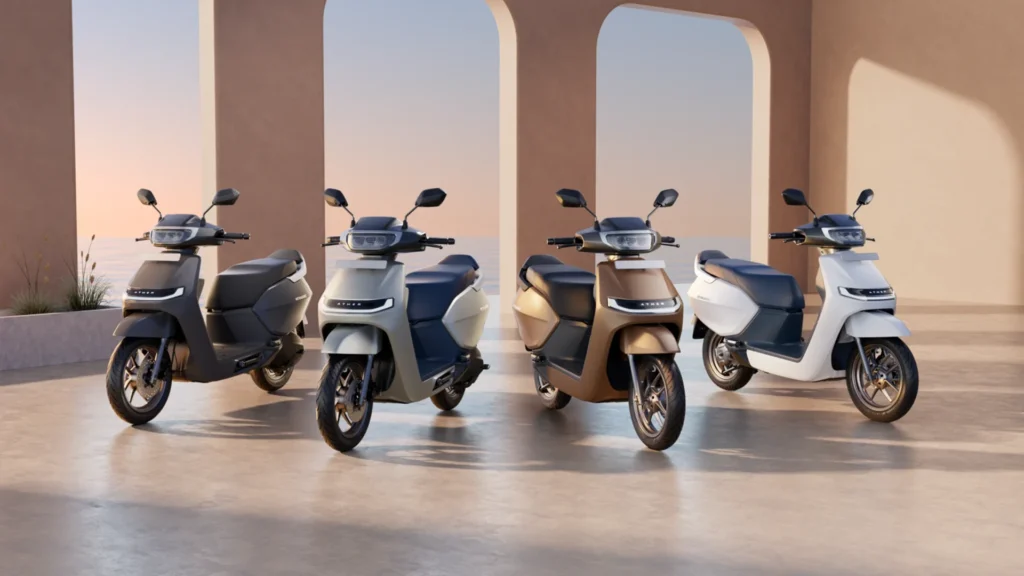
The Konarc is quite different from Ather’s performance-oriented 450 range. It has been developed around everyday usability, comfort and practical ownership rather than outright performance. The scooter gets a metal body, steel unibody construction, 14-inch alloy front wheel and long-travel suspension, giving it a substantial family-scooter character.
Ather has announced four range configurations for the Konarc — 100 km, 125 km, 161 km and 200 km IDC. The 125 km version costs ₹1,21,999, while the 161 km version is priced at ₹1,44,999. The 100 km and 200 km versions are planned for a later rollout, so buyers should not assume that all four configurations are currently available at dealerships.
Practicality is another important part of the package. The Konarc offers 31 litres of under-seat storage along with a 2-litre front storage compartment, while Ather has also focused on reducing ownership hassles through its service and charging ecosystem. This gives the scooter a strong foundation as an everyday family EV.
Konarc vs iQube: Which One Wins on Range?
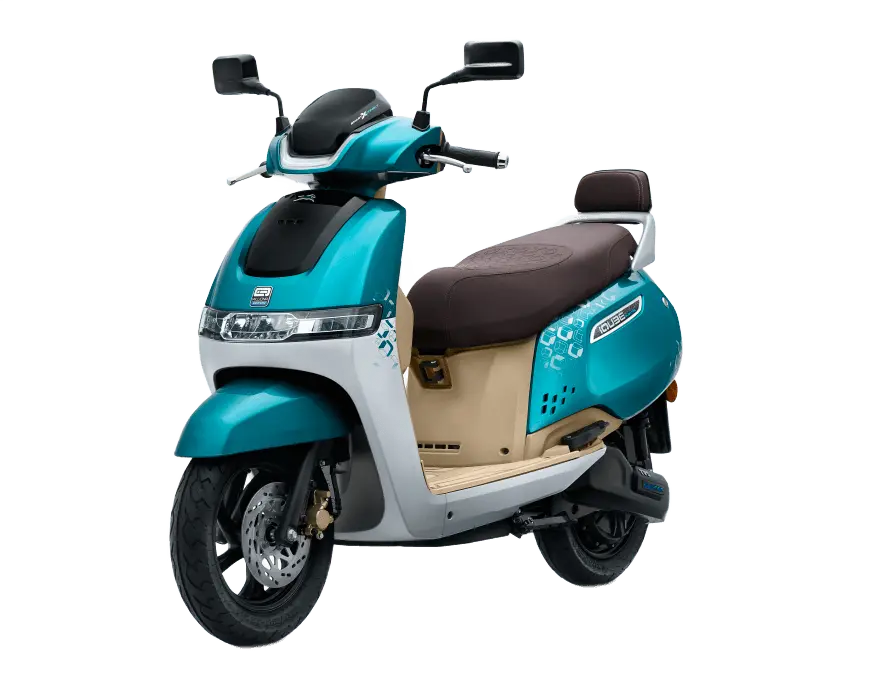
The TVS iQube currently has the advantage when maximum claimed range is the deciding factor. Its larger battery variants offer up to 212 km of claimed IDC range, putting the flagship iQube slightly ahead of the Konarc’s announced 200 km version.
However, the difference is not simply about the highest number. The iQube is available with multiple battery capacities, allowing buyers to choose according to their daily running and budget. This makes it particularly useful for families that want a proven electric scooter without necessarily paying for the biggest battery.
The Konarc takes a similar multi-range approach. Its 125 km and 161 km versions can appeal to urban commuters who do not need a 200 km scooter every day. The upcoming 200 km version could then become a direct rival to the long-range iQube once it reaches the market.
Konarc vs Chetak: Premium Design or New-Age Technology?
The Bajaj Chetak 35 Series takes a more premium approach to the electric scooter segment. The C3503 and C3501 use a 3.5 kWh battery and offer claimed IDC ranges of 151 km and 153 km, respectively. The C3503 is listed at around ₹1.24 lakh, although actual pricing varies with location and applicable offers.
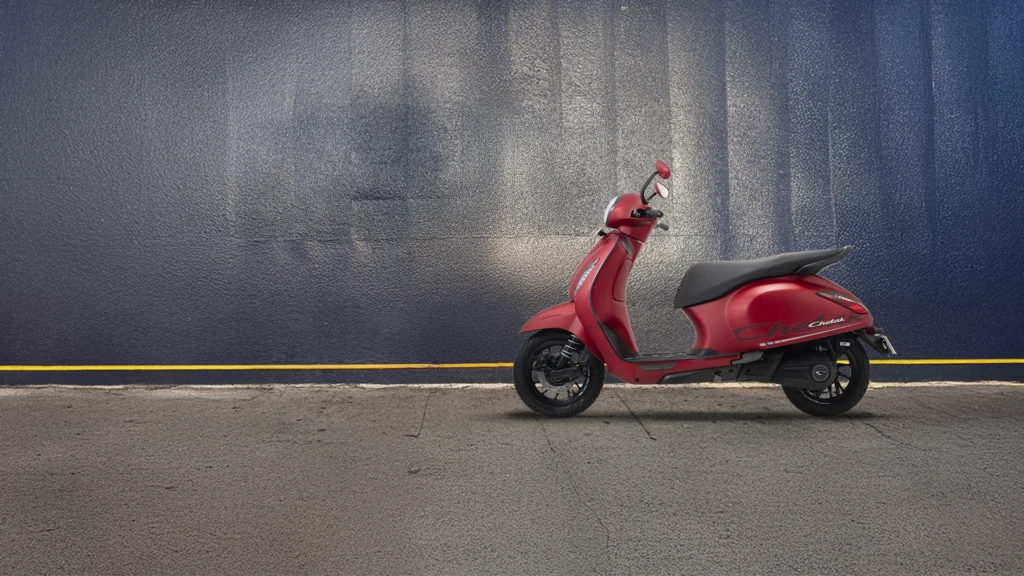
The Chetak’s biggest strength is its overall premium character. Its metal-bodied construction, mature styling and solid road presence make it feel closer to a conventional premium scooter. Higher variants also offer features such as navigation, ride modes, connectivity and reverse functionality.
Compared with the Chetak, the Konarc has a more aggressive entry price and a wider announced range strategy. The Chetak, meanwhile, has the advantage of an established product identity and a premium design that has already become familiar to Indian buyers.
Konarc vs Orbiter: Which Is Better for Everyday City Use?
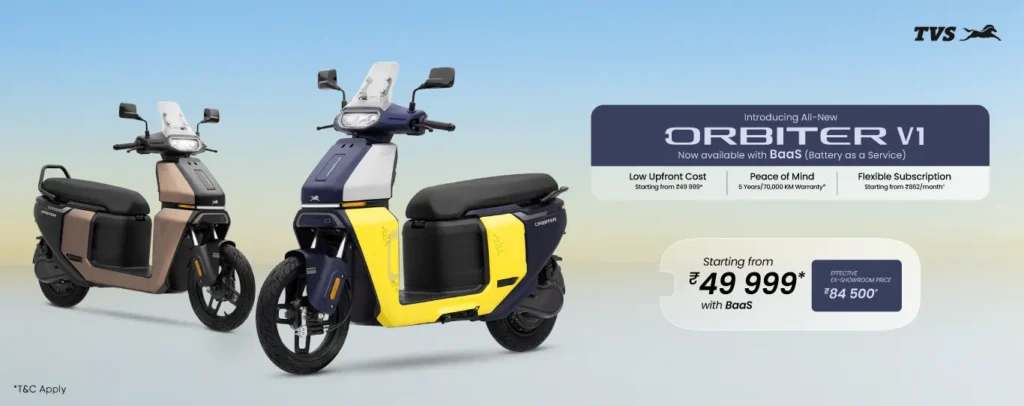
The TVS Orbiter is arguably the most practical competitor in this comparison. The V1 is listed at an effective ₹99,900 in Bengaluru, while the V2 is listed at ₹1,09,830. The V2 offers up to 158 km of claimed IDC range, making it suitable for regular city commuting.
Its biggest advantage is practicality. The Orbiter gets a huge 34-litre boot, along with a 14-inch front wheel, cruise control, hill-hold assist and connected features. For families who frequently carry bags or other everyday items, this storage capacity can be more useful than a small difference in claimed range.
The Konarc counters with a more premium construction approach, Ather’s technology ecosystem and a 161 km range option. That makes the choice fairly straightforward: the Orbiter is better suited to buyers prioritising storage and simple practicality, while the Konarc appeals more to those looking for a newer and more technology-focused package.
Also Read:- Royal Enfield Himalayan 440 Spotted at Dealership Before Launch — Everything You Need to Know
Features: Which Scooter Gives You More?
All four scooters offer modern equipment, but their strengths are different. The Konarc brings Ather’s DeepView display, navigation-related functions, AutoHold and connected technology, while higher versions add features such as MagicKey and AutoPop. This gives it a distinctly modern user experience.
The iQube offers connected technology, navigation, OTA updates and practical functions such as parking assistance on applicable variants. The Chetak counters with navigation, ride modes, connectivity and reverse functionality, while the Orbiter focuses on useful urban features including cruise control and hill-hold assist.
Therefore, there is no clear winner purely on features. Konarc focuses on technology, iQube on connected family usability, Chetak on premium appeal, and Orbiter on practical everyday convenience.
Which Electric Scooter Offers the Best Value?
For buyers who want the highest currently available claimed range, the TVS iQube ST 5.3 kWh has the advantage with up to 212 km. Its multiple battery options also make it easier to select a scooter according to individual usage.
The Bajaj Chetak 35 Series is the better fit for someone who prioritises premium design and a more mature scooter experience. Its strong construction and premium road presence remain major reasons to consider it.
For maximum everyday practicality, the TVS Orbiter is difficult to ignore. Its 34-litre boot and city-focused setup make it particularly suitable for families and regular urban commuting.
The Ather Konarc, meanwhile, offers perhaps the most interesting balance for buyers looking for something new. Its ₹99,999 entry price, metal construction, 14-inch wheel, multiple planned range options and Ather ecosystem give it a strong value proposition, especially for buyers who do not immediately need the maximum possible range.
Which One Should You Buy?
The right choice ultimately depends on what matters most to you. Choose the TVS iQube for maximum available range and battery flexibility, the Bajaj Chetak for premium design and mature appeal, and the TVS Orbiter for storage and practical city commuting.
The Ather Konarc is the most interesting new challenger because it brings together an aggressive starting price, substantial construction, modern technology and multiple range configurations. The currently available 125 km and 161 km versions already cover the needs of many urban riders, while the upcoming 200 km version could make the scooter even more competitive.
In simple terms: iQube wins on maximum range, Chetak on premium appeal, Orbiter on practicality, while Konarc stands out for its overall mix of technology, construction and value.