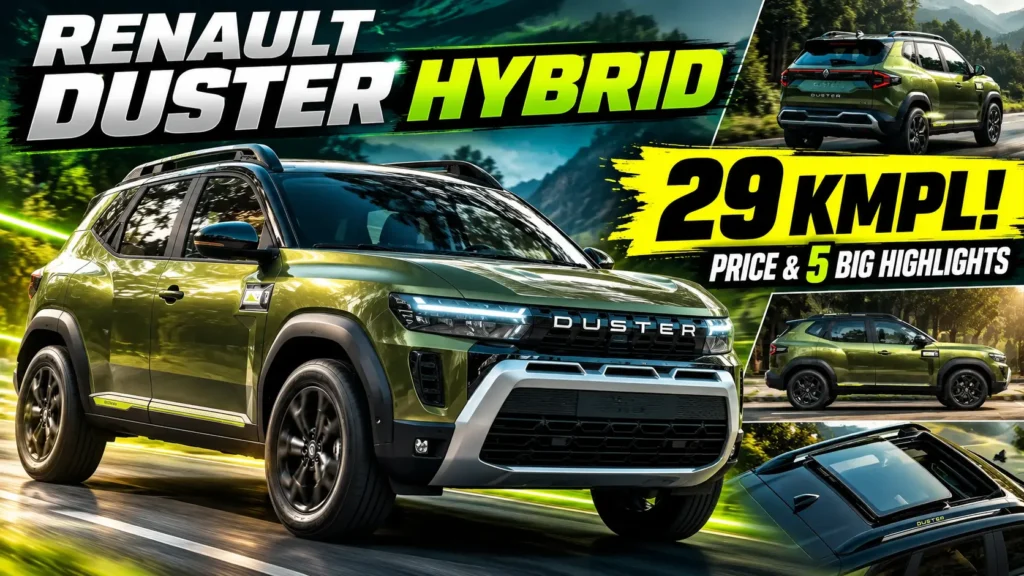
The Renault Duster Hybrid is preparing to take on India’s midsize SUV segment with a new powertrain that puts fuel efficiency firmly in the spotlight. The Renault Duster Strong Hybrid E-Tech 160 combines a 1.8-litre petrol engine with two electric motors and a 1.4kWh battery pack, delivering an ARAI-certified mileage of 29 km/l. That figure makes it a strong contender for buyers who want SUV practicality without the frequent fuel stops associated with conventional petrol models.
The hybrid will join the existing Duster lineup, which already offers turbo-petrol engines. Its biggest appeal is the combination of a claimed 160 PS system output and a self-charging hybrid setup that does not require an external charging point. However, the final buying decision will depend on its official price, variant-wise equipment and real-world fuel efficiency. Here are five key highlights buyers should know before considering the new Renault Duster Hybrid.
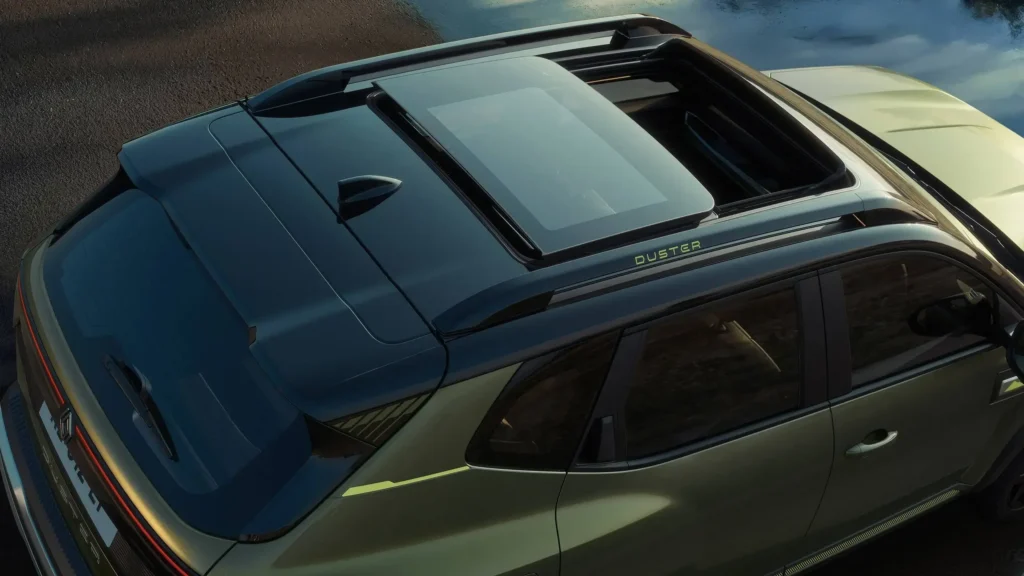
1. Renault Duster Hybrid Price in India: What We Know
Renault announced October 17, 2026, as the planned date for the Duster Strong Hybrid E-Tech 160’s Indian debut and price announcement. However, the company’s official hybrid information page continues to display the model as “coming soon,” and a final hybrid price could not be independently confirmed from the latest official information available at the time of writing.
The existing petrol-powered Renault Duster range starts at ₹10.49 lakh ex-showroom, but that price applies to the conventional lineup, not the strong-hybrid version. Buyers should not use the petrol model’s starting price to estimate the final cost of the hybrid without checking Renault’s latest announcement.
Before booking, customers should confirm the hybrid’s ex-showroom price, available variants, delivery schedule and on-road cost with Renault or an authorised dealership. Insurance, registration and other charges can increase the final amount payable. The price will be especially important because the Duster Hybrid will compete with established strong-hybrid SUVs that already have a presence in India.
Also Read:- Mini Cooper Oxford Edition Launched in India at Rs. 55.50 Lakh: Check Engine, Features and Booking Details
2. 29 KMPL Mileage Is Its Biggest Attraction
The Duster Strong Hybrid’s headline figure is its ARAI-certified fuel efficiency of 29 km/l. Renault has positioned the hybrid as an efficiency-focused alternative to conventional petrol SUVs, and the claimed figure puts it ahead of the published strong-hybrid mileage figures of several direct rivals.
For buyers who travel regularly, fuel economy can have a meaningful impact on long-term ownership costs. The hybrid system can use electric power under suitable conditions and recover energy during braking and deceleration. This helps reduce the amount of work required from the petrol engine, particularly in stop-and-go traffic.
However, 29 km/l is a certified test figure, not a guarantee of everyday mileage. Actual results will depend on traffic, road conditions, driving habits, air-conditioning use and passenger load. Buyers should wait for independent road tests to understand how the Duster Hybrid performs in real Indian driving conditions before calculating their potential fuel savings.
Renault also states that the system can allow electric driving for up to 80% of the time in city conditions under suitable circumstances. This should not be interpreted as a promise that every owner will complete 80% of all city journeys using electric power.
3. 1.8-Litre Petrol Engine, Two Electric Motors and 160 PS
The Duster Strong Hybrid E-Tech 160 uses a naturally aspirated 1.8-litre, four-cylinder petrol engine paired with two electric motors and a 1.4kWh battery. Renault lists a maximum system output of 160 PS, while published technical information gives combined torque of 172 Nm.
One electric motor helps generate electrical energy, while the traction motor drives the wheels. The system automatically manages the petrol engine and electric motors according to driving conditions, battery charge and the amount of power required. This allows the SUV to use electric propulsion when appropriate and combine petrol and electric power when additional performance is needed.
The hybrid is equipped with an intelligent multi-mode automatic transmission. Unlike a conventional manual gearbox, it manages the interaction between the engine and electric motors without requiring the driver to change gears. Energy recovered during deceleration helps recharge the battery while the vehicle is moving.
Another practical advantage is that the Duster Hybrid does not need to be plugged into an external charger. Its battery recharges through the hybrid system, making it an option for buyers who want electrified driving without installing a home charging point.
4. Design, Features and Everyday Practicality
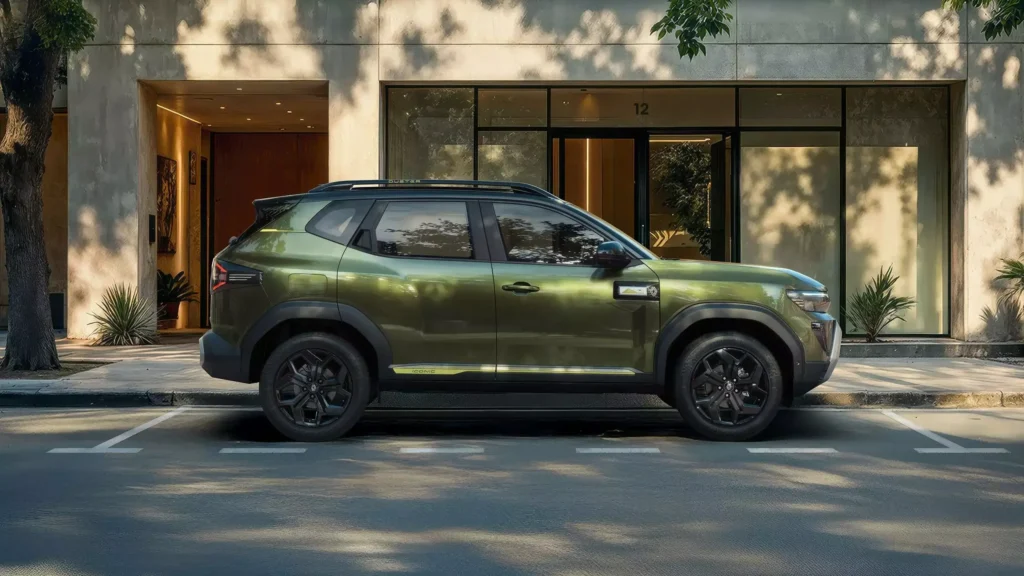
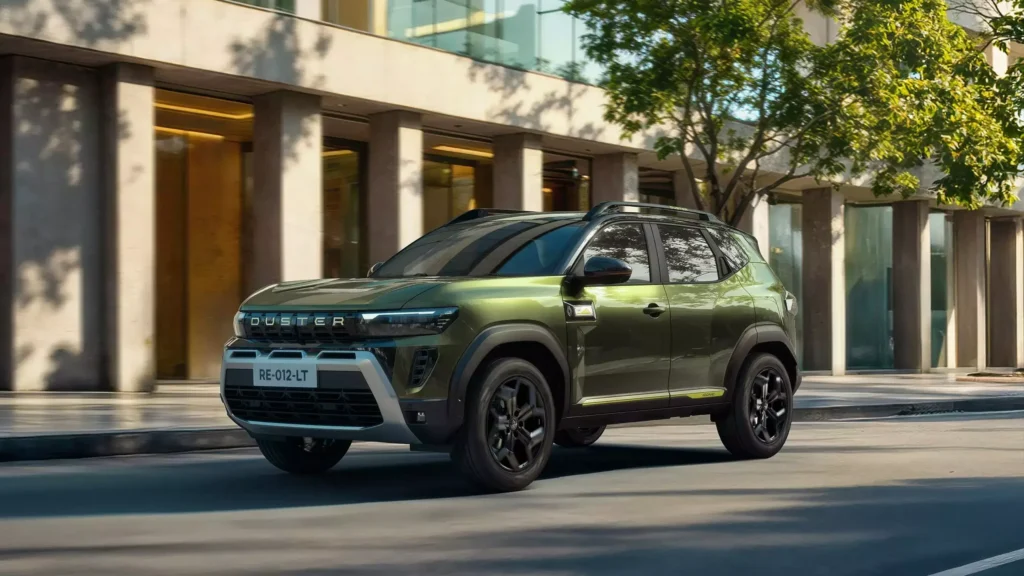
The Duster’s rugged SUV character remains central to its appeal. Its upright stance, muscular proportions and practical body style are intended to suit buyers looking for a family vehicle that can handle daily commutes, longer journeys and imperfect road surfaces. The new hybrid powertrain adds another option for customers who prioritise fuel economy.
The hybrid-specific variant’s final equipment list should be checked before making a purchase. Buyers should pay attention to safety features, infotainment, driver-assistance systems, camera technology, seating comfort and convenience equipment rather than assuming every feature available on the petrol variants will automatically be included.
Practicality matters just as much as the powertrain. Families should assess rear-seat comfort, luggage capacity, cabin storage, visibility and ease of entry and exit. It is also worth checking whether the battery and hybrid hardware affect the boot space compared with other Duster versions.
A test drive will help buyers judge ride comfort, cabin noise and the smoothness of the transitions between electric and petrol power. These everyday details can make a bigger difference to long-term satisfaction than a single headline specification.
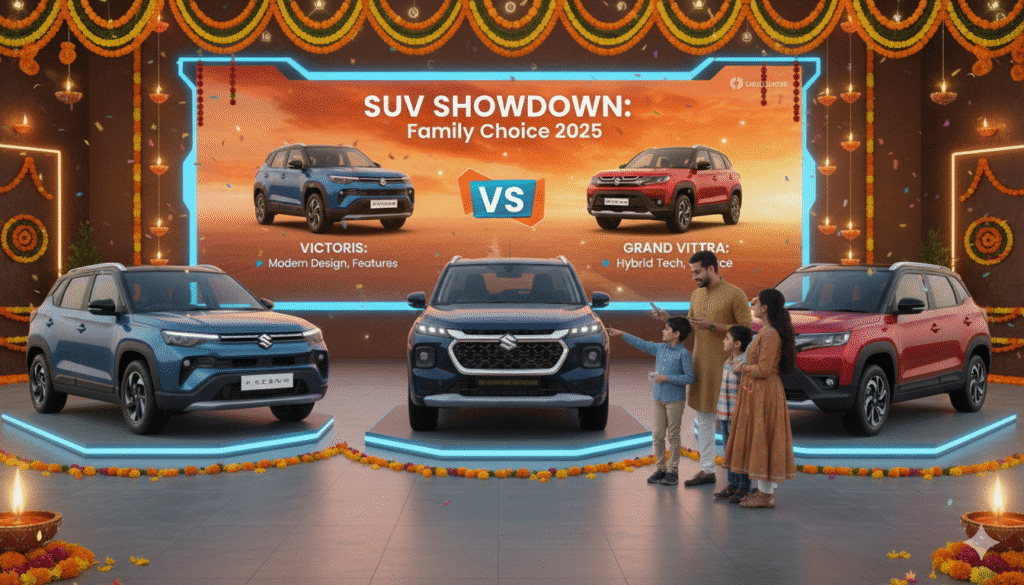
5. Renault Duster Hybrid vs Grand Vitara, Victoris and Hyryder
The Duster Hybrid will enter a competitive segment that already includes the Maruti Suzuki Grand Vitara Strong Hybrid, Maruti Suzuki Victoris Strong Hybrid and Toyota Urban Cruiser Hyryder Strong Hybrid. All three provide alternatives for buyers who want an SUV with a petrol-electric powertrain.
| Key specification | Renault Duster Hybrid | Maruti Grand Vitara Hybrid | Toyota Hyryder Hybrid |
|---|---|---|---|
| Powertrain | 1.8L petrol + two electric motors | 1.5L strong hybrid | 1.5L strong hybrid |
| Claimed system output | 160 PS | Around 116 PS | Around 116 PS |
| ARAI-claimed mileage | 29 km/l | 27.97 km/l | 27.97 km/l |
| Transmission | Multi-mode automatic | e-CVT | e-CVT |
Specifications and mileage are based on published figures for strong-hybrid versions; buyers should verify the exact variant and latest manufacturer specifications before comparing prices.
Also Read:- Renault Duster Hybrid To Be Launched in India on October 17, 2026 – Price, Specs, Mileage & All Details
On paper, the Duster’s 29 km/l certified figure gives it a mileage advantage over the Grand Vitara and Hyryder figures shown above. Its 160 PS system output is also higher than the published combined output of those two rivals. However, these figures alone do not determine which SUV offers the best overall driving experience.
Pricing, equipment, ride comfort, service support, warranty coverage and resale value will also influence the decision. The Maruti and Toyota models have established strong-hybrid offerings, while the Duster will need to demonstrate that its technology and overall package justify its eventual price.
The Maruti Suzuki Victoris is another important rival. Its published strong-hybrid mileage figure is 28.65 km/l, putting it close to the Duster’s claimed 29 km/l. Buyers should therefore compare the final prices and equipment of the relevant variants rather than choosing solely on the basis of a small mileage difference.
Should You Wait for the Renault Duster Hybrid?
The Renault Duster Strong Hybrid E-Tech 160 has three major attractions: a claimed 29 km/l ARAI-certified mileage, a 1.8-litre petrol-electric powertrain and 160 PS of system output. Its self-charging setup also makes it practical for buyers who want hybrid technology without depending on an external charging station.
The biggest unanswered question is its final price and exact variant-wise equipment. Those details will determine whether the Duster Hybrid offers convincing value against the Grand Vitara, Victoris and Hyryder. Real-world mileage tests and independent reviews will also help buyers understand its everyday strengths and limitations.
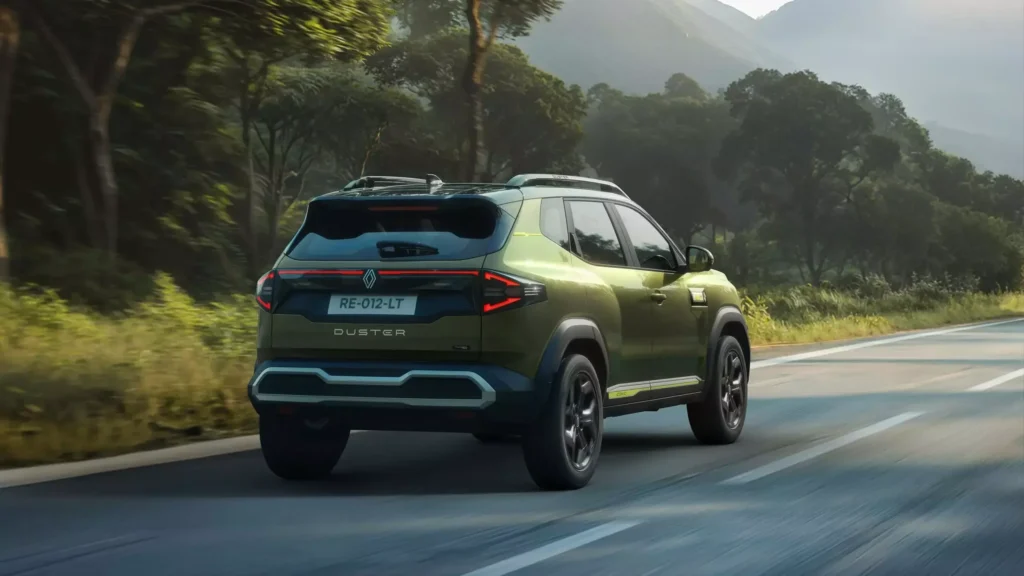
For now, the Duster Hybrid deserves a place on the shortlist of buyers considering an efficient midsize SUV. Before making a booking, confirm the latest price and delivery information directly with Renault, then compare the full ownership package with its rivals. A competitive price, strong equipment list and real-world efficiency close to its certified figure could make the new Duster Hybrid a serious contender in India’s growing strong-hybrid SUV market.