
The mid-size SUV segment enjoys enormous popularity among the masses as it accounts for the majority of SUV sales in the Indian market. Several leading automakers such as Maruti Suzuki, Hyundai, Tata Motors, Kia, Skoda, MG Motor, Toyota and Mahindra offer mid-size SUVs in our country, and the competition in this space has never been fiercer. Models like the Hyundai Creta, Kia Seltos, Renault Duster, Tata Sierra, Maruti Suzuki Victoris, and Skoda Kushaq are all fighting tooth and nail for every customer in this segment.
But the action is far from over. We have learnt that more new models and powertrain options will be launched in this segment within this financial year. From a completely new-generation model built on a brand-new platform to strong hybrid powertrains that promise fuel efficiency figures north of 25 kmpl, the mid-size SUV space is about to get even more exciting. In this piece, we will talk in detail about the three upcoming midsize SUVs launching in India in FY27 that every buyer should know about.
1. Next-Generation Hyundai Creta
The Hyundai Creta has been the undisputed king of the mid-size SUV segment in India for over a decade now. Despite two generations and several facelifts, it has never had to fight for its position at the top of the sales charts. But with competition intensifying from every direction — the new Kia Seltos, Renault Duster, Tata Sierra, and Maruti Suzuki Victoris all breathing down its neck — Hyundai knows it cannot afford to rest on its laurels. And so, the third-generation Creta is being readied for a market launch around early 2027 in India.
Internally codenamed SX3, the next-gen Creta will be sitting on the new K3 platform — the same architecture that underpins the second-generation Kia Seltos. This is a significant upgrade from the current K2 platform and brings with it improvements in structural rigidity, crash safety, noise-vibration-harshness levels, and overall cabin space and packaging. The move to the K3 platform also means the new Creta will grow in size, with the length expected to increase from the current 4,330 mm to somewhere around 4,400-4,500 mm, giving it a more commanding road presence and improved interior space.
Recently, the mid-size SUV was spied during cold-weather high-altitude testing in Manali, Himachal Pradesh, confirming that development is well underway and the vehicle is being put through its paces in extreme conditions. The spy shots have revealed several notable elements that point to a significant step up in terms of premium-ness and technology. One of the most intriguing additions spotted in the interior is a “zero-gravity” seat button, similar to the one found in the Hyundai Ioniq 5 electric vehicle. On the Ioniq 5, this function reclines the passenger seat and extends an ottoman for added comfort — if this feature makes it to the production Creta, it would be a genuine segment-first that elevates the ownership experience significantly.
Other notable elements spotted on the test mules include a multi-link rear suspension setup (replacing the current torsion beam arrangement), which should dramatically improve ride quality and handling characteristics, especially over broken roads. The test mules have also been seen wearing 19-inch alloy wheels, suggesting that the top-spec variants will offer a more premium, planted stance. Additionally, spy shots have revealed flush door handles — a feature typically associated with more premium vehicles — and a boxier, more upright design language that gives the new Creta a more muscular and modern appearance.
Mechanically, the next-gen Creta will continue to carry the familiar engine lineup — the 1.5-litre naturally aspirated petrol, 1.5-litre diesel, and 1.5-litre turbocharged petrol engines. All these engines are likely to be paired with a six-speed manual transmission as standard, with automatic options available on higher variants. However, the big news is that the new Creta is also expected to receive a strong hybrid powertrain for the first time, which would allow it to compete directly with the Maruti Suzuki Victoris and Toyota Urban Cruiser Hyryder in the hybrid space.
The third-generation Creta is expected to launch in India in early 2027, and given Hyundai’s track record of aggressive pricing and feature-loading, it should once again set the benchmark for the segment.
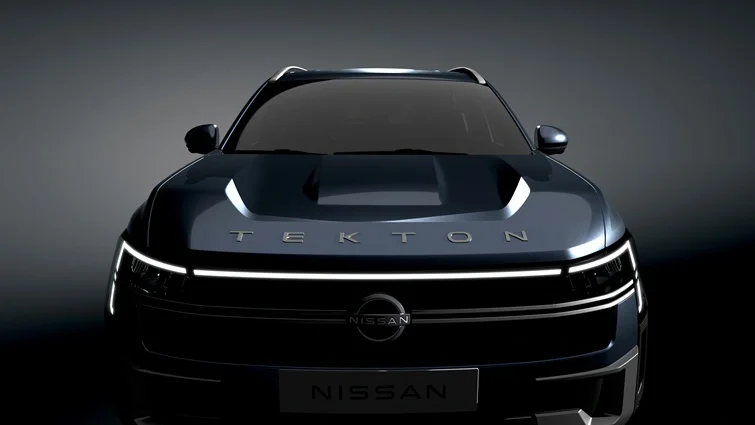
Also Read: 3 New Nissan SUVs Are Coming to India – Here Is Everything We Know
2. Kia Seltos Hybrid
Kia will debut its first strong hybrid vehicle in the Indian market in the form of the Sorento later this year. And the same hybrid technology will be borrowed by the Seltos as it prepares for an early 2027 launch. This is a significant development because the Seltos has always been known as a feature-rich, well-built SUV with strong petrol and diesel engine options — but it has never offered the kind of fuel efficiency that hybrid technology can deliver. That is about to change.
The ongoing model’s naturally-aspirated 1.5-litre petrol engine will be hybridised with a dual electric motor and battery pack setup to create a strong hybrid powertrain. This is not a mild hybrid system that merely assists the engine — this is a full strong hybrid that can run on electric power alone at low speeds and in city traffic, switching seamlessly between electric and petrol power depending on driving conditions. The result is dramatically improved fuel efficiency without any compromise in performance or drivability.
It has been learnt that the Seltos Hybrid will offer a fuel efficiency of approximately 25 kmpl — a figure that would make it one of the most fuel-efficient mid-size SUVs in India, rivalling the Maruti Suzuki Victoris and Toyota Urban Cruiser Hyryder strong hybrids. For a buyer who drives 1,500-2,000 km per month, this kind of efficiency translates into significant savings on fuel costs over the ownership period, making the slightly higher upfront cost of the hybrid variant a worthwhile investment.
The South Korean brand is aiming to heavily localise the hybrid engine components to keep costs down. This is crucial because hybrid technology has traditionally been expensive, and the price premium over conventional powertrains has been a barrier to adoption for many buyers. By localising key components — including the electric motors, battery pack, and power electronics — Kia can reduce import duties and manufacturing costs, passing the savings on to the customer. If Kia can price the Seltos Hybrid within Rs 1.5-2 lakh of the standard petrol variants, it would be an extremely compelling proposition.
The Seltos Hybrid is expected to retain the same exterior design, interior layout, and feature list as the current model, which means buyers will get the same premium cabin with dual 10.25-inch displays, panoramic sunroof, ventilated seats, Bose sound system, 360-degree camera, and Level 2 ADAS — but with the added benefit of 25 kmpl fuel efficiency. The combination of Kia’s build quality, feature richness, and hybrid efficiency could make the Seltos Hybrid one of the most attractive propositions in the mid-size SUV segment when it launches in early 2027.
3. Renault Duster Hybrid
The Renault Duster made a spectacular comeback to the Indian market earlier this year, and it has already established itself as a serious contender in the mid-size SUV space with its rugged design, capable chassis, and multiple powertrain options. But the most exciting variant — the strong hybrid — is yet to arrive. The Renault Duster Hybrid will join the bandwagon of strong hybrid SUVs (alongside the Maruti Suzuki Victoris, Grand Vitara, and Toyota Hyryder) in India later this year around the festive season of Diwali.
The Duster Hybrid, branded as the E-Tech 160, will be rolled out with a naturally-aspirated 1.8-litre four-cylinder petrol engine paired with two electric motors and a 1.4 kWh battery pack. The combined power output stands at 160 hp and 172 Nm, which provides adequate performance for both city commuting and highway cruising. The power will be transmitted to the wheels via a multi-mode automatic gearbox — Renault’s proprietary transmission that uses a dog-clutch mechanism inspired by Formula 1 technology, eliminating the need for a traditional torque converter and improving efficiency.
What makes the Duster Hybrid particularly interesting is its ability to run in pure electric mode for up to 80 percent of city driving, according to Renault. This means that in stop-and-go traffic — which is the reality for most Indian commuters — the petrol engine remains off for the majority of the time, with the electric motors handling propulsion silently and efficiently. The result is exceptional fuel efficiency in urban conditions, with figures expected to be in the range of 24-26 kmpl.
The design, features, and other components will be shared with the regular version of the Duster, which means hybrid buyers will get the same bold, rugged exterior design with its distinctive Y-shaped LED DRLs, the same well-equipped interior with a 10.1-inch touchscreen, digital instrument cluster, wireless Android Auto and Apple CarPlay, automatic climate control, and a comprehensive safety suite. The only visual differentiator will likely be subtle “E-Tech” badging on the exterior.
The Duster Hybrid has already generated significant interest — reports suggest that the E-Tech 160 variant was sold out for 2026 within weeks of bookings opening, indicating strong demand for efficient hybrid SUVs in India. Renault is expected to price the Duster Hybrid between Rs 17-19 lakh (ex-showroom), which would make it competitive with the Victoris and Hyryder strong hybrids while offering the added appeal of the Duster’s rugged character and proven off-road capability.
Also Read: VW Tayron Life Launched at Rs 41.99 Lakh – Rs 5 Lakh Cheaper
Hybrids Are the Future of Mid-Size SUVs
Looking at these three upcoming launches, a clear trend emerges — the mid-size SUV segment in India is rapidly moving towards electrification, with strong hybrid technology leading the charge. While pure electric SUVs are gaining traction in the market, the reality is that charging infrastructure in India is still developing, and many buyers are not yet ready to make the full switch to electric. Strong hybrids offer the perfect middle ground — they deliver dramatically improved fuel efficiency and lower emissions without requiring any charging infrastructure or changes to the buyer’s daily routine.
The next-gen Creta with its potential hybrid option, the Seltos Hybrid with its 25 kmpl efficiency, and the Duster Hybrid with its proven E-Tech technology all represent the direction in which this segment is heading. For buyers who are in the market for a mid-size SUV and can wait until early 2027, these three models offer compelling reasons to hold off on a purchase — whether it is the promise of a completely new-generation platform, class-leading fuel efficiency, or proven hybrid technology with Formula 1-derived engineering.
The mid-size SUV segment in India has never been more exciting, and FY27 promises to take the competition to an entirely new level.
FAQ
1. When will the next-gen Hyundai Creta launch in India?
The third-generation Hyundai Creta (codenamed SX3) is expected to launch in India in early 2027. It will be based on the new K3 platform with features like zero-gravity seats, multi-link rear suspension, and 19-inch alloy wheels.
2. What is the expected mileage of the Kia Seltos Hybrid?
The Kia Seltos Hybrid is expected to deliver a fuel efficiency of approximately 25 kmpl, making it one of the most fuel-efficient mid-size SUVs in India.
3. When will the Renault Duster Hybrid launch in India?
The Renault Duster Hybrid (E-Tech 160) is expected to launch in India around Diwali 2026 (October-November). It features a 1.8L petrol engine with two electric motors producing 160 hp.
4. What platform will the next-gen Creta use?
The next-gen Hyundai Creta will use the new K3 platform, which is the same architecture used in the second-generation Kia Seltos. It offers improved rigidity, safety, and cabin space.
5. Will the Kia Seltos Hybrid be expensive?
Kia is heavily localising hybrid components to keep costs down. The Seltos Hybrid is expected to carry a premium of Rs 1.5-2 lakh over standard petrol variants, making it an accessible hybrid option.
For more such updates on latest cars, bikes and EVs stay connected to MotorMitra. #gaadiyonkismartguide