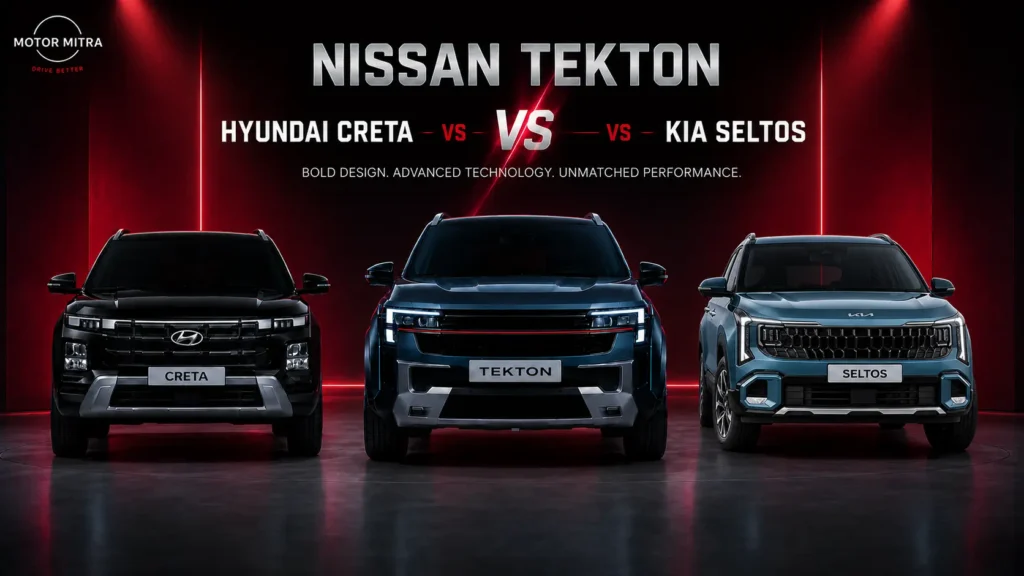
The mid-size SUV segment in India has never been this exciting. With the arrival of the Nissan Tekton on 9 July 2026, the battle that was once a two-horse race between the Hyundai Creta and Kia Seltos has now turned into a three-way war that promises to keep buyers confused and manufacturers on their toes. The Tekton enters the ring with aggressive pricing starting at Rs 10.49 lakh, the Creta holds its ground from Rs 10.91 lakh, and the all-new second-generation Seltos fights back from Rs 10.99 lakh. On paper, these three SUVs are separated by mere thousands of rupees at the entry level, but the differences in what they offer run much deeper than the price tags suggest.
This comparison breaks down everything you need to know about these three SUVs — from their engines and transmissions to their dimensions, features, safety credentials, and overall value proposition — so you can make an informed decision about which one truly deserves a spot in your garage.
Price Comparison
Let us start with what matters most to Indian buyers — the price. The Nissan Tekton undercuts both its rivals at the entry level with a starting price of Rs 10.49 lakh for the T160 Visia variant. The Hyundai Creta begins at Rs 10.91 lakh for the E petrol variant, while the 2026 Kia Seltos starts at Rs 10.99 lakh for the HTE trim. At the top end, the Creta stretches all the way to Rs 20.11 lakh, the Seltos goes up to Rs 19.99 lakh, and the Tekton tops out at Rs 18.59 lakh.
What this means is that the Tekton is not only the most affordable entry point into this segment but also the most affordable at the top end. The starting prices of the Tekton and Creta are separated by just Rs 30,000, making them closely matched at the entry level. However, the Tekton’s introductory pricing is available for a limited period, so the window of opportunity for early adopters is narrow. Nissan has clearly adopted a value-first strategy to lure buyers away from the established Korean duo, and on price alone, it makes a compelling case.
Engine and Performance – Power Under the Hood
This is where things get interesting. All three SUVs offer multiple powertrain options, but the character of each engine is distinctly different.
The Nissan Tekton comes with two petrol engine options. The T160 range gets a 1.0-litre three-cylinder turbo-petrol engine producing 100 hp and 166 Nm of torque, paired exclusively with a 6-speed manual gearbox. The T280 range steps up to a 1.3-litre four-cylinder turbo-petrol engine that delivers a healthy 163 hp and 280 Nm of torque, available with either a 6-speed manual or a 6-speed DCT automatic. The 1.0-litre engine claims a fuel efficiency of 19.4 kmpl, making it a sensible choice for city commuters.
The Hyundai Creta offers the widest powertrain range of the three. Buyers can choose from a 1.5-litre naturally aspirated petrol engine producing 113 hp, a 1.5-litre diesel engine with 113 hp, and a 1.5-litre turbo-petrol engine that pushes out 160 hp. Transmission options include a 6-speed manual, IVT (for the NA petrol), 6-speed automatic (for diesel), and a 7-speed DCT (for the turbo-petrol). The diesel option remains the Creta’s trump card — neither the Tekton nor the Seltos in its current generation can match the long-distance cruising ability and fuel efficiency that a diesel engine provides.
The 2026 Kia Seltos, now in its second generation built on the new K3 platform, offers three engine options as well — a 1.5-litre naturally aspirated petrol with 115 hp, a 1.5-litre turbo-diesel with 116 hp, and a 1.5-litre turbo-petrol producing 160 hp. Transmission choices include a 6-speed manual, IVT, 6-speed iMT, 7-speed DCT, and a 6-speed torque-converter automatic for the diesel. Like the Creta, the Seltos retains its diesel advantage over the Tekton.
In terms of outright performance, the Tekton’s 1.3-litre turbo with 163 hp and 280 Nm edges out both the Creta and Seltos turbo-petrol variants on torque, which translates to stronger mid-range punch and better overtaking ability on highways. However, the absence of a diesel option in the Tekton’s lineup is a notable gap that could deter buyers who clock high monthly kilometres.
Also Read: New Nissan Tekton Launched in India at Rs 10.49 Lakh – A Bold Return to the Mid-Size SUV Battlefield
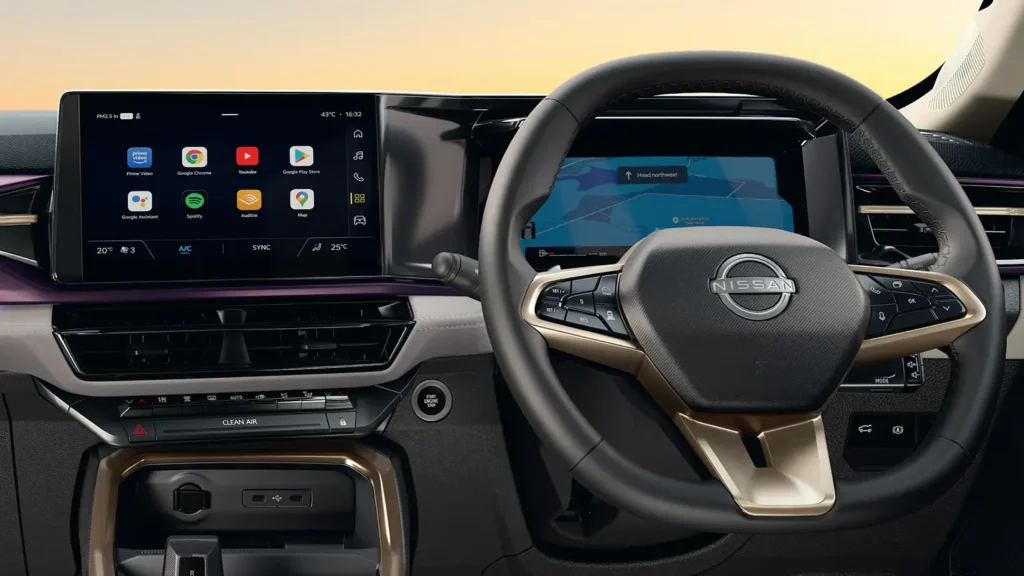
Tekton
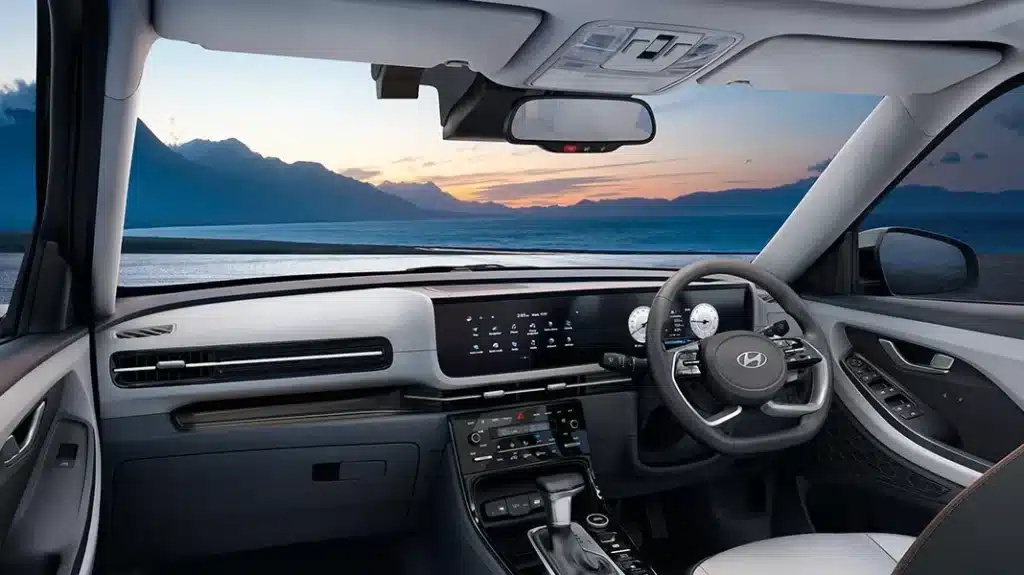
Creta
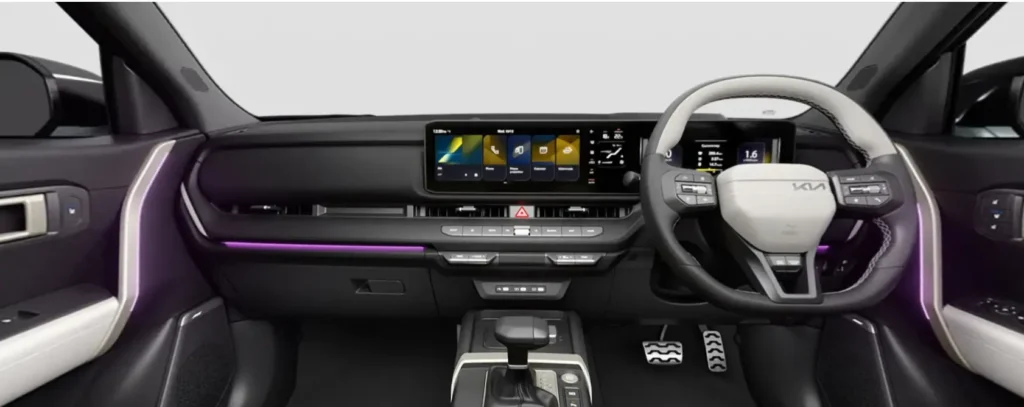
Seltos
Also Read: Tech vs Luxury: 2026 Kia Seltos HTX (A) Face Off Against the GTX Trim
Dimensions and Space
When it comes to road presence and interior space, dimensions play a crucial role. The Nissan Tekton measures 4,348 mm in length, 1,815 mm in width, 1,674 mm in height, and rides on a wheelbase of 2,657 mm. It offers a ground clearance of 212 mm and a boot space of 518 litres.
The Hyundai Creta, in its second-generation facelifted avatar, measures approximately 4,330 mm in length, 1,790 mm in width, 1,635 mm in height, with a wheelbase of 2,610 mm. The Kia Seltos second-generation is similarly sized, built on the new K3 platform that has brought improvements in interior space over its predecessor.
The Tekton is the longest, widest, and tallest of the three, and its wheelbase advantage of nearly 47 mm over the Creta translates directly into more legroom for rear-seat passengers. The 518-litre boot is also among the largest in the segment, making the Tekton a practical choice for families who frequently travel with luggage. The 212 mm ground clearance gives it a slight edge in tackling rough roads and speed breakers without scraping the underbody.
Features and Technology
In today’s market, features sell cars almost as much as engines do, and all three manufacturers know this well.
The Nissan Tekton comes loaded with a fully digital instrument cluster, panoramic sunroof, automatic climate control, ambient lighting, a premium sound system, wireless smartphone charger, push-button engine start/stop, and Level 2 ADAS with functions like adaptive cruise control, lane-keeping assist, and autonomous emergency braking. The Tekton is offered in six variants — Visia, Visia+, Acenta, N-Connecta, Tekna, and Tekna+ — ensuring a wide spread of features across the range.
The Hyundai Creta counters with its own impressive arsenal including a 10.25-inch touchscreen infotainment system, a 10.25-inch digital cluster, panoramic sunroof, ventilated front seats, Bose premium audio, 360-degree camera, blind-spot monitoring, wireless charging, and Level 2 ADAS with 19 functions. The Creta has always been the benchmark for features in this segment, and the facelifted version has only widened that gap.
The 2026 Kia Seltos brings a 12-inch LCD instrument cluster, a 10.25-inch touchscreen with wireless smartphone connectivity, dual-pane panoramic sunroof, flush door handles, IceCube LED headlamps, StarMap DRLs, and a comprehensive ADAS suite. The new-generation Seltos has significantly upped its game in terms of interior quality and technology, making it feel more premium than ever before.
All three SUVs are evenly matched on features in their top variants. However, the Creta and Seltos have a slight edge in terms of feature availability across lower variants, thanks to their wider variant spread and years of refinement. The Tekton, being a brand-new product, will need time to prove whether its feature execution matches the quality standards set by the Korean rivals.
Safety – Non-Negotiable in 2026
Safety has become a decisive factor for Indian car buyers, and this is where the Nissan Tekton makes its strongest statement. The Tekton has achieved a full 5-star Bharat NCAP safety rating right out of the gate, which is a remarkable achievement for a car at this price point. Its safety suite includes electronic stability control, automatic braking system with electronic brakeforce distribution, and Level 2 ADAS capability.
The 2026 Kia Seltos has also scored impressively in Bharat NCAP testing, with an adult occupant protection score of 31.70 out of 32 and a child occupant protection score of 45 out of 49 — effectively a 5-star rating as well. The Seltos comes equipped with 6 airbags as standard, ESC, all-wheel disc brakes, TPMS, and ADAS on higher variants.
The Hyundai Creta offers 6 airbags, ESC, hill-start assist, all four disc brakes, ISOFIX child-seat anchors, and Level 2 ADAS on select variants. While the Creta’s safety equipment list is comprehensive, its older Global NCAP rating of 3 stars (tested in basic specification) is a point of concern, though the current facelifted model with enhanced safety features would likely score significantly better if retested.
On safety alone, the Tekton and the new Seltos have a clear edge with their verified 5-star crash test ratings, giving buyers peace of mind that these SUVs will protect their families in the unfortunate event of a collision.
Verdict – Which One Should You Buy?
Choosing between the Nissan Tekton, Hyundai Creta, and Kia Seltos ultimately comes down to your priorities.
If you want the best value for money with aggressive pricing, a powerful turbo-petrol engine, top-tier safety, and the largest dimensions in the segment, the Nissan Tekton is the car to buy. It offers more car for less money, and its 5-star safety rating and 163 hp turbo engine make it a genuinely exciting proposition. However, the lack of a diesel option and Nissan’s relatively smaller service network in India are factors you must consider.
If you want the most well-rounded package with the widest choice of engines including diesel, a proven track record of reliability, excellent resale value, and the most feature-rich cabin in the segment, the Hyundai Creta remains the safe and sensible choice. It has been India’s best-selling SUV since 2020 for good reason — it does everything well and nothing poorly.
If you want a fresh, modern design with cutting-edge technology, a premium cabin feel, strong safety credentials, and the backing of Kia’s excellent after-sales network, the 2026 Kia Seltos is hard to ignore. The second-generation model is a massive leap over its predecessor and offers a driving experience that feels genuinely premium.
The Tekton has the ingredients to succeed in this segment. Whether Nissan has the support structure — in terms of dealership network, after-sales service, and spare parts availability — to back it up is the real question that only time will answer.
FAQ
1.Which is cheaper — Nissan Tekton, Hyundai Creta, or Kia Seltos?
The Nissan Tekton is the most affordable of the three, starting at Rs 10.49 lakh compared to Rs 10.91 lakh for the Creta and Rs 10.99 lakh for the Seltos (all ex-showroom).
2. Which has the most powerful engine among Tekton, Creta, and Seltos?
The Nissan Tekton’s 1.3-litre turbo-petrol produces 163 hp and 280 Nm, which is slightly more powerful and significantly torquier than the Creta and Seltos turbo-petrol engines that produce 160 hp each.
3. Does the Nissan Tekton have a diesel engine?
No, the Nissan Tekton is available only with petrol engines — a 1.0-litre turbo (100 hp) and a 1.3-litre turbo (163 hp). The Creta and Seltos both offer diesel options.
4. Which SUV has the best safety rating — Tekton, Creta, or Seltos?
Both the Nissan Tekton and 2026 Kia Seltos have achieved 5-star Bharat NCAP safety ratings. The Hyundai Creta has not been tested under the latest Bharat NCAP protocol.
5. Which is the biggest SUV among the three?
The Nissan Tekton is the longest (4,348 mm), widest (1,815 mm), and has the longest wheelbase (2,657 mm) among the three, offering the most cabin and boot space.
For more such updates on latest cars, bikes and EVs stay connected to MotorMitra. #gaadiyonkismartguide