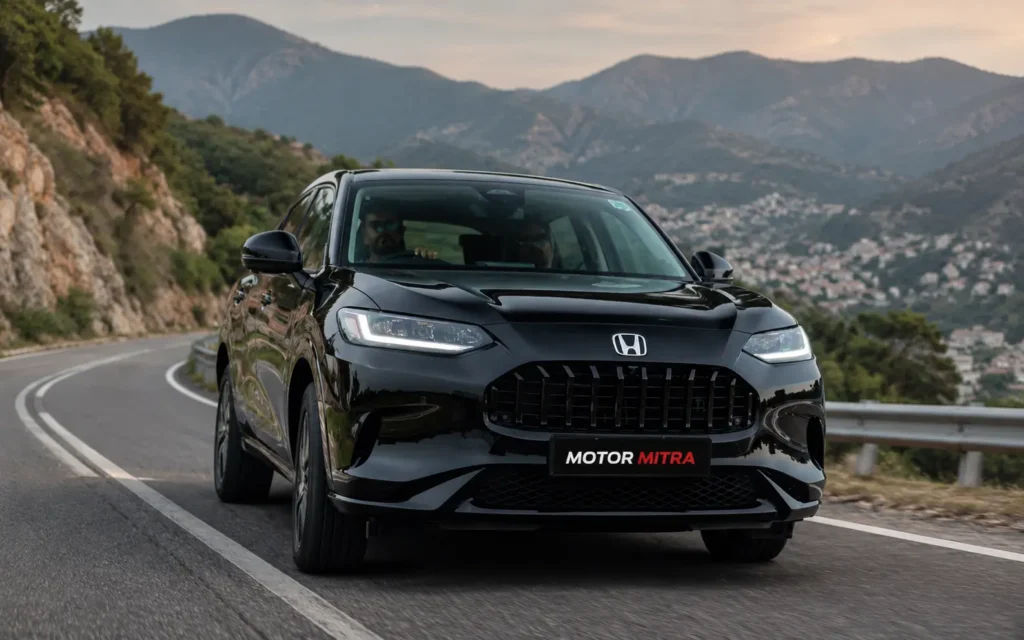
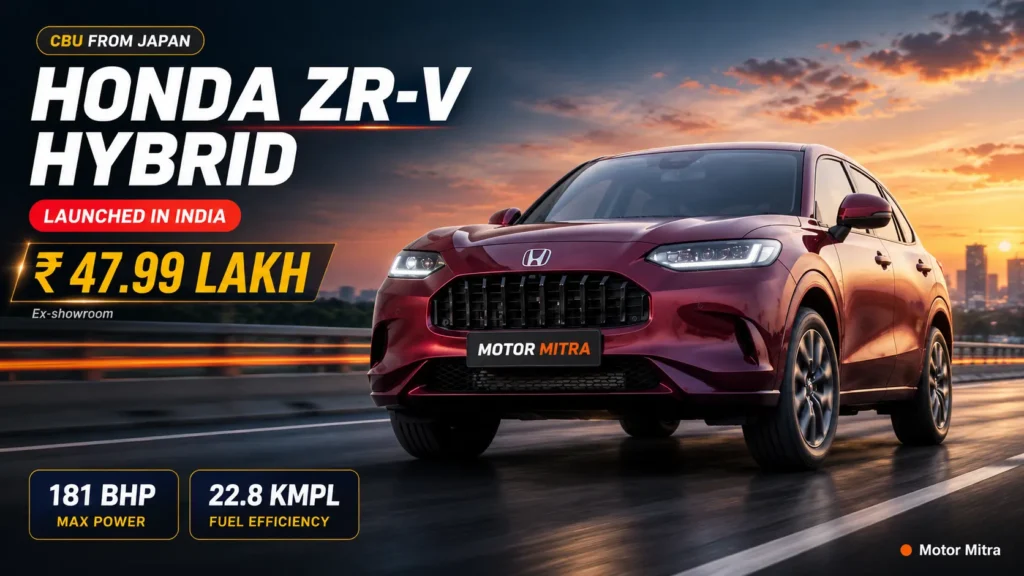
The Honda ZR-V Hybrid’s headline fuel efficiency figure of 22.80 kmpl is genuinely remarkable for a vehicle that produces 181 bhp and weighs over 1,400 kg. It is the kind of number that makes you do a double-take because it seems too good to be true for a proper SUV with genuine performance capabilities. But ARAI-certified figures and real-world efficiency are two very different things, and the true value proposition of the ZR-V’s hybrid system can only be understood when you calculate actual running costs, compare them against conventional alternatives, and determine whether the fuel savings justify the significant purchase price premium over non-hybrid competitors.
This analysis breaks down the ZR-V’s real-world mileage expectations, calculates the cost per kilometre, compares it against key competitors, and ultimately answers the question that every potential buyer is asking – does the hybrid efficiency make financial sense, or is it simply a feel-good feature that never actually pays back the premium?
ARAI vs Real-World – What to Actually Expect
The ARAI-certified figure of 22.80 kmpl is achieved under standardised test conditions that do not perfectly replicate Indian driving conditions. However, Honda’s e:HEV hybrid system has a unique characteristic that works in its favour – it actually performs better in city driving conditions than on highways, which is the opposite of conventional engines. This is because the hybrid system can operate in pure EV mode during low-speed city driving, and the regenerative braking system recovers energy during the frequent braking that city traffic demands.
Based on global owner reports from markets where the ZR-V has been on sale since 2022, and accounting for Indian driving conditions including higher ambient temperatures, more aggressive driving patterns, and frequent use of air conditioning, realistic real-world figures are approximately 20 to 22 kmpl in pure city driving with moderate traffic, 17 to 19 kmpl in highway driving at speeds above 100 kmph where the engine runs directly, and 18 to 20 kmpl in mixed city-highway conditions that most Indian owners will experience.
These figures are extraordinary by any standard. A conventional 2.0-litre petrol SUV in this segment typically delivers 10 to 12 kmpl in city conditions and 13 to 15 kmpl on highways. Even diesel SUVs, which are traditionally the efficiency champions, manage only 12 to 14 kmpl in city driving and 16 to 18 kmpl on highways. The ZR-V’s hybrid system delivers diesel-beating efficiency while running on petrol, which means lower emissions, smoother operation, and no diesel particulate concerns.
Running Cost Per Kilometre
Using a conservative real-world estimate of 19 kmpl for mixed driving conditions and the current petrol price of approximately Rs 105 per litre in Delhi, the Honda ZR-V’s running cost works out to Rs 5.53 per kilometre for fuel alone.
For comparison, the Jeep Compass diesel delivering approximately 15 kmpl in mixed conditions with diesel priced at Rs 92 per litre costs Rs 6.13 per kilometre. A conventional 2.0-litre petrol SUV delivering 12 kmpl costs Rs 8.75 per kilometre. The ZR-V saves Rs 0.60 per km compared to the Compass diesel and a massive Rs 3.22 per km compared to a conventional petrol SUV.
These per-kilometre differences may seem small in isolation, but they compound dramatically over the course of ownership. For a buyer driving 50 km daily, the ZR-V saves Rs 30 per day compared to the Compass diesel and Rs 161 per day compared to a conventional petrol SUV. Over a year, that translates to Rs 10,950 saved versus diesel and Rs 58,765 saved versus conventional petrol.
The 5-Year Fuel Cost Picture
For a typical premium SUV buyer driving 15,000 km per year over five years, the total distance covered would be 75,000 km. Here is how the fuel costs compare across the ownership period.
The Honda ZR-V Hybrid at 19 kmpl and Rs 105 per litre petrol would consume approximately 3,947 litres of fuel over 75,000 km, costing Rs 4,14,474 in total fuel expenditure. The Jeep Compass diesel at 15 kmpl and Rs 92 per litre diesel would consume 5,000 litres, costing Rs 4,60,000. A conventional 2.0-litre petrol SUV at 12 kmpl would consume 6,250 litres, costing Rs 6,56,250.
The ZR-V saves approximately Rs 45,500 in fuel costs compared to the Compass diesel over five years, and approximately Rs 2,41,776 compared to a conventional petrol SUV. While the saving versus diesel is modest, the saving versus a conventional petrol competitor is substantial – nearly Rs 2.5 lakh over five years.
Does the Hybrid Premium Pay Back?
This is the critical question. The Honda ZR-V at Rs 47.99 lakh is approximately Rs 18 lakh more expensive than a comparable Jeep Compass. Can fuel savings alone recover this premium? The honest answer is no – at Rs 45,500 saved per year versus diesel, it would take approximately 39 years for fuel savings alone to recover the Rs 18 lakh price difference. The ZR-V’s pricing premium is clearly not justified by fuel savings alone when compared to the Compass.
However, this comparison is somewhat unfair because the ZR-V and Compass are not equivalent vehicles. The ZR-V offers CBU Japanese build quality, a more advanced powertrain, superior safety technology, better cargo space, and a more refined driving experience. The price premium pays for these attributes collectively, not just for fuel efficiency. The hybrid system is one component of a premium package, not the sole justification for the price.
Where the fuel efficiency argument becomes more compelling is when comparing the ZR-V against other vehicles in its actual price bracket – vehicles like the Skoda Kodiaq, Volkswagen Tiguan, or even entry-level luxury SUVs. Against these competitors delivering 10 to 13 kmpl, the ZR-V’s 19 kmpl represents savings of Rs 2 to Rs 2.5 lakh over five years, which is a meaningful contribution to the total cost of ownership.
Insurance and Maintenance Costs
The ZR-V’s higher purchase price means higher insurance premiums. First-year comprehensive insurance for the ZR-V would be approximately Rs 1.2 to Rs 1.5 lakh, compared to Rs 60,000 to Rs 80,000 for the Compass. Over five years, the cumulative insurance cost difference could amount to Rs 2 to Rs 3 lakh in the ZR-V’s disfavour.
Maintenance costs for the ZR-V should be reasonable given Honda’s reputation for reliability and the hybrid system’s reduced wear on conventional components. The regenerative braking system means brake pads last significantly longer than conventional vehicles – often two to three times longer. The engine operates less frequently and at lower stress levels, potentially extending oil change intervals and reducing engine wear. Honda’s scheduled service costs in India are typically competitive, though the CBU status means some parts may be more expensive than locally manufactured alternatives.
Total Cost of Ownership
When you combine purchase price, fuel costs, insurance, maintenance, and estimated resale value over a five-year period, the ZR-V’s total cost of ownership is higher than the Compass in absolute terms. However, the gap narrows significantly when you factor in the ZR-V’s lower fuel costs, potentially lower maintenance costs due to the hybrid system’s reduced mechanical wear, and Honda’s traditionally strong resale values.
The ZR-V’s resale value after five years is difficult to predict given its novelty in the Indian market, but Honda vehicles globally retain value well, and the growing acceptance of hybrid technology suggests that demand for used ZR-V units should remain healthy. If Honda eventually begins local assembly, the CBU units could even appreciate in relative value as collector-worthy first-batch imports.
Who Benefits Most from the ZR-V’s Efficiency?
The ZR-V’s hybrid efficiency delivers the greatest financial benefit to buyers who drive extensively in city conditions. The hybrid system’s ability to operate in pure EV mode at low speeds means that city-heavy drivers will achieve the highest real-world efficiency figures, potentially exceeding 20 kmpl consistently. For a buyer driving 80 km daily in city traffic – perhaps a business owner or professional with a long urban commute – the annual fuel saving compared to a conventional petrol SUV could exceed Rs 80,000.
Conversely, buyers who primarily drive on highways at sustained high speeds will see less benefit from the hybrid system, as the engine operates directly at highway speeds and the efficiency advantage over diesel narrows. For pure highway use, a diesel SUV may actually deliver comparable or even better efficiency than the ZR-V.
The ideal ZR-V buyer is someone who does 60 to 70 percent city driving with the remainder on highways, drives 40 to 60 km daily, values the quiet and refined hybrid driving experience, and plans to keep the vehicle for at least five years to maximise the cumulative fuel savings and benefit from the comprehensive warranty coverage.
FAQ
1. What is the real-world mileage of Honda ZR-V?
In real-world Indian conditions, expect 20-22 kmpl in city, 17-19 kmpl on highway, and 18-20 kmpl in mixed driving. City mileage is actually better than highway due to the hybrid system’s EV mode and regenerative braking.
2. How much does Honda ZR-V cost per km to run?
At 19 kmpl real-world efficiency and Rs 105/litre petrol, the ZR-V costs approximately Rs 5.53 per km for fuel. This is lower than the Jeep Compass diesel (Rs 6.13/km) and significantly lower than conventional petrol SUVs (Rs 8.75/km).
3. Does Honda ZR-V hybrid save money vs diesel?
Yes, but modestly. The ZR-V saves approximately Rs 45,500 in fuel over 5 years (75,000 km) compared to the Compass diesel. The savings are much larger (Rs 2.4 lakh) compared to conventional petrol SUVs.
4. What is the 5-year fuel cost of Honda ZR-V?
At 15,000 km/year for 5 years, the ZR-V’s total fuel cost is approximately Rs 4.14 lakh. Compare this to Rs 4.60 lakh for Compass diesel and Rs 6.56 lakh for a conventional petrol SUV.
5. Is Honda ZR-V expensive to maintain?
Honda vehicles are known for reliability and reasonable maintenance costs. The hybrid system actually reduces wear on brakes (regenerative braking) and engine (operates less frequently), potentially lowering long-term maintenance costs.
6. Does Honda ZR-V hybrid battery need replacement?
Honda provides an 8-year/1,60,000 km battery warranty. Globally, Honda hybrid batteries have proven extremely durable, with most lasting the entire life of the vehicle without replacement. Battery replacement concerns are largely unfounded for Honda hybrids.
For more such updates on latest cars, bikes and EVs stay connected to MotorMitra. #gaadiyonkismartguide