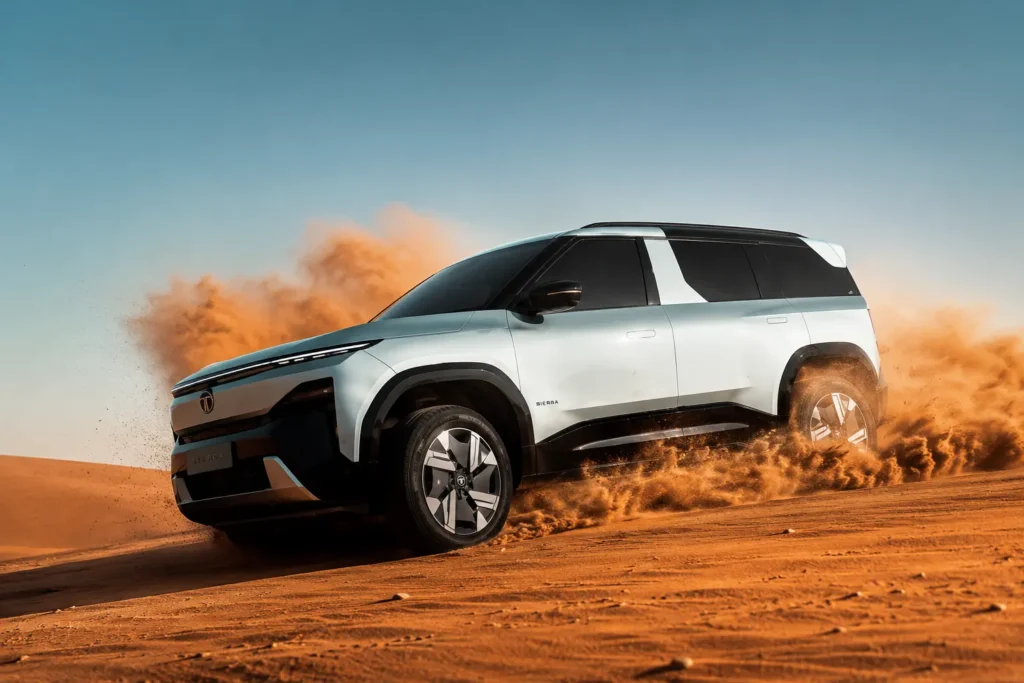
The Indian midsize electric SUV segment was supposed to follow a highly predictable, calculated growth trajectory. Heavyweight contenders like the Maruti Suzuki e Vitara, Hyundai Creta EV, and Mahindra BE 6 were all gearing up for a conventional street fight based on urban commuting manners and basic front-wheel-drive efficiency. By releasing footage of a production-ready Tata Sierra EV scaling the 300-meter high Tal Moreeb sand dune in Abu Dhabi, the brand completely rewrote the rules of engagement.
Scaling a vertical 50-degree desert wall—whilst casually showing an internal dashboard displaying a 530 km real-world range, a dual-motor AWD layout, and an emergency Boost Mode—has changed everything. As the Sierra EV prepares for its official price announcement tomorrow, June 30, 2026, the entire industry is facing a massive shakeup. Here is an auto-journal breakdown of the structural damage the Sierra EV is about to inflict on its closest rivals.
Maruti Suzuki’s entire marketing blueprint for the upcoming e Vitara was anchored around its sophisticated, Toyota-jointly developed electronic All-Wheel Drive (e-AWD) system. Maruti intended to position itself as the only true, rugged mechanical choice for buyers looking to graduate beyond soft urban crossovers.
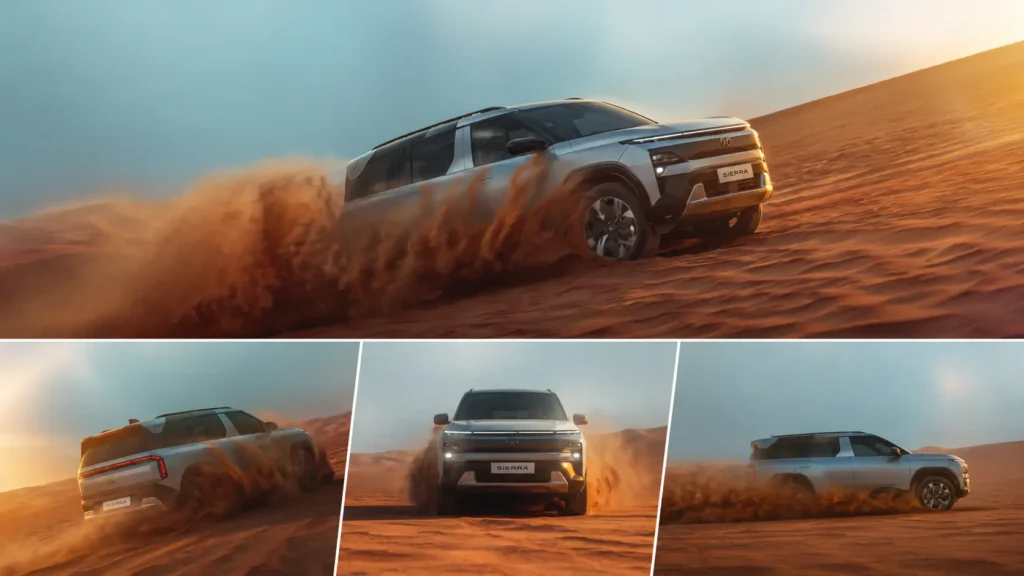
Tata didn’t just match Maruti’s AWD claims; they completely overshadowed them by showcasing their Quad Wheel Drive (QWD) dual-motor setup surviving the world’s most unforgiving desert terrain. By generating a staggering 504 Nm of instant torque and pairing it with a specialized “Sand Mode” and a temporary Boost Mode loop, Tata has established the Sierra as a hardcore off-roader before it even hits showrooms. Maruti will now have to work twice as hard to convince buyers that the e Vitara’s road-biased AWD can compete with a vehicle that literally climbs desert mountains for breakfast.
Hyundai is preparing to launch the Creta EV by leveraging the absolute brand equity of its internal combustion engine (ICE) bestseller. However, structurally, the Creta EV remains a modified version of an existing petrol platform, restricting its mechanical architecture strictly to a Front-Wheel-Drive (FWD) layout.
The Sierra EV is built from the ground up on Tata’s dedicated acti.ev+ skateboard architecture. By prioritizing a ground-up EV platform, Tata has managed to pack a massive 65 kWh base battery and a flagship 75 kWh battery pack into the chassis.
When the Sierra’s teaser leaked a 424 km remaining range at just 80% charge, it effectively set the benchmark for a 530+ km real-world range. Hyundai’s expected 60 kWh battery and FWD setup suddenly look highly conventional and urban-restricted. Buyers spending upwards of ₹20 Lakh are going to seriously question why they should settle for a front-wheel-drive urban commuter when Tata is offering a purpose-built overland cruiser for the exact same money.
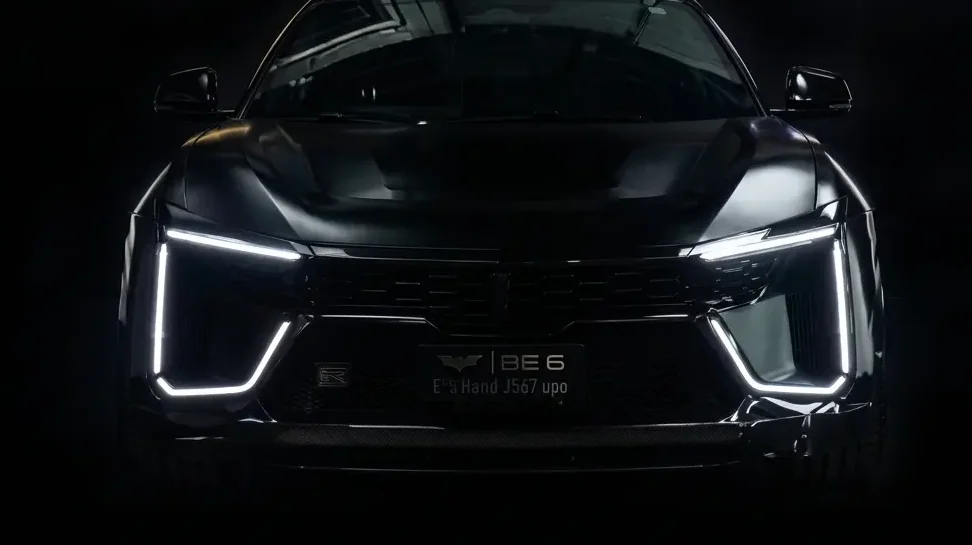
Mahindra’s upcoming BE 6 was relying heavily on shock-and-away design tactics. With its extreme coupe-SUV roofline, fighter-jet cockpit, and rear-wheel-drive layout, the BE 6 was targeting young tech-enthusiasts who want a sports car aesthetic. While the BE 6 looks incredibly futuristic, it severely compromises on real-world utility due to its sloping roofline cutting into rear passenger headroom and cargo space.
The Sierra EV counters with an absolute masterstroke of automotive packaging. It pairs iconic, emotional 1991 retro-nostalgia (the signature alpine rear glasshouse wrap) with cutting-edge cabin luxury.
| Interior Battleground | Mahindra BE 6 Layout | Tata Sierra EV Setup |
| Dashboard Interface | Driver-Centric Cockpit Panels | Futuristic Triple-Screen Array (Passenger Independent display) |
| Cabin Space / Utility | Restricted Rear Headroom & Boot | Spacious Lounge Seats & Massive 622L Boot |
| Glass Area | High Waistline, Compact Windows | Large Panoramic Sunroof + Iconic Alpine Windows |
By offering a high-tech triple-screen layout alongside uncompromised family comfort and massive boot space, the Sierra effectively wins over the practical family gatekeepers who would otherwise veto the highly radical Mahindra.
The Threat of Battery-as-a-Service (BaaS)
Perhaps the most terrifying aspect of the Sierra EV’s arrival for its competitors is Tata’s potential deployment of its Battery-as-a-Service (BaaS) pricing model. If Tata replicates the strategy used in its lower portfolio, it could structurally decouple the cost of the 65 kWh battery pack from the physical vehicle. This would allow Tata to drop the initial showroom entry price of the Sierra EV from an expected ₹18.50 Lakh down to a jaw-dropping shock price of around ₹14.99 Lakh, moving the battery cost into a flexible monthly usage subscription. If this happens, it will completely disrupt the pricing matrix of the entire midsize SUV segment, forcing Maruti, Hyundai, and Mahindra into an immediate, defensive price war.
Motor Mitra Verdict
The incoming Tata Sierra EV is a textbook execution of market disruption. Tata didn’t just build an electric vehicle; they manufactured an emotional event. By packing it with top-tier overland hardware like the 504 Nm QWD system, expanding the range threshold past the true 500 km mark, and wrapping it inside a highly practical, nostalgia-driven silhouette, the Sierra EV doesn’t just slot into the midsize segment—it completely dominates the narrative.
When the final price sheets drop tomorrow on June 30, the competition won’t just be looking at a new rival; they will be forced to entirely recalculate how they justify their own value propositions to the Indian buyer.
For more such updates on latest cars, bikes and EVs stay connected to MotorMitra. #gaadiyonkismartguide