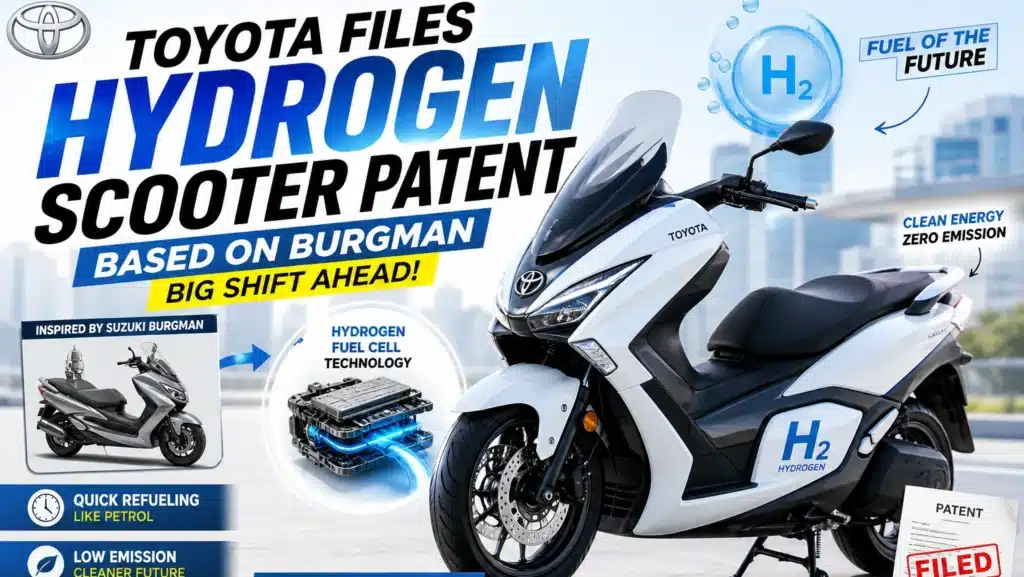
At a time when most brands are focused heavily on electric mobility, Toyota has quietly taken a completely different route—and it could change how you think about the future of scooters. Instead of following the EV race blindly, the company has filed a hydrogen scooter patent, and what makes it even more interesting is its clear connection to the familiar Burgman-style maxi scooter format.
This is not just another concept that will disappear after headlines fade. A hydrogen-powered scooter from a brand like Toyota signals a much bigger shift, because it challenges the idea that electric is the only future. And that is exactly where this story starts becoming more important than it initially appears.
Why This Matters
- Hydrogen power offers an alternative beyond petrol and electric
- Burgman-style design makes it familiar and practical
- Could redefine how future urban mobility actually works
Also Read:- TVS Sales Hit 4.73 Lakh — Scooters Are Taking Over While Bikes Collapse
What Toyota Has Actually Revealed
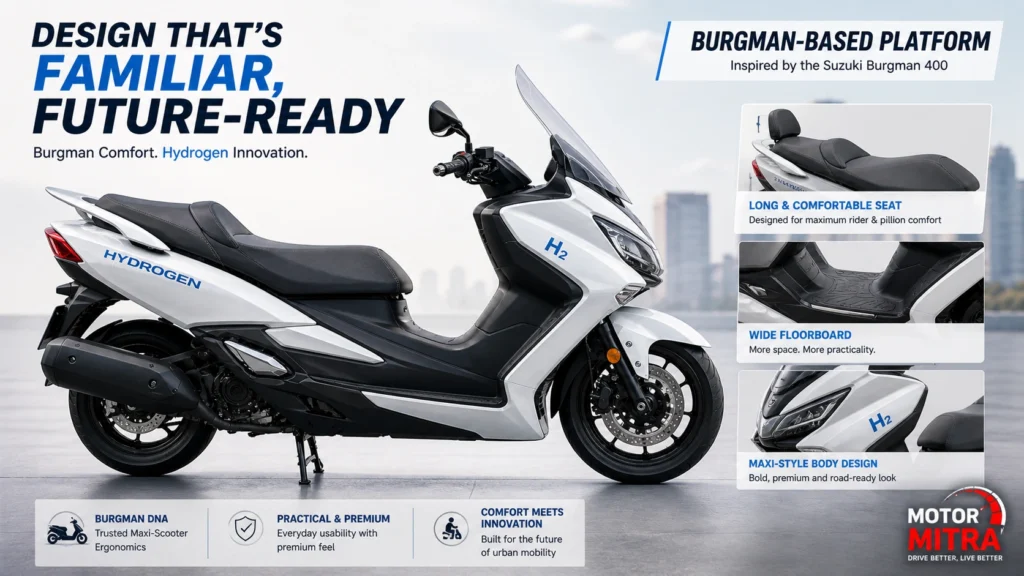
The patent highlights a scooter layout that strongly resembles the Burgman-style maxi scooter, known for its comfortable riding posture, larger body panels, and practical urban usability. This immediately makes the concept relatable, because it is not introducing a completely unfamiliar design that buyers might struggle to accept.
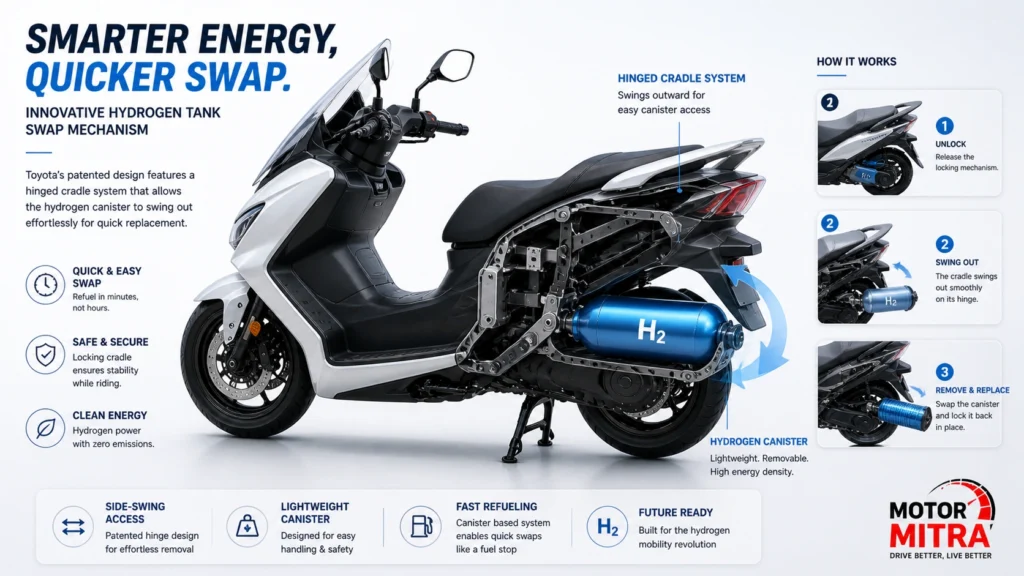
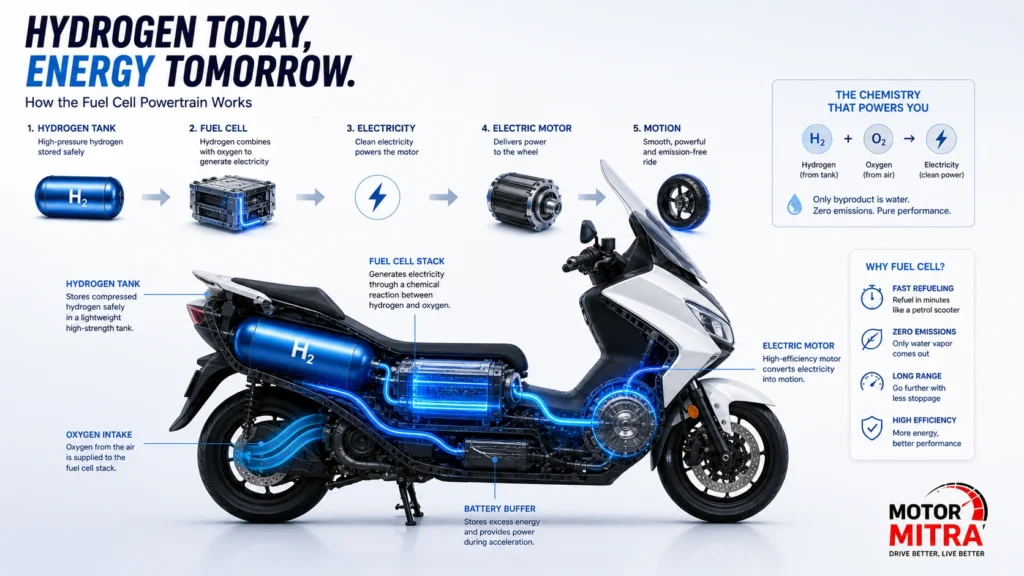
At the same time, the real focus is not the design but the power source. Instead of petrol or a conventional electric setup, the scooter is designed around a hydrogen-based system, placing it in a completely different category of future mobility solutions. This is where the concept starts becoming real.
Familiar Design, Completely Different Thinking
By using a Burgman-like structure, Toyota is clearly trying to reduce the learning curve for buyers. The riding posture, storage practicality, and overall layout are expected to feel familiar, which makes the transition easier if such technology reaches production.
However, beneath that familiar shell lies a completely different approach to mobility. Hydrogen power changes how energy is stored, delivered, and consumed, making this scooter fundamentally different from anything buyers are used to today.
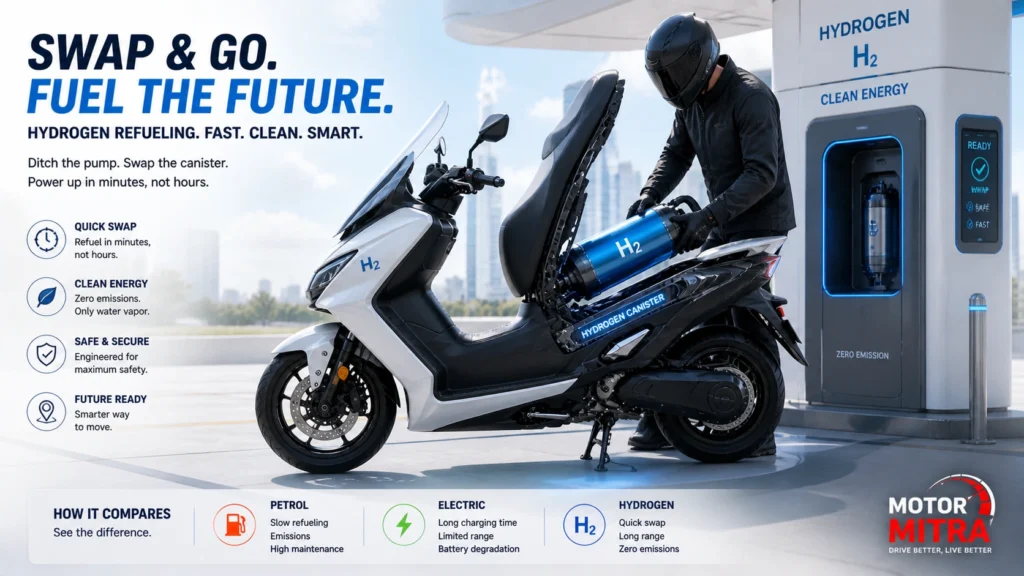
Quick Comparison: Petrol vs Electric vs Hydrogen
| Factor | Petrol Scooter | Electric Scooter | Hydrogen Scooter |
|---|---|---|---|
| Fuel Type | Petrol | Battery | Hydrogen |
| Refueling Time | Quick | Slow (charging) | Quick |
| Emissions | High | Low | Very Low |
| Infrastructure | Strong | Growing | Limited |
| Future Scope | Declining | Growing | Emerging |
This is where things start to shift—and where most buyers begin to rethink their expectations.
The difference is not just about technology—it is about which system can realistically fit into daily life without compromise.
This Is Where Buyers Get Confused
Most buyers today are already trying to understand whether petrol or electric makes more sense for them. Now, the introduction of hydrogen adds a third dimension to that decision, making the landscape even more complex.
That is where curiosity quickly turns into hesitation, because while hydrogen sounds promising, it also raises questions about availability, cost, and real-world practicality. This is exactly where decision-making starts to slow down.
Also Read:- Top 10 Scooters FY26 – Activa to Yamaha
What Hydrogen Actually Changes
The biggest advantage of hydrogen is that it offers quick refueling similar to petrol while still maintaining low emissions like electric vehicles. This combination makes it extremely attractive in theory, especially for urban users who want convenience without compromising sustainability.
However, the challenge lies in infrastructure. Without proper hydrogen refueling networks, even the most advanced vehicle cannot succeed in everyday use—and that is where its real potential lies.
Why Toyota Is Exploring This Path
Toyota has consistently invested in hydrogen technology across global markets, and this scooter patent reflects that long-term strategy. Instead of focusing only on electric vehicles, the company is exploring multiple pathways to future mobility.
By adapting hydrogen technology into a familiar scooter format, Toyota is testing whether this approach can work at a mass-market level, especially in markets where two-wheelers dominate everyday mobility.
Should You Be Excited or Cautious
The idea of a hydrogen-powered scooter is exciting because it offers a new direction that avoids the limitations of both petrol and electric options. It feels like a fresh solution in a market that is becoming increasingly predictable.
At the same time, early-stage technology always comes with uncertainty. That is where most buyers will pause before deciding, because fuel access, pricing, and long-term reliability still need clear answers.
The Bigger Picture No One Is Talking About
This move is not just about one scooter—it reflects a much larger shift in how companies are approaching future mobility. Instead of relying on a single solution, manufacturers are now exploring multiple technologies simultaneously.
That means the future may not be limited to electric alone. Hydrogen could become an important part of the mix, especially if infrastructure improves and adoption actually begins to scale.
Final Verdict: A Bold Idea That Needs the Right Timing
Toyota’s hydrogen scooter patent may look familiar on the outside, but what it represents is a completely different direction for the industry. It combines a known design with an unknown fuel, creating a mix of comfort and curiosity for buyers.
If the ecosystem supports it, this could become a major breakthrough. But until then, it remains a concept that buyers should watch closely rather than rush into.
Because sometimes, the biggest shift is not in design—but in what will power the future.