
Tata Tiago Facelift To Launch With Paddle Shifters on CNG AMT
The Indian entry-level hatchback market is on the verge of a major disruptive cycle. Tata Motors has once again turned to social media to drop a high-impact teaser video outlining what to expect from the highly anticipated 2026 Tata Tiago facelift. While the brand had already sparked conversation around the standard internal combustion engine (ICE) variants, this latest video focuses purely on the cabin execution and mechanical cleverness of the refreshed Tiago iCNG variant.
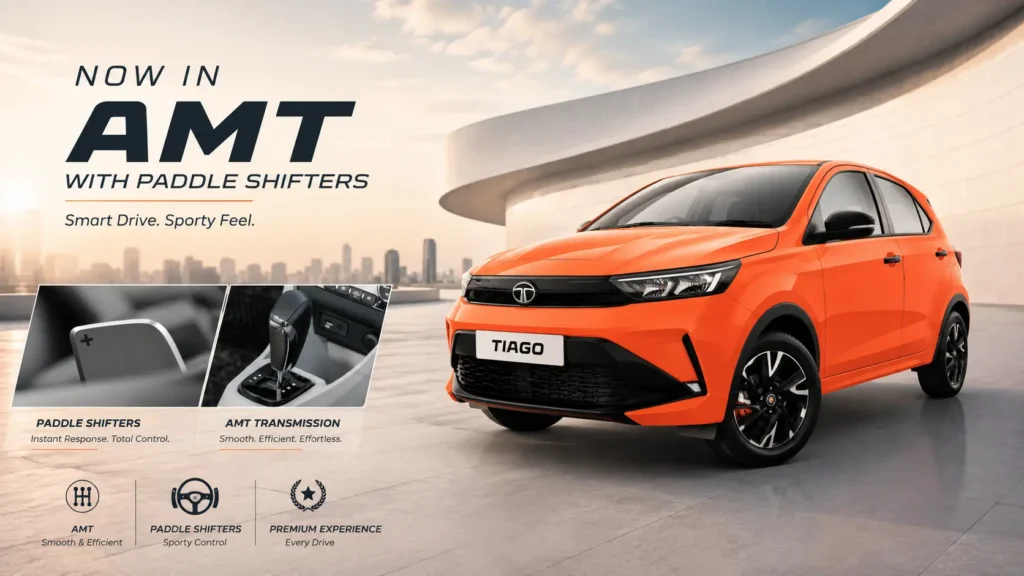
Historically, buyers chose Compressed Natural Gas (CNG) models purely to save running costs, entirely surrendering performance, premium tech, and convenience features. Tata Motors single-handedly broke that stereotype by introducing factory-fitted automatic gearboxes to the alternate-fuel space. Now, the 2026 Tiago facelift is taking that democratic approach to premium tech a step further: it is officially set to become the cheapest car in India to offer paddle shifters.
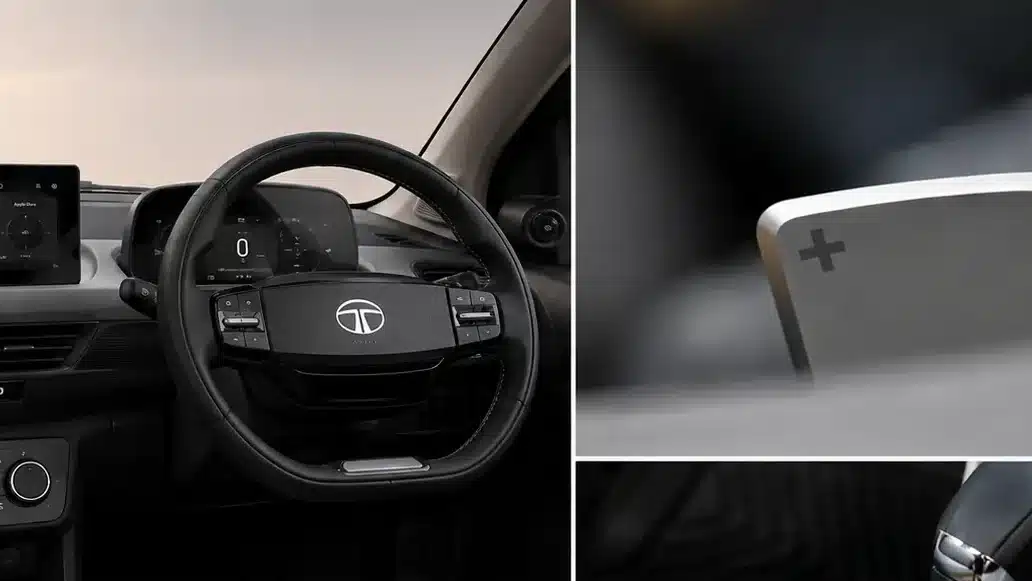
The primary talking point of this mid-cycle refresh centers around the transmission tunnel. Tata Motors has confirmed that both the standard 1.2-litre petrol model and the bi-fuel iCNG variants will couple their 5-speed Automated Manual Transmission (AMT) with steering-wheel-mounted paddle shifters.
[1.2L 3-Cylinder Engine] ---> [5-Speed AMT Box] ---> [Steering Column Paddle Shifters]
From an engineering perspective, this is a fascinating addition. Automated Manual Transmissions are notorious for their inherent “head-nod” effect and hesitant shift logic under hard acceleration. By introducing column-mounted paddle shifters, Tata is putting manual intervention directly into the driver’s hands. While it will not mimic the instantaneous, lightning-fast cogs of a premium dual-clutch transmission (DCT), the ability to manually downshift before an overtaking maneuver or hold a gear through a twisty section of road adds an entirely new dimension of driver control to an affordable commuter asset.
Also Read: 2026 Tata Tiago Facelift Interior Revealed: Bigger Screens & Premium Cabin
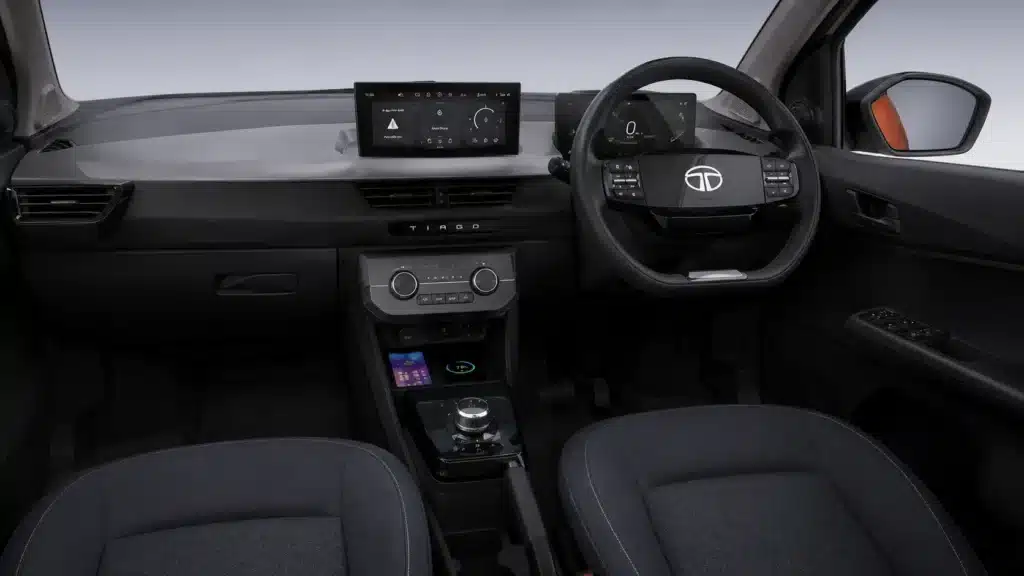
Moving past the paddle shifters, the teaser video reveals a radically altered dashboard layout that moves completely away from the outgoing car’s flowing, rounded architecture. Instead, the 2026 Tiago shifts toward a far cleaner, more premium, layered horizontal design layout.
The interior upgrades are extensive:
- Dual Screen Layout: A large 10.25-inch free-standing central MMI touchscreen handles infotainment, augmented by a floating, crisp digital driver’s display.
- Premium Controls: The traditional mechanical gear lever has been completely ditched for a premium, knurled rotary gear selector dial (displaying R, N, and D configurations) flanked by gloss-black trim.
- Convenience Enhancements: The center console integrates a 65W Type-C fast-charging outlet alongside dual wireless smartphone charging pads.
- Rear Cabin Upgrades: Rear passengers finally receive dedicated rear AC vents and charging ports to boost overall occupant comfort.
On the visual front, the teaser makes it clear that Tata is using a subtle styling hand rather than a complete sheet-metal re-write. The front fascia gets updated, sleeker LED headlamps with integrated daytime running lights (DRLs), a reprofiled front bumper, and a sharper grille structure that mirrors the design language seen on the Altroz and Punch. The side profile benefits from refreshed dual-tone alloy wheels and blacked-out ORVM housings.
[Front Profile: Uniform Look] ---> [Rear Profile: Distinct iCNG Badge]
Also Read: Tata Tiago AMT CNG Variants Explained — From ₹7.32 Lakh to ₹7.92 Lakh
At the rear, the aesthetic differences between the petrol and bi-fuel models remain minimal, down to the distinct iCNG badging stamped onto the right side of the tailgate.
Crucially, the video highlights the absolute masterstroke of Tata’s packaging: the dual-cylinder CNG technology. By splitting a massive, intrusive single tank into two smaller, cylindrical tanks and tucking them flat underneath the boot floor, Tata has successfully freed up a significant amount of usable luggage room. When you lift the tailgate, the visual absence of massive tanks instantly separates the Tiago from its primary market competitors.
Mechanically, the vehicle carries forward the proven, reliable 1.2-litre, three-cylinder naturally aspirated Revotron engine.
True to Tata’s current engineering philosophy, the car will retain its signature direct start-in-CNG function, allowing the engine to fire up smoothly using alternative fuel without requiring an initial petrol cycle.
With prices scheduled for an official reveal on May 28, 2026, market experts predict a modest premium of roughly ₹30,000 over the current model’s ex-showroom brackets. This aggressive packaging leaves key cross-shopped rivals like the Maruti Suzuki Celerio and the Hyundai Grand i10 Nios in an interesting position. Neither rival offers an automatic transmission option with their factory-fitted CNG kits, let alone the driver involvement of steering-wheel paddles. Tata Motors continues to rewrite the budget-car script, proving that choosing economy doesn’t mean you have to surrender engagement.