
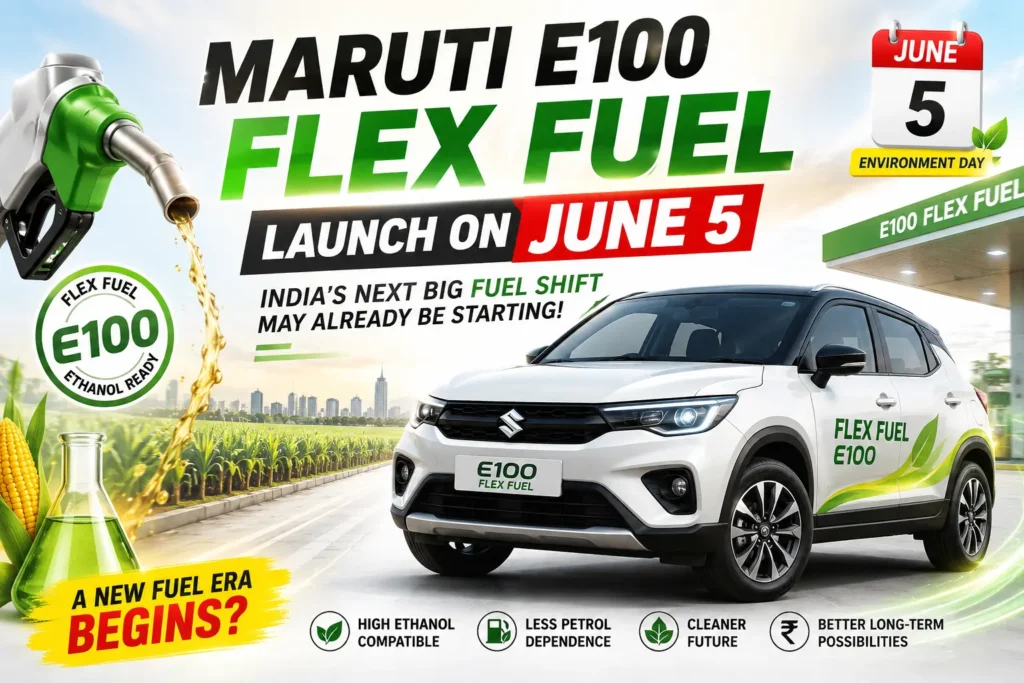
Buying a petrol car in India still feels like the safest decision for most people. EVs continue expanding, but concerns around charging infrastructure, long-distance practicality and ownership experience remain part of buyer conversations. Yet the next meaningful Maruti E100 Flex Fuel shift in India’s automotive story may not arrive through either of those routes. It could emerge through something less dramatic but potentially far more practical: alternative fuels.
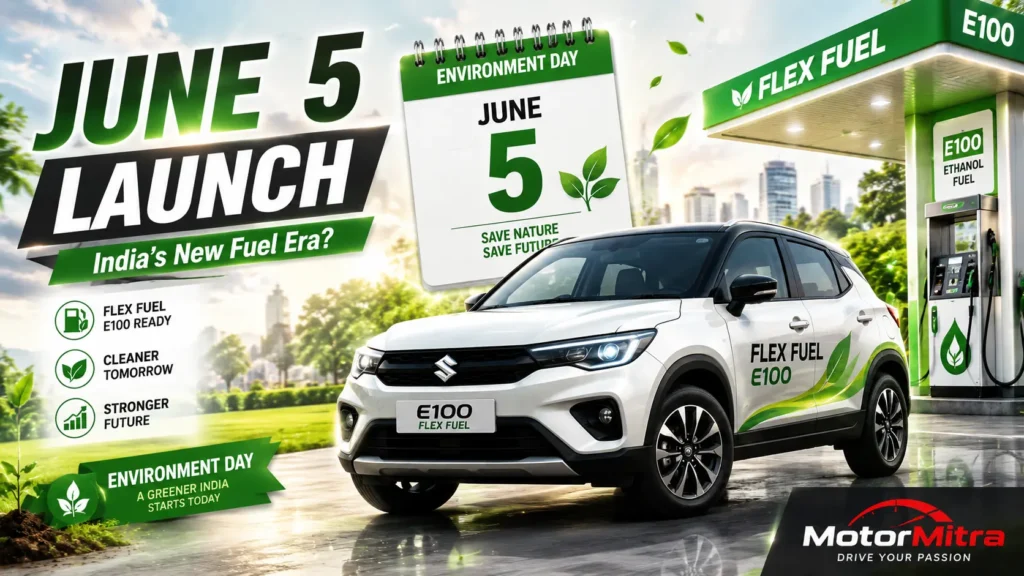
That is exactly why reports around the expected Maruti E100 Flex Fuel launch on June 5, Environment Day, are attracting attention. The discussion goes beyond one vehicle because when India’s largest carmaker explores technologies linked with future fuel diversification, buyers naturally begin asking a bigger question: could the way Indians think about fuel slowly start changing?
Why This Matters
- The expected Maruti E100 Flex Fuel launch on June 5 highlights continued focus on alternative fuel mobility.
- Strong government support around ethanol-based technologies may increase long-term attention toward flex fuel adoption.
- Future buyers could eventually compare fuel ecosystems alongside vehicle features and pricing before purchasing.
Also Read:- Maruti Suzuki June 2026 Price Hike Announced: Cars To Get Costlier By Up To Rs 30,000
The Bigger Story May Not Be The Car — It Could Be The Direction India Is Taking
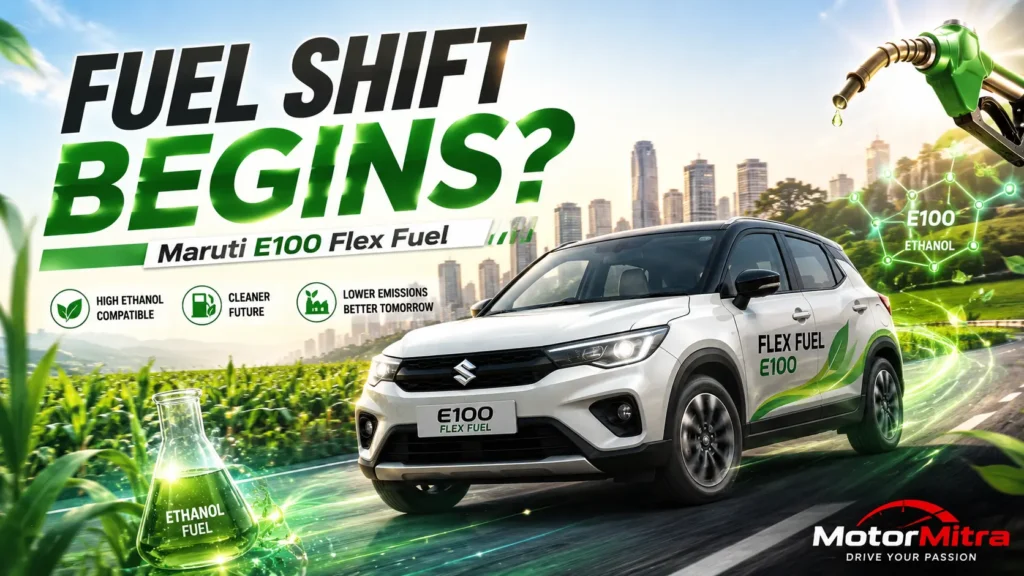
The expected Maruti E100 Flex Fuel unveiling matters because Maruti Suzuki influences Indian passenger vehicle trends more than most manufacturers. Technologies explored by the company often attract stronger attention simply because of its scale and market presence.
Government support around ethanol-based mobility has also remained consistent through recent years, with policymakers repeatedly discussing reduced oil dependence and broader fuel diversification. That combination creates curiosity because technologies backed by both industry interest and policy support often evolve differently from standalone experiments.
The important point here is uncertainty should remain part of the discussion. A launch event alone does not confirm immediate widespread adoption, nor does it automatically suggest conventional petrol vehicles lose relevance. Industry shifts typically move slower than headlines imply.
Understanding Why Flex Fuel Vehicles Continue Generating Attention
A flex fuel vehicle is designed to operate using varying blends of petrol and ethanol. In simple terms, the expected Maruti E100 Flex Fuel focuses on compatibility with significantly higher ethanol concentration compared with conventional fuel blends currently used by most buyers.
The broader objective includes reducing crude oil dependence while encouraging domestic ethanol production. For policymakers, that supports energy diversification. For consumers, however, the conversation eventually becomes more practical: Will ownership remain convenient? Will fuel availability improve? Could long-term running costs become more attractive?
Those questions matter because alternative mobility technologies succeed only when daily usability improves alongside policy ambition.
Maruti E100 Flex Fuel: Areas Buyers Could Watch Closely
| Area | Expected Direction | Why Buyers Could Care | Possible Long-Term Impact |
|---|---|---|---|
| Fuel Compatibility | Higher ethanol blend support | Alternative ownership path | Reduced petrol dependence |
| Ownership Costs | Future running cost discussions | Cost sensitivity | Buyer curiosity |
| Infrastructure | Developing ecosystem | Daily practicality | Gradual adoption |
| Policy Support | Strong government focus | Industry confidence | Increased momentum |
| Market Effect | Alternative fuel attention | New purchase thinking | Broader diversification |
Large automotive transitions rarely happen overnight because infrastructure expansion, consumer confidence and ownership familiarity usually take years to develop. That matters because buyers planning their next vehicle purchase may eventually ask whether future fuel options deserve greater attention before making long-term decisions.
Also Read:- Maruti Suzuki’s Next Big Moves Caught On Camera – YMC, Brezza FL And Baleno FL Tested Together
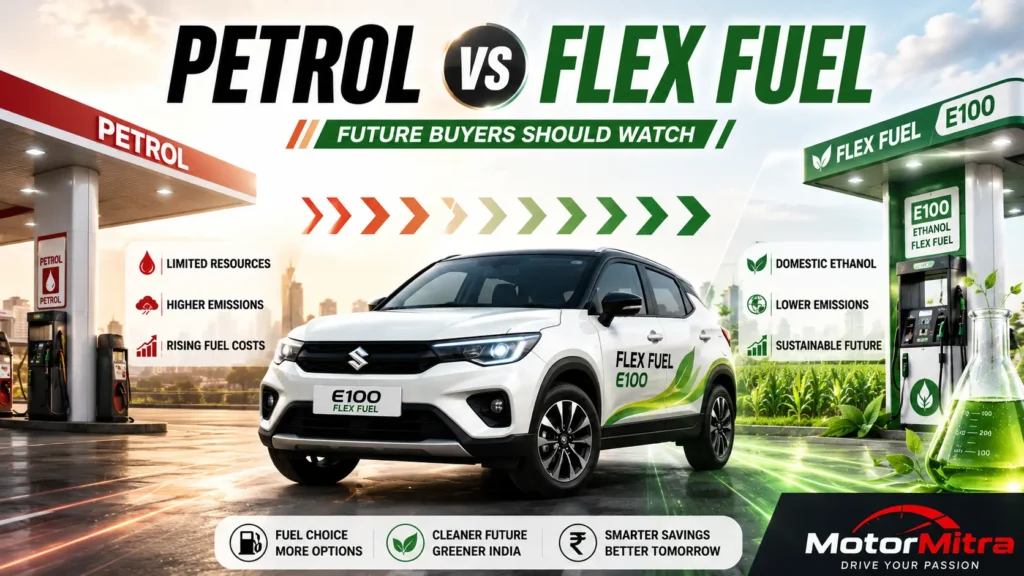
Maruti E100 Flex Fuel vs Conventional Fuel Thinking: Why Buyer Behaviour Could Slowly Change
Consumers purchasing cars today often compare safety, features, mileage and resale value. If alternative fuel adoption strengthens over time, future purchase decisions may gradually include another factor: which fuel ecosystem appears more practical for long-term ownership.
| Factor | Conventional Petrol Vehicles | Flex Fuel Vehicles |
|---|---|---|
| Fuel Source | Petrol | Petrol + higher ethanol blend |
| Infrastructure | Established | Expanding |
| Familiarity | Very high | Developing |
| Ownership Mindset | Existing standard | Emerging consideration |
| Future Potential | Stable | Evolving |
This does not mean buyers needing a vehicle immediately should delay decisions purely because of the expected Maruti E100 Flex Fuel launch. Transitions toward alternative mobility generally take years rather than months, and practicality remains one of the biggest deciding factors.
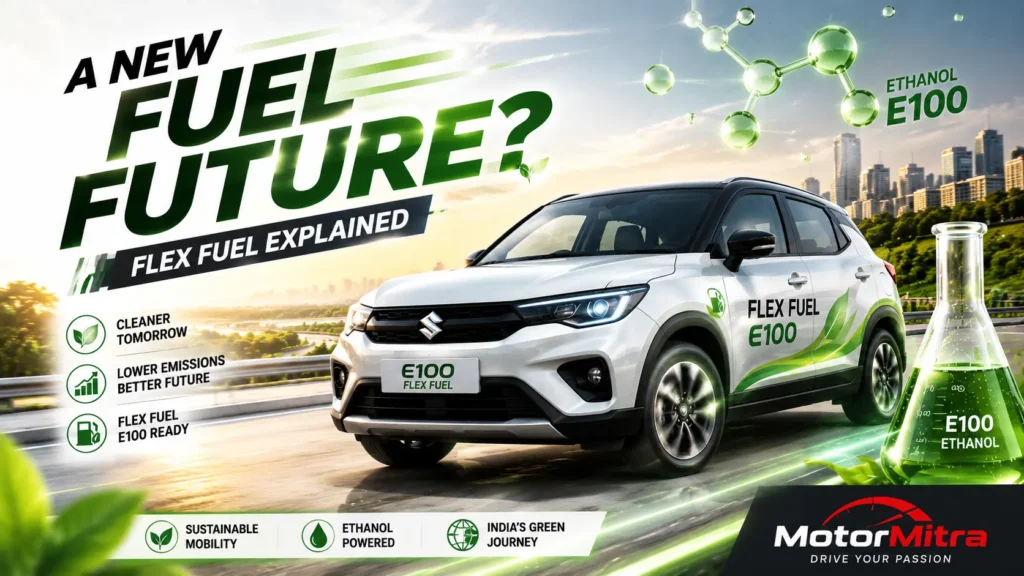
However, consumers interested in future ownership trends may still watch this development closely because early industry shifts often appear insignificant before gradually influencing larger buying patterns.
Buy Or Wait Verdict
The expected Maruti E100 Flex Fuel launch on June 5 may initially look like another automotive announcement linked with Environment Day. The larger story, however, may involve whether India is slowly preparing for broader fuel choices sooner than many consumers expected.
Because automotive transitions rarely become important at the moment they begin. Sometimes buyers only recognise their significance after the market has already started changing around them.