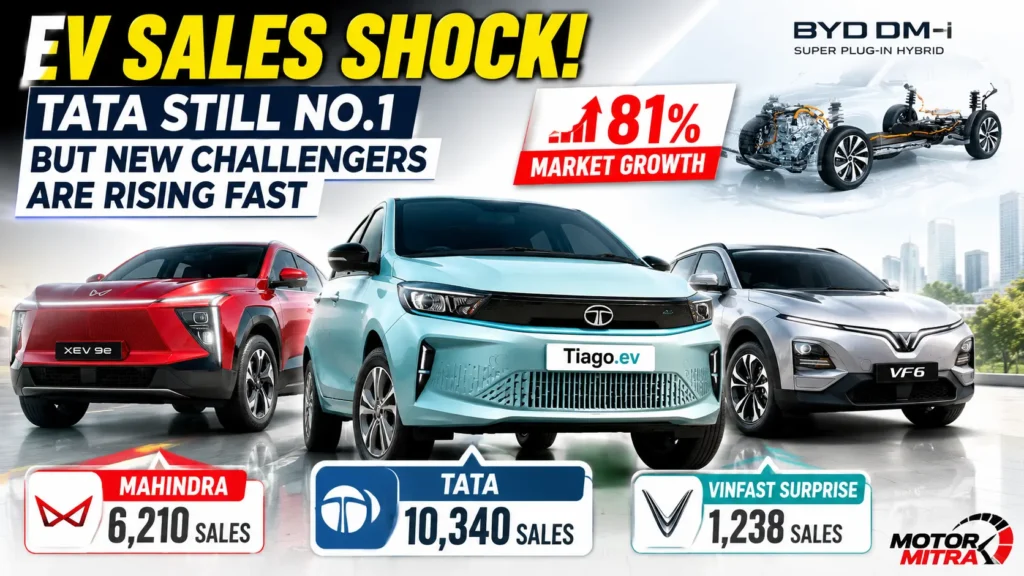
Tata Motors is still India’s EV king, but the latest sales report tells a much bigger story. Mahindra is steadily closing the gap, Maruti Suzuki has finally started making its presence felt, BYD is gaining momentum, and VinFast has entered the market with surprising force. For buyers planning to switch to an electric car, Electric Car Sales May 2026 may be remembered as the month that proved India’s EV market is no longer a one-brand game.
The latest industry data shows that India’s electric passenger vehicle segment sold 26,682 units in May 2026. That represents an impressive 81.2% year-on-year growth and a 2% month-on-month increase over April. More importantly, the market added nearly 12,000 extra units compared to the same month last year, highlighting how rapidly EV adoption is accelerating across the country.
While Tata Motors continues to lead comfortably, the battle for the positions behind it is becoming increasingly intense. Several manufacturers posted strong gains, while a few established players lost momentum. The result is a market that is more competitive than ever before.
Also Read:- 1,200+ Km Without Range Anxiety? BYD’s New Hybrid Tech Could Be A Game Changer
India’s EV Sales Scorecard – May 2026
| Brand | Sales | Share | Trend | Key EVs |
|---|---|---|---|---|
| Tata | 10,340 | 38.75% | ▲ Growing | Punch EV, Nexon EV, Curvv EV |
| Mahindra | 6,210 | 23.27% | ▲ Strong Growth | BE Range |
| MG | 4,984 | 18.68% | ▼ Slight Drop | Windsor EV, Comet EV |
| Maruti | 1,591 | 5.96% | ▲ Rising | e Vitara |
| VinFast | 1,238 | 4.64% | New | VF Series |
| BYD | 686 | 2.57% | ▲ Fast Growth | Seal, Atto 3 |
| Hyundai | 460 | 1.72% | ▼ Falling | Creta EV |
| Kia | 349 | 1.31% | ▼ Falling | EV6 |
Tata Still Leads, But The Gap Is Being Watched
Despite increasing competition, Tata Motors remains firmly in control of India’s EV market. The company sold 10,340 electric cars during May 2026 and captured nearly 39% of the total segment. The performance becomes even more impressive when compared to May 2025, as Tata more than doubled its sales volume and recorded over 103% year-on-year growth.
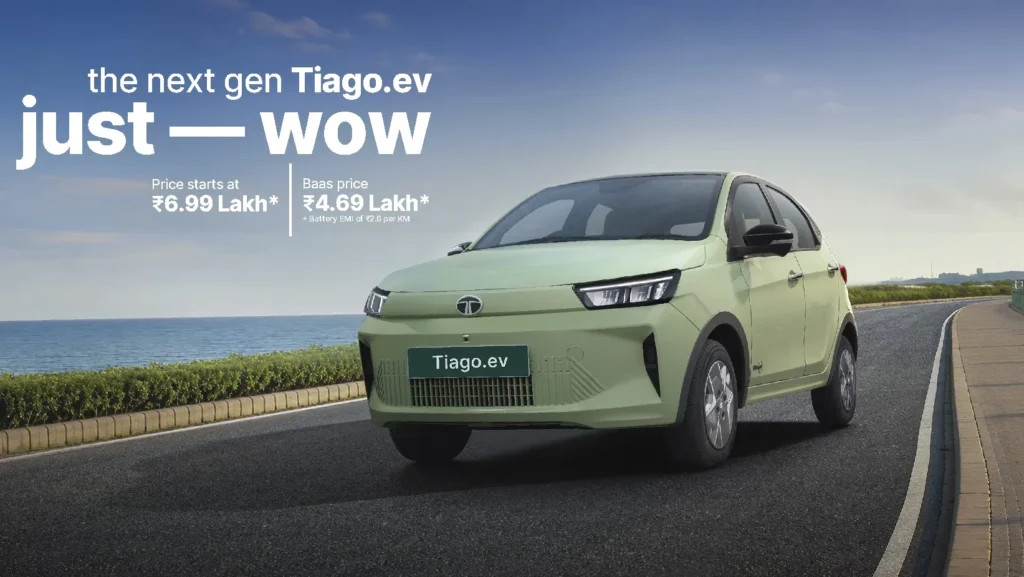
Much of this success continues to come from the company’s broad EV portfolio. From the affordable Tiago EV to the Punch EV, Nexon EV and Curvv EV, Tata has products spread across multiple price points. That wide coverage allows the brand to attract first-time EV buyers as well as customers looking for larger and more premium offerings. For now, no rival can match Tata’s range of electric products in the mainstream market.
Mahindra Is Emerging As The Biggest Threat
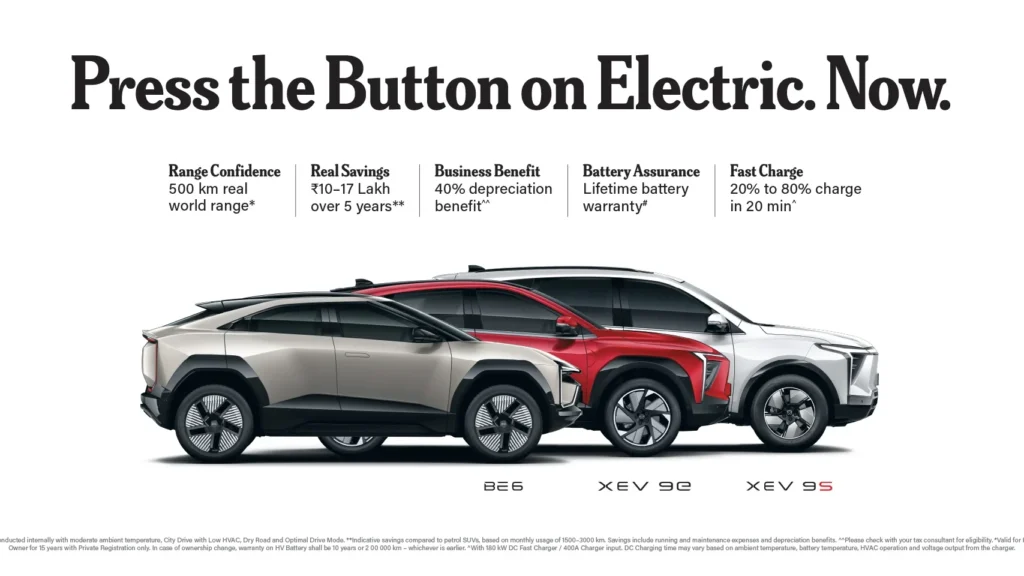
If there is one company that should make Tata pay attention, it is Mahindra. The automaker sold 6,210 electric vehicles in May and secured more than 23% market share, comfortably holding the second position.
What makes Mahindra’s performance particularly important is the speed at which it is growing. The company added more than 3,300 units compared to the same month last year and delivered nearly 115% year-on-year growth. Mahindra’s focus on premium electric SUVs and next-generation EV platforms is clearly resonating with buyers who want something beyond the traditional mainstream offerings.
Also Read:- Tata Avinya Just Got More Interesting: New Platform Details Change The Story
The gap between Tata and Mahindra remains substantial, but Mahindra is currently the only manufacturer showing the scale and momentum needed to challenge the leader over the coming years.
Maruti, VinFast And BYD Are Changing The Game
The most fascinating part of the May 2026 report lies outside the top three positions. Maruti Suzuki sold 1,591 units and registered a healthy 19.53% month-on-month increase. Considering the company’s massive customer base and dealer network, even a modest EV push has the potential to reshape the market.
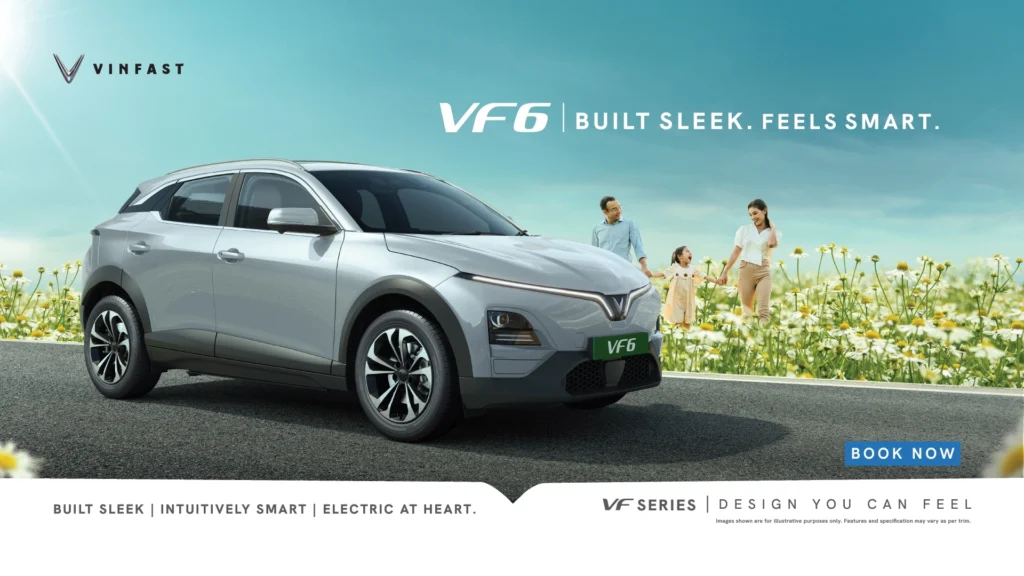
VinFast also deserves attention. The Vietnamese brand delivered 1,238 units during the month, immediately placing itself ahead of several established manufacturers. For a relatively new entrant, that is a notable achievement and suggests that Indian buyers are increasingly open to new EV brands.
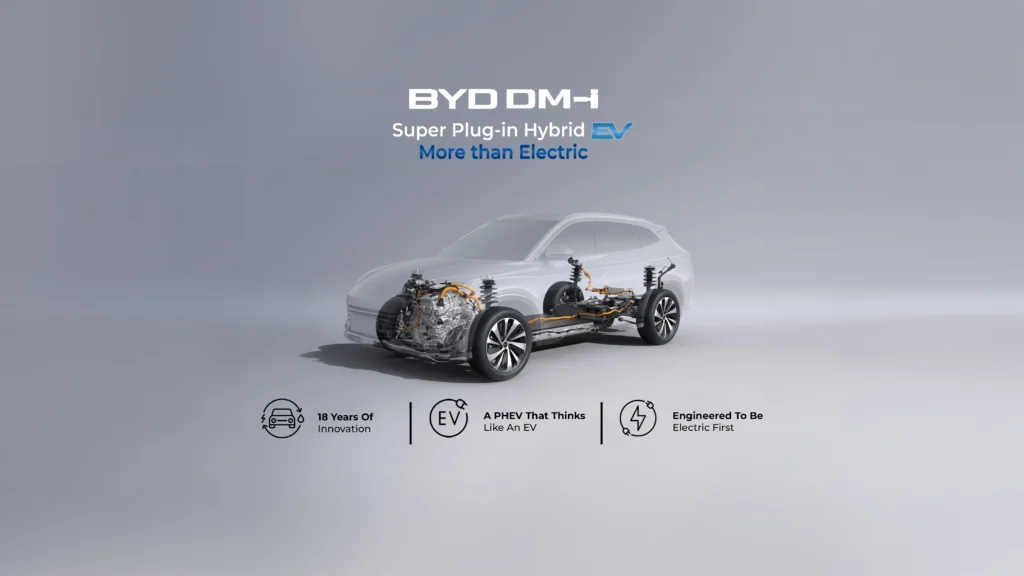
BYD recorded one of the strongest performances of the month, posting 25.41% month-on-month growth. The company sold 686 vehicles and continued building momentum in the premium EV space. As charging infrastructure improves and EV awareness increases, BYD’s technology-focused approach could help it gain a larger share of the market.
Not every manufacturer had reason to celebrate. Hyundai’s EV sales dropped to 460 units, while Kia recorded 349 units and a month-on-month decline. Meanwhile, BMW maintained its position as the leading luxury EV brand with 352 units, and Mercedes-Benz delivered an impressive 76.27% growth compared to April, demonstrating that premium electric mobility is gaining acceptance among luxury buyers as well.
What These Numbers Mean For EV Buyers
Sales figures do more than reveal which companies are winning. They often provide an early indication of where future investments, new launches, software updates, charging initiatives and after-sales support are likely to be concentrated. Strong sales typically encourage manufacturers to expand their EV portfolios and improve ownership experiences.
For buyers, the biggest takeaway from May 2026 is that India’s EV market has entered a new phase. Tata Motors remains the benchmark, but the competitive landscape is changing quickly. Mahindra is strengthening its position, Maruti is entering the fight, BYD is growing steadily, and VinFast has already made a noticeable impact.
For now, Tata remains comfortably ahead of everyone else. However, the latest numbers make one thing clear: India’s EV battle is no longer about a single dominant brand. It is becoming a genuine multi-player race, and that competition is likely to deliver better products, stronger technology and greater value for consumers in the months ahead.