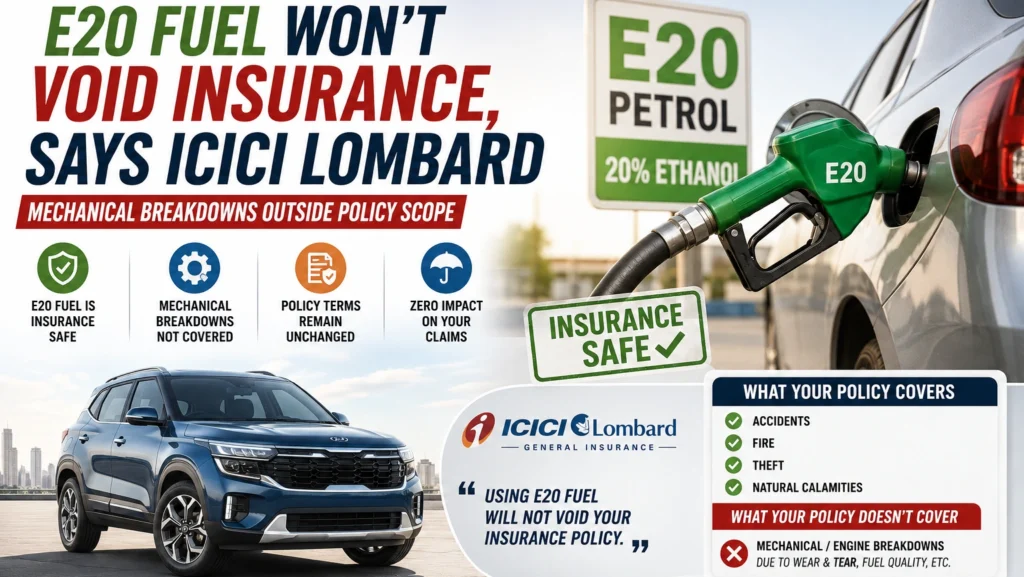
E20 Fuel usage will not lead to the cancellation of your motor insurance policy or the automatic rejection of accident claims, according to recent definitive directives issued by major financial underwriters across India. This major policy clarification comes as a massive relief for millions of motorists driving older petrol cars who were worried about legal compliance during the country’s aggressive green-energy transition. The core decision shifts the focus away from internal tank chemistry and places it back onto standard road risk protection, ensuring your comprehensive safety net remains fully operational.
For months, social media groups and automotive forums were filled with intense speculation that fueling older, non-compliant vehicles with ethanol-blended petrol would be categorized as intentional operator misconduct. That regulatory anxiety has completely dissolved now that leading insurance firms have explicitly separated normal vehicle operational wear from traditional accidental liabilities. This crucial infrastructure alignment ensures that hard-working car owners can continue using public refueling stations without the constant fear of facing sudden financial ruin after a highway mishap.
Why This Policy Framework Changes Consumer Confidence
- The Contract Legality Seal: Motor insurance underwriters have formally confirmed that all active third-party and comprehensive policy documents remain completely binding regardless of fuel blend ratios.
- The Negligence Clause Redefined: Filling up with government-mandated commercial petrol at a authorized station will never be classified as intentional vehicle abuse or a breach of policy terms.
- The Peril-Focused Evaluation Matrix: Surveyors are legally obligated to evaluate claims based on the actual physical impact or external incident rather than analyzing the fuel lines.
Also Read:- India’s Next Fuel Step: E25 Talks Begin After E20—Should You Wait to Buy a Car?
A Fresh Perspective: Differentiating Road Risk From Maintenance
Many vehicle owners often fail to recognize the strict legal boundary that separates a standard comprehensive insurance policy from a manufacturer’s mechanical component warranty. The latest structural guidelines surrounding the nationwide rollout of E20 Fuel serve as an excellent masterclass in how modern automotive risk assessment actually functions at the corporate surveyor level. If your vehicle undergoes a sudden external collision, localized fire, or third-party property damage, your underlying insurance coverage remains perfectly intact to handle the repair invoices.
The operational reality has been further validated by senior compliance officers who analyzed the market confusion triggered by earlier, ambiguous advisory blogs. The updated industry framework clearly outlines that the specific chemical composition of the combustible fluid inside your tank holds zero relevance during a standard accident investigation. Whether you are driving a vintage luxury sedan or a modern commuter hatchback, the surveyor’s primary job is to verify the occurrence of an insured peril—like a sudden rollover or external impacts—before approving the workshop payouts.
The Engineering Reality Inside The Underwriting Rules
The real technical nuance that every car owner must understand lies within the classic exclusion clauses governing gradual material deterioration and consequential damages. While your primary insurance policy cannot be invalidated by choosing standard fuel variants, insurers openly state that policy documents have never covered slow internal mechanical breakdown. Because ethanol absorbs moisture naturally, operating older engines that lack specialized anti-corrosive coatings can result in accelerated wear on fuel pump seals, rubber gaskets, and vintage steel fuel lines over extended periods.
While the immediate panic of total policy cancellation is officially dead, touring enthusiasts need to remember that chemical corrosion remains an out-of-pocket maintenance responsibility. Specialized add-ons, such as dedicated engine protection covers or return-to-invoice packages, are explicitly designed to shield owners from flash floods or sudden oil starvation. They do not extend to slow, long-term chemical degradation, meaning that any internal component upgrades required to handle modern blended petrol must be managed during your routine workshop service visits.
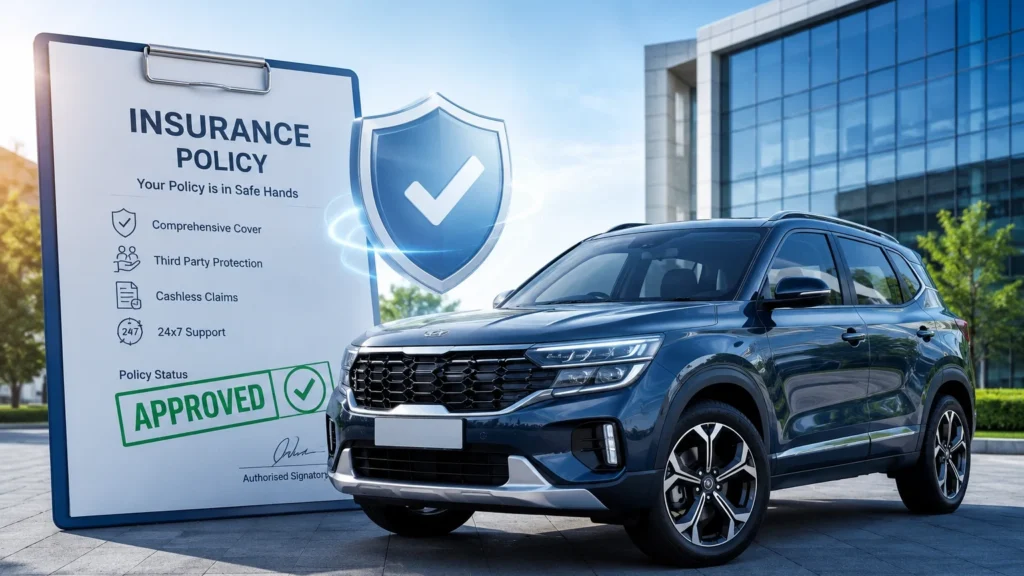
Core Technical Blueprint: Insurance Coverage Reality
| Underwriting Parameter | Pre-2023 Legacy Petrol Engines | Modern BS6 Phase 2 Compliant Cars | Operational Claims Impact |
| Policy Contract Status | 100% Active and Legally Enforced | 100% Active and Legally Enforced | Fuel blending cannot invalidate active policies. |
| Accidental Crash Approval | Fully Settled Under Standard Terms | Fully Settled Under Standard Terms | Processed normally based on physical road impact. |
| Theft & Third-Party Liability | Completely Honored by Insurers | Completely Honored by Insurers | Zero connection to changing fuel distribution. |
| Operator Negligence Filter | Ruled Out for Commercial Blends | Factory Approved Fuel Standard | Eliminates arbitrary rejections at workshop bays. |
| Slow Gasket Corrosion | Excluded Under Wear and Tear Clauses | Protected by Factory Material Upgrades | Treated as routine vehicle aging and upkeep. |
| Engine Protection Add-On | Covers Hydro-locking and Oil Leaks | Full Premium Component Coverage | Excludes long-term ethanol material wear. |
Step inside the corporate headquarters of the country’s largest underwriting networks, and it becomes completely clear why this synchronized operational announcement was fast-tracked. Since the central energy roadmaps have converted standard petrol pumps into blended supply nodes, penalizing regular citizens for using the only fuel available in the country would create an impossible legal gridlock. This explicit confirmation completely removes the legal ambiguity, allowing motorists to focus entirely on regular maintenance routines rather than worrying about insurance litigation.

Also Read:- Centre Waives Excise Duty on E22-E30 Petrol to Eliminate Double Taxation
Real-World Market Realignment
This rapid operational update will go a long way in stabilizing the sudden price drops seen across the massive pre-2023 used car market in India. Dealership syndicates and individual buyers were starting to avoid older premium vehicles out of a misplaced fear that future accident claims would be thrown out due to fuel non-compatibility. By firmly delinking claims processing from fuel station mixing ratios, the insurance industry has successfully protected the asset value and trade-in viability of millions of perfectly reliable family cars.
The final resolution of this insurance debate creates an immediate, friction-free pathway for smoother eco-friendly fuel integration across the national grid. When everyday vehicle owners realize that their legal financial armor remains completely bulletproof, the resistance against adopting domestic alternative fuel options completely fades away. This allows manufacturing networks and consumer groups to focus on long-term mechanical tuning solutions without forcing hard-working drivers into premature, expensive vehicle replacements.
Buy Or Wait?
The definitive verdict is to confidently retain your existing insurance policies and continue driving without any unnecessary anxiety. There is absolutely no logistical reason to panic-sell your reliable petrol vehicle or waste money on ultra-expensive premium fuels just to protect your legal claims processing status. Your insurance shield is robust, legally sound, and backed by solid industry consensus. Simply stick to your manufacturer’s recommended service windows, monitor your fuel lines during regular wheel balancing trips, and let your comprehensive policy manage the unpredictable road hazards.
Who Can Stop Worrying:
- Owners of legacy petrol vehicles who were terrified that a minor bumper scratch would face total claim denial due to the fuel sitting inside their tank.
- Daily metropolitan commuters who rely exclusively on standard commercial fuel options because high-octane alternatives are financially restrictive.
- Used car enthusiasts looking to secure incredible deals on older executive vehicles without sacrificing their comprehensive legal protection net.
Who Must Remain Vigilant:
- Owners of classic high-performance performance cars who must actively monitor their fuel systems to replace aging rubber lines before leaks occur.
- Negligent drivers who skip annual mechanical inspections, falsely assuming that an active insurance copy will pay for basic wear-and-tear rebuilds.
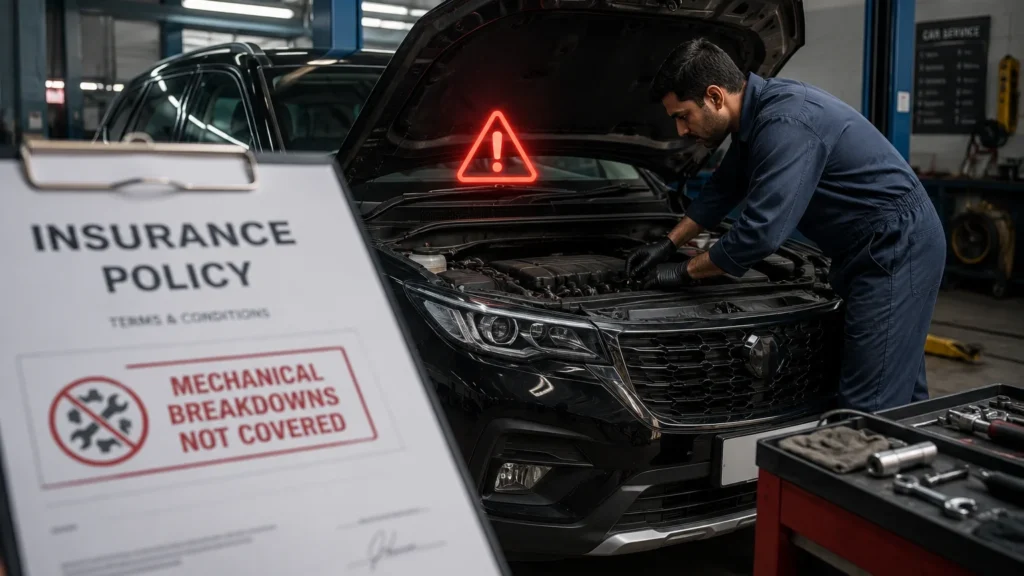
The real story starts here: your comprehensive motor insurance policy is a rock-solid legal contract that remains completely independent of changing infrastructure mandates at the pump. The country’s premier financial regulators have fully integrated their frameworks with the national energy transition, guaranteeing that emergency financial protection remains focused entirely on road safety. If you value long-term asset security, uncompromised claim protection, and complete mental peace during your daily drive, rest easy. Keep your policy premiums updated—your financial safety net is completely bulletproof.