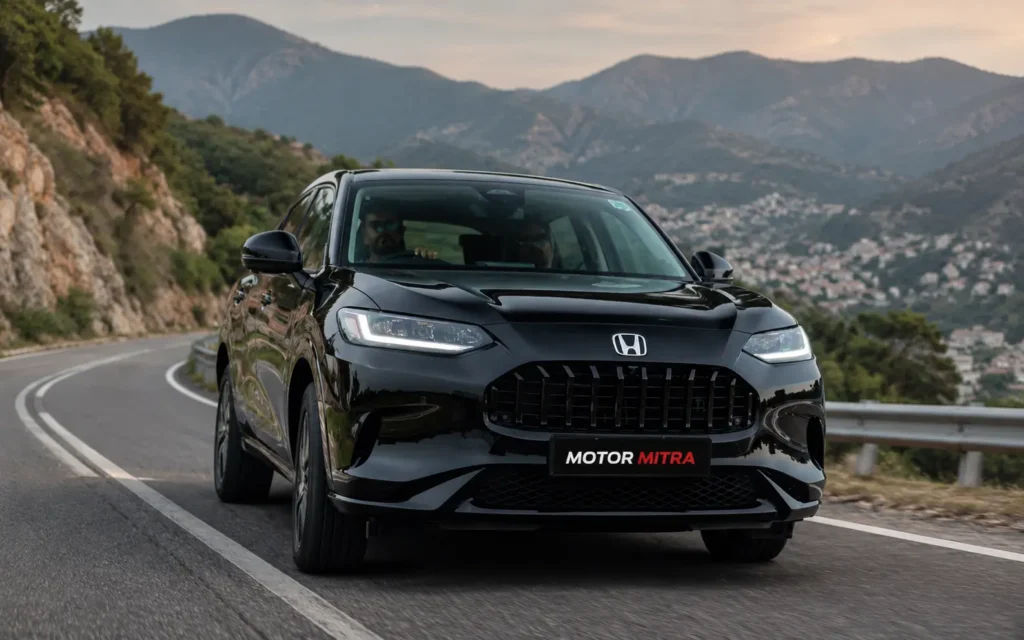
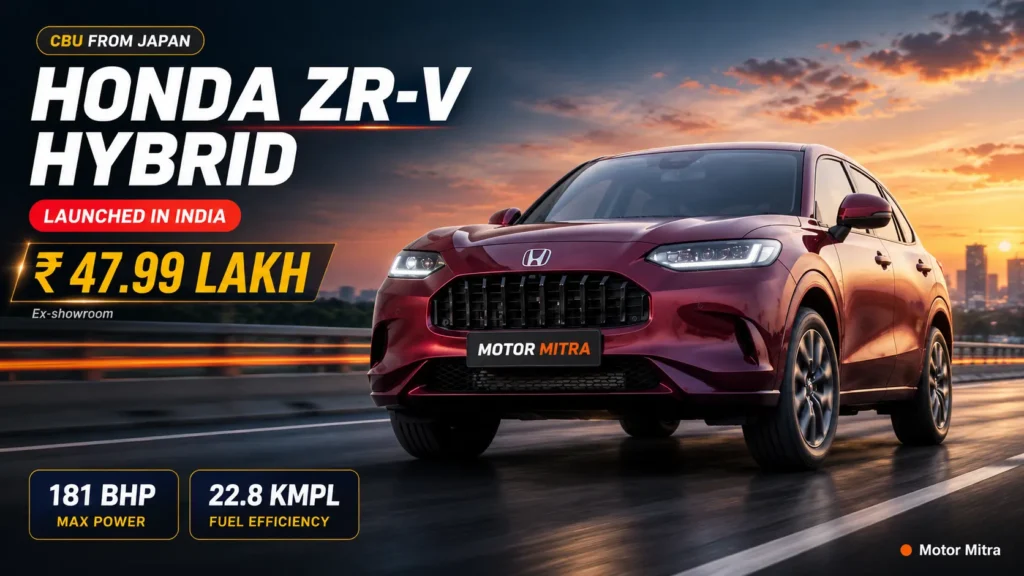
The Honda ZR-V Hybrid has arrived in India at Rs 47.99 lakh ex-showroom, and it has immediately polarised opinions in the automotive community. Some see it as a brilliantly engineered hybrid SUV that brings Japanese precision and proven technology to a segment desperately in need of alternatives. Others see it as an overpriced CBU import that asks too much money for a brand that does not carry the same prestige as German luxury marques in India. The truth, as always, lies somewhere in between. After examining every aspect of the ZR-V – from its hybrid powertrain to its ownership costs, from its feature list to its competitive positioning – here are five compelling reasons why you should seriously consider buying one, and three honest reasons why you might want to look elsewhere.
Reasons to Buy (Honda ZR-V)
1. The Hybrid Powertrain is Genuinely Exceptional
Honda’s e:HEV hybrid system is not a mild hybrid that barely makes a difference, nor is it a complex plug-in system that requires charging infrastructure. It is a full hybrid that operates intelligently across three modes – pure electric for low-speed city crawling, series hybrid where the engine generates electricity for the motor, and direct engine drive for efficient highway cruising. The transitions between these modes are so seamless that you would never know they are happening unless you were watching the power flow display.
The result is 181 bhp of combined output that feels effortless and refined, paired with fuel efficiency of 22.80 kmpl that seems almost impossible for a vehicle of this size and power. In real-world driving, owners can expect 18 to 20 kmpl in mixed conditions – figures that many compact hatchbacks struggle to achieve. This means the ZR-V costs significantly less to run on a daily basis than any conventional petrol or diesel SUV in its class, and over a five-year ownership period, the fuel savings alone could amount to Rs 2 to Rs 3 lakh compared to a diesel competitor delivering 14 kmpl.
The hybrid system also means the Honda ZR-V is whisper-quiet at low speeds when operating in EV mode, creating a premium, serene cabin experience that conventional engines simply cannot match. For city driving where you spend most of your time below 40 kmph, the ZR-V operates primarily on electric power, making it feel like an EV without any of the range anxiety or charging hassles.
2. Japanese CBU Build Quality
There is a tangible difference between a vehicle assembled in India and one built in Japan, and the Honda ZR-V makes this difference immediately apparent the moment you close the door. The solid, vault-like thunk of the doors, the precision of the panel gaps, the quality of the materials, the tightness of the cabin at highway speeds – everything communicates a level of build quality that domestically assembled vehicles in this price range rarely achieve.
Being a CBU import from Japan means the ZR-V is built on the same production line, with the same quality standards, and using the same materials as units sold in Japan, Europe, and other developed markets. There are no cost-cutting measures applied specifically for the Indian market. The paint quality, the underbody protection, the wiring harness quality, the rubber seals – every component meets Japanese manufacturing standards. For buyers who appreciate engineering excellence and are willing to pay for it, the CBU build quality is a genuine differentiator that you will appreciate every single day of ownership.
3. Comprehensive Safety with Honda Sensing ADAS
At Rs 48 lakh, you expect comprehensive safety, and the ZR-V delivers. The Honda Sensing ADAS suite provides genuine Level 1+ autonomous driving assistance that reduces driver fatigue on highways and actively prevents accidents in city conditions. The Collision Mitigation Braking System can detect vehicles, pedestrians, and cyclists, applying emergency braking if you fail to respond. Adaptive Cruise Control maintains safe following distances automatically. Lane Keeping Assist provides gentle steering corrections to keep you centred in your lane. Road Departure Mitigation alerts you and provides corrective action if you drift off the road.
Beyond ADAS, eight airbags provide comprehensive occupant protection, the 360-degree camera eliminates blind spots during parking, Vehicle Stability Assist maintains control in emergency manoeuvres, and Honda’s ACE body structure distributes crash forces to protect occupants. This is not safety as a checkbox exercise – it is a genuinely comprehensive approach to protecting you and your family.
4. Exceptional Warranty and Battery Coverage
One of the biggest concerns buyers have about hybrid vehicles is battery longevity and replacement costs. Honda addresses this head-on with an eight-year or 1,60,000 km warranty on the lithium-ion hybrid battery – one of the most generous battery warranties offered by any manufacturer in India. This means you can drive the Honda ZR-V for eight years without worrying about battery degradation costs.
The overall warranty structure is equally reassuring – three years unlimited km standard warranty, three years complimentary roadside assistance, extended warranty available up to seven years, and Anytime Warranty up to 10 years or 1,20,000 km. For a CBU import where parts might be more expensive than domestically produced vehicles, this comprehensive warranty coverage provides genuine peace of mind and protects against unexpected repair costs.
5. Practical Space and Cargo Versatility
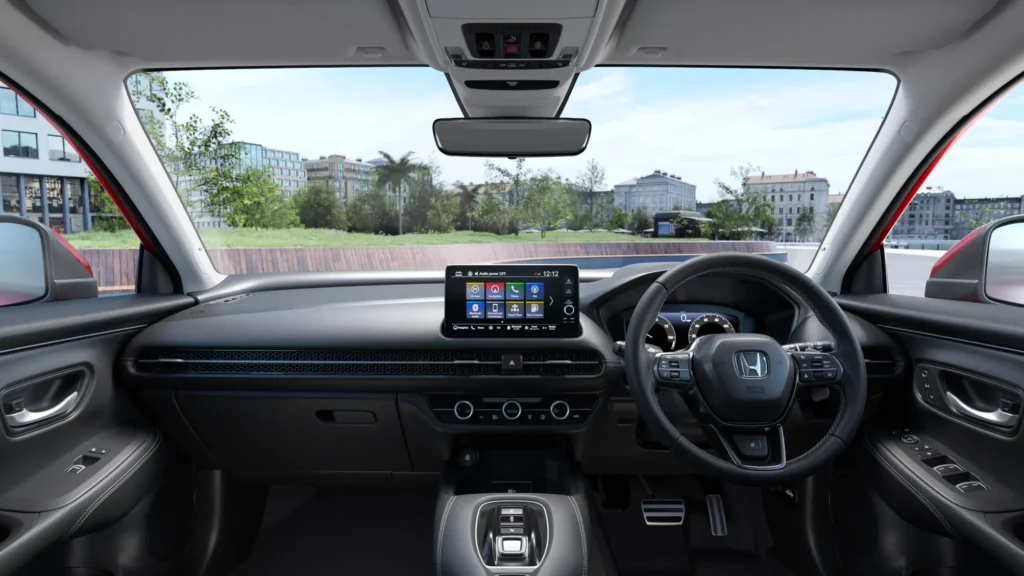
The Honda ZR-V is not just a technology showcase – it is a genuinely practical family vehicle. The 1,313-litre maximum cargo capacity with rear seats folded is enormous, rivalling vehicles from the segment above. The flat cargo floor, low loading height, under-floor storage, and retractable parcel cover make it easy to carry everything from weekly groceries to airport luggage to furniture from IKEA. The 60:40 split rear seats allow you to carry long items while still accommodating rear passengers on one side.
The cabin storage is equally thoughtful – large cup holders, generous door pockets, a tray under the centre console, rear armrest storage, and a centre console box large enough for a tablet. These are the details that make daily living with a vehicle pleasant and convenient, and they demonstrate that Honda has thought carefully about how real families actually use their SUVs.
Also Read: 2026 Maruti Suzuki Brezza Turbo vs Tata Nexon Turbo – Which Turbo Compact SUV Gives More Value?
Reasons to Skip (Honda ZR-V)
1. The Price is Hard to Justify Against the Competition
At Rs 47.99 lakh, the Honda ZR-V costs more than a fully-loaded Jeep Compass Model S 4×4 by approximately Rs 18 lakh. It costs more than what the Hyundai Tucson Signature used to cost by over Rs 12 lakh. For the same money, you could buy a well-specced Skoda Kodiaq, a Volkswagen Tiguan, or even look at entry-level luxury options from BMW and Mercedes-Benz in the pre-owned market.
The CBU import duty structure is the primary reason for this pricing, and while the build quality justifies some premium, the Honda badge does not carry the same aspirational value in India as German luxury brands. Many buyers at this price point expect a premium badge on their vehicle, and Honda – despite its engineering excellence – is still perceived as a mass-market brand by many Indian consumers. This perception gap between price and brand positioning is the ZR-V’s biggest challenge.
2. No AWD, No Diesel, Limited Powertrain Choice
The ZR-V is available in exactly one configuration – the 2.0-litre e:HEV hybrid with front-wheel drive and CVT. There is no diesel option for buyers who prefer torque-rich diesel engines for highway driving. There is no all-wheel-drive option for buyers who want capability on rough roads or during monsoon conditions. There is no manual transmission option for driving enthusiasts. And there is no lower-spec variant for buyers who want the Honda ZR-V experience at a more accessible price point.
This single-variant, single-powertrain approach simplifies the buying decision but also limits the ZR-V’s appeal to a very specific buyer profile. If you want 4×4 capability, the Jeep Compass is your only option in this space. If you want diesel efficiency for long highway drives, the Compass again wins. The ZR-V’s hybrid-only strategy is bold but limiting.
3. Honda’s Limited Service Network for Premium Vehicles
While Honda has a well-established dealer network in India for its mass-market vehicles like the City and Amaze, the experience of servicing a Rs 48 lakh CBU hybrid SUV is fundamentally different from servicing a Rs 12 lakh sedan. The Honda ZR-V requires specialised hybrid technicians, specific diagnostic equipment, and potentially imported parts that may not be readily available at every Honda dealership.
In major metros like Delhi, Mumbai, Bangalore, and Chennai, this is unlikely to be an issue. But for buyers in tier-two cities or those who frequently travel to remote areas, the availability of qualified hybrid service support could be a concern. Additionally, if any body panel or component needs replacement, the CBU import status means parts may need to be ordered from Japan, potentially resulting in longer wait times compared to locally manufactured vehicles.
The Final Verdict
The Honda ZR-V Hybrid is a genuinely excellent vehicle that suffers primarily from its pricing in the Indian context. If you can look past the price tag and evaluate it purely on its merits – the hybrid efficiency, the build quality, the safety features, the practicality, and the warranty coverage – it is one of the most well-rounded premium SUVs available in India today. The five reasons to buy are substantial and will be appreciated every single day of ownership. The three reasons to skip are real concerns that buyers must honestly evaluate against their own priorities and expectations.
For buyers who drive extensively in cities, who value fuel efficiency and environmental responsibility, who appreciate Japanese engineering precision, and who plan to keep their vehicle for the long term, the Honda ZR-V is an outstanding choice that will reward them with years of refined, economical, and safe motoring. For buyers who prioritise brand prestige, off-road capability, or simply cannot justify Rs 48 lakh for a Honda, the alternatives remain compelling.
FAQ
1. Is Honda ZR-V worth Rs 48 lakh?
If you value hybrid efficiency (22.8 kmpl), Japanese CBU build quality, comprehensive ADAS safety, and 8-year battery warranty, yes. If you prioritise brand prestige or need 4×4, alternatives may suit you better.
2. What are the disadvantages of Honda ZR-V?
Main disadvantages are high price (Rs 47.99 lakh), no AWD option, no diesel engine, single variant only, Honda’s limited premium service experience in India, and potential parts availability concerns for a CBU import.
3. Is Honda ZR-V better than Jeep Compass?
The ZR-V is better in fuel efficiency, build quality, safety tech, and cargo space. The Compass is better in price (Rs 18 lakh cheaper), 4×4 capability, diesel availability, and variant choice. They target different buyers.
4. How long does Honda ZR-V battery last?
Honda provides an 8-year or 1,60,000 km warranty on the hybrid battery, indicating confidence in its longevity. Globally, Honda hybrid batteries have proven extremely reliable, with many lasting well beyond 10 years.
5. Is Honda ZR-V good for long drives?
Yes, the Honda ZR-V is excellent for long drives with its refined hybrid powertrain, comfortable seats, Honda Sensing ADAS for highway fatigue reduction, and impressive fuel efficiency that means fewer fuel stops.
For more such updates on latest cars, bikes and EVs stay connected to MotorMitra. #gaadiyonkismartguide