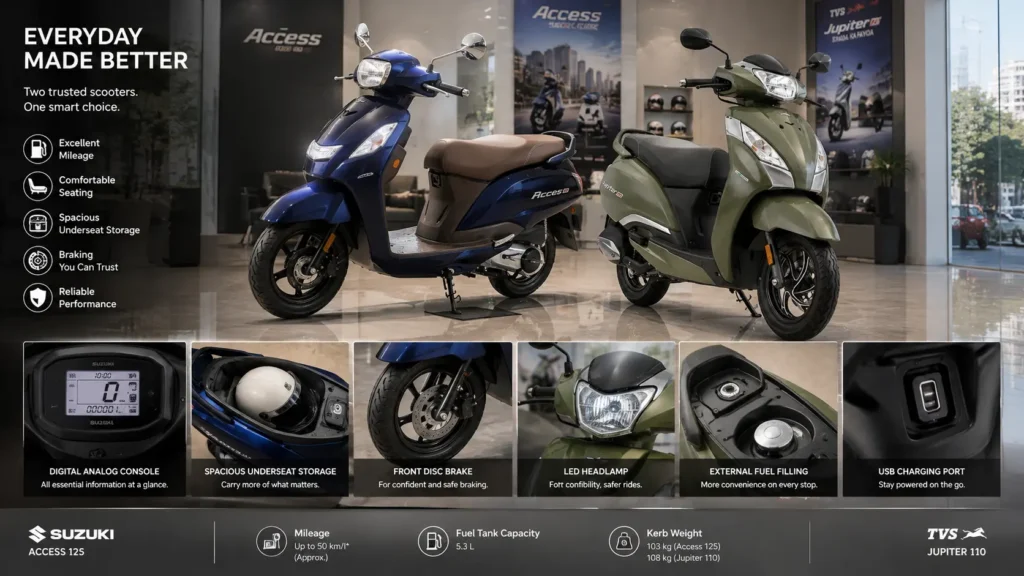
Let’s be honest – buying a 125cc scooter in India isn’t just about you. It’s about your wife’s grocery runs, your kid’s school drop, your dad’s morning chai trips, and that one cousin who always needs a lift. The scooter has to do everything without complaining. And right now, two names keep popping up in every showroom conversation – Suzuki Access 125 and TVS Jupiter 125.
Both are solid. Both are proven. But which one actually deserves your ₹80,000-1,00,000? Let’s settle this once and for all.
Price Mein Kaun Jeetega?
| Variant | Suzuki Access 125 | TVS Jupiter 125 |
|---|---|---|
| Base (Drum) | ₹82,185 | ₹81,700 |
| Disc Brake | ₹87,827 | ₹86,110 |
| Connected (Mid) | ₹90,727 | ₹88,950 |
| Top-spec Connected | ₹93,877 | ₹89,935 |
| ABS (Access only) | ₹96,230 – ₹1,01,279 | Not Available |
All prices ex-showroom Delhi
Bottom line: TVS Jupiter 125 is slightly cheaper across the board. But Suzuki gives you a full LCD dash even in the base variant – TVS doesn’t. Also, only Access offers ABS if you want that extra braking confidence.
Warranty game-changer: TVS gives you 5 years/50,000 km standard warranty. Suzuki? Just 2 years/24,000 km (though you can extend up to 10 years if you pay extra). For a family scooter that’ll see daily abuse, that TVS warranty is gold.
Also Read:https://motormitra.in/new-bajaj-pulsar-125-monoshock-bigger-screen-lights/
Design: Shaadi Mein Park Karna Ho Toh?
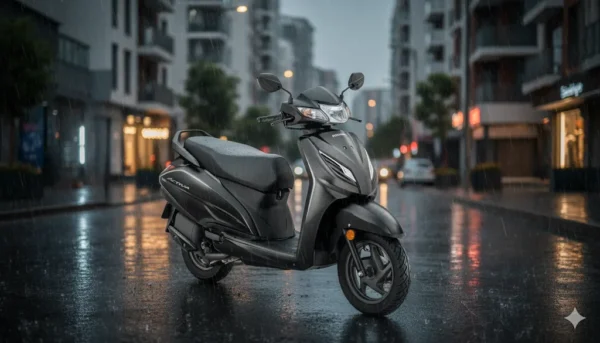
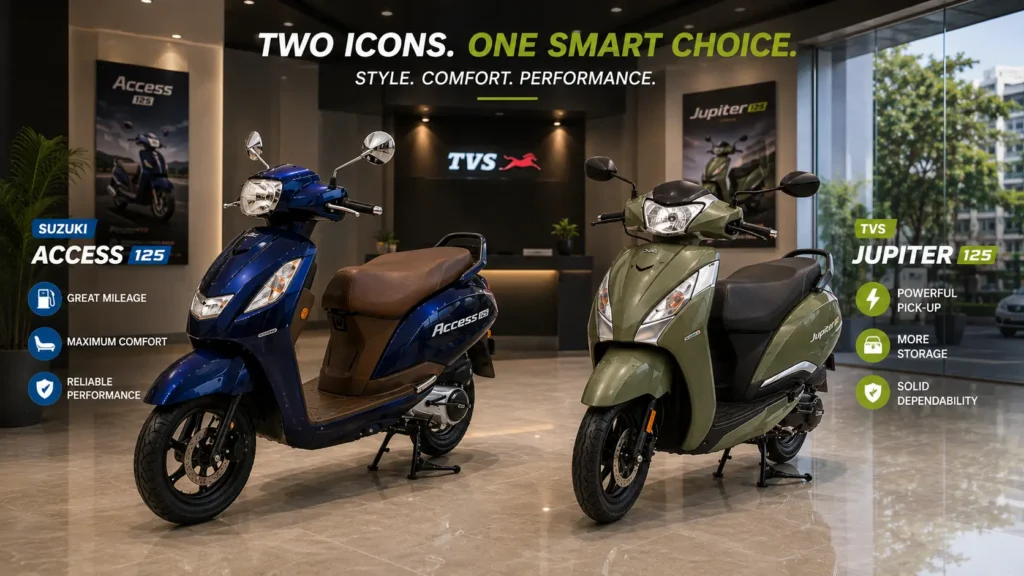
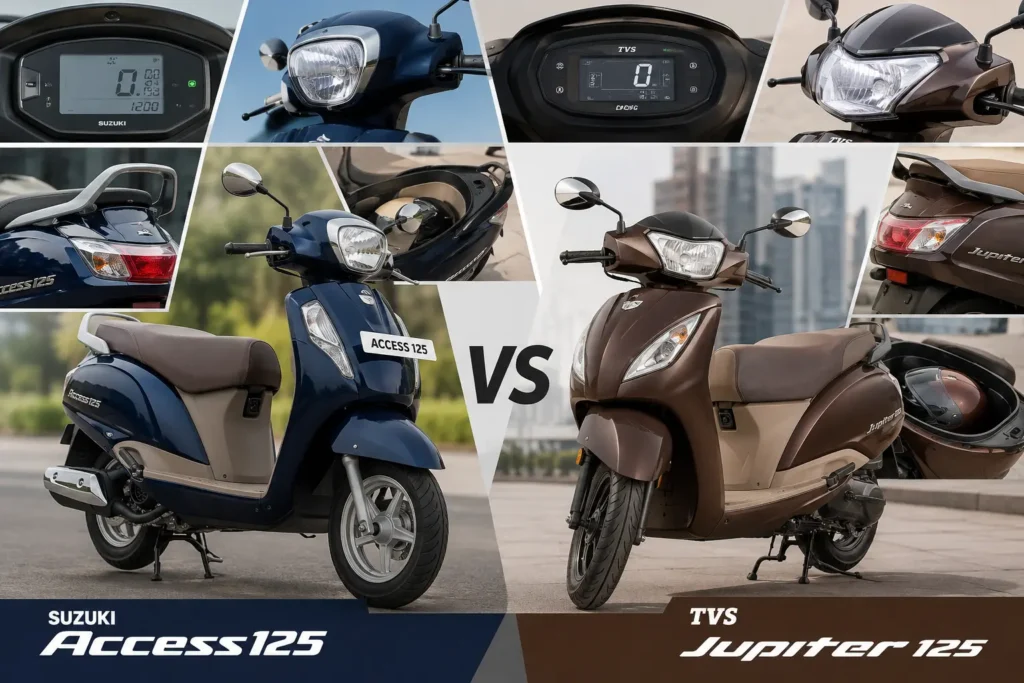
The Access 125 looks premium. Clean lines, rectangular headlamp, chrome touches – it has that subtle European vibe that doesn’t scream “look at me” but still turns heads. Think of it as the guy who wears a plain white shirt but it’s from Zara.
The Jupiter 125 is more straightforward. Angular headlamp, diamond-cut alloys, sharper stance. It’s not trying to be fancy – it’s trying to be functional. And honestly? It looks good doing it.
Colour options: Jupiter wins with 11 shades vs Access’s 6. If you want that specific shade of matte blue, Jupiter’s got you covered.
Seat, Space & Storage – The Real Deal
Here’s where things get interesting for Indian families:
| Feature | Access 125 | Jupiter 125 |
|---|---|---|
| Seat Length | 856mm | 790mm |
| Under-seat Storage | 24.4 litres | 33 litres |
| Front Pockets | 2 open pockets | 1 open pocket |
| Fuel Tank | 5.3 litres | 5.1 litres |
| Kerb Weight | 106-107 kg | 108-109 kg |
Access wins on seat length – 66mm extra means your pillion isn’t squeezing behind you on long rides.
Jupiter wins on storage – 33 litres is massive. Two helmets? Done. Weekly sabzi? Easy. That random Amazon package? Fits right in. Access’s 24.4 litres feels tight in comparison.
Engine & Performance – Kitna Deti Hai?
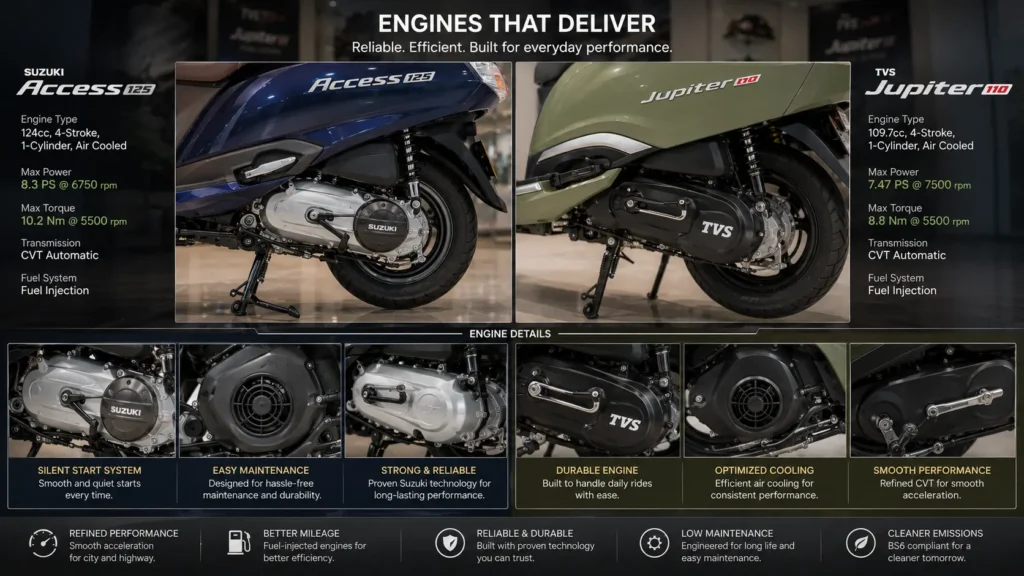
Both run nearly identical 124cc, air-cooled, fuel-injected engines with CVT gearbox. On paper:
| Spec | Access 125 | Jupiter 125 |
|---|---|---|
| Power | 8.4 PS @ 6,500 rpm | 8.15 PS @ 6,500 rpm (8.56 PS with iGO) |
| Torque | 10.2 Nm @ 5,000 rpm | 10.5 Nm @ 4,500 rpm (11.1 Nm with iGO) |
| Claimed Mileage | ~47 kmpl | ~50 kmpl |
In daily riding, you won’t feel much difference. Both pull cleanly from signals, both cruise comfortably at 60-70 kmph.
But here’s the twist – Jupiter’s higher variants get TVS iGO Assist, a mild-hybrid system that gives you an electric boost during acceleration. That extra kick when you’re overtaking an auto on a narrow road? Chef’s kiss.
Jupiter also gets an Idle Stop System – engine cuts off at signals and restarts silently when you twist the throttle. Saves fuel, saves your ears from that constant idling noise.
Ride Quality & Braking – Potholes Ka Sach
Both use underbone frames with telescopic front forks and a rear hydraulic shock. Standard stuff. But:
- Jupiter’s rear shock is 3-step adjustable – you can stiffen it up when riding solo or soften it for pillion comfort. Access doesn’t offer this.
- Jupiter runs a larger 12-inch rear wheel vs Access’s 10-inch. Bigger wheel = better pothole absorption.
- Access feels slightly more agile thanks to its shorter wheelbase and lighter weight. Lane-splitting in Bangalore traffic? Access has a slight edge.
Braking: Both offer drum/disc options with linked braking. But only Access gives you single-channel ABS on select variants – a genuine safety upgrade that prevents front wheel lock-up during panic braking. In monsoon riding, this matters.
Features – Kaun Zyada Smart Hai?
| Feature | Access 125 | Jupiter 125 |
|---|---|---|
| Base Instrument Cluster | Full LCD | Analogue + small LCD |
| Top-spec Display | 4.2-inch Colour TFT | LCD + TFT Dual Screen |
| Bluetooth Connectivity | Yes (RC/RCT variants) | Yes (DT SXC/SmartXonnect) |
| ABS | Yes (select variants) | No |
| Alloy Wheels (Base) | No (steel) | Yes |
| Pillion Backrest | No | Yes (SXC/SmartXonnect) |
| Idle Stop System | No | Yes |
| iGO Hybrid Assist | No | Yes (higher variants) |
| Voice Assistance | No | Yes (SmartXonnect only) |
| Under-seat Storage | 24.4L | 33L |
| USB Charging | Yes | Yes |
| Side Stand Alarm | Yes | Yes |
Access focuses on safety – ABS, full digital dash from day one, premium feel.
Jupiter focuses on practicality – massive storage, alloy wheels standard, fuel-saving tech, longer warranty.
Final Verdict – Kisko Lein?
Buy the Suzuki Access 125 if:
- You want that premium, classy look
- ABS is non-negotiable for you (especially for monsoon riding)
- You carry a pillion often and need that longer seat
- You prefer a fully digital dash even in the base model
- You like a slightly lighter, more agile scooter
Buy the TVS Jupiter 125 if:
- Storage is king for you (33 litres is no joke)
- You want alloy wheels without paying extra
- That 5-year warranty gives you peace of mind
- You like the idea of mild-hybrid tech saving fuel
- Budget matters – it’s consistently ₹1,000-4,000 cheaper
- You want a pillion backrest option
Honest Take
Both are excellent scooters – you genuinely can’t go wrong with either. The Access 125 is for the person who values refinement, safety, and that “premium feel” every time they look at their scooter. The Jupiter 125 is for the person who says “bhai, practical hona chahiye” and means it.
If I had to pick one for a typical Indian family of four using it daily in city traffic? Jupiter 125 DT SXC – the storage alone wins half the battle, and that iGO boost is genuinely useful in traffic. But if you ride in heavy rain often or want ABS peace of mind, the Access 125 RC ABS is worth every extra rupee.
FAQs – Suzuki Access 125 vs TVS Jupiter 125
Q1. Which is better for daily office commute – Access 125 or Jupiter 125?
Both are equally good for daily commuting. But if your commute involves heavy stop-and-go traffic, the Jupiter 125’s idle stop system saves fuel and reduces engine noise at signals. If you ride in rain often, the Access 125’s ABS option gives you better braking confidence on wet roads.
Q2. Mileage mein kaun better hai – Access 125 ya Jupiter 125?
TVS Jupiter 125 claims around 50 kmpl, while Suzuki Access 125 delivers approximately 47 kmpl. In real-world city riding, expect 45-48 kmpl from Jupiter and 42-45 kmpl from Access. Jupiter’s idle stop and iGO hybrid tech give it a slight fuel efficiency edge.
Q3. Which scooter has more boot space for keeping helmet?
TVS Jupiter 125 wins this hands down with 33 litres of under-seat storage – enough for two helmets comfortably. Suzuki Access 125 offers only 24.4 litres, which fits one full-face helmet snugly but struggles with two.
Q4. Is Suzuki Access 125 ABS worth the extra money?
Absolutely, especially if you ride in monsoon or on slippery city roads. The single-channel front ABS prevents wheel lock-up during emergency braking. At around ₹96,000-1,01,000, it’s a genuine safety upgrade that no other 125cc scooter in India currently offers.
Q5. Which scooter is better for a family of 3-4 people?
For families, both work well but for different reasons. Access 125 has a longer seat (856mm vs 790mm), so your pillion sits more comfortably on longer rides. Jupiter 125 offers a pillion backrest on higher variants and way more storage for carrying stuff. If comfort matters more – Access. If storage and practicality matter more – Jupiter.
Q6. TVS Jupiter 125 ka iGO Assist kya hai? Is it worth it?
TVS iGO Assist is a mild-hybrid system that uses a small electric motor to boost acceleration. When fully charged, it adds extra torque (11.1 Nm vs standard 10.5 Nm) during initial pickup – helpful when overtaking or pulling away from signals with a pillion. It also improves fuel efficiency slightly. Available only on DT SXC and SmartXonnect variants.
Q7. Which one has better resale value in India?
Both hold resale value well since they’re from trusted brands. Historically, Suzuki Access 125 has had a slight edge in resale because of its longer market presence (since 2007) and premium image. But TVS Jupiter’s massive sales numbers mean finding buyers is never a problem either.
Q8. Can I get Bluetooth navigation on the base variant of either scooter?
No. Bluetooth connectivity and navigation are available only on mid-to-top variants of both scooters – Ride Connect (RC/RCT) editions of Access 125 and DT SXC/SmartXonnect editions of Jupiter 125. Base variants don’t get this feature on either scooter.
Q9. Which scooter is easier to handle for women and new riders?
Both are beginner-friendly, but Jupiter 125 has a slightly lower seat height (765mm) and Access 125 is lighter (106-107 kg vs 108-109 kg). In practice, both feel equally manageable. Test ride both and see which handlebar reach and seat height feels natural to you.
Q10. Suzuki Access 125 vs TVS Jupiter 125 – overall winner kaun?
There’s no single winner – it depends on your priorities. Access 125 wins on safety (ABS), seat comfort, premium design, and lighter weight. Jupiter 125 wins on storage (33L), fuel efficiency, warranty (5 years), alloy wheels as standard, and value for money. Pick what matters most to YOUR daily life