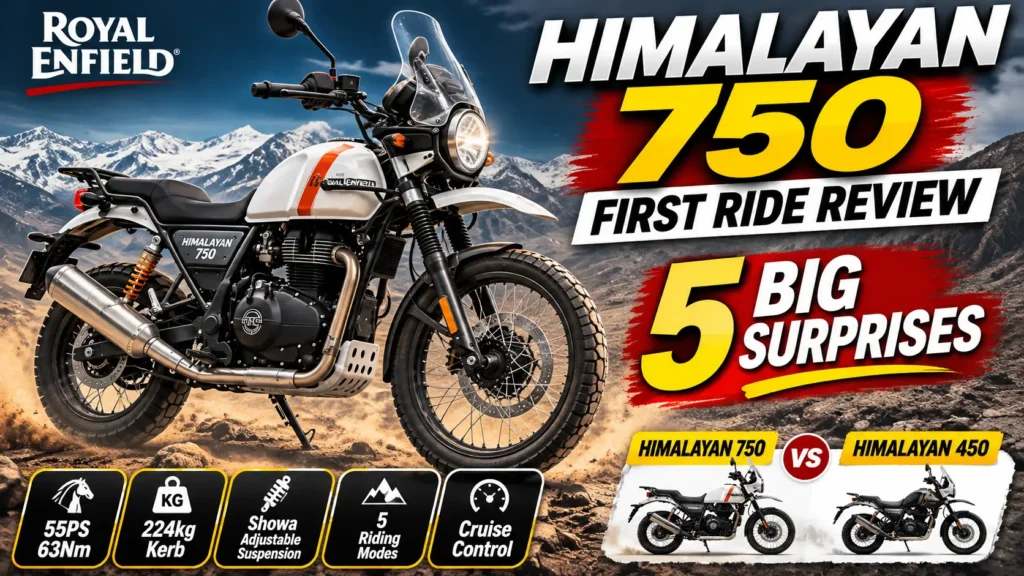
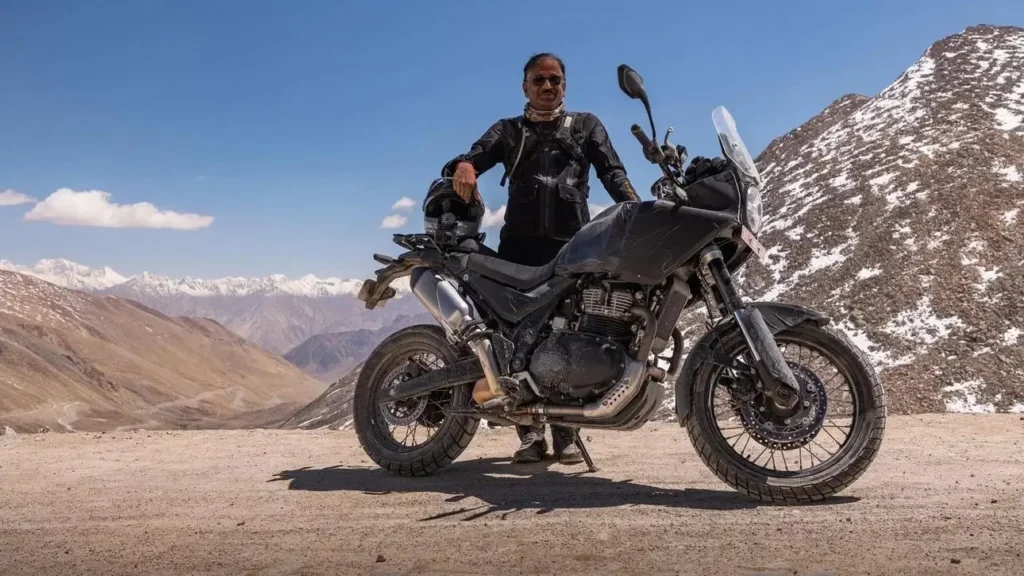
Royal Enfield has finally taken its biggest Himalayan yet out for its first international ride, and the early impressions suggest that this is much more than a simple engine-capacity upgrade. Tested on the winding roads and gravel trails of Sicily, Italy, the new Himalayan 750 has revealed an interesting combination of strong performance, surprisingly agile handling and modern touring technology.
At the centre of the motorcycle is an all-new 743cc air/oil-cooled parallel-twin engine producing 55PS and 63Nm. But the real story is not just about these numbers. First-ride reviews suggest that the engine feels considerably more refined than the familiar 650cc twin, while its strong low- and mid-range torque makes highway riding and overtaking feel effortless.
There are improvements in suspension, electronics and touring equipment too. However, the first ride has also highlighted a few things that potential buyers should consider, including its 224kg weight, relatively firm suspension setup and some observations about the gearbox and clutch.
So, does the Himalayan 750 genuinely feel like a major step forward from the Himalayan 450? Here are five important first-ride observations and the details that could influence your buying decision.
1. The 743cc Engine’s Strong Mid-Range Is Its Biggest Surprise
The biggest highlight of the Himalayan 750 is its new 743cc parallel-twin engine. It produces 55PS at 7,000rpm and 63Nm at 5,000rpm, paired with a six-speed gearbox.
However, peak figures only tell part of the story. What makes this engine interesting is its torque delivery. Around 90% of its maximum torque is available from 3,500rpm, meaning riders do not need to constantly chase high revs to access useful performance.
First-ride impressions support that character. Reviewers found the motorcycle particularly strong in the low and middle parts of the rev range. It pulls confidently through corners without demanding frequent downshifts, and the engine has enough flexibility to tackle steep inclines in second or even third gear.
Also Read:- New BMW F 450 GS Sport Launched at ₹5.90 Lakh: 5 Big Upgrades That Could Make It the Better Buy!
The refinement is another noticeable improvement. The engine feels smoother than the existing 650cc twin, while the exhaust produces a deep, distinctive parallel-twin sound. Performance begins to taper beyond approximately 7,000rpm, so the motorcycle is happier being ridden through its broad torque band rather than constantly pushed towards the redline.
Compared with the Himalayan 450’s 452cc single-cylinder engine, the 750 offers a different riding experience. The 450 has a punchy character, but the twin-cylinder 750 is more relaxed and better suited to riders who prioritise highway touring and stronger mid-range performance.
2. The 224kg Weight Sounds Heavy, But Handling Is Surprisingly Agile
At 224kg kerb weight, the Himalayan 750 is certainly not a lightweight adventure motorcycle. Moving it around in a parking space or pushing it backwards can require noticeable effort, particularly for riders coming from smaller motorcycles.
However, the first-ride experience has been more encouraging than the weight suggests. Reviewers found that the motorcycle becomes surprisingly manageable once it is moving, with its low-set engine and carefully distributed mass helping it feel balanced.
The parallel-twin engine also serves as a stressed member of the new chassis. This packaging helps keep the motorcycle’s centre of gravity relatively low, contributing to its composed behaviour through corners.
On the winding roads of Sicily, the Himalayan 750 demonstrated impressive stability and confidence. It changes direction more willingly than its weight might suggest, holds its line well and feels predictable when leaned over. The cornering ABS also adds another layer of rider assistance.
This is particularly impressive for a large adventure tourer. The Himalayan 450 remains easier to manoeuvre in tight spaces because it is lighter, but the 750 appears to deliver a more planted and substantial road-riding experience.
3. Touring Comfort and Riding Ergonomics Feel Well Thought Out
A powerful engine is useful, but an adventure motorcycle also needs to remain comfortable after several hours in the saddle. This is an area where the Himalayan 750 has made a positive first impression.
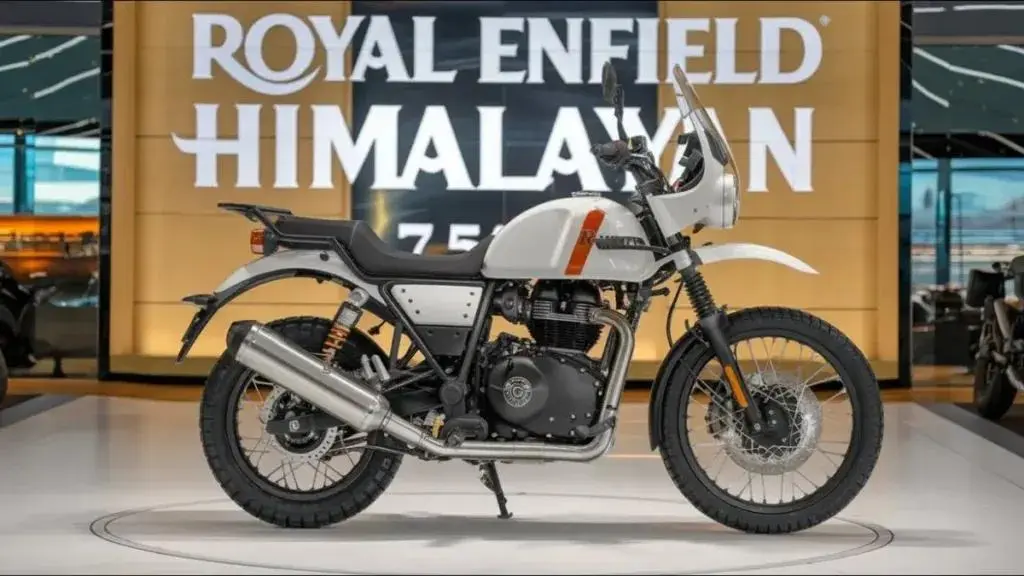
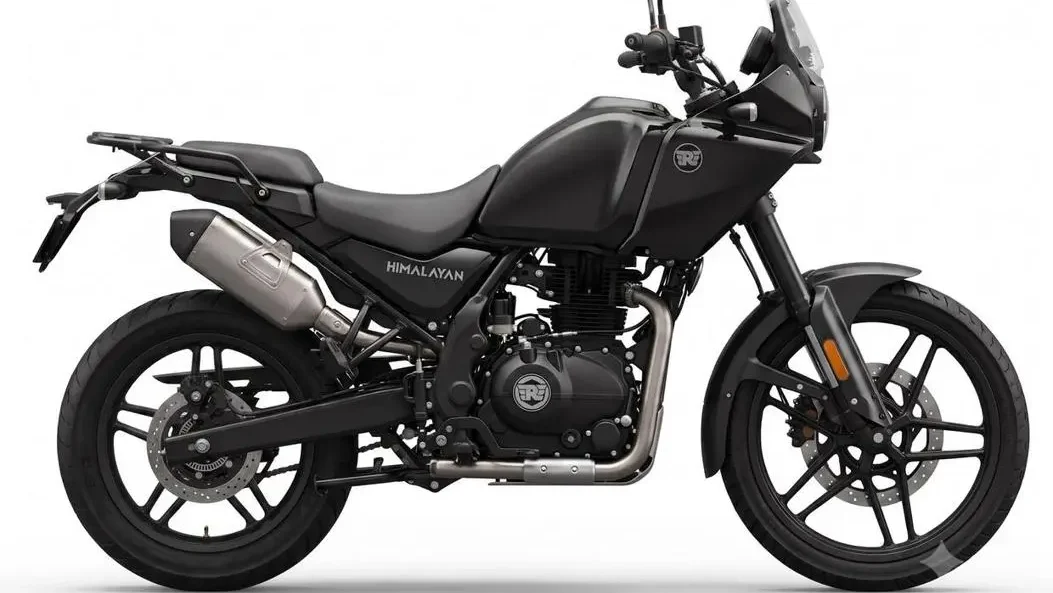
The motorcycle gets an 815mm standard seat height, while the tank shape, seat design and relatively narrow engine help make it feel less intimidating than its overall size suggests.
The riding triangle also appears well judged. The handlebar reach feels natural, the footpegs are comfortably positioned and the seat offers supportive cushioning for longer journeys. Reviewers found the ergonomics particularly suitable for relaxed touring.
The adjustable windscreen is another practical addition. It offers five positions and up to 60mm of adjustment, allowing riders to change the wind protection according to their height and riding conditions.
The Himalayan 750 also gets cruise control, which should make sustained highway journeys more convenient. These features give it a more touring-focused character than the Himalayan 450.
However, the first ride took place in Italy, so Indian traffic, hot weather and longer journeys on broken roads will provide a better indication of everyday comfort.
4. Five Riding Modes and Fully Adjustable Showa Suspension Add More Control
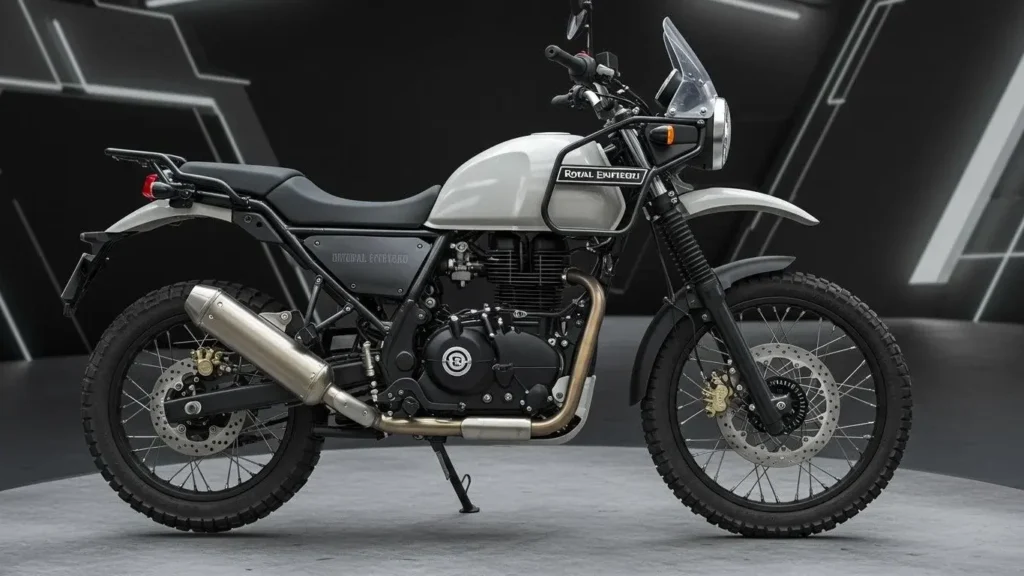
The Himalayan 750 represents a significant technology upgrade for Royal Enfield. It gets five riding modes: Road, Road Sport, Rain, Trail and Custom.
These modes adjust throttle response and the intervention levels of the motorcycle’s electronic safety systems. Rain mode softens the throttle response, Road is intended for everyday riding, while Road Sport provides a more responsive character. Trail is designed for loose surfaces, and Custom allows riders to personalise selected settings.
The motorcycle also features a six-axis IMU, lean-sensitive traction control and cornering ABS. Rear ABS can be switched off for riders who want more freedom on loose terrain. Cruise control is included as standard.
Suspension duties are handled by fully adjustable Showa components. The 43mm front USD fork offers 190mm of travel, while the rear monoshock provides 175mm. Both ends offer adjustment options to help riders tailor the setup.
One important detail from the first ride is that suspension settings can significantly change the experience. The alloy-wheel motorcycle was tested with a relatively firm setup suited to fast, smooth roads, while the tubeless cross-spoke version felt more compliant.
The 4-inch TFT display also receives improved navigation and connectivity functions, along with clearer directions and music information. Together, these features make the Himalayan 750 the most technologically advanced member of the Himalayan family so far.
5. Off-Road Capability Is Better Than Expected, But the 450 Still Has an Advantage
Despite its larger engine and higher weight, the Himalayan 750 is not restricted to smooth roads. Its 19-inch front and 17-inch rear wheel configuration, long-travel suspension and upright ergonomics give it the equipment needed for occasional off-road adventures.
During the Sicily first ride, reviewers found the motorcycle surprisingly approachable on gravel and rocky sections. Trail mode made throttle response easier to manage, while the balanced chassis helped maintain confidence over uneven surfaces.
However, the Himalayan 750 should not automatically be considered a replacement for the 450 in demanding off-road conditions. The Himalayan 450 uses a 21-inch front wheel and is lighter, which can be advantageous when navigating technical trails and rough terrain.
The 750’s 19-inch front wheel reflects its more road-oriented adventure-touring character. Riders who spend most of their time on highways, mountain roads and occasional trails may appreciate this balance, while serious off-road enthusiasts may still prefer the smaller Himalayan.
There is also a choice between cast-alloy wheels and tubeless cross-spoke wheels. Reviewers found the Vredestein-equipped cross-spoke version more confidence-inspiring on the mixed surfaces encountered during the test. This makes the wheel and tyre combination an important consideration for buyers.
Also Read:- Royal Enfield Himalayan 750: 5 Exciting Upgrades That Could Make It a Game-Changer
The One Thing That Could Disappoint: Clutch, Gearbox and Suspension Feel
The first ride has not been entirely perfect. Although the Himalayan 750 received plenty of praise for its engine and handling, reviewers also identified a few areas that deserve attention.
The clutch lever felt relatively heavy to one reviewer, particularly during repeated gear changes. There were also occasional difficulties finding the correct gear, including a noticeable gap between second and third gear in another review.
Braking feedback was mixed too. The twin front-disc setup provides strong stopping power, but one reviewer wanted a more progressive response because the initial bite felt somewhat on-off. Another found the braking feel progressive and appropriate for the motorcycle’s intended use. It is therefore better to describe this as a difference in brake feel rather than a confirmed braking weakness.
Suspension comfort also depends on the setup. The Showa units felt firmer than the Himalayan 450 during some parts of the test, particularly on rippled surfaces. However, the available adjustments should allow riders to find a more comfortable setting.
These are useful observations, but they should not be treated as final verdicts until the motorcycle is tested on Indian roads.
Himalayan 750 vs Himalayan 450: Which One Makes More Sense?
The two motorcycles serve slightly different purposes. The Himalayan 450 uses a 452cc liquid-cooled single-cylinder engine producing 40.02PS and 40Nm. It is lighter, has a 21-inch front wheel and remains a strong option for riders who prioritise off-road ability.
The Himalayan 750 moves into a more powerful twin-cylinder category with 55PS and 63Nm. It offers stronger mid-range performance, more relaxed highway cruising and additional touring technology.
The difference is not simply about choosing the bigger engine. Buyers need to consider weight, riding conditions and how much off-road riding they actually do.
For regular highway touring, mountain roads and long-distance journeys, the 750 looks like the more capable option. For technical trails, easier manoeuvrability and a lighter motorcycle, the 450 still has a convincing advantage.
Should You Wait for the Royal Enfield Himalayan 750?
The first-ride impressions suggest that Royal Enfield has created a genuinely interesting new adventure tourer. Its 743cc twin-cylinder engine, strong torque delivery, composed handling and modern electronics give it a more premium character than the Himalayan 450.
However, the 224kg weight, clutch feel, gearbox observations and suspension setup deserve attention before buyers make a decision. Indian road testing will be particularly important in determining whether the motorcycle delivers the comfort expected from a long-distance adventure tourer.
The Himalayan 750 is not simply a bigger Himalayan 450. It is a different interpretation of the adventure motorcycle, aimed at riders who want more performance, relaxed touring and a sophisticated electronic package.
The first ride has certainly raised expectations. Now, the real test will be how well the Himalayan 750 performs on Indian roads and where Royal Enfield positions it on price.