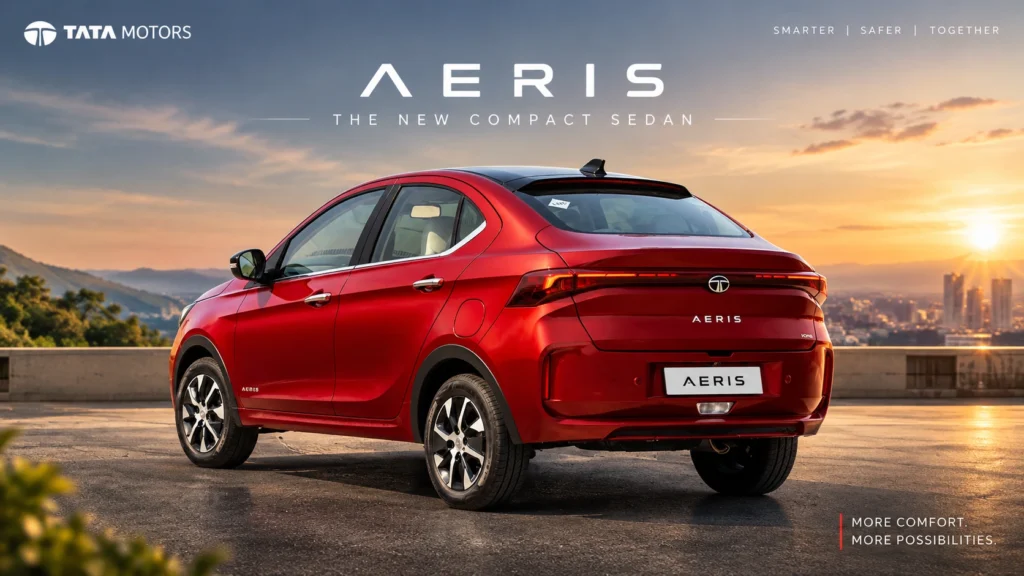
Tata Motors has replaced the Tigor with the Tata Aeris, which is a new model of compact sedan that features a fresh look, a modern interior, and a larger number of convenience and technology options. The Aeris was released in India on September 25, 2026, and is designed primarily for private owners who require a practical family sedan with modern features and several different types of powertrains. The Aeris is available with both petrol and factory-installed CNG options, manual and automated manual transmission (AMT) options, and introductory prices starting at ₹5.29 lakh (ex-showroom). The Aeris competes in a competitive segment that includes the Maruti Suzuki Dzire, Hyundai Aura, and Honda Amaze. The most significant changes made to the Aeris include its design, cabin technology, safety equipment, and everyday usability; however, it does not have a completely new mechanical package.
Exterior Design
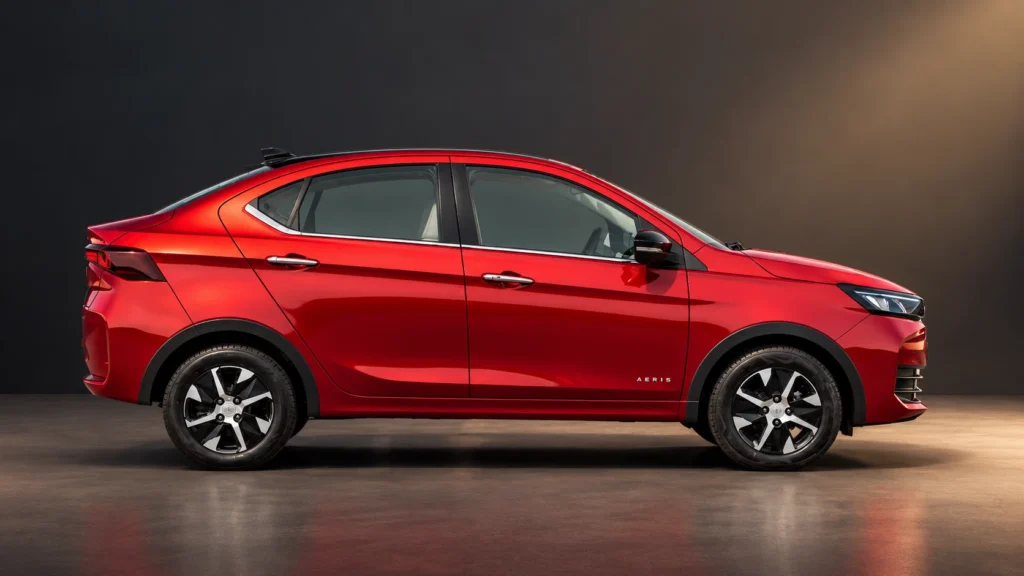
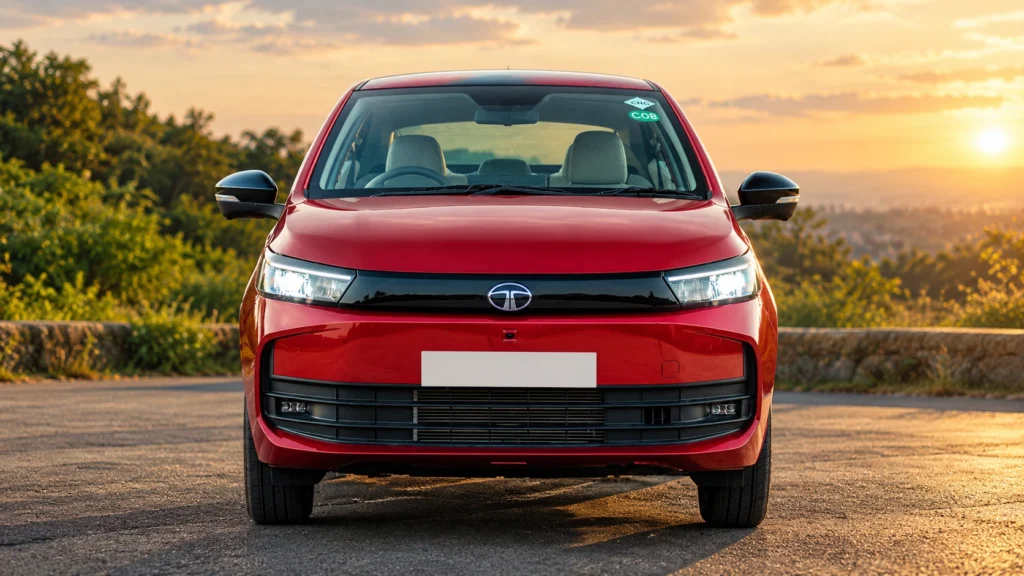
The Tata Aeris maintains the same compact sedan shape as the Tigor but adds several styling updates. The front has thinner LED headlights with integrated daytime running lights, a new grille, and new bumper details. The new lighting signature gives the car a more modern look, while some petrol models come with 15-inch alloy wheels.
The rear of the Aeris has new LED tail-lamps and a cleaner bumper design to help differentiate it from its predecessor. The overall approach is evolutionary rather than revolutionary, but the changes bring the sedan closer to Tata’s newer design language.
For buyers who prefer a traditional four-door car with simple styling, the Aeris provides a more contemporary appearance without sacrificing its compact size.
Also Read: India’s Top 5 Best-Selling Midsize SUVs – September 2026: Creta Leads, Tata Sierra Surges
Interior and New Features
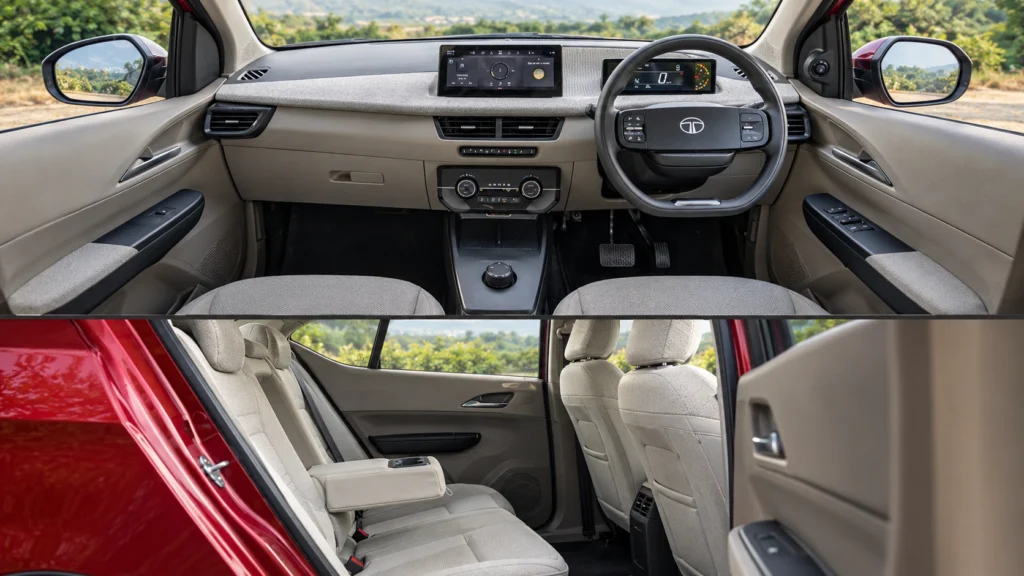
The cabin is one of the most noticeable improvements. A new dashboard includes a 26.03cm (10.25-inch) HD touchscreen infotainment system and a 12.7cm digital instrument cluster. Wireless Apple CarPlay and Android Auto, along with Tata’s iRA connected-car technology providing more than 35 connected features, add to its technology package.
Other features include a Dual Smartphone Deck with wireless charging, automatic climate control on certain models, rear AC vents, and 65W Type-C fast-charging ports. The top Accomplished model adds ventilated front seats, leatherette upholstery, and a wireless phone charger.
These improvements increase everyday convenience, although equipment varies among the Smart, Pure, Pure+, Creative, and Accomplished models. Buyers should compare variant-level specifications rather than assuming each feature is standard across the entire range.
Also Read: Tesla Roadster 2026: Everything You Need to Know — Price, Specs, Release Date & FAQs
Engine and Performance
The Aeris continues to use Tata’s 1.2-liter, three-cylinder, naturally aspirated Revotron engine. In petrol form, it produces 86hp and 113Nm of torque. The factory-installed CNG version produces approximately 75.5hp and 96.5Nm.
Both powertrains are available with a five-speed manual gearbox or a five-speed AMT, although the entry-level Smart model is manual-only. The addition of a CNG-AMT combination is particularly relevant for buyers who want the potential running-cost benefits of CNG along with easier operation in heavy traffic.
The petrol engine is suitable for everyday commuting and routine family use. However, independent road-test reports indicate that the engine can be noisy at high speeds and that the AMT may not operate smoothly at low speeds. A test drive is recommended, especially for buyers who spend a lot of time in city traffic.
Dimensions and Boot Space
The Tata Aeris is 3,995mm long, 1,684mm wide, and 1,532mm tall. It has a wheelbase of 2,450mm and ground clearance of 170mm. These dimensions are designed to provide a good balance between cabin space and the maneuverability required of a sub-four-meter sedan.
The petrol model has a 419-liter boot, which provides adequate space for family luggage. The CNG model uses a twin-cylinder arrangement under the boot floor, but its luggage capacity is reduced to approximately 227 liters based on published specifications.
A particularly useful feature is the use of externally mounted hydraulic struts for the boot lid instead of traditional gooseneck hinges. This arrangement reduces bulky hinge intrusion into the luggage compartment, allowing you to position bags more easily and use the available space more efficiently. It is a small engineering detail, but one that can make a difference in daily use.
Safety Features
Safety is a key component of the Aeris package. Six airbags are standard on all models, along with ABS with EBD, Electronic Stability Program, Corner Stability Control, hill-hold control, and ISOFIX child-seat anchors.
Certain models add a 360-degree Surround View System HD camera with multiple viewing angles, a Blind View Monitor, and a MultiView Digital Video Recorder. Automatic headlamps and rain-sensing wipers are also available on higher-end models.
The CNG models include additional protection measures, such as gas leak detection and thermal incident protection. While these features enhance the car’s safety offering, they should not be confused with an independently verified crash test rating.
Tata Aeris Price and Variants
Introductory ex-showroom prices at launch ranged from ₹5.29 lakh for the Smart petrol manual to ₹9.74 lakh for the Accomplished CNG AMT. The five-model lineup consists of Smart, Pure, Pure+, Creative, and Accomplished.
The entry-level model is designed for buyers who prioritize affordability, while the higher-end models offer technology, comfort, and convenience equipment. Actual on-road prices will vary based on insurance, registration, local fees, and dealer-specific offers, so buyers should get an updated quote before making a decision.
Verdict: Is the Tata Aeris Worth Considering?
The Tata Aeris is a significant improvement on the Tigor formula, combining a fresh look with a more technology-focused cabin, six airbags as standard, and a wider selection of petrol and CNG transmissions. Its dimensions and petrol boot capacity make it a viable option for family use, while the external hydraulic boot struts are a thoughtful packaging detail.
The main factors to consider are its carryover engine, reported noise at high speeds, and the AMT’s behavior in slow-moving traffic. Buyers should also weigh the reduced luggage capacity of the CNG model against their daily needs.
Overall, the Tata Aeris is worthy of consideration by buyers looking for an affordable, feature-packed compact sedan. A variant-by-variant comparison, a proper test drive, and confirmation of the latest on-road price will help you determine if it is the right choice for you.