
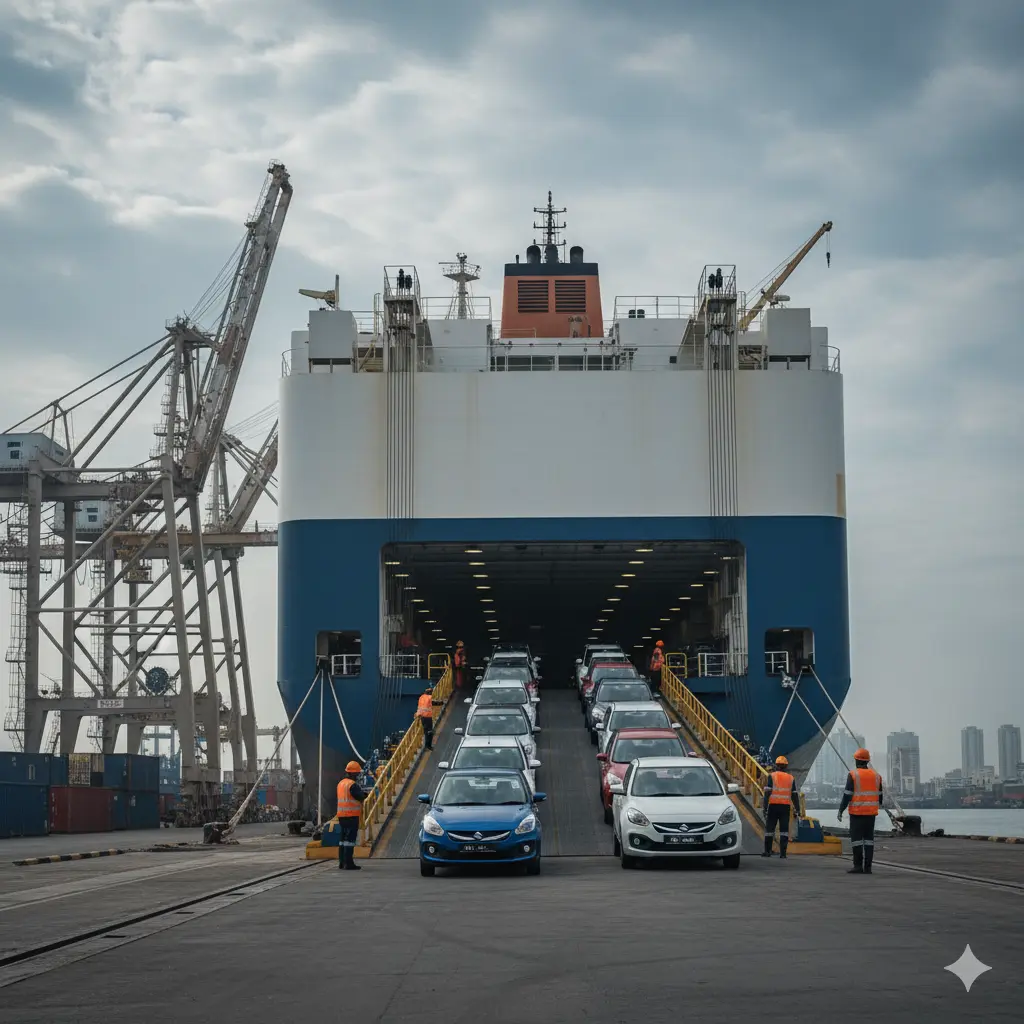
Maruti Suzuki Posts Highest-Ever Export
India’s largest passenger vehicle manufacturer, Maruti Suzuki , has marked a significant milestone in its global operations: it achieved exports of 1,10,487 units during the second quarter (July-September) of FY 2025-26, representing a 42.2% year-on-year growth and the highest quarterly tally in the company’s history. @motor mitra
This success comes at a time when the domestic market is showing signs of moderation, making the export achievement all the more critical in sustaining the company’s growth trajectory. @times.motormitra.in In this article, we examine the key drivers behind this export surge, what it means for Maruti Suzuki’s business, the implications for the Indian automotive industry, and what lies ahead.
For official information on India’s vehicle export policies and industry regulations, you can visit the Ministry of Commerce & Industry – Government of India .
Q2 FY25 Performance at a Glance
- Exports: 1,10,487 units in Q2 FY25, up 42.2% YoY — record high for any quarter.
- Overall sales volume: 5,50,874 units (up 1.7% YoY) despite weak domestic numbers.
- Domestic wholesales: Fell 5.1% to 4,40,387 units, impacted by customer deferment ahead of anticipated tax/GST changes.
- Net sales: Highest-ever quarterly net sales in the company’s history for the period.
What’s Driving the Export Surge?
1. Strong Global Demand
Maruti Suzuki has expanded its export footprint to more than 100 countries and is increasingly leveraging India’s manufacturing base for global markets. The surge in exports indicates sustained demand from overseas markets, such as Africa, the Middle East, Latin America, and parts of Asia. @motor mitra
2. Portfolio Optimisation & Model Export Focus
Models such as the Swift, Baleno, Fronx, and Jimny (where applicable for export) are increasingly catering to export requirements. Maruti Suzuki’s strategy to tailor certain models for export markets is paying off.
3. Domestic Market Slowdown Driving Export Focus
With domestic wholesales declining 5.1% in Q2 and customers deferring purchases ahead of GST-led price cuts, Maruti shifted focus to exports to compensate for slower domestic momentum.
4. Manufacturing Scale & Export Readiness
India‘s production base, strong supplier network, global cost competitiveness, and export-oriented logistics are helping Maruti efficiently scale exports. @times.motormitra.in The record quarterly export number reflects that readiness.
To explore Indian automotive standards and certification norms, refer to the Ministry of Road Transport & Highways (MoRTH) .



What This Means for Maruti Suzuki
A. Diversification of Revenue Sources
Exports, which form a larger share of volumes, cushion the company against domestic market volatility. Maruti Suzuki’s ability to tap global demand adds stability to its business.
B. Leverage for Global Brand & Manufacturing Credibility
Achieving the highest quarterly export figure bolsters Maruti Suzuki’s credentials as a global manufacturing hub. This can open up future strategic alliances, global sourcing, and exports of higher-margin products. @motor mitra
C. Room for Margin & Product Mix Improvement
While sheer volume growth is good, improving the mix (higher-margin exports, premium models) can further benefit profitability. The export success provides a platform for that.
D. Signal for Investors & Stakeholders
Investors often view export growth as a positive growth lever. The record export number is a strong signal of Maruti Suzuki’s growth potential beyond the domestic market.
Broader Implications for the Indian Automotive Industry
- “Make in India” Strengthening: India is proving its capability as a global auto manufacturing hub by enabling high export volumes for leading OEMs like Maruti Suzuki.
- Export Growth Offset Domestic Weakness: With occasional domestic market sluggishness (due to regulatory, economic, or tax factors), exports provide a vital growth corridor for Indian auto companies. @motor mitra
- Global Benchmarking: Achieving high export volumes means Indian‐made vehicles must meet international standards—raising the bar for quality and production.
- Supply Chain & Logistics Readiness: High exports require robust logistics, quality control, and global marketing—areas where the ecosystem is now maturing.
Ministry of Road Transport & Highways (MoRTH)
https://morth.nic.in/
Key Challenges / Watch-Points
- Commodity and input cost inflation: While volume is rising, margins may come under pressure if input costs increase.
- Currency & logistics risk: Global exports expose the business to forex fluctuations and shipping/logistics disruptions. @motor mitra
- Domestic tailwinds needed: Export growth is great, but long-term growth requires recovery in the domestic market too.
- Product mix complexity: Moving from volume exports of standard models to higher value/higher margin products will be critical.
For verified information on national policies and public services, you can visit the Government of India Official Portal.
What’s Next for Maruti Suzuki?
- The company has set its sights on higher export targets in FY26, leveraging new models, improved global competitiveness and expanded network.@motor mitra
- With the domestic market expected to pick up in H2 FY26 (post GST repricing and festive demand), Maruti Suzuki could see a more balanced growth scenario.
- On the product frontier, increased focus on BEVs (e.g., e-Vitara) and global model exports are part of the roadmap.
Government of India – National Portal
https://www.india.gov.in/
Final Thoughts
Maruti Suzuki’s record exports of 1,10,487 units in Q2 FY25 mark a major milestone in the company’s journey from India‐centric OEM to global player. @times.motormitra.in Despite headwinds in the domestic market, the strong export performance underscores the strategic importance of global demand, manufacturing competitiveness, and product portfolio management.
As the auto industry evolves with new technologies, themes like electrification, global sourcing, and export diversification will gain centre stage—and Maruti Suzuki’s Q2 export achievement is a strong step in that direction.
For stakeholders—be it investors, industry watchers, or customers—this performance signals that Maruti Suzuki is not just battling domestic slowdown but proactively scaling up globally.
For more such updates and latest news on cars and bikes stay connected to motor mitra
Thank you ..
Times Mitra
latest bytes of news.


For more such updates and latest news on cars and bikes stay connected to times.motormitra.in
Thank you ..