If you have been eyeing a Mahindra SUV and have been putting off that showroom visit, this news might sting a little. Effective July 10, 2026, Mahindra has increased prices across most of its SUV portfolio by up to 2.7 percent, citing rising commodity costs as the primary reason. This is not an isolated move — it is the second price hike the company has implemented this year, following a 2.5 percent increase that was rolled out in April 2026. Cumulatively, Mahindra buyers are now paying significantly more than they would have at the start of the year, and the trend shows no signs of reversing anytime soon.
The price revision affects nearly the entire Mahindra combustion-engine lineup, with only a handful of models escaping the hike. For buyers who were already stretching their budgets to afford a top-spec Thar Roxx or XUV 7XO, this additional burden of up to Rs 70,000 on select models could be the difference between signing on the dotted line and walking away to reconsider their options.
Which Models Are Affected?
The July 2026 price hike covers a broad swathe of Mahindra’s ICE portfolio. The Bolero, Bolero Neo, Thar 3-door, Thar Roxx, XUV 3XO, Scorpio Classic, and XUV 7XO have all seen their prices revised upward across multiple variants. The only combustion-powered SUV to escape unscathed is the Scorpio N, which retains its earlier pricing despite being one of Mahindra’s best-selling models.
On the electric vehicle front, the story is slightly different. The XEV 9S is the only EV to receive a price hike, with its starting price jumping by Rs 70,000 — from Rs 19.95 lakh to Rs 20.65 lakh. This makes it the single biggest absolute price increase across the entire Mahindra portfolio in this revision. The XUV 3XO EV, BE 6, and XEV 9e have all been left unchanged, suggesting that Mahindra is being strategic about where it applies the correction rather than implementing a blanket increase across all models.
Updated Price List – What You Pay Now

Also Read: Mahindra’s XUV 3XO EV Affordable Electric SUV | Variants, Range & Colours
Here is a look at the revised ex-showroom price ranges for Mahindra SUVs after the July 10 hike. The Mahindra XUV 3XO now ranges from Rs 7.79 lakh to Rs 15.04 lakh, making it the most affordable entry point into the Mahindra SUV family. The Bolero, which received the sharpest base price increase of Rs 49,000 in this revision, now sits between Rs 8.49 lakh and Rs 9.99 lakh. The Bolero Neo follows at Rs 8.99 lakh to Rs 12.49 lakh.
Moving up the ladder, the iconic Thar 3-door is now priced between Rs 10.32 lakh and Rs 18 lakh, while its bigger sibling, the Thar Roxx, commands Rs 12.52 lakh to Rs 23.53 lakh. The Scorpio Classic, which continues to find buyers in semi-urban and rural markets, ranges from Rs 13.37 lakh to Rs 17.40 lakh. The Scorpio N, untouched by this hike, remains at Rs 13.49 lakh to Rs 24.95 lakh. And the flagship XUV 7XO now stretches from Rs 13.99 lakh to Rs 25.79 lakh.
The XEV 9S, the only electric model affected, now starts at Rs 20.65 lakh — a Rs 70,000 jump that could make potential EV buyers think twice, especially when the BE 6 and XEV 9e remain at their earlier price points.
Why Is Mahindra Raising Prices?
The official reason cited by Mahindra is commodity cost escalation. In simpler terms, the raw materials that go into building a car — steel, aluminium, copper, rubber, plastics, and electronic components — have all become more expensive over the past few months. When input costs rise beyond a certain threshold, manufacturers have two choices: absorb the increase and take a hit on margins, or pass it on to the customer. Mahindra, like most automakers, has chosen the latter.
This is not unique to Mahindra. The broader automotive industry in India is going through a phase of sustained cost pressure. Tata Motors, Maruti Suzuki, BYD, and several other manufacturers have also announced price hikes in recent months, reflecting the same underlying issue. Global supply chain disruptions, fluctuating metal prices, and the weakening rupee have all contributed to a situation where car prices are trending upward across the board.
What makes Mahindra’s situation particularly noteworthy is the frequency of these hikes. Two increases within three months — 2.5 percent in April and up to 2.7 percent in July — means that a buyer who was quoted a price in March 2026 would now be paying roughly 5 percent more for the same vehicle. On a Rs 20 lakh SUV, that translates to an additional Rs 1 lakh out of pocket, which is not an insignificant amount.
Why Was the Scorpio N Spared?
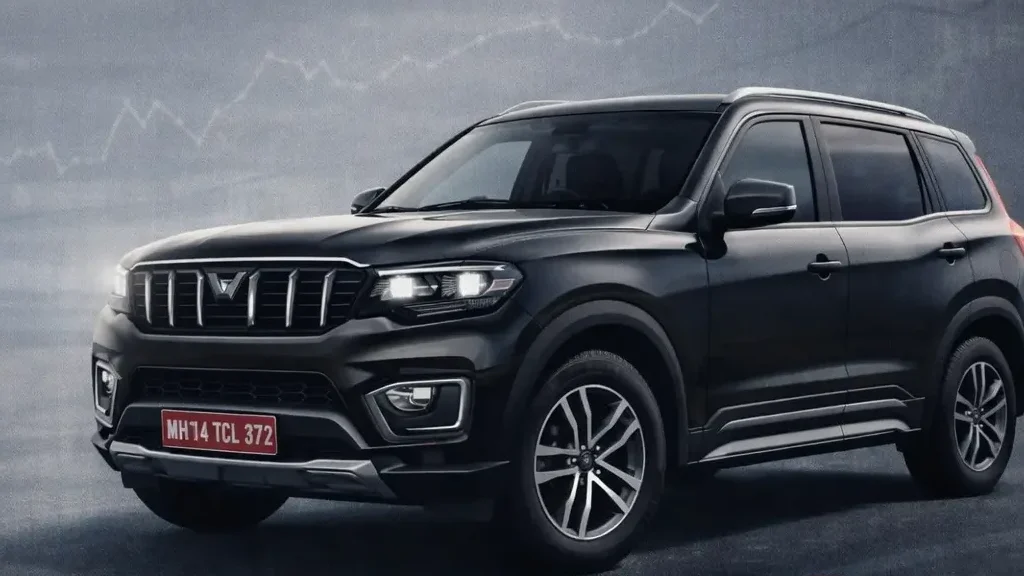
The decision to exclude the Scorpio N from this price hike is interesting and likely strategic. The Scorpio N operates in one of the most competitive segments in the Indian market, going up against the Tata Safari, Hyundai Alcazar, and MG Hector. It also has a massive waiting period on certain variants, which means demand is already outstripping supply. Raising prices on a model that already has a months-long waitlist could alienate buyers who might switch to alternatives rather than pay more and wait longer.
There is also the possibility that Mahindra is planning a model year update or a variant rejig for the Scorpio N, which would provide a natural opportunity to adjust pricing alongside added features or cosmetic changes. Whatever the reason, Scorpio N buyers can breathe easy — for now.
Impact on Buyers – What Should You Do?
If you have already booked a Mahindra SUV and are awaiting delivery, the good news is that most manufacturers honour the price at the time of booking, not delivery. However, this varies by dealership and the specific terms of your booking agreement, so it is worth confirming with your dealer.
If you have been considering a Mahindra SUV but have not yet booked, the message is clear — prices are only going one way, and waiting longer is unlikely to save you money. With two hikes already in 2026 and commodity costs showing no signs of cooling down, a third increase later in the year cannot be ruled out. The best time to lock in your price is now, before the next revision hits.
For buyers looking at the electric models, the situation is more favourable. With the BE 6, XEV 9e, and XUV 3XO EV all retaining their earlier pricing, Mahindra’s EV lineup currently offers better value stability compared to the ICE range. Whether this holds through the rest of 2026 remains to be seen, but for now, EV buyers have one less thing to worry about.
The Bigger Picture
Mahindra’s price hike is a reflection of a broader industry reality. The days of stable car prices are behind us, at least for the foreseeable future. Between rising raw material costs, stricter emission norms requiring expensive after-treatment systems, and the increasing electronics content in modern vehicles, the cost of building a car is going up year after year. Manufacturers can only absorb so much before passing the burden to consumers.
For Mahindra specifically, the company is also investing heavily in its EV transition, new platform development, and capacity expansion. These investments need to be funded, and while the company’s SUV business is highly profitable, maintaining those margins in the face of rising costs requires periodic price corrections.
The silver lining, if there is one, is that Mahindra continues to offer strong value across its range. Even after this hike, models like the XUV 3XO, Scorpio N, and Thar Roxx remain competitively priced against their rivals, and the feature-to-price ratio continues to be one of the best in the industry. The question is not whether Mahindra SUVs are worth the money — they clearly are — but rather how many more hikes buyers will have to stomach before the year is out.
FAQ
1. How much have Mahindra SUV prices increased in July 2026?
Mahindra has increased prices by up to 2.7 percent across most of its SUV range, effective July 10, 2026. The biggest absolute increase is Rs 70,000 on the XEV 9S, while the Bolero saw the sharpest base price hike of Rs 49,000 among ICE models.
2. Which Mahindra models are not affected by the price hike?
The Scorpio N, BE 6, XEV 9e, and XUV 3XO EV have been left unchanged in this revision.
3. Why is Mahindra increasing prices?
Mahindra cites rising commodity costs — including steel, aluminium, and electronic components — as the primary reason for the price revision.
4. Is this the first price hike by Mahindra in 2026?
No, this is the second hike in 2026. Mahindra had earlier increased prices by up to 2.5 percent in April 2026.
5. Will Mahindra increase prices again in 2026?
While nothing has been officially announced, given the trend of rising input costs and two hikes already this year, another revision later in 2026 cannot be ruled out.
For more such updates on latest cars, bikes and EVs stay connected to MotorMitra. #gaadiyonkismartguide