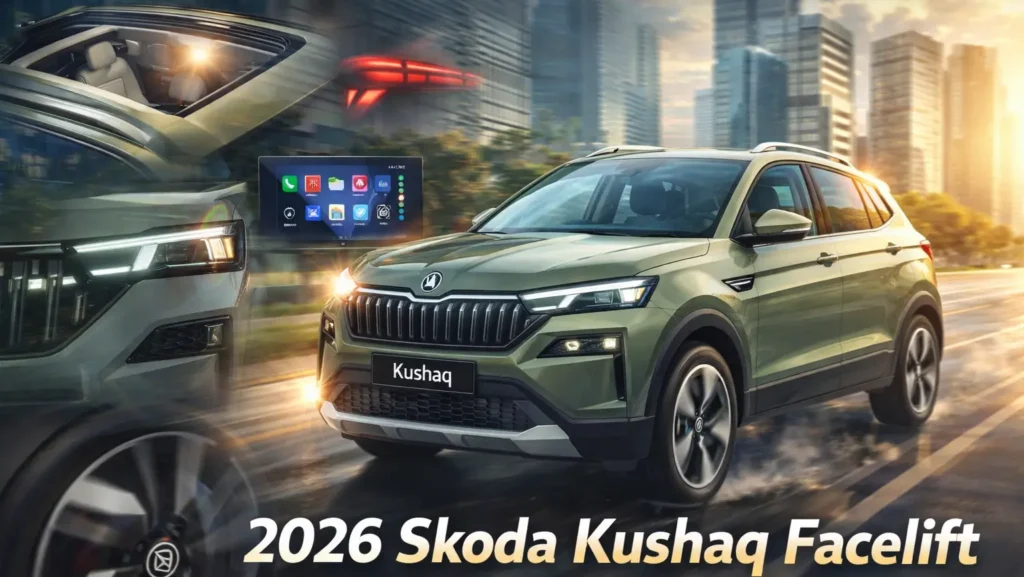
The 2026 Skoda Kushaq Facelift: Mechanical Maturity Meets Mid-Life Makeover
When Skoda first introduced the Kushaq under its ambitious India 2.0 strategy, it brought classic European driving dynamics to a midsize SUV segment heavily dominated by feature-flush Korean competitors. It was a driver’s car first and an appliance second. Fast forward to 2026, and the midsize landscape has evolved dramatically. To stay fighting fit against newer, highly aggressive competition, the Czech carmaker has dropped the 2026 Skoda Kushaq Facelift into the arena, priced between Rs 10.69 lakh and Rs 18.99 lakh (ex-showroom).
This isn’t just a simple cosmetic tuck-and-trim. Skoda has made significant adjustments under the hood, particularly to its workhorse 1.0-litre automatic variant, while packing in features that were sorely missed on the original checklist. Let’s dissect whether these changes are enough to shift the needle in this hyper-competitive segment.
The MQB-A0-IN platform remains structurally untouched, meaning the Kushaq retains its relatively compact, tight-skinned footprint. However, the visual drama has turned up a notch.
Also Read: Skoda Kushaq vs Volkswagen Taigun Facelift 2026: Major Differences Explained
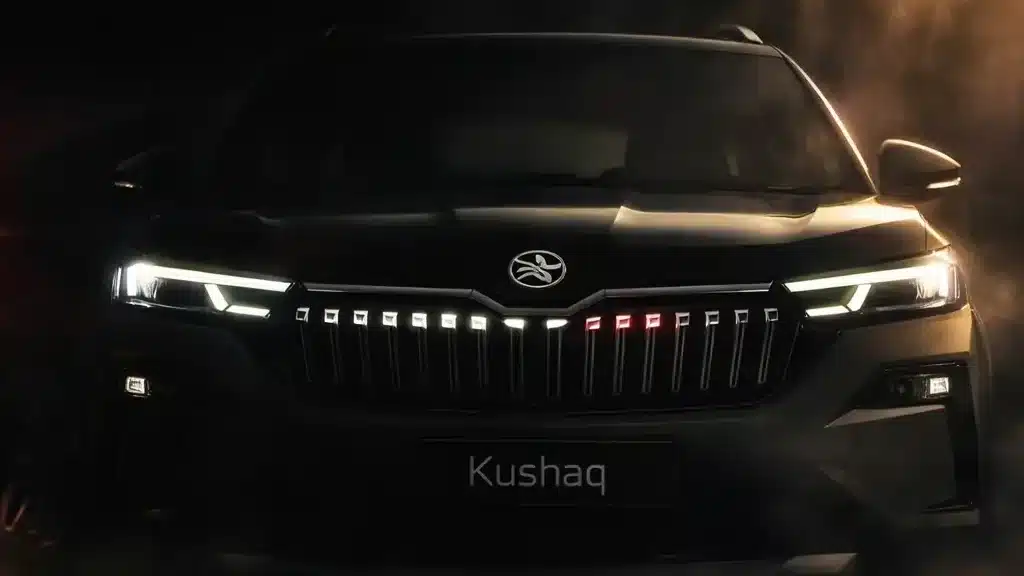
Up front, the face looks substantially wider and more assertive. Skoda has integrated a wider signature grille split by a modern, segmented LED lightbar that bridges the sharper headlight units. The main clusters get a striking new ‘eyebrow-style’ LED DRL configuration, sitting above a re-profiled front bumper and slimmer fog lamp housings.
Move to the side, and the silhouette remains the same clean, understated European shape we’ve grown fond of, though accented by fresh 17-inch alloy wheel designs depending on the trim level (Classic+, Signature, Sportline, Prestige, or the top-tier Monte Carlo). The rear mirrors the front’s tech-forward theme with a heavily redesigned bumper and connected LED taillights featuring intricate segmented elements and illuminated “SKODA” lettering spelled out across the tailgate. It’s mature, athletic, and looks expensive without trying too hard.
Historically, the Kushaq lost a few showroom battles because it lacked the dazzling features its rivals used to lure buyers. The 2026 facelift mounts a serious counter-offensive.
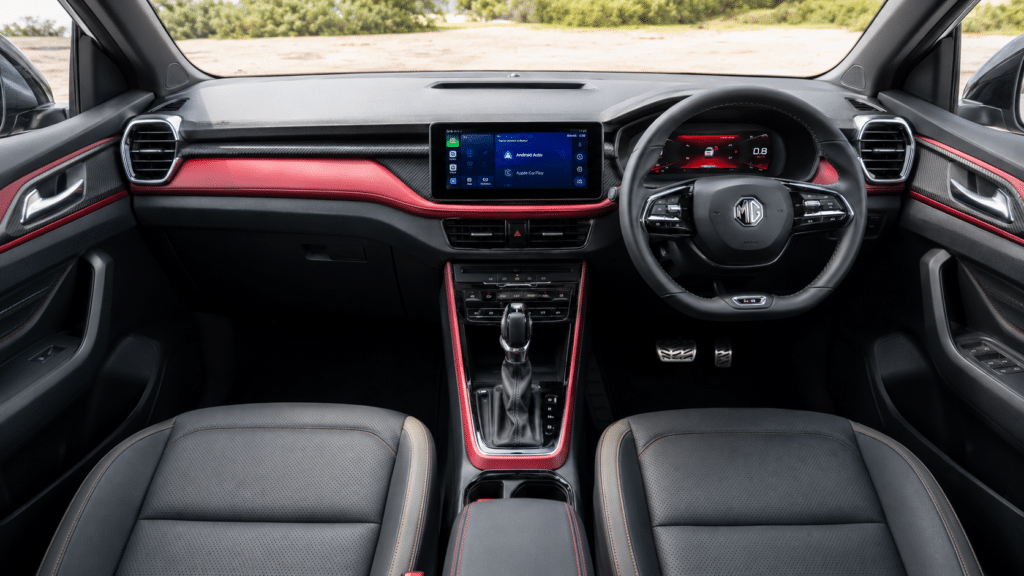
The cabin layout remains ergonomically flawless, but it feels refreshed thanks to a new 10.24-inch digital driver’s display that is crisp and highly configurable. The center console continues to house the slick 10.1-inch touchscreen infotainment unit. A crucial mechanical optimization comes in the form of a new variable displacement AC compressor—addressing a major weak point of the pre-facelift car by delivering significantly faster, quieter cooling performance even in harsh Indian summers.
                                                                   [ NOTABLE CABIN UPDATES ]
                                                                                            │
                                 ┌─────────────────────┼─────────────────────┐
                                 ▼                                                      ▼                                                       ▼
                 Panoramic Sunroof                        10.24-inch Cluster                   Rear Seat Massagers
Also Read: Skoda Kushaq vs Volkswagen Taigun Facelift 2026:
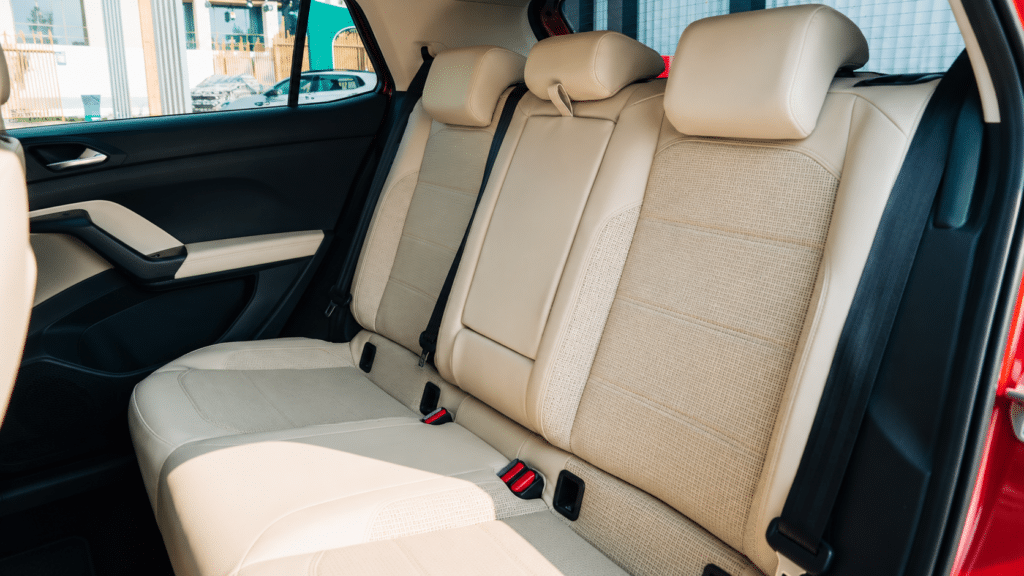
Skoda has also added a sprawling panoramic sunroof on the top trims, alongside standard dual digital screens, ventilated front seats, and a wireless charger. In an eccentric segment-first move, Skoda has integrated massage functions into the rear seats. While they are somewhat gentle and lack multi-mode complexity, it’s a unique addition for chauffeur-driven owners.
However, the cabin isn’t without omissions. In a 2026 market where tech is king, the absolute lack of a 360-degree camera and a Level 2 ADAS suite feels like a stark oversight—especially when almost every competitor offers them as standard on higher trims.
Under the hood, the engine options remain familiar, but the way they deploy their power has fundamentally changed. The 150hp, 1.5-litre four-cylinder TSI monster continues to rule the top-end variants with its 7-speed DSG (dual-clutch) automatic box, now crucially updated with rear disc brakes for much-needed stopping confidence.
The real newsmaker, however, is the entry-level 1.0-litre, three-cylinder TSI petrol engine. While it still puts out 115 hp and 178 Nm of torque, Skoda has completely binned the old 6-speed torque-converter automatic, replacing it with a far more sophisticated 8-speed automatic gearbox.
                                                      [ 1.0L 3-Cylinder TSI Turbo-Petrol ]
                                                                                   │
                                      ┌────────────────┴────────────────┐
                                      ▼                                                                                      ▼
                           Power: 115 hp                                                                  Torque: 178 Nm
                                      │                                                                                        │
                                      └────────────────┬────────────────┘
                                                                                   ▼
                                                 [ NEW 8-Speed Torque Converter AT ]
On the road, this transformation is immediately apparent. The old car’s tendency to slightly lurch forward from a standstill has been ironed out into a seamless, progressive power delivery. The transmission is eager to shift and matches the turbo-petrol’s powerband beautifully. Toss it into manual mode, and the gear changes feel astonishingly snappy—almost mimicking a dual-clutch setup.
Performance has seen a noticeable bump; the 0-100 kph sprint drops to an impressive 11.57 seconds on our clocks. The extra gear ratios also translate to spectacular efficiency gains. The 1.0-litre AT now claims an outstanding 19.09 kpl (up from the older automatic’s 15.78 kpl), actually undercutting the 1.5-litre DSG on the fuel-economy front. The only real chink in its armor remains the inherent three-cylinder thrum, which makes itself heard in the cabin once you pass the 2,500 rpm mark.
If you value the connection between your hands on the steering wheel and the rubber on the asphalt, the Kushaq remains the gold standard in its class. True to its European heritage, the chassis is beautifully set up.
Also Read: New Skoda Epiq EV Breaks Cover With Futuristic Design & 440 KM Range
At slow city speeds, the ride does carry a distinctly firm edge. You will feel and hear sharp ruts or broken tarmac filtering into the cabin. However, as the digital speedometer climbs, the suspension reveals its brilliance. High-speed pliancy is unmatched; it settles flat over highway undulations, and body roll is tight and beautifully managed through corner apexes. The steering is light and effortlessly nimble for urban slicing, though we would still prefer a tad more weight to dial in at triple-digit speeds.
On the safety front, the Kushaq retains its structural integrity boasting a 5-star Global NCAP crash test rating, with 6 airbags, electronic stability control (ESC), and tire pressure monitoring (TPMS) rounding out a solid protection package.
The 2026 Skoda Kushaq facelift is a deeply calculated, highly effective update. By swapping out the transmission on the volume-selling 1.0-litre variant, Skoda hasn’t just improved the drive experience—they’ve fixed the fuel efficiency equation that matters so much to Indian buyers.
It still won’t appeal to the buyer looking for maximum physical street presence or a textbook full of semi-autonomous driving gadgets. But by fixing the air conditioning, upgrading the cabin tech, sharpening the look, and preserving its flawless mechanical soul, Skoda has ensured that the Kushaq remains the absolute default choice for the discerning driver.