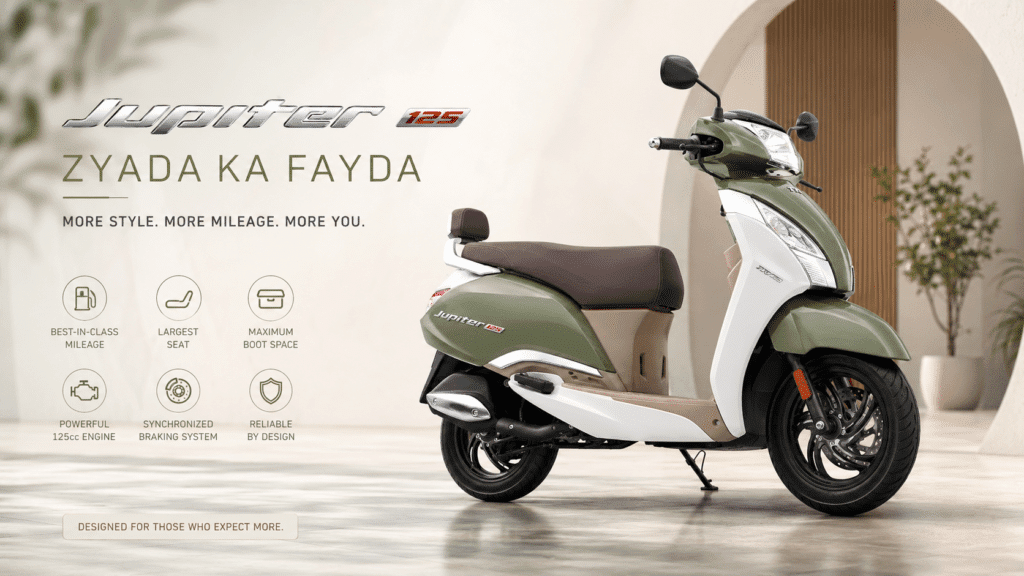
Why the TVS Jupiter 125 Overthrows the Honda Activa 125
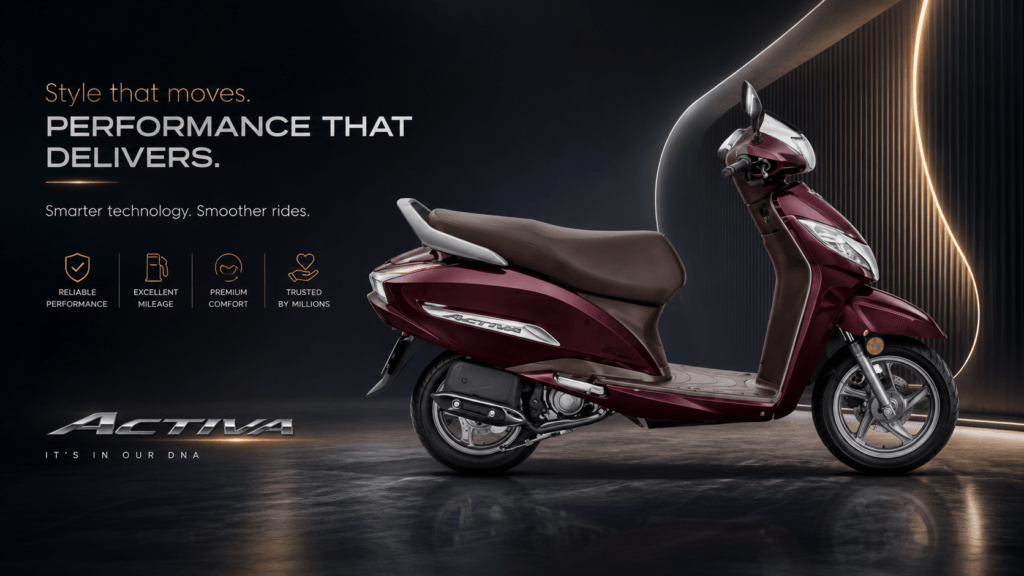
For over two decades, the 125cc family scooter segment in India has been governed by a simple, almost religious rule of thumb: when in doubt, buy a Honda Activa. It was the default, risk-averse choice for the Indian household—a mechanical appliance prized for its metal body panels, bulletproof reliability, and predictable resale value. But the automotive landscape of 2026 demands more than just predictable appliances.
When TVS upscaled its highly successful Jupiter moniker into the 125cc tier, it didn’t just launch a rival; it launched a philosophical critique of Honda’s conservative packaging. While the Honda Activa 125 continues to trade on its historic reputation, the TVS Jupiter 125 actively deconstructs what a modern utility scooter should be. Here is an authentic, journalist’s deep dive into why the smart money is decisively moving away from the established order and toward the TVS camp.
1. The Packaging Triumph: Relocating the Fuel Tank
Also Read: 2026 TVS Jupiter 125 Launched With New Colors, Variants & Price
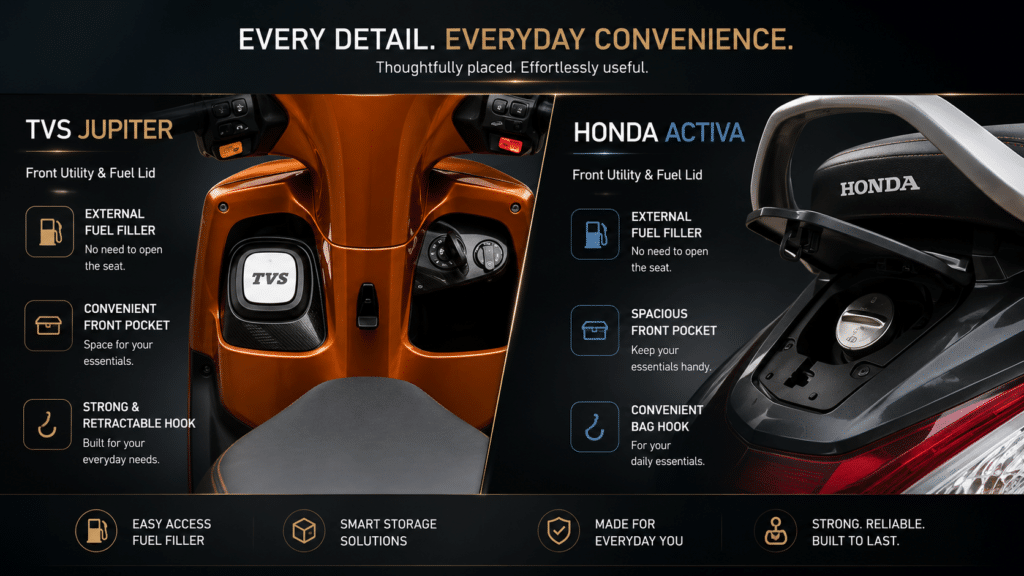
In the commuter scooter ecosystem, space is the ultimate currency. For generation after generation, Honda has stuck to the traditional engineering blueprint: the fuel tank sits squarely under the rear seat frame. To fill it, you operate an external cap, but the massive tank invariably encroaches on the under-seat storage cavity.
TVS engineers threw that old blueprint out the window. By relocating the fuel tank underneath the floorboard and positioning the fuel filler cap neatly on the front apron, they achieved a packaging masterstroke that yields two massive real-world advantages.
[Honda Activa 125] ──► Rear Frame Tank ──► Traditional 18L Boot (Single Helmet)
[TVS Jupiter 125]  ──► Floorboard Tank ──► Colossal 33L Boot    (Two Helmets)
First, it creates a staggering 33-litre under-seat storage cavern. This is not just a marginal upgrade; it is nearly double the Activa’s modest 18-litre boot. The Jupiter is the only machine in this class that can genuinely swallow two half-face helmets or a massive office backpack without forcing you to sit on the seat to jam it shut. Second, fueling becomes completely effortless. You never have to step off the scooter or awkwardly twist around at a chaotic fuel station. The cap is right there under the handlebars, accessible by a simple twist of the multi-function key.
2. Uniform 12-Inch Wheels vs Staggered Geometry
Also Read: TVS FY26 Sales Hit All-Time High, iQube EV & Jupiter Lead Growth
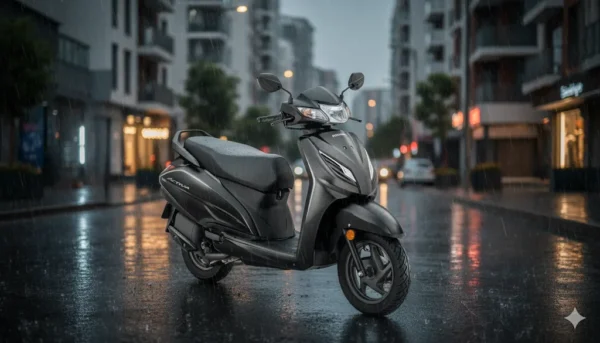
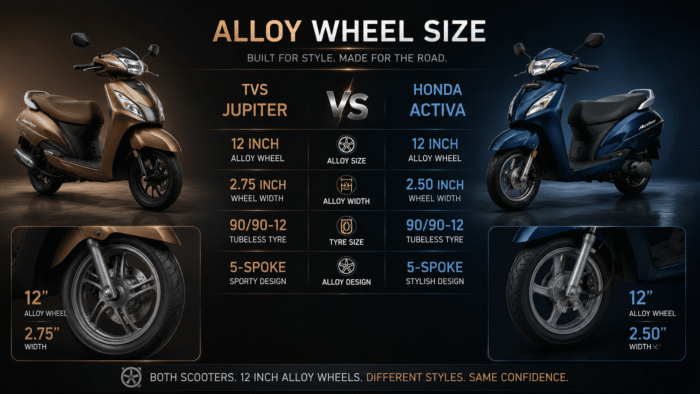
Look closely at the rolling stock of the Honda Activa 125. It employs a staggered wheel geometry: a 12-inch wheel at the front coupled with a smaller 10-inch wheel at the rear. While this packaging trick helps Honda lower the rear seat height, it introduces a dynamic compromise on harsh Indian roads. A smaller rear wheel drops more violently into deep potholes and can feel skittish when cornering over wet tramlines or loose gravel.
TVS equips the Jupiter 125 with uniform 12-inch alloy wheels at both ends, wrapped in identical 90/90-12 tubeless tyres. That extra two inches of diameter at the rear completely alters the scooter’s dynamic composure. The Jupiter tracks with far superior straight-line stability at high speeds and glides over sharp road ruts with a level of mid-corner poise that the Activa simply cannot match.
3. Ride Quality: The Gas-Charged Revelation
If you ride both scooters back-to-back over an unpaved metro construction bypass, the difference in suspension tuning becomes instantly apparent. The Activa 125 relies on a traditional, firmly sprung three-step adjustable hydraulic rear monoshock. On smooth tarmac, it feels tight and stable. However, when subjected to sharp expansion joints or broken asphalt, it transmits harsh, localized thuds directly into the rider’s lower spine.
TVS counters this by fitting the Jupiter 125 with a premium gas-charged MIG (Mono Tube Inverted Gas) rear shock absorber. This is hardware usually reserved for sporty or more premium performance segment motorcycles. The damping philosophy here is incredibly plush. It rounds off the sharp edges of jagged potholes with absolute maturity, keeping both the rider and a pillion remarkably well-isolated from urban road trauma.
4. Tractive Effort: Lower-Peak Urban Torque
On paper, their performance parameters seem neck-and-neck. Both use highly refined, fuel-injected, air-cooled 125cc motors putting out an identical 10.5 Nm of peak torque. But as any seasoned automotive writer will tell you, where that torque arrives makes all the difference in stop-and-go city traffic.
- TVS Jupiter 125: Peak torque arrives at a low 4,500 RPM.
- Honda Activa 125: Peak torque peaks later at 5,000 RPM.
Because the Jupiter delivers its maximum twisting force 500 RPM earlier in the rev range, it exhibits vastly superior tractive effort right off the line. When pulling away from traffic lights or executing a split-second overtaking maneuver against a slow-moving commercial vehicle, the Jupiter responds with instant, eager acceleration. The Activa, while peerlessly smooth, feels noticeably lazier and more linear in its power delivery, requiring a more aggressive handful of throttle to achieve the same urgency.
Also Read: 2026 Yamaha XSR155 Just Broke Cover – The Price Could Make Indian Buyers Pause
The Verdict: Appliance vs Evolution
The Honda Activa 125 remains an excellent appliance. If your sole objective is to buy a scooter with a whisper-quiet starter motor, an unburstable pedigree, and a badge that guarantees a stress-free resale ten years down the line, the Honda is a safe bet.
But if you value engineering innovation, superior ergonomics, class-leading utility, and a ride quality that genuinely protects your physical comfort, the TVS Jupiter 125 is the superior product. TVS didn’t just match Honda’s specifications; they re-engineered the very architecture of the family scooter to deliver a vehicle that works harder for the Indian consumer.