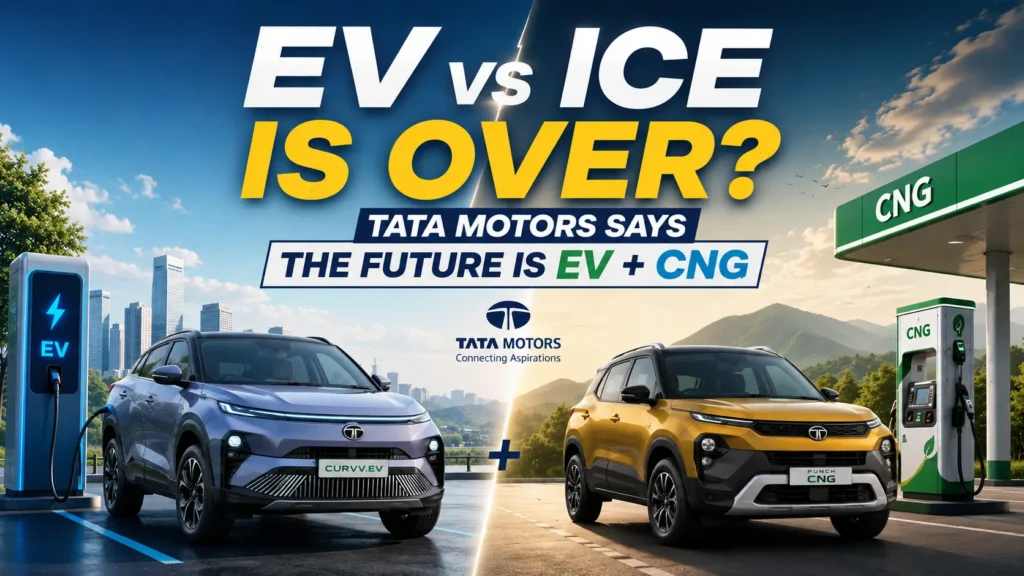
For years, the automotive industry has debated whether electric vehicles (EVs) would completely replace internal combustion engine (ICE) vehicles. While several global manufacturers have announced aggressive plans to transition to fully electric lineups, Tata Motors has presented a different perspective for the Indian market.
During Investor Day 2026, the company outlined a multi-powertrain strategy that moves beyond the traditional EV versus ICE discussion. Instead of treating electric mobility as the sole future of transportation, Tata Motors believes India’s next phase of growth will be driven by a combination of electric vehicles (EVs), compressed natural gas (CNG), and conventional petrol and diesel vehicles.
The company’s FY31 Vision reflects a pragmatic approach to India’s evolving mobility landscape, where infrastructure, affordability, and customer preferences continue to shape purchasing decisions.
Why Tata Motors Rejects the EV vs ICE Debate
India’s automotive market is significantly different from many developed markets. Factors such as charging infrastructure, regional driving patterns, fuel availability, vehicle affordability, and ownership costs vary considerably across the country. Recognising these challenges, Tata Motors believes that a single technology cannot meet the needs of every customer.
Instead, the company expects different powertrain options to coexist for several years, allowing buyers to choose the vehicle that best suits their driving habits and budget. This strategy reduces dependence on one technology while ensuring greater flexibility as the market continues to evolve.
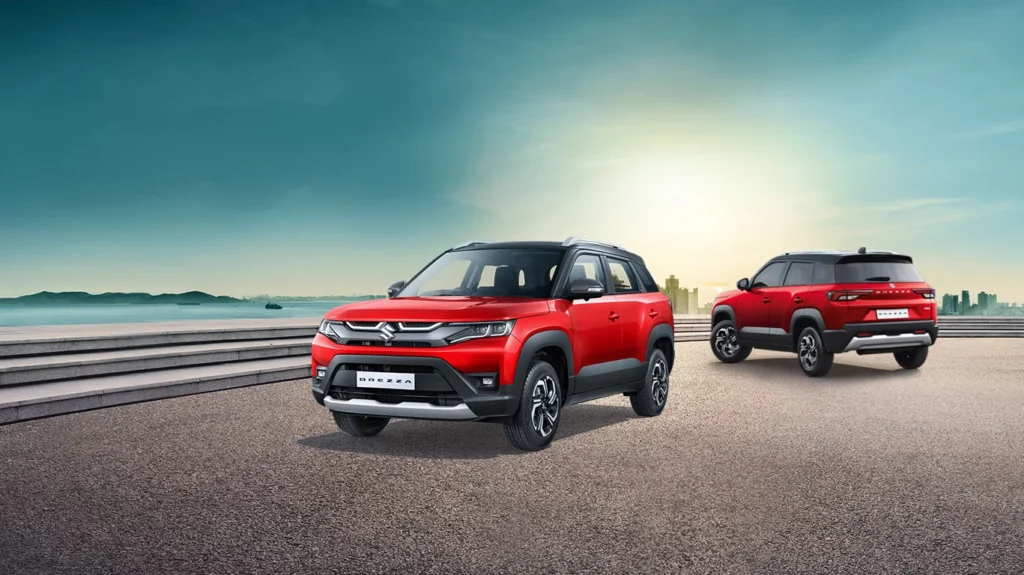
Also Read: 2026 Maruti Brezza Could Be A Game-Changer — Turbo Petrol And Smarter CNG Finally Arrive
EVs and CNG Expected to Drive Future Growth
One of the most notable announcements during Investor Day 2026 was Tata Motors’ projection that EVs and CNG vehicles together could account for around 45% of India’s passenger vehicle market by FY31. Rather than positioning electric vehicles as direct replacements for petrol or diesel cars, Tata Motors expects alternative fuel technologies to complement conventional powertrains.
This reflects growing demand for:
- Affordable daily commuting solutions
- Lower running costs
- Reduced emissions
- Flexible ownership choices
As fuel prices continue to fluctuate and charging infrastructure expands, both EVs and CNG vehicles are expected to play increasingly important roles.
Electric Vehicles Remain a Strategic Priority
Although Tata Motors supports a multi-powertrain future, electric mobility remains one of its biggest long-term investments. The company has established itself as India’s leading electric passenger vehicle manufacturer through models such as the Tiago.ev, Tigor.ev, Punch.ev, Nexon.ev and Curvv.ev. Going forward, Tata Motors plans to strengthen its EV portfolio with:
- New electric SUVs
- Longer driving ranges
- Faster charging technologies
- Connected vehicle software
- Premium cabin experiences
- Advanced safety systems
The upcoming Harrier EV and Sierra EV are expected to become key pillars of the company’s premium electric vehicle strategy.

Also Read: 2026 Royal Enfield Himalayan Basecamp Ladakh Registrations Begin!
Why CNG Still Matters
Compressed Natural Gas has emerged as one of the fastest-growing fuel options in India due to its lower running costs and expanding refuelling infrastructure. Recognising this opportunity, Tata Motors continues to expand its CNG lineup across multiple passenger vehicle segments.
CNG offers several advantages:
- Lower operating costs than petrol
- Reduced tailpipe emissions
- Established refuelling infrastructure in many cities
- Familiar ownership experience without charging concerns
For customers who are not yet ready to switch to an EV, CNG represents an attractive alternative.
ICE Vehicles Will Continue to Have a Role
Despite rapid electrification, Tata Motors does not expect petrol and diesel vehicles to disappear in the near future. Long-distance travel, rural markets, commercial applications and regions with limited charging infrastructure will continue to rely on conventional powertrains for years to come. The company therefore plans to continue investing in ICE vehicles while improving their efficiency, refinement and emissions performance. This balanced strategy ensures Tata Motors remains competitive across every major customer segment. Instead of encouraging customers towards a single technology, Tata Motors aims to offer multiple choices.
Its future portfolio is expected to include:
- Petrol hatchbacks and SUVs
- Diesel premium SUVs
- Factory-fitted CNG vehicles
- Battery electric hatchbacks
- Electric SUVs
- Premium lifestyle EVs
This diversified lineup allows buyers to select a powertrain based on their driving patterns, budget and infrastructure availability.
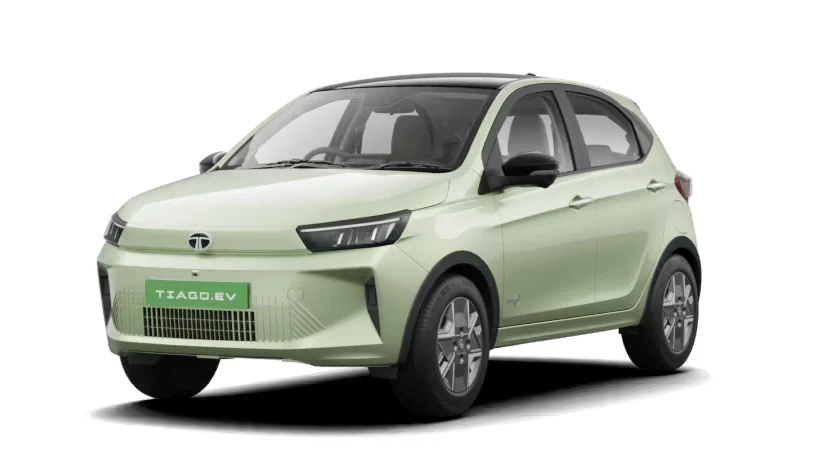
For car buyers, Tata Motors’ strategy provides greater flexibility. Urban commuters with access to charging infrastructure may find electric vehicles to be the most economical option. High-mileage users without reliable charging access could benefit from CNG models. Meanwhile, buyers who frequently travel long distances may continue to prefer petrol or diesel-powered SUVs. Rather than forcing a rapid transition, Tata Motors is preparing for a gradual evolution of the Indian market.
Tata Motors’ roadmap reflects a broader shift in how automakers are approaching the Indian market. Instead of betting entirely on a single technology, manufacturers are increasingly investing across multiple powertrains to address varying customer requirements. This strategy also reduces business risk, allowing companies to adapt as government policies, charging infrastructure, fuel prices and consumer preferences continue to evolve. If Tata Motors’ projections prove accurate, India’s automotive market could become one of the world’s most diversified mobility ecosystems by the end of the decade.
Motor Mitra Verdict
Tata Motors’ FY31 Vision sends a clear message: the future of mobility in India is unlikely to be defined by EV versus ICE. Instead, the company believes the market will evolve through a balanced mix of electric vehicles, CNG models and efficient conventional powertrains, each serving different customer needs.
By investing simultaneously in electrification, alternative fuels, product innovation and manufacturing expansion, Tata Motors is preparing for a market where flexibility will be just as important as technology. As India continues its transition toward cleaner mobility, this multi-powertrain strategy could become one of the defining factors behind Tata Motors’ long-term growth and competitive advantage.
For more such updates on latest cars, bikes and EVs stay connected to MotorMitra. #gaadiyonkismartguide