Tata Motors has officially unveiled an ambitious growth roadmap for its passenger and commercial vehicle businesses during its high-profile Investor Day 2026. Charting out a definitive five-year operational playbook, the management team outlined how the company plans to systematically scale up its market share, technology portfolio, and production capacity. Rather than gambling heavily on a single propulsion platform, Tata Motors showcased a highly practical, multi-powertrain vision that balances internal combustion engines (ICE), compressed natural gas (CNG), and pure battery electric vehicles (EVs).
Here are the 10 biggest structural announcements from the event that outline Tata Motors’ aggressive vision leading up to Fiscal Year 2031 (FY31).
1. Beyond 12 Lakh Annual Passenger Vehicle Sales
The absolute headline numbers from the event centered around massive scale. Tata Motors has set a target to achieve more than 12 lakh annual passenger vehicle sales by FY31. This ambitious target signals massive confidence in the sustained upward trajectory of India’s domestic car market, positioning Tata to solidify its spot near the absolute top of the volume charts.
2. Massive ₹40,000 Crore Capital for Expansion
To clear any doubts about how these massive targets will be funded, the automotive giant confirmed a major cap-ex commitment of up to ₹40,000 crore leading into the turn of the decade. This multi-billion dollar chest is structurally reserved for doubling factory capabilities, engineering ground-up alternative architecture, and rolling out next-generation software features.
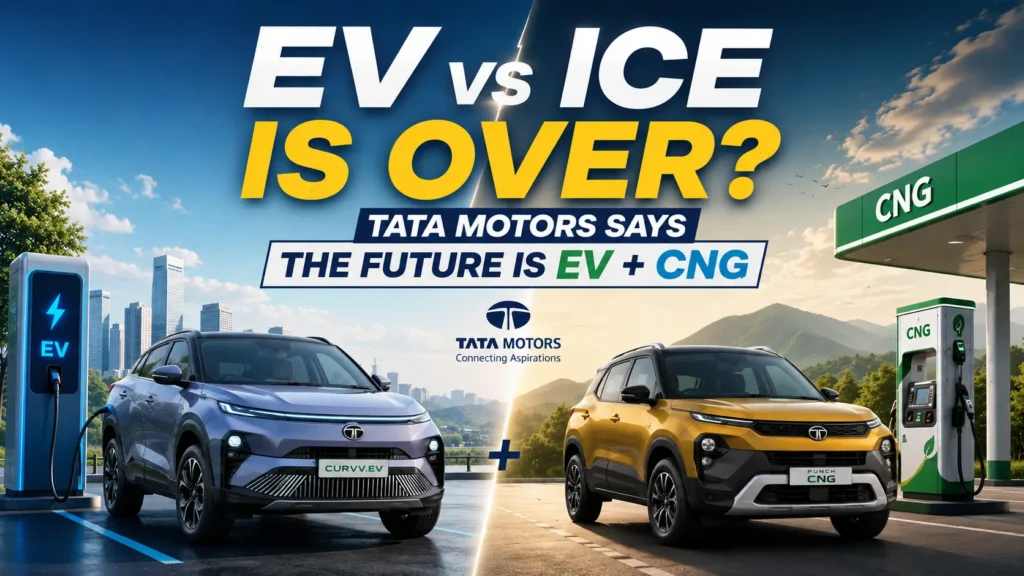
Also Read: EV vs ICE Is Over in 2026? Tata Motors Says the Future Is EV + CNG
3. Six All-New Vehicle Nameplates Confirmed
Tata Motors officially locked in the arrival of six entirely new vehicle nameplates before FY31. While the precise product list remains closely guarded under wraps, these upcoming introductions will aggressively populate key whitespaces in the midsize lifestyle SUV, premium crossover, and flagship multi-row segments.
4. A Wave of Over 20 Facelifts
To prevent its massive existing portfolio from growing visually stale against rapid new competitor cycles, the brand will deploy more than 20 cosmetic facelifts and lifecycle updates. Expect deep interior tech overhauls, larger high-definition infotainment displays, smarter Level 2 ADAS packages, and unified connected-car software logic across existing mainstays like the Nexon, Punch, and Altroz.
5. Aiming for Up to ₹6 Lakh Crore in Revenue
Driven by an premium trend that prioritizes higher-spec, tech-heavy model choices over entry-level trims, the passenger vehicle division is formally projecting its net revenue pool to surpass the ₹6 lakh crore milestone by FY31. The company aims to operate with a sustainable, highly healthy 10% EBITDA margin benchmark across this timeline.
6. Production Capacities Escalating to 13 Lakh Units
To address long waiting periods and support this incoming product wave, Tata Motors is expanding its physical footprint. By maximizing output across its newly integrated manufacturing plants, the company will bump up its net production capacity to 13 lakh units annually within the next 2 to 3 years, paving the way for smooth high-volume assembly lines.
7. EV and CNG to Claim 45% of Total Sales
In a bold alternative energy projection, Tata predicts that alternative powertrains—specifically a combination of EVs and advanced twin-cylinder CNG systems—will command 45% of its total product mix by FY31. Electrification is viewed not as an isolated experiment, but as a primary mass-volume driver working alongside combustion options.
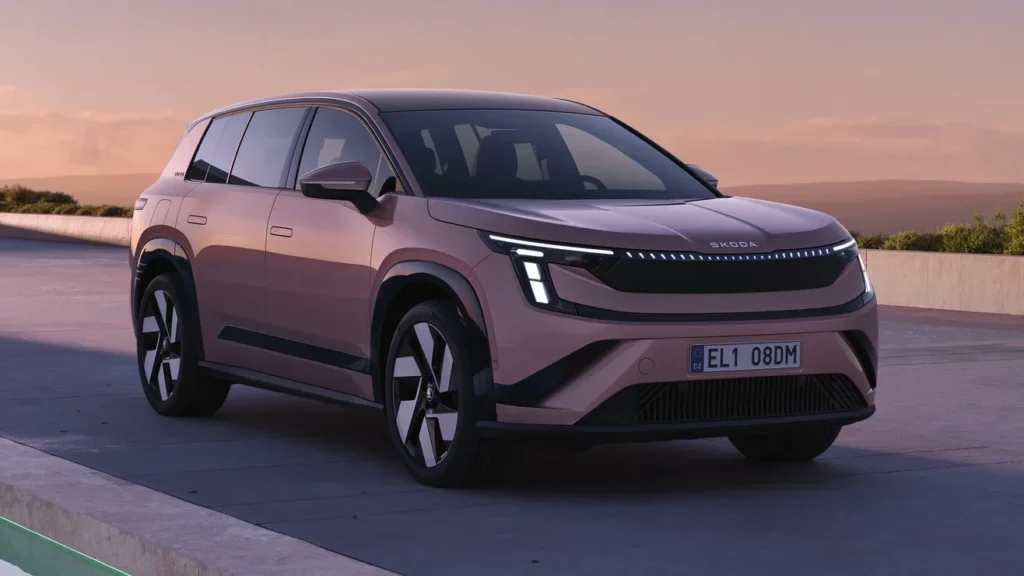
Also Read: Skoda’s Most Ambitious Electric SUV Yet Is Finally Here — And It Could Be A Glimpse Of The Future
8. Multi-Powertrain Flexibility
The executive board made it clear that Tata Motors will absolutely avoid an “EV-only” rush. Recognizing that charging networks and local fuel prices vary wildly across India’s Tier 1, 2, and 3 markets, the brand’s modular factory configurations will allow them to instantly dial production up or down across Petrol, Diesel, CNG, and EV variants depending on real-time consumer orders.
9. Deep Focus on Quality Control and Owner Experience
Moving away from pure volume numbers, Tata is redirecting critical corporate focus toward structural quality management. The investor brief highlighted immediate programs to elevate factory-gate manufacturing reliability, streamline digital after-sales service bookings, and completely overhaul the premium dealership experience ahead of its high-end EV deliveries.
10. Global Expansion for Commercial Vehicles
While the passenger car business claimed massive attention, the Commercial Vehicle (CV) division outlined its own high-stakes global playbook. Moving into its next growth phase, the CV sector will focus heavily on exporting localized transit solutions to demanding international markets, backed by smart digital fleet management apps and next-generation electric delivery vans.
Motor Mitra Verdict
Tata Motors’ Investor Day 2026 makes it clear that the domestic automotive landscape has officially shifted into a high-stakes technology race. By pairing a staggering ₹40,000 crore investment strategy directly with a versatile, multi-powertrain blueprint, Tata is successfully insulating itself against sudden market shifts. Whether the industry moves fast toward pure electrification or stays anchored to alternative combustion fuels, this long-term framework ensures that the manufacturer remains completely armed to lead the market well into 2031.
For more such updates on latest cars, bikes and EVs stay connected to MotorMitra. #gaadiyonkismartguide