The Indian midsize SUV segment has always been the most hotly contested space in the country’s automotive landscape, and June 2026 has once again proven why this segment generates more headlines than any other. Every month brings a new twist, a new challenger, and a new story of dominance or decline. This June was no different, as the top five midsize SUVs delivered a fascinating mix of explosive growth, steady consistency, and one dramatic fall from grace that has the entire industry talking.
What makes this month particularly interesting is the sheer diversity of brands occupying the top five positions. We have Maruti Suzuki with its newest offering, Kia with a resurgent classic, Toyota with its hybrid-powered contender, Maruti Suzuki again with another strong product, and Hyundai with what was once the undisputed segment leader now struggling to hold its ground. The numbers tell a compelling story of how quickly fortunes can change in this ruthlessly competitive market, and how consumer preferences are shifting towards newer, more feature-rich, and better-priced alternatives.
Let us dive deep into the performance of each of these top five midsize SUVs and understand what their June 2026 numbers reveal about the current state of this segment.
Maruti Suzuki Victoris
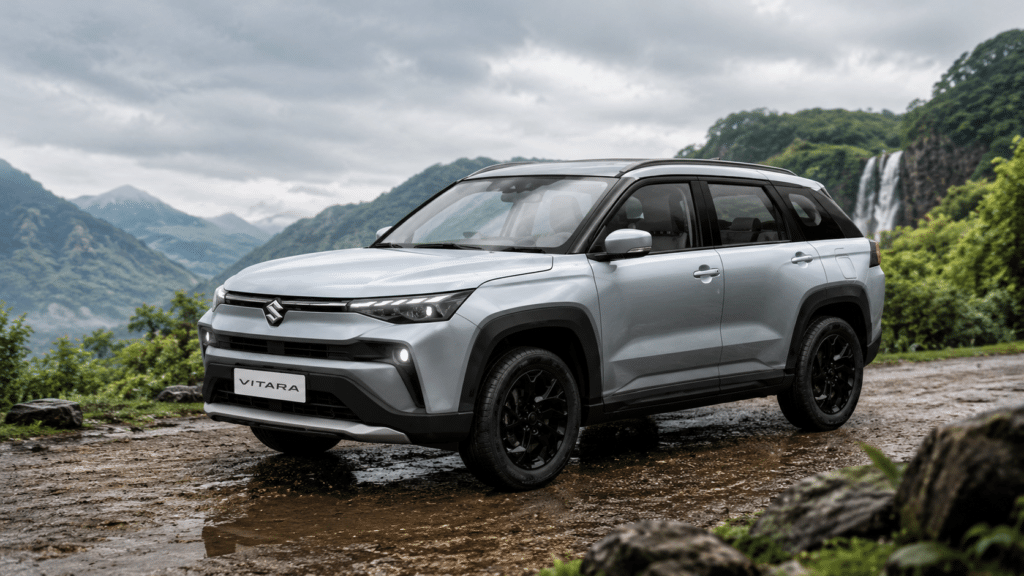
Sitting comfortably at the top of our list with 10,035 units sold in June 2026, the Maruti Suzuki Victoris has announced its arrival in the most emphatic manner possible. Being a relatively new entrant in this space, there is no year-on-year comparison available for the Victoris, but the raw volume alone speaks louder than any growth percentage ever could. Maruti Suzuki has done what it does best – identified a gap in the market, developed a product that ticks all the right boxes, and leveraged its unmatched distribution network to ensure maximum reach from day one.
The Victoris represents Maruti Suzuki’s most serious attempt at cracking the midsize SUV segment with a dedicated, ground-up product rather than a rebadged or platform-shared offering. The response from Indian buyers has been overwhelmingly positive, with the vehicle’s combination of bold design, comprehensive feature list, multiple powertrain options, and trademark Maruti Suzuki ownership experience proving to be an irresistible package. At this rate, the Victoris is not just competing in the midsize SUV segment – it is redefining the benchmarks that others will need to match.
Kia Seltos
Also Read: Tata Harrier & Safari STEALTH Edition Arrives With A Bold New Look—Would You Buy One?
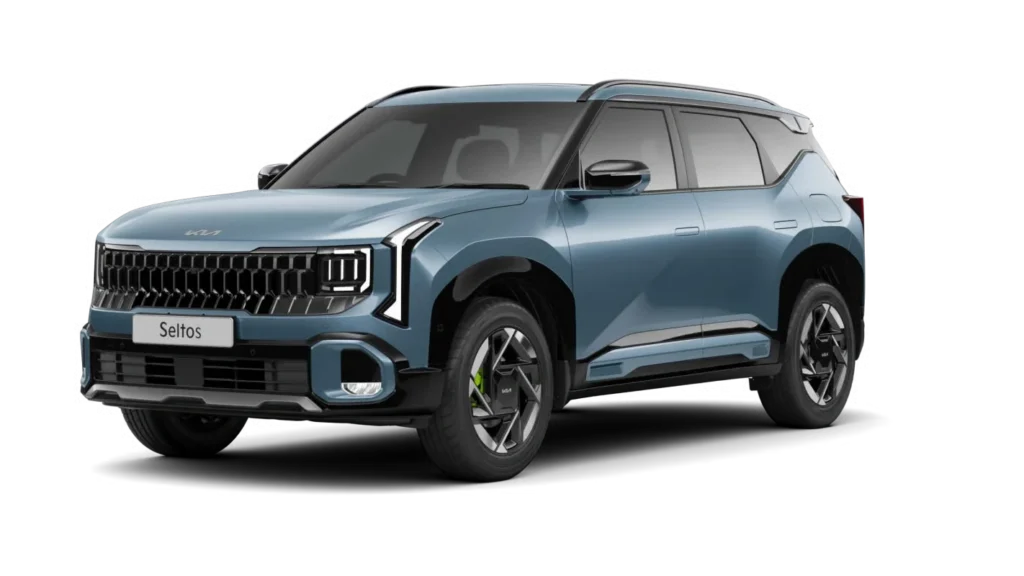
If there is one number that defines June 2026 in the midsize SUV segment, it is 85 percent. That is the year-on-year growth the Kia Seltos has delivered this month, catapulting itself to 9,654 units and firmly establishing itself as the comeback story of the year. The Seltos has always been a strong product, but its latest iteration has clearly elevated it to an entirely different level of desirability among Indian buyers.
Kia’s strategy of continuously updating the Seltos with the latest technology, refreshed design elements, and an ever-expanding variant lineup has paid rich dividends. The 85 percent growth is not a result of a low base effect or temporary discounting – it reflects genuine, sustained demand driven by a product that offers exceptional value at its price point. The updated ADAS features, the refined interior quality, and the punchy turbocharged petrol engine option have all contributed to making the Seltos the vehicle that buyers in this segment are increasingly gravitating towards. For Kia India, this performance validates their philosophy of never letting a product stagnate and always staying one step ahead of consumer expectations.
Toyota Urban Cruiser Hyryder
Toyota’s Urban Cruiser Hyryder has quietly but consistently built itself into one of the most dependable performers in this segment, and June 2026 was no exception. With 9,104 units sold and a solid 22 percent year-on-year growth, the Hyryder continues to attract buyers who value long-term reliability, excellent fuel efficiency, and the peace of mind that comes with the Toyota badge.
The Hyryder’s strong hybrid powertrain remains its biggest differentiator in a segment where most competitors rely solely on conventional petrol and diesel engines. As fuel prices continue to remain elevated and environmental consciousness grows among Indian buyers, the Hyryder’s ability to deliver exceptional fuel economy without compromising on performance or features has become an increasingly compelling proposition. Toyota’s reputation for bulletproof reliability and strong resale values adds another layer of appeal that few competitors can match. The 22 percent growth suggests that more and more buyers are recognizing these advantages and choosing the Hyryder over flashier but potentially less dependable alternatives.
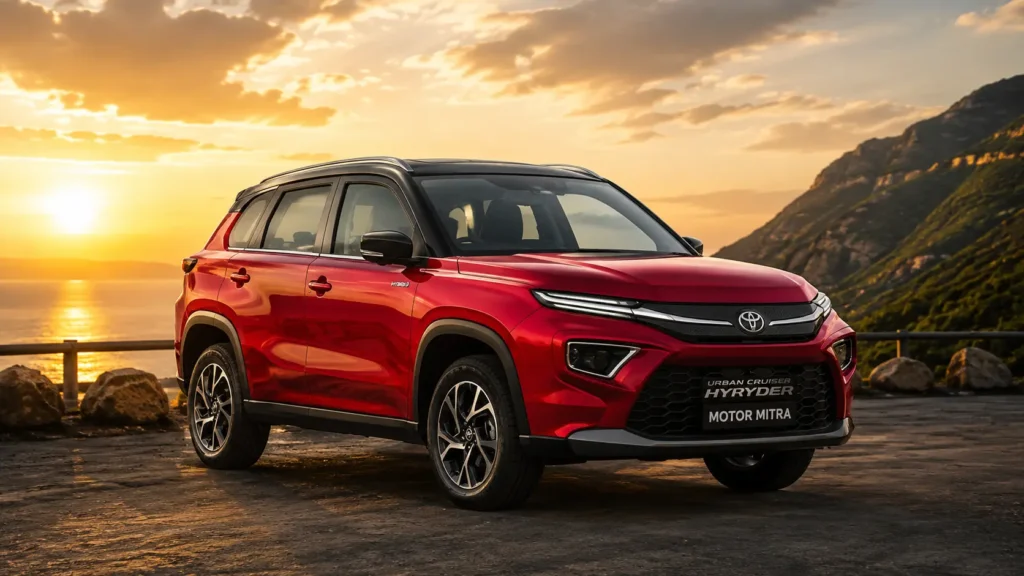
Maruti Suzuki Grand Vitara – 9,092 Units – 33% YoY Growth
The Grand Vitara from Maruti Suzuki posted 9,092 units with an impressive 33 percent year-on-year growth, making it the second-fastest growing vehicle in our top five list. Sharing its platform and powertrain options with the Toyota Hyryder, the Grand Vitara offers essentially the same mechanical excellence but wraps it in Maruti Suzuki’s extensive service network, competitive pricing, and the brand familiarity that millions of Indian families have grown up with.
The 33 percent growth is particularly noteworthy because it comes at a time when Maruti Suzuki also has the Victoris competing in the same segment. Rather than cannibalizing each other’s sales, both products seem to be expanding Maruti Suzuki’s overall pie in the midsize SUV space by targeting slightly different buyer profiles. The Grand Vitara appeals to the more rational, efficiency-focused buyer who wants hybrid technology and proven reliability, while the Victoris targets those seeking a bolder, more SUV-like presence. This dual-product strategy appears to be working brilliantly for Maruti Suzuki, giving them a combined volume that no other manufacturer can match in this segment.
Hyundai Creta
Also Read: 2026 Land Rover Defender Breaks Cover With New Vertex Variant — Everything That’s Changed
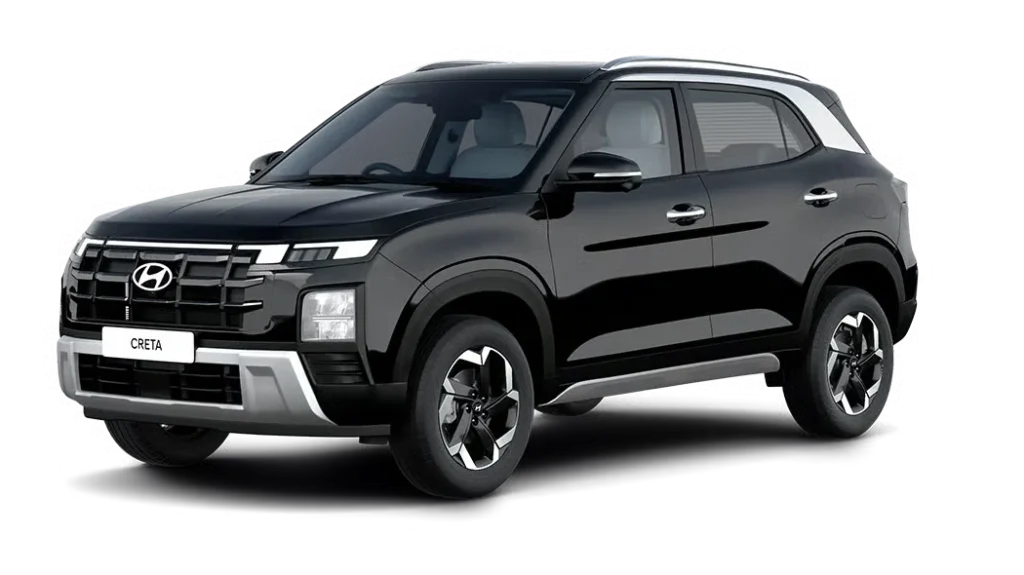
And then there is the Hyundai Creta. Once the undisputed ruler of the midsize SUV segment, the Creta’s June 2026 performance of just 7,168 units with a devastating 55 percent year-on-year decline tells the story of a vehicle that is rapidly losing its grip on a market it once dominated with ease. This is not a minor correction or a seasonal fluctuation – a 55 percent decline is a seismic shift that should have alarm bells ringing at Hyundai Motor India’s headquarters.
The reasons behind the Creta’s decline are multifaceted. The arrival of aggressively priced competitors like the Maruti Suzuki Victoris, the resurgence of the Kia Seltos with its massive update, and the growing preference for hybrid powertrains offered by the Hyryder and Grand Vitara have all eaten into the Creta’s traditional buyer base. Additionally, the Creta’s pricing has crept upward over successive updates, making it increasingly difficult to justify against newer rivals that offer more features at similar or lower price points. Hyundai will need to respond with urgency – whether through a significant price correction, a comprehensive facelift, or an entirely new generation – if it hopes to reclaim its former glory in this segment.
What These Numbers Mean for the Segment
The June 2026 top five midsize SUV rankings paint a clear picture of where this segment is headed. Maruti Suzuki’s dominance with two products in the top five, combined with Kia’s explosive growth and Toyota’s steady climb, suggests that the era of any single model dominating this space unchallenged is well and truly over. Buyers today have more credible options than ever before, and they are making increasingly informed decisions based on total cost of ownership, technology offerings, and long-term value rather than just brand loyalty.
The Hyundai Creta’s decline serves as a cautionary tale for any manufacturer that takes its market position for granted. In a segment this competitive, standing still is the same as moving backward, and the Creta’s 55 percent decline proves that even the mightiest can fall when they fail to keep pace with evolving consumer expectations and aggressive new competition.
FAQ
1. Which midsize SUV sold the most units in June 2026?
Maruti Suzuki Victoris topped the midsize SUV sales chart in June 2026 with 10,035 units, establishing itself as the new segment leader.
2. Which SUV showed the highest YoY growth in June 2026?
Kia Seltos delivered the highest year-on-year growth at an impressive 85 percent, selling 9,654 units compared to its June 2025 numbers.
3. Why is Hyundai Creta sales declining in 2026?
Hyundai Creta faced a 55 percent YoY decline in June 2026 due to intense competition from newer models like Victoris and updated Seltos, along with growing buyer preference for hybrid options like Hyryder and Grand Vitara.
4. Is Maruti Suzuki Grand Vitara better than Toyota Hyryder?
Both share the same platform and hybrid technology. Grand Vitara offers Maruti’s wider service network and slightly competitive pricing, while Hyryder provides Toyota’s reliability reputation and stronger resale value.
5. How many midsize SUVs did Kia Seltos sell in June 2026?
Kia Seltos sold 9,654 units in June 2026, registering a remarkable 85 percent year-on-year growth over its June 2025 performance.
For more such updates on latest cars, bikes and EVs stay connected to MotorMitra. #gaadiyonkismartguide