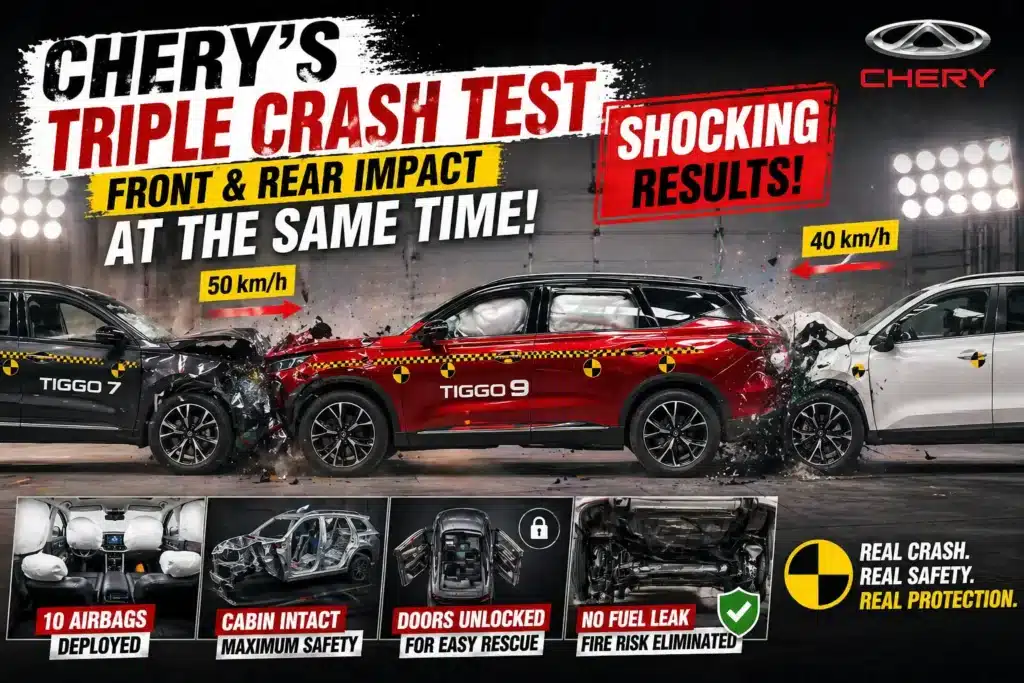
This is not a normal crash test, and that is exactly why it is getting so much attention. Chery has done something that very few manufacturers even attempt, a real-world three-vehicle crash simulation where impacts happen from both directions at the same time. This immediately sets it apart from traditional lab-based safety demonstrations.
At first glance, it might look like a dramatic showcase, but there is a deeper purpose behind it. This test highlights a scenario that can actually happen on highways or crowded roads. If you think standard safety ratings are enough to judge a car, this experiment might completely change your perspective.
Ignore this, and you might be underestimating real-world safety.
Why This Matters
- Simulates real-world chain-reaction crashes instead of controlled lab impacts
- Tests structural strength under extreme dual-impact stress
- Introduces a new benchmark for SUV safety evaluation
The Setup: A Crash From Both Sides at Once
The test took place at Chery’s Longshan Test Centre in Wuhu, China, during a global business summit attended by media and industry representatives. The goal was not just to show strength but to recreate a complex accident scenario that most safety tests do not cover.
Also Read:- Harrier & XUV7XO Beware! New JSW’s Chery Tiggo 7L SUV Could Change Everything
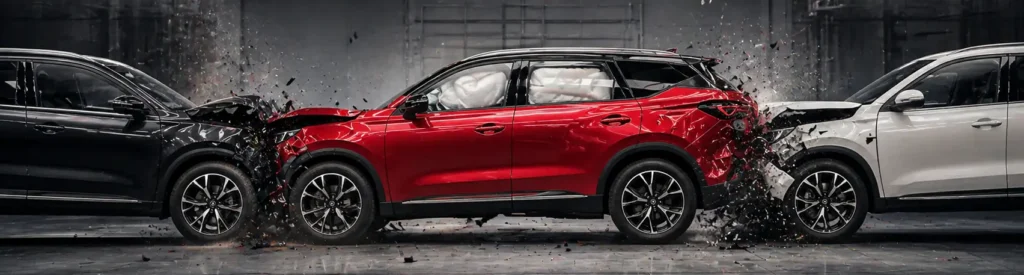
A Tiggo 9 was positioned as the primary test vehicle. At the exact same moment, it was hit head-on by a Tiggo 7 at 50 km/h while another vehicle crashed into it from the rear at 40 km/h. This simultaneous bidirectional impact created extreme stress on the structure, far beyond standard crash conditions.
Why This Test Is Different From Everything Else
Most crash tests focus on a single direction of impact, whether it is frontal, side, or rear. However, real-world accidents are rarely this simple, especially in situations like highway pile-ups or sudden braking scenarios.
This triple crash test pushes the vehicle beyond those limitations by applying force from both directions at the same time. It challenges not just the chassis strength but also how well the safety systems work together under maximum stress conditions.
Crash Scenario Breakdown: What Makes This Test Extreme
| Parameter | Test Condition | Real-World Meaning | Impact on Safety |
|---|---|---|---|
| Impact Type | Simultaneous Front + Rear | Chain collision / pile-up | Maximum structural stress |
| Front Collision Speed | 50 km/h | Highway frontal crash | High energy absorption required |
| Rear Collision Speed | 40 km/h | Sudden rear-end impact | Load transfer challenge |
| Number of Vehicles | 3 Vehicles | Multi-car accident scenario | Complex force distribution |
| Impact Direction | Dual-direction | Opposite force application | Chassis + frame stress peak |
| Airbag Deployment | 10 Airbags Activated | Multi-angle protection | Occupant injury reduction |
| Cabin Integrity | No major deformation | Survival space maintained | Critical for life safety |
| Post-Crash Safety | Doors unlocked, no fuel leak | Rescue-friendly structure | Real-world usability |
The data from this test clearly highlights how extreme the conditions were compared to standard crash scenarios. It also shows how multiple safety systems need to work together in real time when a vehicle is hit from different directions.
This kind of testing goes beyond regulations and gives a clearer picture of how a vehicle behaves in unpredictable situations. It is exactly this level of detail that makes scenario-based safety testing more relevant for modern buyers.
👉 And this is where things start to get really interesting.
The Result: Cabin Stayed Intact Against All Odds
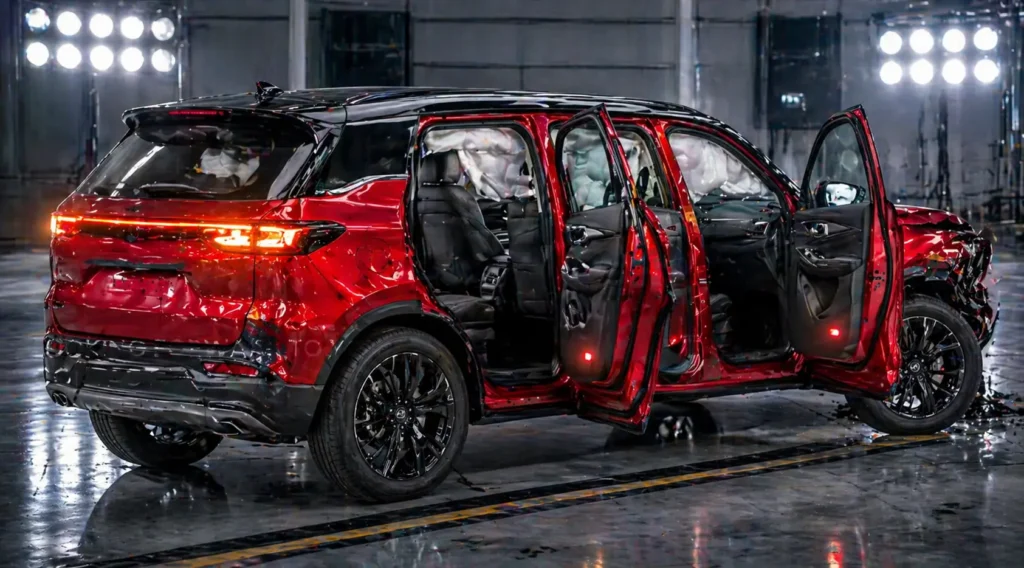
Despite the massive energy generated from both sides, the Tiggo 9 managed to maintain its structural integrity impressively. The passenger compartment showed no major deformation, and the core safety zones remained protected.
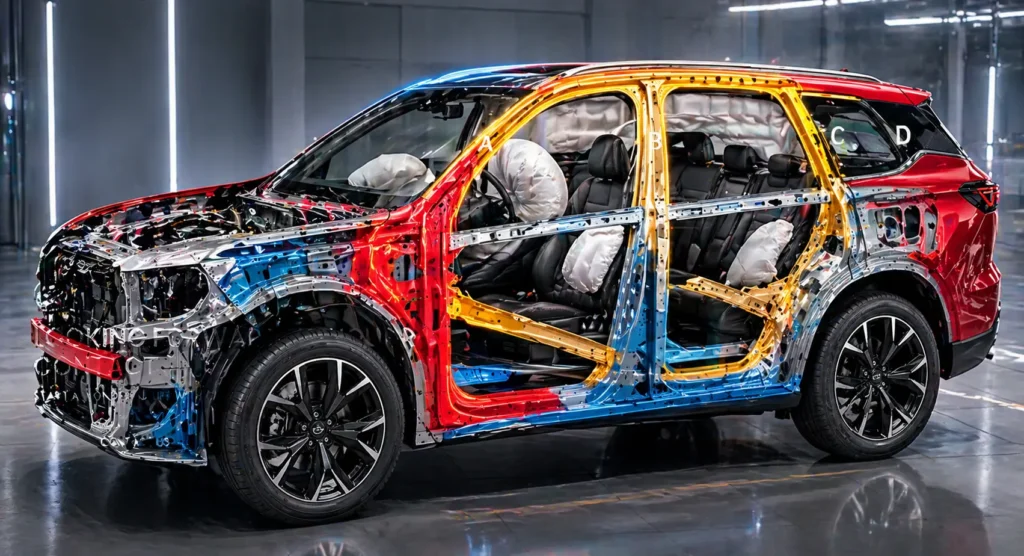
Critical structural elements like the A, B, C, and D pillars held their shape, ensuring that enough survival space was preserved for occupants. This level of stability is crucial in preventing serious injuries during high-impact collisions.
Airbag & Safety Systems: Perfect Execution Under Pressure
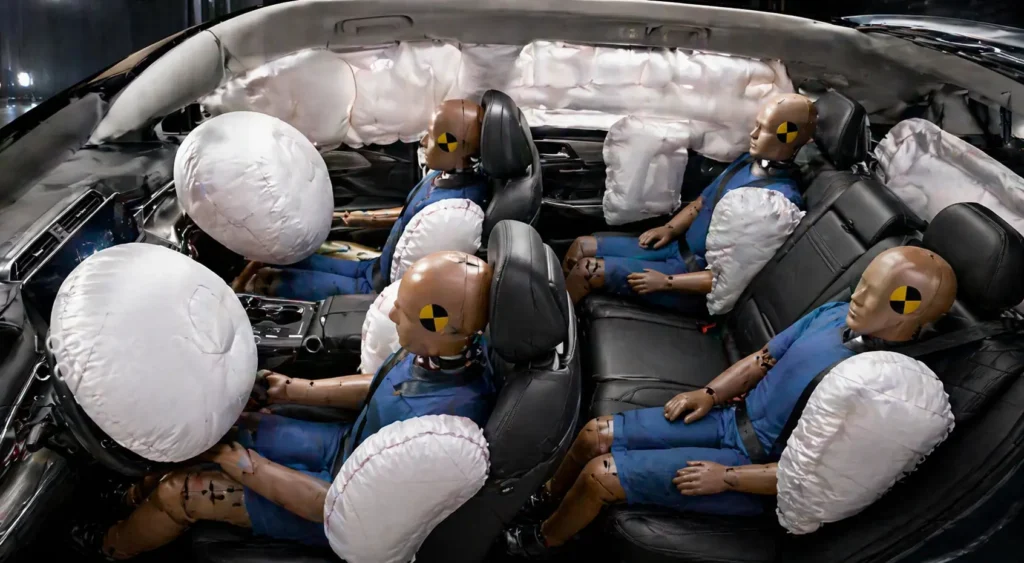
The performance of safety systems during such a complex crash is equally important, and this is where the Tiggo 9 delivered strongly. All 10 airbags deployed exactly as intended, covering front, side, and curtain zones without any delay.
This coordinated deployment ensured that occupants were protected from multiple impact directions simultaneously. It shows how advanced safety systems are now designed to work together rather than independently.
Also Read:- Safety Leak! Chery-JLR Freelander SUV Spotted in Crash Test—Zero-Gravity Seats & 800V Tech at ₹54 Lakh?
Post-Crash Safety: The Real Test of Engineering
What happens after a crash often determines the final outcome, and Chery has clearly focused on this aspect as well. The Tiggo 9 showed no fuel leakage, significantly reducing the risk of fire after impact.
In addition, the hazard lights activated automatically, and all four doors unlocked and opened normally. This ensures that occupants can exit safely or be rescued quickly, which is a critical factor in real-world accident scenarios.
👉 But here’s what most buyers still overlook.
The Engineering Behind It: Built Like a Safety Shield
Chery attributes this performance to its high-rigidity body structure, which acts like a protective safety shield around occupants. The Tiggo 9 uses 85% high-strength steel, with 21% hot-stamped steel reinforcing key structural areas.
This combination allows the vehicle to absorb and distribute impact forces more effectively. Instead of concentrating energy in one area, the structure redirects it away from the passenger cabin.
Load Distribution: The Hidden Advantage
Another crucial factor is how the vehicle manages impact energy during a collision. The Tiggo 9 is designed with an optimized load-transfer architecture that spreads crash forces across the body.
This reduces the intensity of impact in critical zones and helps maintain cabin integrity. It is this engineering detail that makes the difference between visible damage and actual occupant safety.
Global Safety Strategy: Beyond Just Ratings
This crash test is not just a one-time demonstration but part of Chery’s larger global safety strategy. The brand is aiming for consistent 5-star ratings across Euro NCAP, ANCAP, and ASEAN NCAP.
By focusing on real-world scenarios, Chery is trying to go beyond basic regulatory requirements. This approach positions the brand as a serious contender in global safety standards.
What This Means For Buyers
For buyers, this test changes how safety should be evaluated when choosing a vehicle. Traditional crash ratings provide a baseline, but they do not always reflect unpredictable real-world situations.
Scenario-based testing like this gives a better understanding of how a vehicle performs under extreme conditions. For families and frequent highway users, this level of safety engineering becomes especially important.
Who Should Care About This
- Buyers who prioritize maximum real-world safety
- Families looking for stronger cabin protection
- Users who frequently drive on highways or long distances
MotorMitra Verdict
Chery’s triple crash test is not just a marketing stunt but a clear demonstration of advanced engineering capability. By pushing beyond standard testing methods, the brand has shown how modern vehicles can handle complex accident scenarios.
The Tiggo 9 stands out as a strong example of this approach, but the bigger takeaway is the shift in how safety is being tested. The real question now is whether other manufacturers will follow this direction or continue with traditional methods.