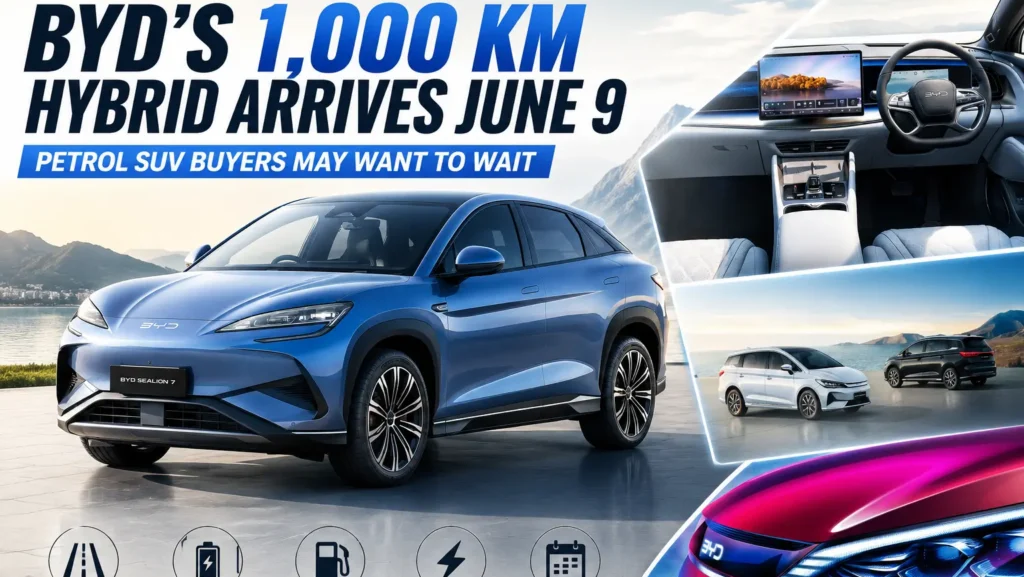
The Indian SUV market is packed with choices, but very few upcoming launches have the potential to make buyers pause their purchase decisions. BYD’s next launch could be one of them. While most manufacturers continue focusing on either conventional petrol engines or fully electric vehicles, BYD is preparing to introduce a technology that promises to combine the best of both worlds. More importantly, it arrives at a time when fuel prices, ownership costs, and charging concerns are all influencing how buyers evaluate their next vehicle.
Set to debut in India on June 9, BYD’s first plug-in hybrid vehicle is arriving with a headline figure that immediately grabs attention—an impressive claimed driving range of more than 1,000 kilometres. In a market where range anxiety still affects buying decisions and fuel efficiency remains a major priority, that number alone could make many petrol SUV buyers rethink their options before making a final purchase decision.
Why This Launch Matters
- BYD is bringing its first plug-in hybrid vehicle to India.
- Claimed combined driving range exceeds 1,000 kilometres.
- Offers electric driving capability along with petrol backup.
- Could create a new alternative between EVs and traditional SUVs.
The Technology That Could Change Buyer Priorities
For years, Indian buyers have been forced to choose between traditional petrol-powered SUVs and fully electric vehicles. Each option comes with its own strengths and compromises. Petrol models offer convenience and long-distance flexibility, while EVs deliver lower running costs and a quieter driving experience. Plug-in hybrids aim to bridge that gap by combining both technologies into a single package that can adapt to different usage patterns.
Also Read:- Sky’s No Longer The Limit: Deep Dive into India’s Most Affordable Panoramic Sunroof Cars Under Rs 12 Lakh
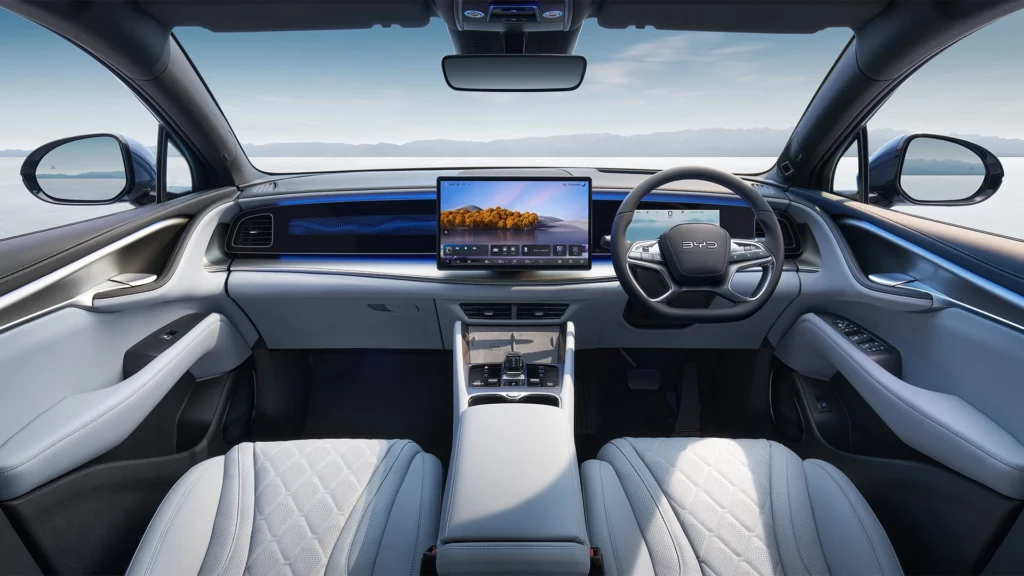
BYD’s upcoming model is expected to use the company’s advanced Super Hybrid technology, allowing the vehicle to operate on electric power for daily commutes while retaining a petrol engine for longer journeys. The result is a package designed to reduce fuel consumption significantly without introducing the charging concerns that still discourage some buyers from switching to a fully electric vehicle.
The Comparison That Could Change Buyer Decisions
| Feature | BYD Super Hybrid | Typical Petrol SUV | Why It Matters |
|---|---|---|---|
| Claimed Driving Range | 1,000+ km | 600–800 km | Fewer fuel stops during long journeys |
| Daily City Usage | EV mode possible | Petrol only | Lower running costs for everyday driving |
| Long-Distance Travel | Petrol engine backup | Petrol only | Convenience without range anxiety |
| Fuel Efficiency Potential | Significantly higher | Standard efficiency | Better ownership economics |
| Charging Dependency | Optional | Not required | Greater flexibility for buyers |
| Technology Appeal | Next-generation hybrid system | Conventional powertrain | Future-ready ownership experience |
| Buyer Profile | EV-curious SUV buyers | Traditional SUV buyers | Wider ownership appeal |
| Biggest Advantage | EV + petrol strengths combined | Proven familiarity | Best-of-both-worlds approach |
| Ownership Anxiety | Very Low | Fuel Cost Dependent | More predictable ownership |
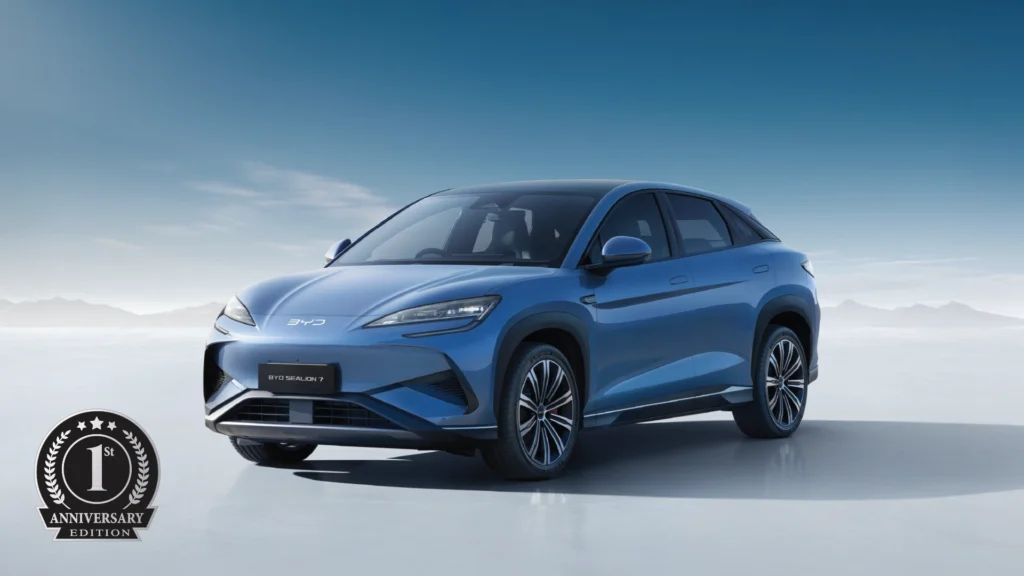
The range figure is what makes this launch particularly interesting. Most buyers rarely drive 1,000 kilometres in one stretch, but the psychological impact of such a number is significant. It directly addresses one of the biggest concerns many customers still have when considering electrified vehicles—range confidence. For many potential buyers, that confidence could become just as important as performance, features, or brand value. That is exactly why this launch could matter far more than a typical new SUV debut.
But the real story is not the number itself. It is what that number says about changing buyer expectations. Rather than asking customers to choose between petrol convenience and EV efficiency, plug-in hybrids attempt to offer both. If BYD delivers on its promises, it could create an entirely new conversation in India’s premium SUV market.
Why Petrol SUV Buyers May Want To Wait
The timing of this launch is important. SUV buyers today are increasingly looking beyond traditional performance figures and feature lists. Running costs, fuel efficiency, environmental impact, and future-proof technology are becoming equally important parts of the purchase decision. As a result, vehicles that can reduce ownership costs without sacrificing convenience are attracting greater attention than ever before.
A vehicle capable of handling daily city driving on electric power while retaining the freedom of a petrol engine for road trips addresses many of the concerns that typically influence buying decisions. For customers planning to spend a significant amount on a premium SUV, evaluating this option before signing on the dotted line may prove to be a smart move.
Also Read:- Upcoming Cars in June 2026: Maruti Flex-Fuel, Tata Sierra EV, and New S-Class Launch Timeline
The Bigger Challenge For Rivals
BYD has already established a strong reputation globally in electric mobility, and the company has been steadily expanding its presence in India. Introducing a plug-in hybrid now could allow the brand to target buyers who are interested in electrification but are not yet ready to commit to a full EV. That creates a unique positioning advantage that very few manufacturers currently possess.
Traditional petrol SUVs may struggle to match the efficiency benefits, while some electric vehicles still face questions around charging accessibility for certain buyers. By sitting between both worlds, plug-in hybrids could attract customers from either side of the market, potentially creating a segment that grows much faster than expected over the next few years.
Could This Become The Ideal Family SUV Formula?
One of the biggest reasons plug-in hybrids have gained popularity in international markets is their versatility. Owners can complete most daily drives using electric power while relying on the petrol engine whenever additional range is required. For families with mixed usage patterns, this combination can be particularly appealing because it reduces compromises without dramatically changing driving habits.
Indian buyers have historically embraced technologies that reduce ownership costs without compromising convenience. If BYD’s latest offering delivers strong real-world efficiency alongside its headline range figure, it could become a compelling alternative for customers who are currently undecided between a petrol SUV and a full EV.
Who Should Wait And Who Should Buy Now?
Buyers already considering a premium SUV and open to new technology should strongly consider waiting until June 9. The launch will provide a clearer picture of pricing, specifications, electric-only range, and overall value proposition before any purchase decision is made. With so many unanswered questions set to be resolved at launch, waiting a few more days could provide valuable clarity.
However, customers looking for an immediate purchase in a lower price segment may not necessarily need to delay their plans. BYD’s upcoming hybrid is expected to target a more premium audience, which means its direct impact may be concentrated in the upper end of the SUV market rather than the mass-market segments.
The Verdict That Matters Most
BYD’s upcoming plug-in hybrid is more than just another new SUV launch. It represents a technology that could reshape how many Indian buyers think about electrified mobility. With a claimed range of over 1,000 kilometres and the promise of combining electric efficiency with petrol-powered flexibility, it arrives at a time when customers are actively searching for alternatives to traditional ownership experiences.
With the official debut now just days away, rushing into a premium petrol SUV purchase may not be the smartest move. The next big shift in the segment could arrive on June 9, and the smartest buyers may be the ones who wait to see whether BYD has just created the most compelling alternative to a traditional petrol SUV.