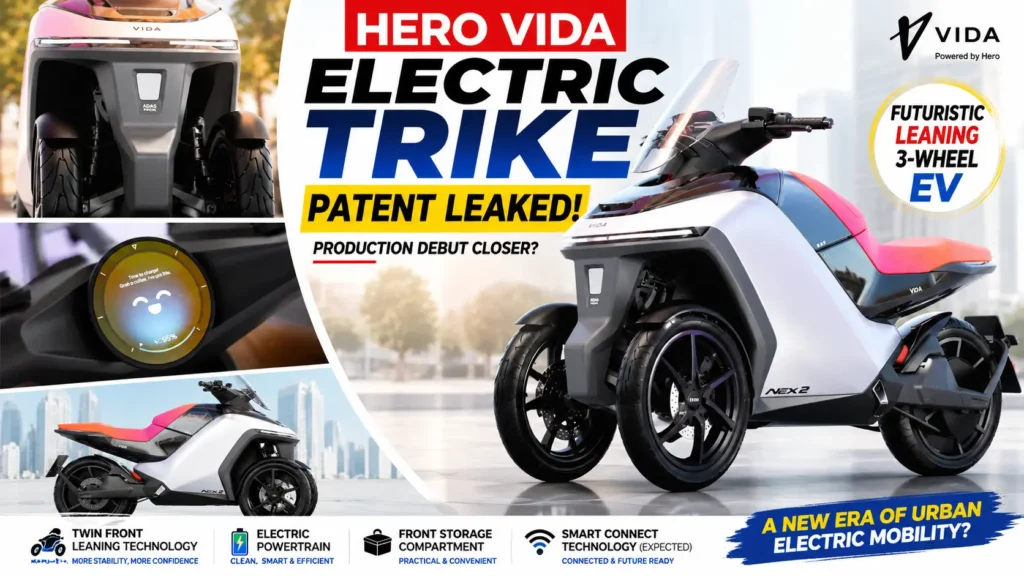
Hero MotoCorp may have just offered its clearest glimpse into the future of premium urban electric mobility. Fresh design patent filings have revealed what appears to be the production-oriented version of the NEX 2 Hero Vida Electric Trike, indicating that the concept first showcased at EICMA 2025 is steadily progressing towards reality. While Hero has not officially confirmed a launch timeline or technical specifications, the newly registered patent strongly suggests that the company is protecting the vehicle’s final design before moving to the next phase of development.
More importantly, this patent highlights Hero’s ambition to expand well beyond conventional electric scooters. Instead of competing only in the crowded commuter EV space, the company appears to be exploring an entirely new premium mobility category that combines futuristic styling, enhanced stability and everyday practicality. If the production model stays close to the patented design, the Vida NEX 2 could become one of Hero MotoCorp’s most innovative electric vehicles to date.
Also Read:- Hero MotoCorp Launches Flex-Fuel Splendor+ and HF Deluxe; Prices Start At Rs. 72,792
Design Patent Suggests Futuristic Hero Vida Electric Trike Is Moving Closer to Production
The leaked documents identify the vehicle as a three-wheeled electric motorcycle with a storage compartment, registered under Design No. 500020-001. The design registration was officially filed on 28 April 2026, while the priority application dates back to 31 October 2025 in Italy. Although design patents do not guarantee a production launch, they are generally submitted once manufacturers finalise the exterior styling, making this one of the strongest indicators yet that Hero continues to develop the project.
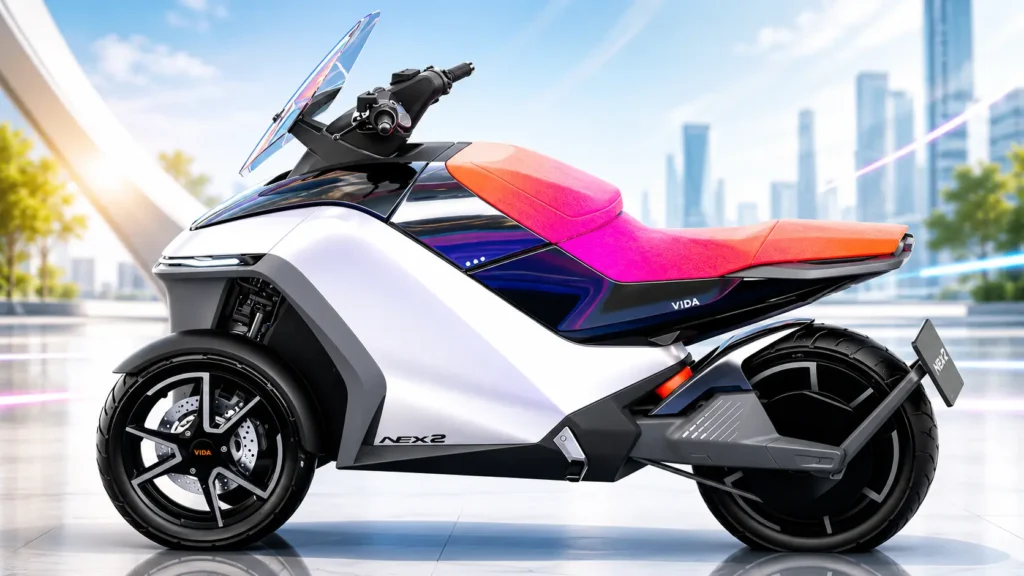
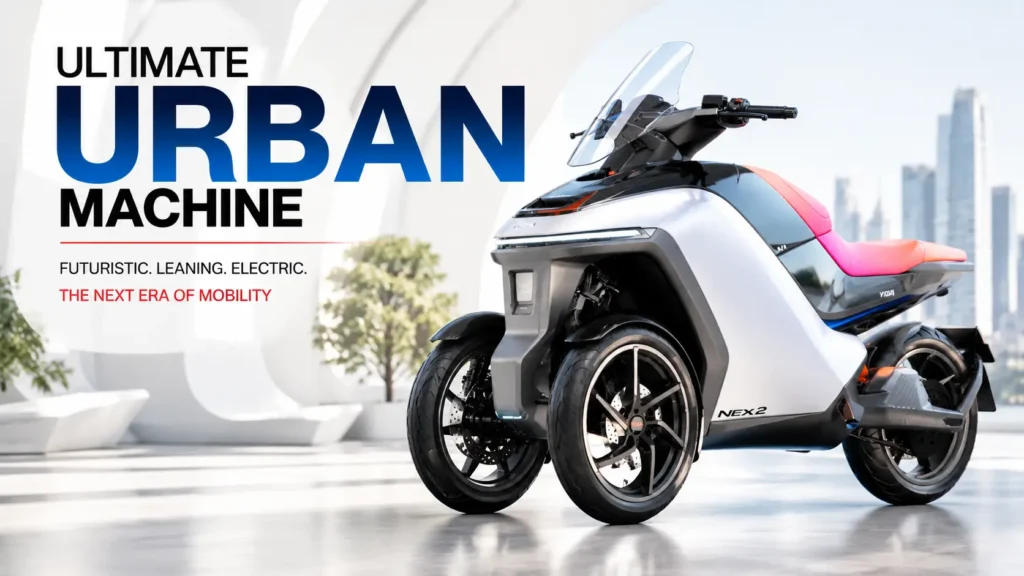
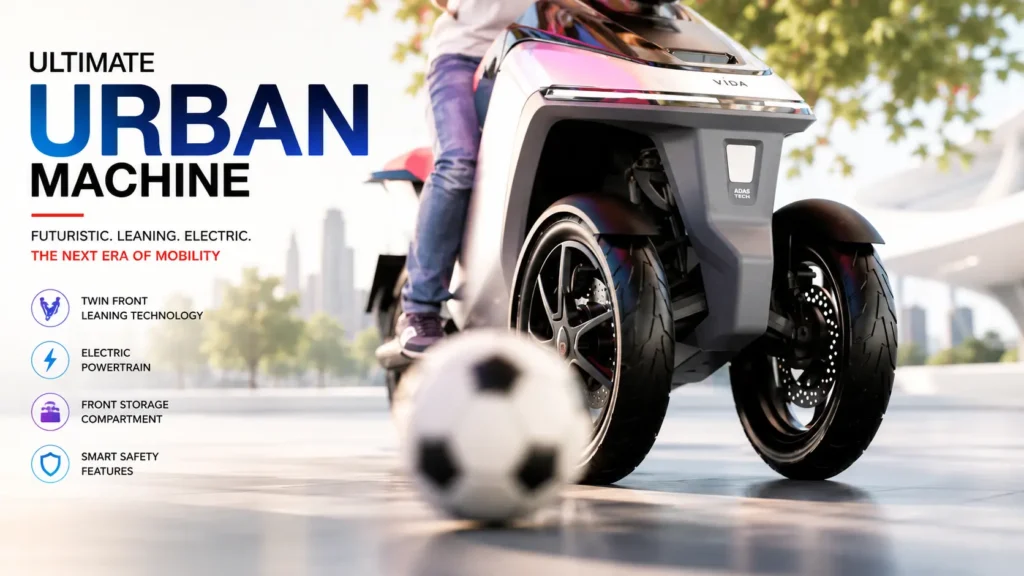
The overall styling remains remarkably close to the Vida NEX 2 concept displayed at EICMA 2025. The aggressive LED headlamp, muscular front fascia, tall windscreen and sculpted body panels have all been retained, preserving the futuristic character that initially attracted attention. Unlike a conventional scooter, the wider twin-front-wheel layout immediately creates a more planted stance while maintaining compact overall dimensions suitable for crowded city streets. The patent images suggest Hero has deliberately carried over most of the concept’s premium design elements rather than simplifying them for production.
NEX 2 Hero Vida Electric Trike – Complete Buyer Snapshot
| Category | Current Status | Buyer Impact |
|---|---|---|
| Vehicle Type | Electric Three-Wheel Trike | Better stability than conventional scooters |
| Patent Status | Official Design Registered | Strong indication of ongoing development |
| First Reveal | EICMA 2025 Concept | Production design remains largely unchanged |
| Front Suspension | Twin-Wheel Leaning Architecture | Higher confidence while cornering and braking |
| Storage Solution | Integrated Front Storage Compartment | Improved everyday practicality |
| Design Highlights | LED Lighting, Tall Windscreen, Sporty Bodywork | Premium road presence |
| Battery & Motor | Not Officially Revealed | Expected to use Hero’s latest EV technology |
| Expected Technology | Connected Features, Ride Modes, OTA Updates* | Smarter ownership experience |
| Potential Buyers | Urban Professionals, Early EV Adopters | Premium alternative to electric scooters |
| Competition | No Direct Rival Yet | Could create an entirely new EV niche |
| Launch Timeline | Officially Unconfirmed (Expected After Further Development) | Awaiting official Hero confirmation |
*Expected features are based on Hero’s existing EV ecosystem and have not been officially confirmed for the Vida NEX 2.
Also Read:- 2026 TVS Ntorq 125 Disc & Race Edition Launched: Check Price
The Leaning Three-Wheel Layout Could Be Its Biggest Advantage
Unlike traditional electric scooters, the Vida NEX 2 adopts a sophisticated leaning twin-front-wheel architecture, a technology designed to improve rider confidence without sacrificing agility. This setup is expected to provide greater stability while cornering, improved grip during braking and better balance at low speeds, making everyday city riding significantly easier than on a conventional two-wheeler.
The patent images also reveal several practical design elements that reinforce the vehicle’s premium positioning. Large alloy wheels with a distinctive spoke pattern, retractable footrests, comfortable grab rails, compact body proportions and an integrated storage compartment indicate that Hero has focused on creating an EV that balances innovation with daily usability. Rather than serving as a futuristic showpiece, the Vida NEX 2 appears engineered to become a practical urban mobility solution capable of handling regular commuting duties while standing out visually from every electric scooter currently available in the market.
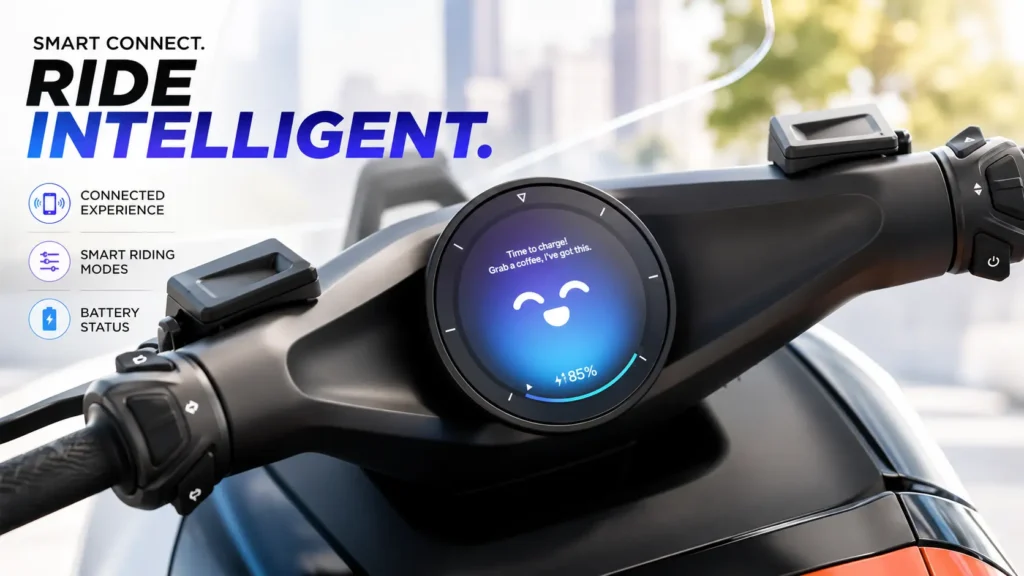
Since Hero MotoCorp has not officially announced battery specifications, motor output, riding range or charging capability, all performance-related expectations should currently be treated as preliminary. However, industry expectations suggest that Hero could utilise technology developed through its existing Vida electric scooter platform, potentially bringing connected features, regenerative braking, multiple riding modes and over-the-air software updates to the production model.
Why This Patent Matters More Than Just Another EV Leak
The Indian electric vehicle market is becoming increasingly competitive, but almost every manufacturer continues focusing on scooters and motorcycles. Hero’s decision to develop a premium electric trike signals a willingness to explore an entirely different mobility category instead of following the industry’s existing direction. If successfully commercialised, the Vida NEX 2 could offer buyers a unique combination of motorcycle-like dynamics, scooter-like practicality and additional riding confidence through its advanced front suspension architecture.
Although the vehicle currently has no direct mainstream rival, it could eventually compete with future premium urban electric mobility solutions while creating an entirely new niche within India’s EV market. Hero’s extensive dealership network, established after-sales support and rapidly expanding Vida ecosystem could also become significant advantages if the project reaches production.
For now, the newly surfaced design patent provides the clearest indication yet that Hero MotoCorp’s futuristic electric trike is steadily moving beyond the concept stage. Whether the production model arrives next year or later, the Vida NEX 2 has already established itself as one of the most intriguing electric mobility projects under development. If Hero manages to preserve the concept’s bold design while delivering competitive pricing and practical real-world usability, the Vida NEX 2 may not simply expand the company’s EV portfolio—it could redefine what premium urban electric mobility looks like for Indian buyers.