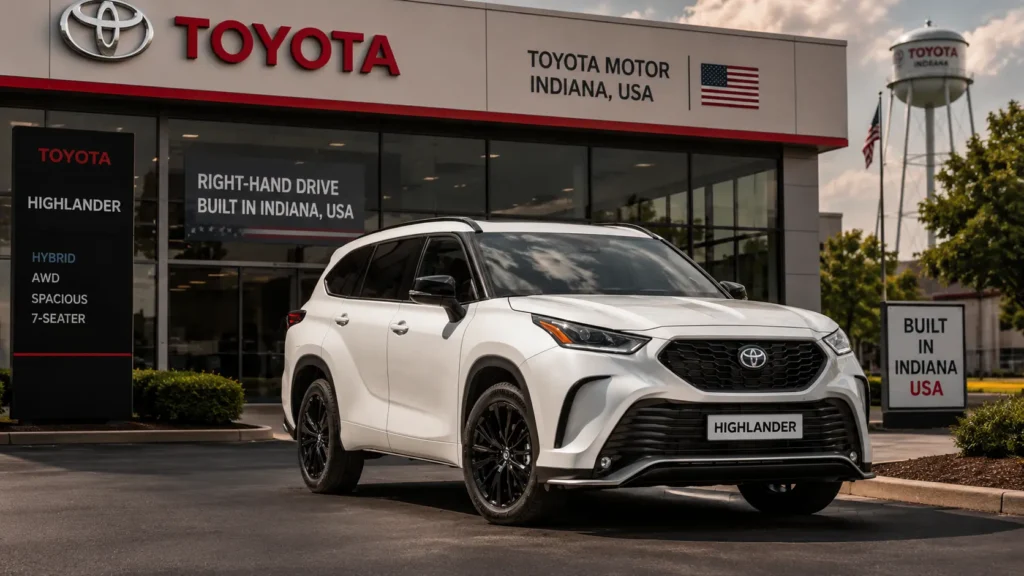
Here’s something that would have sounded absolutely absurd a decade ago — Japan, the country that practically invented the modern automobile industry, is now importing a Toyota SUV built in Indiana, United States. And no, this isn’t some grey-market import or a one-off special order. This is Toyota officially selling the American-made Highlander at dealerships across Japan starting August 1, 2026. The automotive world really has come full circle.
For decades, the flow of Japanese cars was strictly one-directional. Toyota, Honda, Nissan — they all built cars in Japan and shipped them to the rest of the world. The idea of sending an American-built Toyota back to Japan would have been laughed out of any boardroom meeting. But times change, trade dynamics shift, and here we are — watching a three-row SUV roll off the assembly line in Princeton, Indiana, get converted to right-hand drive, and find its way into Japanese showrooms. It’s a fascinating development, and it tells us a lot about where the global auto industry is headed.
How Did We Get Here?
The story behind this reverse import trend is rooted in trade policy rather than automotive engineering. A new certification system that took effect on February 16, 2026, now allows US-built vehicles that have already been cleared by American safety standards to skip additional testing in Japan. Previously, any car entering Japan needed to go through a separate and often lengthy certification process, which made reverse imports economically unviable for mass-market vehicles.
This regulatory change opened the floodgates. Toyota was quick to take advantage, first sending the Texas-built Tundra pickup truck to Japanese showrooms, and now following it up with the Highlander. Both vehicles are rolling out of Toyota’s Indiana factory, and word is that the US-built Camry could be next in line for a Japanese launch.
The timing isn’t coincidental either. This move comes against the backdrop of increased tariffs and the current US administration’s push to get more American-made vehicles into international markets. Toyota, being the diplomatic giant that it is, seems to be playing both sides perfectly — maintaining its massive US manufacturing presence while simultaneously using those American-built products to ease trade tensions with Japan.
What Japanese Buyers Are Getting
Also Read: Ford’s Historic D.C. Showcase: Model T, Mustang & Jay Leno
Toyota has slapped a price tag of 8.6 million yen — roughly $59,000 — on the Japanese-market Highlander. That positions it as a premium three-row SUV aimed at buyers who want something that stands out from the usual domestic lineup. And let’s be honest, in a market dominated by compact cars and kei vehicles, a full-size American SUV is going to turn heads regardless.
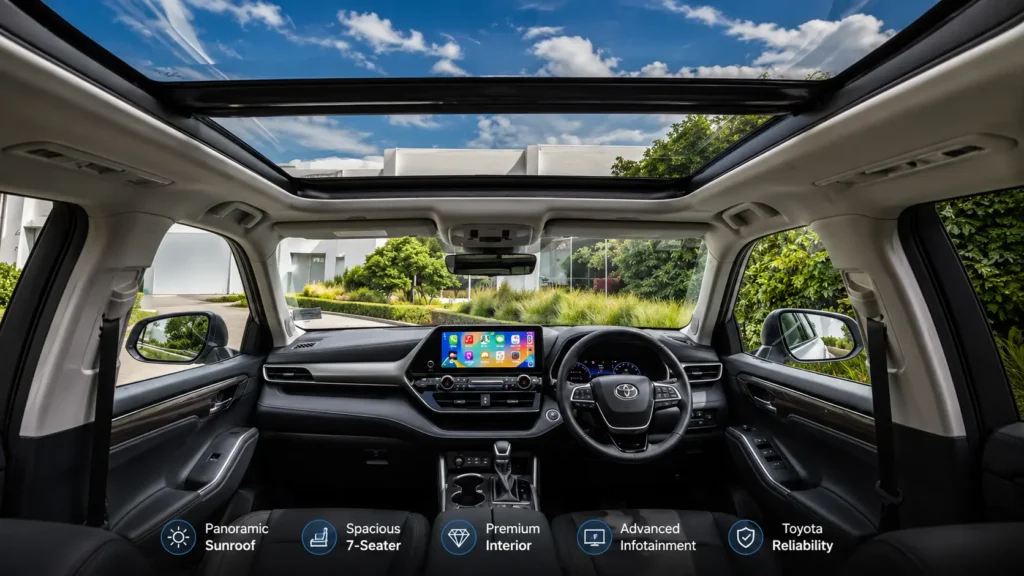
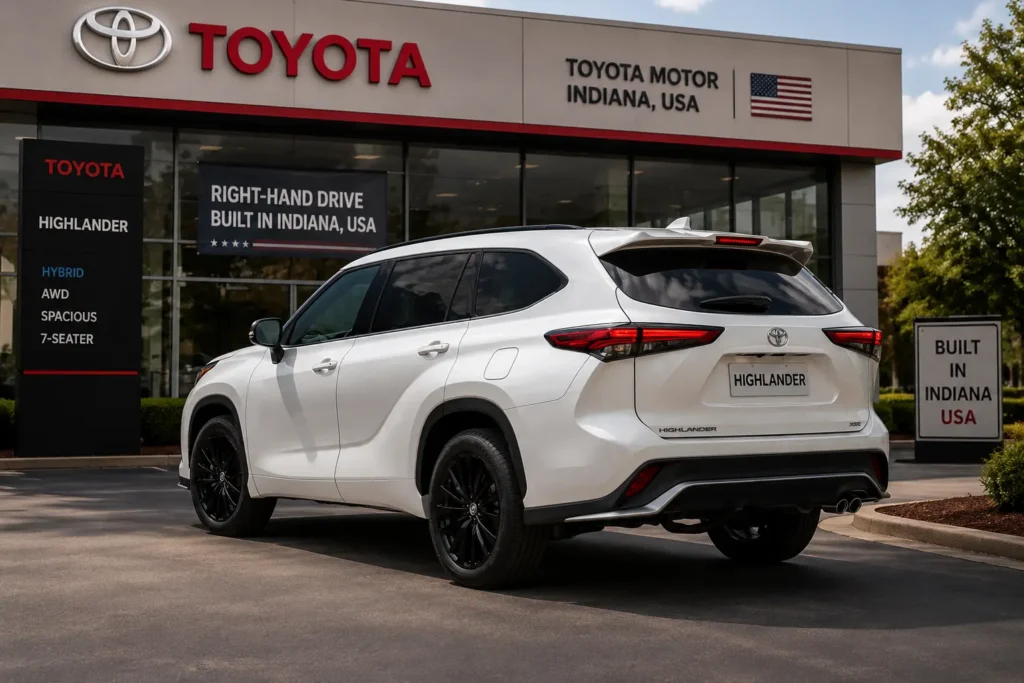
The biggest question everyone had when this was first announced was whether the Highlander would come in left-hand drive or right-hand drive. After all, Japan drives on the left side of the road, and asking buyers to deal with a left-hand drive vehicle for daily use would have been a dealbreaker for most. Toyota put those concerns to rest — the JDM-spec Highlander arrives in proper right-hand drive configuration, making it perfectly suited for Japanese roads.
Under the hood sits a 2.5-litre four-cylinder hybrid powertrain paired with an electric motor, producing a combined output of 247 horsepower. Every version sold in Japan comes standard with Toyota’s E-Four all-wheel-drive system, which makes sense given Japan’s varied terrain and weather conditions. The hybrid setup also means excellent fuel efficiency — something Japanese buyers care deeply about, regardless of how large their vehicle is.
In terms of features, the Japanese-spec Highlander doesn’t skimp. It comes equipped with a panoramic roof, a JBL premium sound system, a colour head-up display, and the full suite of Toyota Safety Sense driver assistance features. Seven-seat capacity remains standard, making it a genuine family hauler for those who need the space.
The Caveat That Comes With American Manufacturing
Here’s where things get interesting, and perhaps a little uncomfortable for Toyota. The company is actually issuing a disclaimer to Japanese buyers about potential cosmetic imperfections. Since the Highlander is built for export at the Indiana plant, Toyota warns that customers might notice minor paint differences, polishing marks, or small surface quirks that don’t affect safety or performance but might be visible upon close inspection.
This is a remarkably honest admission, and it speaks to the different manufacturing standards and expectations between Japanese and American production facilities. Japanese consumers are famously particular about fit and finish — a tiny paint imperfection that an American buyer might never notice could be a genuine concern for a Japanese customer who expects absolute perfection from a Toyota product.
Interestingly, Toyota isn’t alone in this approach. Nissan has done the same thing with its US-built Murano that’s being sold in Japan, flagging possible quirks in paint, panel fit, or leftover adhesive. It seems like Japanese automakers are collectively deciding that transparency is the best policy here — acknowledge the differences upfront rather than deal with complaints later. They’re even spinning it as part of the “unique charm” of these reverse imports, which is a clever bit of marketing if nothing else.
Why This Matters Beyond Just One SUV
The Toyota Highlander arriving in Japan isn’t just a quirky automotive footnote — it represents a fundamental shift in how global automotive trade works. For the first time in modern history, we’re seeing a sustained, official, manufacturer-backed flow of vehicles from the United States to Japan. That’s significant.
It also raises some fascinating questions about the future. If this reverse import model proves successful — and early signs suggest it’s generating plenty of buzz in Japan — we could see more American-built Japanese vehicles making the trip across the Pacific. Toyota has already hinted at the Camry being next, and there’s no reason why Honda or Nissan couldn’t follow suit with their own US-manufactured models.
The online reaction in Japan has been mixed but largely positive. Some buyers are genuinely excited about getting access to a large, premium SUV that was previously unavailable in their market. Others appreciate the Highlander’s bold styling and family-friendly practicality. The price tag has raised some eyebrows — 8.6 million yen is serious money in Japan — but for a fully-loaded hybrid SUV with seven seats and AWD, it’s not unreasonable when compared to European alternatives in the same size class.
The Bigger Trade Picture
Also Read: Mercedes New Models Coming In 2026: From Sedan To Suvs
Let’s not pretend this is purely about consumer demand. The reverse import trend is as much a political and economic play as it is an automotive one. With US-Japan trade relations under constant scrutiny and tariffs being a perpetual talking point, having American-built Toyotas on sale in Japanese dealerships sends a powerful message. It shows that trade can flow both ways, that American manufacturing is capable of producing world-class vehicles, and that Japanese automakers are willing to invest in and source from their US operations.
Toyota’s Indiana plant — Toyota Motor Manufacturing Indiana (TMMI) — employs over 7,000 people and is one of the largest employers in the Evansville area. The fact that vehicles built by American workers in the heartland of the United States are now being sold in Tokyo is a remarkable testament to how interconnected the global automotive industry has become.
Whether this trend continues to grow or remains a niche curiosity will depend largely on consumer reception and trade policy developments. But for now, the sight of an Indiana-built Highlander sitting in a Japanese Toyota dealership is one of those moments that makes you appreciate just how much the automotive world has changed — and how much more it’s likely to change in the years ahead.
Disclaimer: Pricing and specifications mentioned are based on the Japanese-market variant. Availability and features may differ by region.
For more such updates on latest cars, bikes and EVs stay connected to MotorMitra. #gaadiyonkismartguide