You might be planning your next SUV purchase right now, and it probably feels like the market already has enough options to choose from. But what if the next wave of launches is about to change everything you are considering today, making your current shortlist feel outdated sooner than expected? That is exactly where this story becomes important.
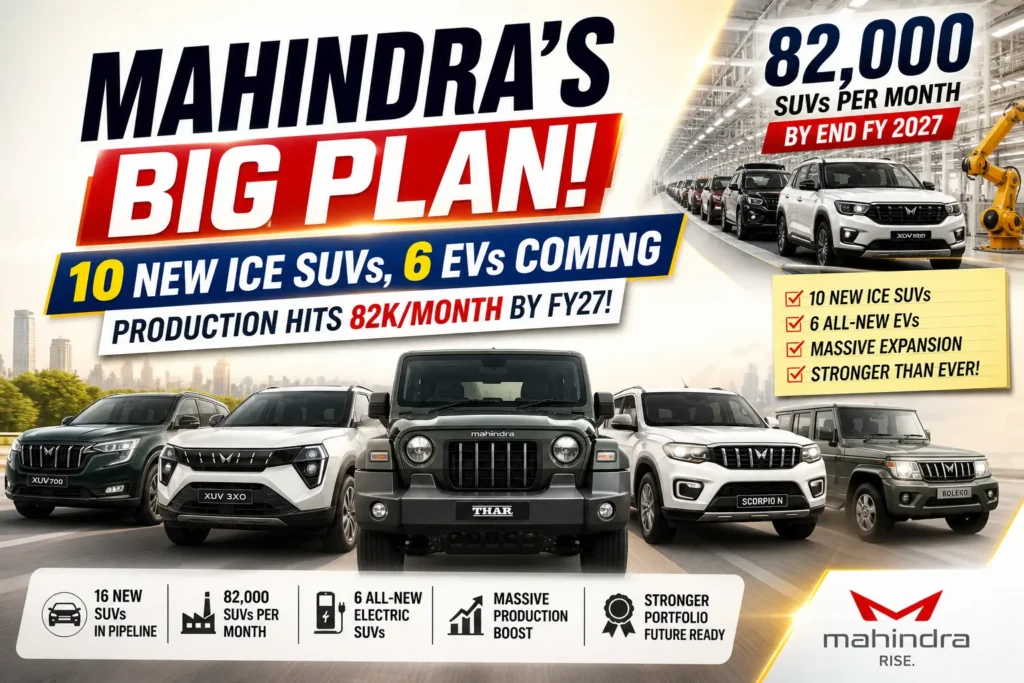
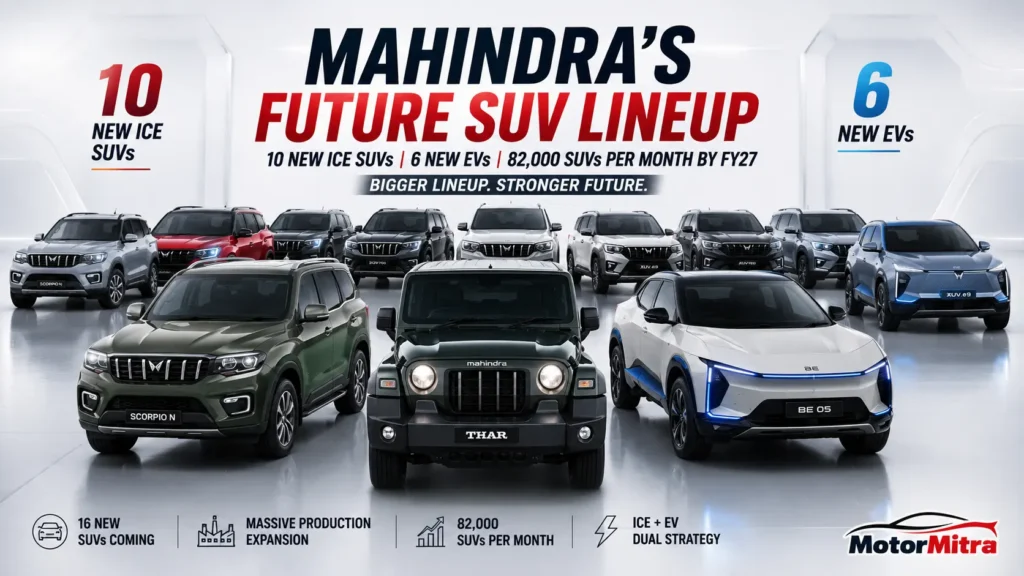
Because Mahindra is not just adding a few new models—it is preparing a massive shift in strategy. With 10 new ICE SUVs and 6 electric vehicles planned, along with a production scale-up to 82,000 SUVs per month by FY27, this is a move that could reshape how buyers approach their next purchase.
Miss this shift, and you could end up buying just before better options arrive.
Why This Matters
- 16 new SUVs (ICE + EV) planned in next phase
- Massive production scale-up to 82K units/month
- Direct impact on availability, pricing, and competition
Also Read:- Mahindra Thar Roxx-based ATV Revealed – Military Off-Roader Not Available for Buyers
What Mahindra Is Planning
Mahindra’s roadmap is not limited to launching new vehicles—it is about strengthening its presence across both fuel types at the same time. While many manufacturers are aggressively shifting toward electric vehicles, Mahindra is taking a more balanced and calculated approach that allows it to stay relevant in both present and future markets.
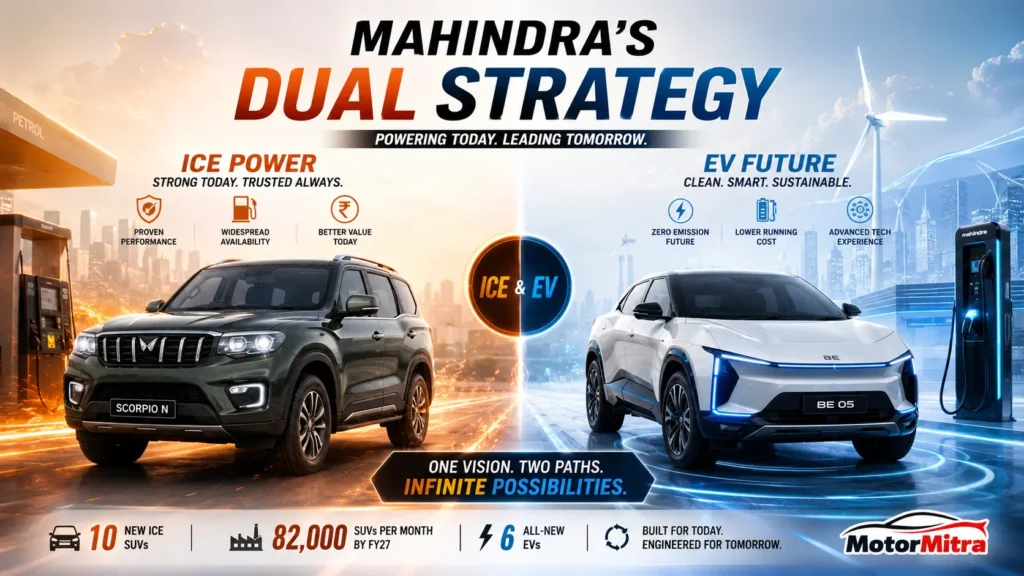
The strategy includes 10 ICE SUVs to maintain strong demand in existing segments, while 6 BEVs are being prepared to capture the growing electric space. This dual focus ensures that Mahindra does not depend on one direction alone, giving it flexibility as the market evolves.
Production Push: The Real Game Changer
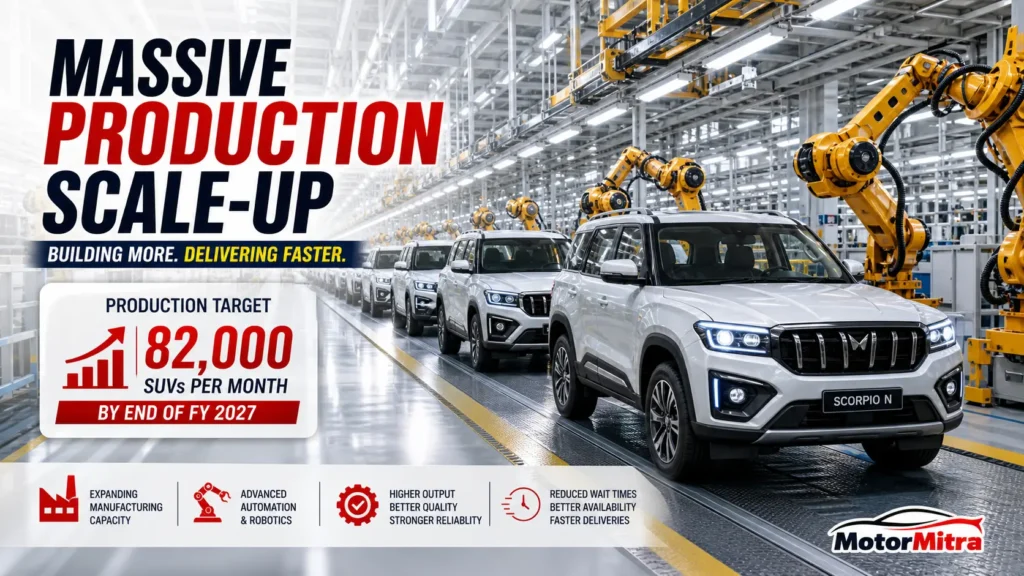
Scaling production to 82,000 SUVs per month is not just about increasing numbers—it reflects confidence in demand and a clear intent to reduce waiting periods. Long waiting times have been a major concern for buyers, and this move directly addresses that problem in a meaningful way.
Improved production capacity means better availability, faster deliveries, and a smoother ownership experience. And for many buyers, this factor alone can influence the final decision more than features or performance.
This is where things start to shift—and where the market begins to respond.
Quick Breakdown of the Plan
| Segment | Details |
|---|---|
| ICE SUVs | 10 new models planned |
| Electric SUVs | 6 BEVs in pipeline |
| Production Target | 82,000 units/month |
| Timeline | By end of FY 2027 |
| Strategy | Dual focus (ICE + EV) |
This is not just expansion—it is a complete scale transformation.
Why This Strategy Is Smart
Mahindra is not committing fully to one path, which is what makes this strategy stand out. Instead of choosing between ICE and EV, it is building strength in both areas, allowing it to adapt based on how the market shifts over time.
For buyers, this approach means more choices, better segmentation, and stronger competition. It also increases the likelihood of improved features and more competitive pricing across different models.
Also Read:- Mahindra XUV7XO Spotted Testing Hybrid & Flex Fuel Variants in India, Big Shift Incoming
This Is Where Buyers Get Confused
At first glance, this announcement feels exciting, because it promises more options and better availability. However, it also introduces uncertainty, especially for buyers who are planning a purchase in the near future and are unsure whether to wait or proceed.
That is exactly where confusion begins, because the decision is no longer just about choosing a car—it becomes about choosing the right timing.
Real Impact on Buyers
If you are planning to buy an SUV in the coming months, this update becomes highly relevant. Upcoming models could bring better features, updated designs, and improved value, which might make current options feel outdated sooner than expected.
At the same time, increased production will reduce waiting periods, making existing models easier to buy. So the impact works both ways, and your decision depends on whether you prioritize immediate ownership or future improvements.
This is where most decisions go wrong—buyers react to hype instead of planning based on actual need.
What This Means for the Market
Mahindra’s aggressive expansion is likely to trigger a response from competitors, because no brand can ignore such a large-scale move. Other manufacturers may accelerate their launches or improve their offerings to stay competitive in the same segments.
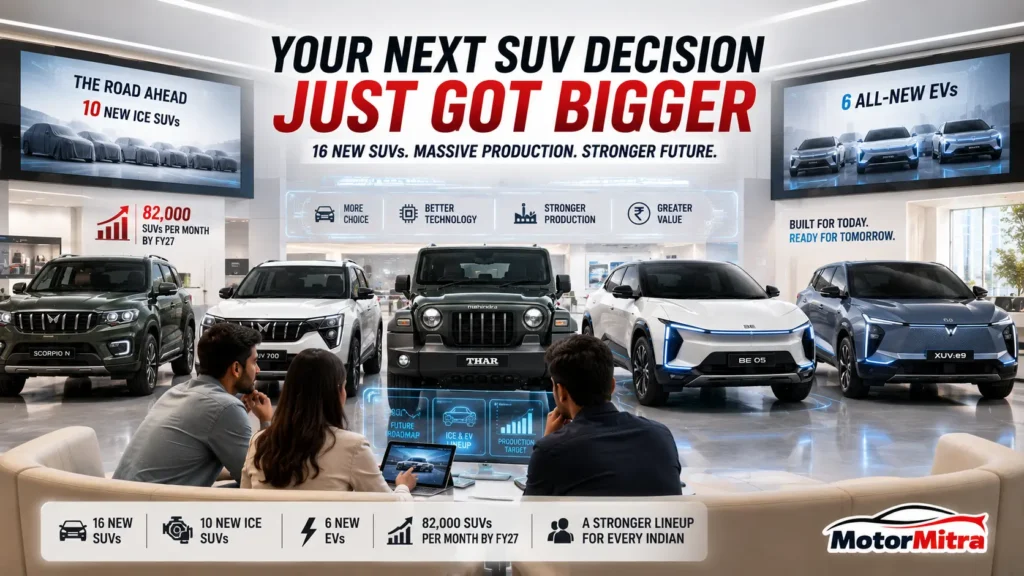
This could lead to a more dynamic and competitive market, where buyers benefit from better products, faster updates, and stronger value propositions across the board.
Should You Buy Now or Wait
If your requirement is immediate, waiting for future launches may not be practical. Current models still offer strong value and proven performance, making them reliable choices.
However, if your purchase timeline is flexible, it may be worth watching upcoming launches closely. New models could offer meaningful upgrades that justify the wait and deliver better long-term satisfaction.
Choosing the right timing here can either maximize value—or lead to regret.
Who Should Pay Attention
Buyers in the ₹10 lakh to ₹30 lakh segment should pay close attention, as most of Mahindra’s upcoming launches are expected to focus here. This is where the impact of new models and improved availability will be most noticeable.
It is equally important for those considering EVs, because Mahindra’s upcoming electric lineup could introduce strong alternatives that reshape expectations in this segment.
Final Verdict: A Market Shift You Should Not Ignore
Mahindra is not just expanding its lineup—it is preparing for a long-term transformation of the SUV market. The combination of new launches and increased production clearly signals a strategy focused on growth, flexibility, and leadership.
For buyers, this creates both opportunity and complexity. More options improve choice, but they also make decisions harder, especially when timing becomes a critical factor.
And that one decision—whether to buy now or wait—could define how satisfied you are with your purchase in the years ahead.