
Most people believed the Mitsubishi Pajero story had quietly come to an end, replaced by newer SUVs and rapidly changing market trends. Over the years, its absence created a noticeable gap, especially for buyers who wanted a rare mix of rugged off-road capability and premium road presence in one package. Even today, very few SUVs manage to deliver that same balance of strength and character.
But now, the story is changing—and much faster than expected. Mitsubishi is not just planning a comeback, it is preparing a complete reinvention of the Pajero. This is no longer about reviving a legacy name. The new Pajero is being developed as a serious global flagship, combining luxury, hybrid performance, and hardcore 4×4 capability. And if this vision translates into reality, it could disrupt one of the most stable SUV segments in India.
Why This Matters
- Mitsubishi Pajero is returning as a true luxury off-roader, not just a utility SUV
- Hybrid setup with 300+ HP changes performance expectations
- Direct challenge to Toyota Fortuner’s long-standing dominance
Also Read:- Fortuner vs MG Majestor: Shocking Truth Revealed—Which SUV Actually Deserves Your ₹50 Lakh?
This Is Not Pajero Sport — This Is a Full Flagship Comeback
The biggest transformation with the new Pajero lies in its positioning. Mitsubishi is clearly moving away from the Pajero Sport philosophy, which was largely based on a pickup-derived platform and focused more on practicality than refinement. That approach worked for a specific audience, but it limited the brand’s ability to compete in the premium space.
This time, Mitsubishi is taking a completely different route. The new Pajero is being designed as a global flagship SUV that blends luxury, technology, and serious off-road capability. This shift is important because it signals that Pajero is no longer trying to fit into an existing segment—it is aiming to redefine expectations within it.
New Platform: Stronger, Smarter, More Capable
Under the skin, the new Pajero is expected to adopt a heavily reinforced version of the CMF-P platform. This marks a major departure from the traditional ladder-frame construction that defined earlier generations, and it reflects a more modern engineering approach.
The advantage of this shift is significant. A monocoque-based structure can deliver far better ride comfort, improved stability at higher speeds, and more predictable handling dynamics. At the same time, Mitsubishi is expected to reinforce the platform heavily to retain genuine off-road capability. With over 220mm of ground clearance and strong water-wading ability, this SUV is being engineered to perform confidently both on highways and in extreme terrain conditions.
Hybrid Powertrain: More Power Than Ever Before
The powertrain strategy is where the new Pajero takes its biggest leap forward. Mitsubishi is expected to move away from the traditional diesel-only setup and introduce a plug-in hybrid system that aligns with global trends and future regulations.
This setup is likely to combine a 2.4-liter turbocharged petrol engine with dual electric motors, producing a combined output of over 300 horsepower. That makes it one of the most powerful offerings in its segment. More importantly, this system is not just about improving efficiency—it is about delivering stronger acceleration, better torque distribution, and a smoother driving experience.
Adding to this is the return of the legendary Super Select 4WD-II system, now expected to be upgraded with electronic locking differentials and multiple terrain modes such as rock, sand, mud, and snow. This ensures that the Pajero retains its core identity as a true off-road machine.
Design & Interior: From Rugged Icon to Premium Flagship
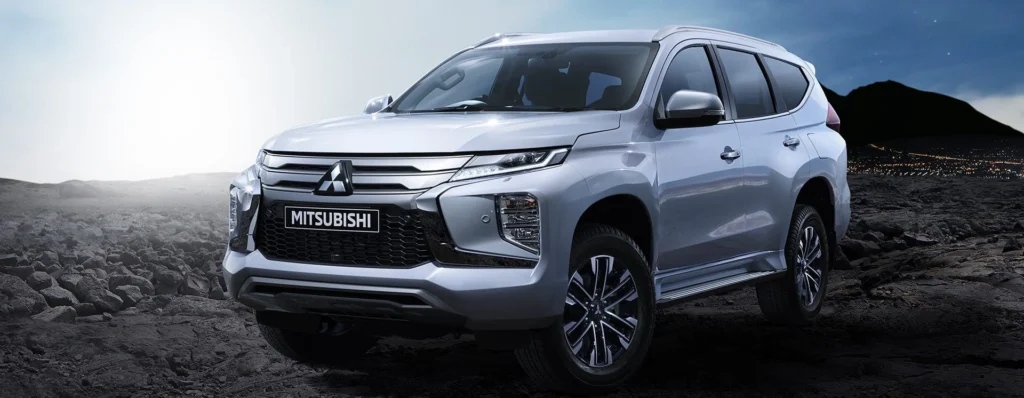
Visually, the new Pajero is expected to adopt Mitsubishi’s Bold and Robust design philosophy, which focuses on strong lines, aggressive stance, and a commanding road presence. The goal is clear—this SUV should look as powerful as it performs.
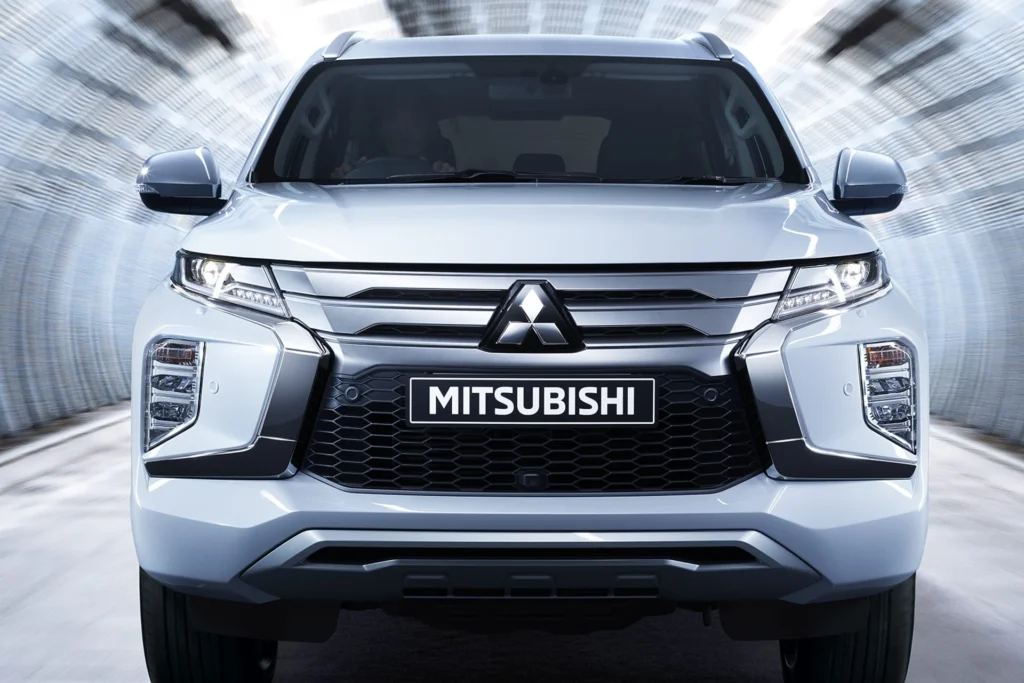
The front is likely to feature the signature Dynamic Shield grille, flanked by sharp LED lighting elements and a muscular overall design. This is not a subtle design language; it is meant to stand out and instantly communicate strength. The proportions are also expected to be larger, giving it a true flagship presence on the road.
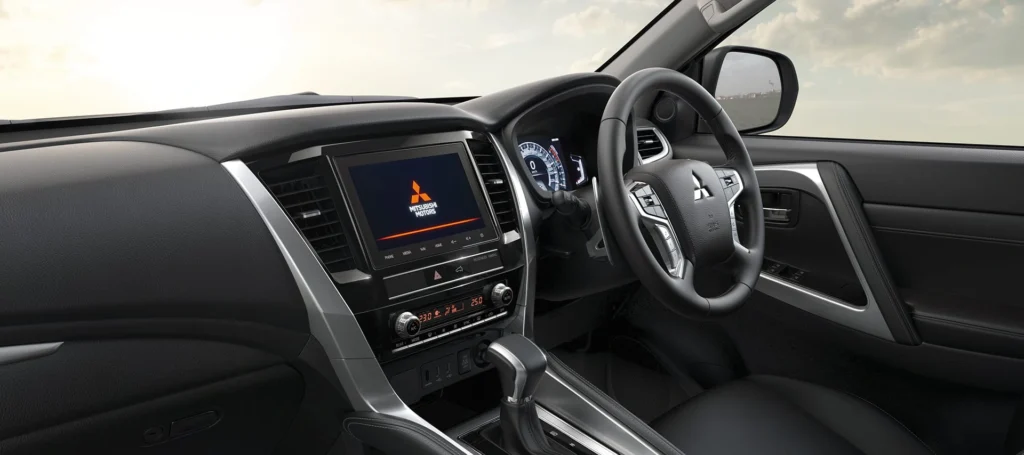
Inside the cabin, the transformation is even more significant. Mitsubishi is expected to focus heavily on premium materials and advanced technology. Features such as Nappa leather upholstery, a large 12.3-inch infotainment display, and a high-end audio system will bring it closer to luxury SUV territory. Importantly, it will remain a 7-seater, with improved third-row comfort, addressing one of the key limitations seen in competitors.
Advanced Specs Overview
| Category | Expected Specification | Real-World Impact | Segment Advantage |
|---|---|---|---|
| Platform | Reinforced CMF-P | Better comfort + stability | More refined than ladder-frame rivals |
| Powertrain | 2.4L Turbo + Dual Motor (PHEV) | 300+ HP performance | Higher power output |
| 4×4 System | Super Select 4WD-II | True terrain control | Proven + upgraded system |
| Ground Clearance | 220mm+ | Better off-road ability | Competitive edge |
| Seating | 7-Seater | Family usability | Improved third-row comfort |
Also Read:- Mahindra Scorpio N 2026 Breaks the Old Rules — That’s the Whole Point
Pajero vs Fortuner: The Real Battle Begins
When compared to the Toyota Fortuner, the new Pajero appears to bring a completely different approach to the segment. While the Fortuner continues to rely on its proven diesel engine and rugged ladder-frame construction, the Pajero is expected to introduce a more modern combination of hybrid power and refined architecture.
This difference could significantly impact buyer perception. The Pajero’s higher power output, improved ride quality, and more advanced technology could make it more appealing to buyers who want a future-ready SUV. At the same time, the Fortuner’s strong reliability reputation and widespread service network will continue to be key strengths.
| Parameter | Pajero (Expected) | Fortuner | What This Means |
|---|---|---|---|
| Power Output | 300+ HP (Hybrid) | Lower diesel output | Pajero advantage |
| Technology | Advanced + modern | Slightly dated | Pajero leads |
| Ride Comfort | Improved platform | Stiffer setup | Pajero edge |
| Off-Roading | Advanced 4WD-II | Proven system | Close competition |
| Third Row | Improved comfort | Limited space | Pajero advantage |
India Launch Strategy: Premium Comeback Plan
Mitsubishi is reportedly considering bringing the Pajero to India through the Completely Built Unit route. This indicates a premium positioning strategy, focusing more on brand image than high sales volumes.
Pricing is expected to fall between ₹65 lakh and ₹80 lakh, placing it firmly in the luxury SUV category. The global debut is likely by late 2026, with a potential India launch around mid-2027. This timeline suggests that Mitsubishi is taking its time to ensure the product meets global expectations.
Should You Wait for the New Pajero
For buyers planning to purchase a premium SUV, this becomes a critical decision point. The Fortuner continues to be a safe and proven option, offering reliability and strong resale value.
However, the new Pajero could offer something very different. With hybrid technology, higher performance, and a more premium experience, it has the potential to redefine expectations in this segment. Choosing between buying now and waiting could significantly impact your long-term ownership experience, especially if you value modern technology and comfort.
MotorMitra Verdict — The King Might Truly Return
The Pajero comeback is not just about reviving a nameplate. It represents Mitsubishi’s attempt to re-establish itself as a serious player in the global SUV market.
If the company delivers on its promises—strong hybrid performance, premium build quality, and reliable off-road capability—this could become one of the most important launches in the segment. It has the potential to challenge the Fortuner in areas where competition has been limited for years.
This is no longer about nostalgia. This is about a real shift in the segment, and if everything comes together as expected, the Pajero may not just return—it may reclaim its position at the top.