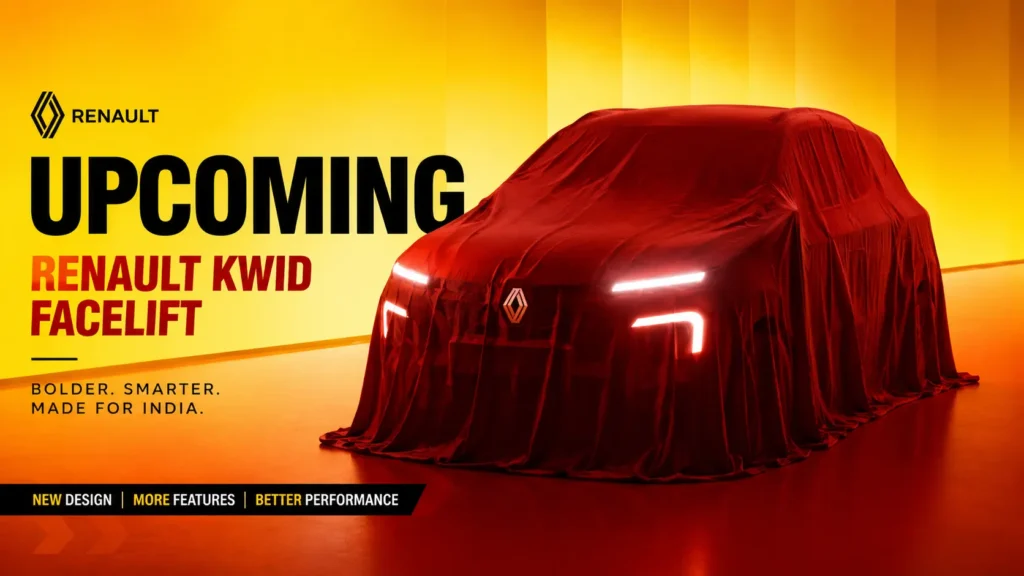
Renault India has officially announced that it will roll out the heavily anticipated 2026 Renault Kwid facelift on July 3, 2026. This mid-cycle refresh marks one of the most critical updates for the entry-level hatchback since its inception, aiming to inject fresh styling and modern high-end features into the budget segment.
The Kwid has been on sale in India for over a decade and remains Renault’s most accessible, high-volume model. The upcoming update follows the brand’s aggressive product strategy for the country, which recently saw updates to the Kiger and Triber, alongside the highly anticipated arrival of the next-generation Duster.
Inspired by the Global Dacia Spring EV
While the car retains its iconic, muscular tall-boy stance, spy shots of test vehicles under heavy camouflage reveal that the changes are far more than just minor bumper tweaks. The 2026 Kwid facelift draws heavy design inspiration from the international Dacia Spring EV:
- Y-Shaped Lighting Architecture: The traditional front fascia gets a sharp redesign featuring sleek, split Y-shaped LED daytime running lamps (DRLs) up top, with matching split Y-shaped LED graphics inside the rear taillight cluster.
- Rugged SUV Stance: It will incorporate a newly designed closed-off front grille frame, updated front and rear skid plates, aggressive body cladding across squared-off wheel arches, and a fresh design for the 14-inch dual-tone wheels.
- Refreshed Logo: The center grille will also prominently display Renault’s slightly updated, flat-monochrome brand emblem.
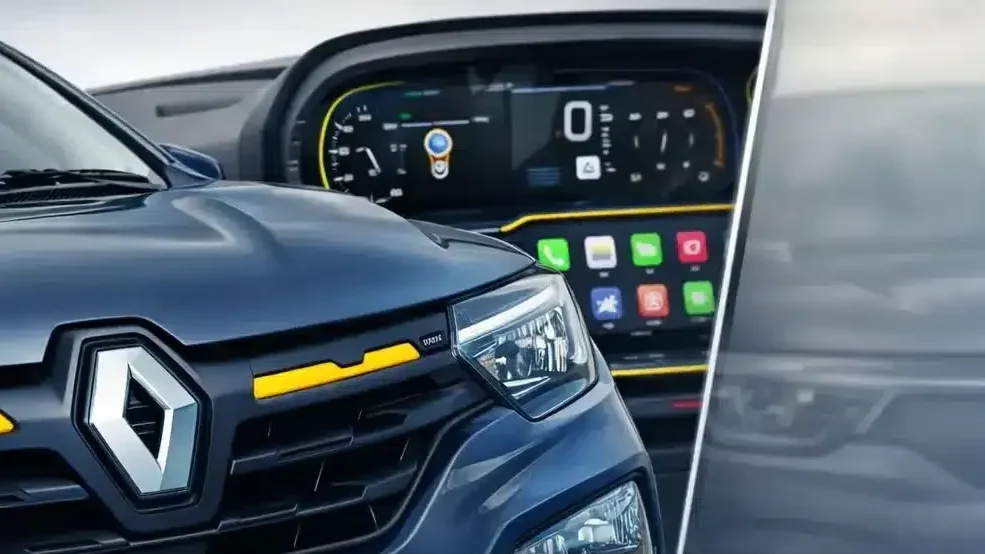
The interior is where budget car buyers will see the biggest jump in day-to-day premium feel. The layout moves completely away from the older cabin configurations, creating a much cleaner, digital-first driver interface.
Also Read: 2027 Hyundai Elantra Just Changed Everything – Bold New Design, AI Cabin & Hybrid Power Revealed
Key Expected Tech Enhancements:
- Massive 10-Inch Infotainment Panel: The existing 8-inch screen makes way for a significantly larger 10-inch high-definition floating touchscreen interface running Renault’s latest media layout, fully supporting wireless Android Auto and Apple CarPlay.
- Fully Digital Cockpit: Behind the newly sculpted steering wheel sits a redesigned, high-clarity fully digital driver instrument cluster.
- Upgraded Safety Net: To stay strictly aligned with evolving crash norms and rising consumer standards, Renault is highly tipped to standardize six airbags alongside Electronic Stability Control (ESC), traction control, and a Tyre Pressure Monitoring System (TPMS).
Proven 1.0L Engine Stays Under the Hood
While the cosmetic shell and tech package receive deep structural updates, Renault is avoiding any high-cost mechanical complications. The 2026 Kwid facelift will continue to rely on its highly efficient, low-maintenance powertrain.
| Mechanical Metric | Specification |
| Engine Configuration | 1.0-Litre, 3-Cylinder, Naturally Aspirated Smart-Efficiency Petrol |
| Maximum Power Output | 68 hp (65 bhp) |
| Peak Torque Generation | 96 Nm |
| Manual Transmission | 5-Speed Manual Gearbox |
| Automatic Transmission | 5-Speed Easy-R AMT (Rotary Dial Selector) |
| Expected Mileage Range | 21.7 kmpl to 22.5 kmpl |
The engine is tuned perfectly for low-end punch, making it exceptionally easy to squeeze through tight city alleyways and heavy traffic gaps.

Expected Pricing & Competition
The outgoing Renault Kwid is currently retailing at an accessible price bracket between ₹4.30 Lakh and ₹5.88 Lakh (ex-showroom). Due to the addition of six airbags, a larger 10-inch screen, and advanced LED lighting elements, the incoming 2026 facelift is expected to command a small, justified premium, likely starting around the ₹4.60 Lakh to ₹4.80 Lakh mark.
Once launched on July 3, the updated Kwid will stand fully armed to take a direct swing at established entry-level micro-hatchbacks like the Maruti Suzuki Alto K10, Maruti S-Presso, and Maruti Suzuki Celerio.
For more such updates on latest cars, bikes and EVs stay connected to MotorMitra. #gaadiyonkismartguide