EV Shift Unleashed: Tata Motors Reports Massive 2.5X Jump in Electric Vehicle Bookings
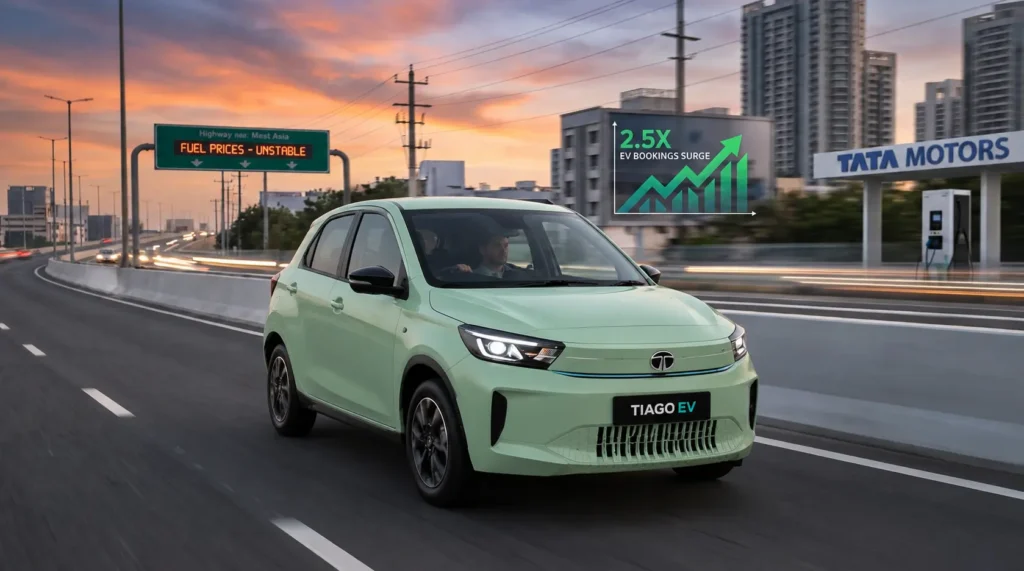
The global automotive landscape has long been sensitive to macroeconomic shifts, but the recent escalation of the West Asia crisis has triggered an unprecedented pivot in consumer behavior within the Indian subcontinent. In a striking revelation, Shailesh Chandra, Managing Director of Tata Motors Passenger Vehicles (TMPV) and Tata Passenger Electric Mobility (TPEM), confirmed that the carmaker has witnessed a staggering 2 to 2.5 times jump in electric vehicle (EV) bookings over the last two months.
As geopolitical tensions continue to cast a shadow on global crude supplies, Indian consumers are rapidly rewriting their ownership playbook. What was once a gradual, climate-conscious transition has transformed into an urgent, economically driven migration toward alternative powertrains, fundamentally altering the trajectory of the domestic auto sector.
The primary driver behind this sudden influx of EV bookings is the volatility of fossil fuel costs. With domestic fuel prices being hiked multiple times in a short span due to the West Asia conflict, the psychological barrier holding back traditional ICE (Internal Combustion Engine) buyers has eroded.
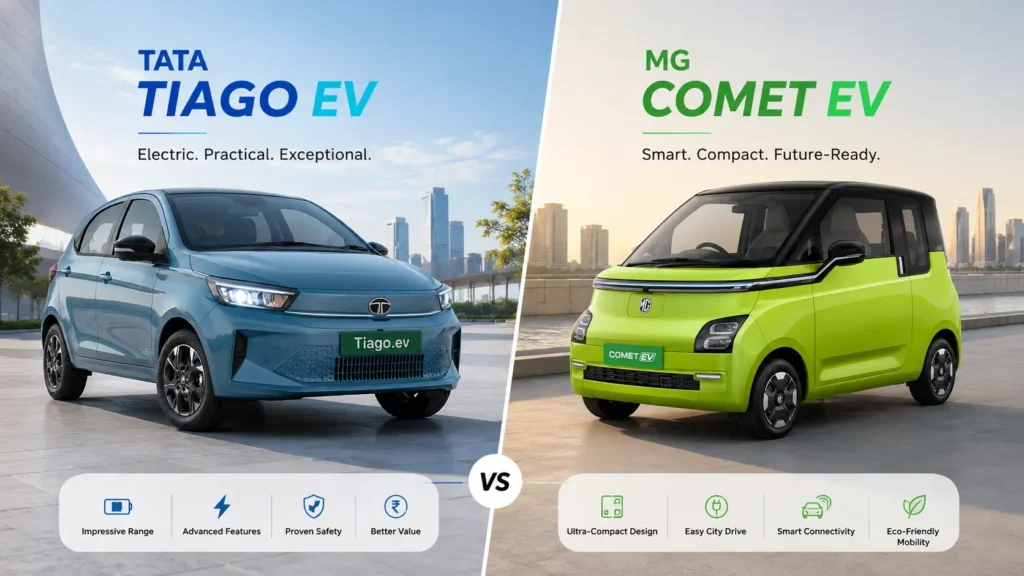
Also Read: 2026 Tata Tiago EV Facelift vs MG Comet EV: Price, Specs & Range
Historically, geopolitical conflicts in oil-rich regions trigger apprehensions of prolonged inflation and elevated running costs. Speaking on the sidelines of a recent product launch, Shailesh Chandra noted that while the company had anticipated a steady rise in interest, the absolute volume of the rush caught the industry by surprise.
“There’s a sharp jump that we see in EV bookings. In just two months, it is about 2 to 2.5 times what it used to be. In the last 15 days, things have changed completely,” Chandra stated.
Interestingly, this shift is not pushing buyers toward smaller, bare-bones entry cars to save money. Instead, consumers are upgrading their tech. As Chandra pointed out, “More than small cars, it is the powertrain that will win here.” Buyers are keeping their segment preferences—such as premium hatchbacks or compact SUVs—but are firmly choosing Electric or Compressed Natural Gas (CNG) variants over petrol or diesel.
The real-world impact of this consumer shift is best reflected in Tata Motors’ order books. In May, EV bookings scaled new heights, comprising nearly 33% (one-third) of the company’s total order book. For an industry where EV penetration in the passenger vehicle segment has hovered around the 5% to 6% mark nationwide, Tata’s internal booking mix is a testament to its dominant market position and the readiness of the urban buyer.
This explosive demand is particularly pronounced in the sub-₹15 lakh price bracket, driven heavily by products like the Tiago EV, Punch EV, and Tigor EV. These vehicles offer a compelling proposition: an ex-showroom price increasingly comparable to entry-level petrol variants combined with a fraction of the operational running costs.
While demand has skyrocketed, Tata Motors faces a temporary hurdle on the fulfillment side. The company’s actual retail sales, though strong, have not fully mirrored the 2.5X booking surge due to acute component-supply constraints at the vendor level.
Chandra admitted that while internal manufacturing lines are highly flexible and capable of shifting production between powertrains seamlessly, supply-side bottlenecks for EV-specific components are restricting immediate deliveries. He remarked that the company’s EV market share “theoretically would have skyrocketed” had the component ecosystem been fully synchronized with the sudden demand wave.
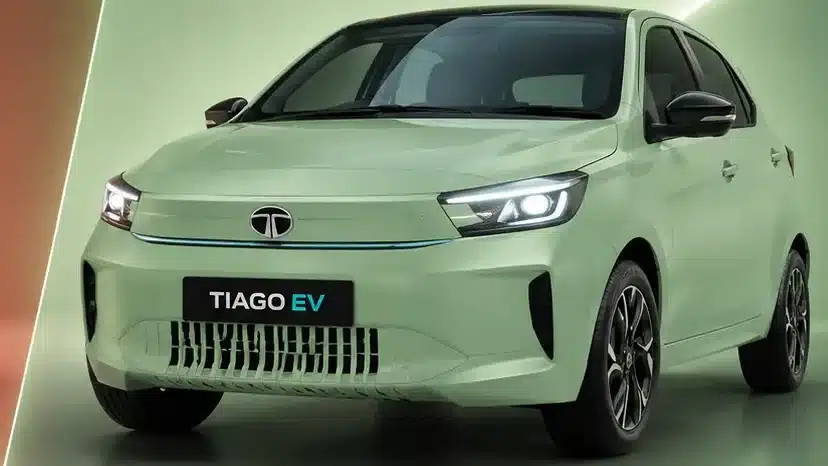
Also Read: New Tata Tiago EV Facelift 2026: Battery, Range & Colour Options Explained
Despite these hurdles, Tata Motors remains the undisputed leader in India’s electric mobility space, holding the lion’s share of the market and charting an ambitious roadmap to increase nationwide EV penetration to 8% to 10% within the year, provided supply lines ease.
The Roadmap: Ramping Up Production by 50%
To bridge the gap between unprecedented demand and restricted supply, Tata Motors has announced an aggressive capacity expansion plan. The company currently supplies approximately 10,000 EVs per month. To accommodate the massive influx of bookings, Tata plans to enhance its monthly production capacity by 50%, aiming for 15,000 units within the next three to four months.
This manufacturing agility is a strategic advantage for Tata Motors. By utilizing flexible production architecture, the carmaker can repurpose assembly lines to prioritize clean-energy vehicles as the market dictates. Furthermore, with the anticipated stabilization of supply chains, the company remains firmly on track to have EVs account for over 30% of its total sales volume within the next three to four years.
From an automotive journalism standpoint, what we are witnessing is not a temporary anomaly but a accelerated structural shift. Geopolitical crises often act as historical inflection points. Just as the oil shocks of the 1970s permanently established fuel-efficient Japanese compact cars in the West, the West Asia crisis may very well be remembered as the definitive catalyst that pushed the Indian mass market into the electric era.
Tata Motors’ proactive “multi-powertrain” strategy—offering petrol, diesel, CNG, and electric versions of the same car—has allowed it to capture this sudden consumer migration seamlessly. As volatile macro conditions persist, the peace of mind offered by predictable, low-cost electric driving is proving to be the ultimate luxury for the Indian car buyer.