The mid-size SUV segment has become one of the most design-focused categories in India, and two products that continue to attract buyers are the Kia Seltos and Volkswagen Taigun. While both SUVs compete in the same space, their approach toward styling is completely different. The Kia Seltos focuses on creating a stronger visual impact with bold proportions and premium detailing, whereas the Volkswagen Taigun follows a cleaner and more sophisticated European design language.
If design and cabin appeal are among your top priorities, here is a detailed comparison of both SUVs.
Front Design
Also Read: 4 New Kia Hybrid SUVs Arriving in India 2026: Seltos to Sorento Hybrid
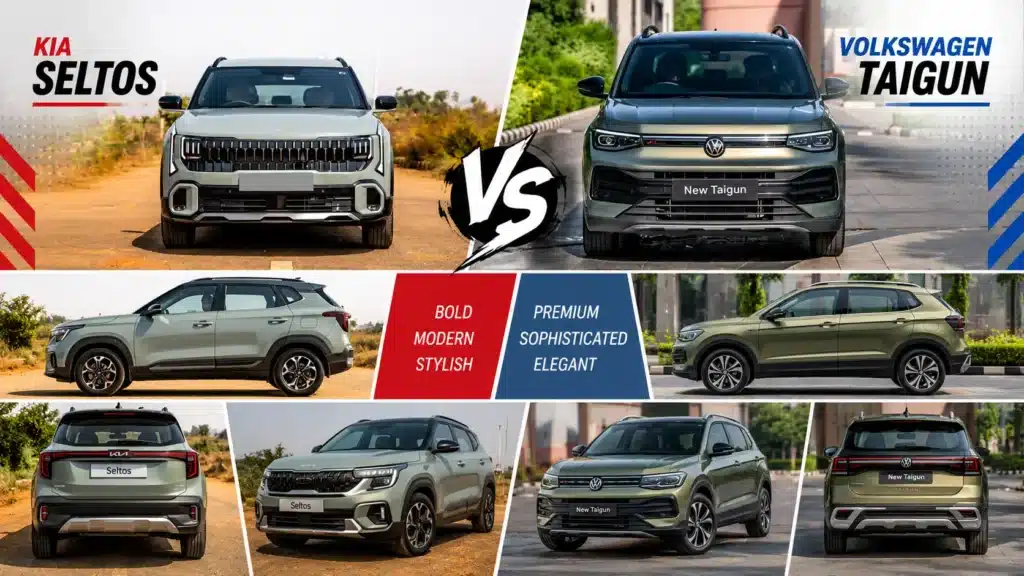
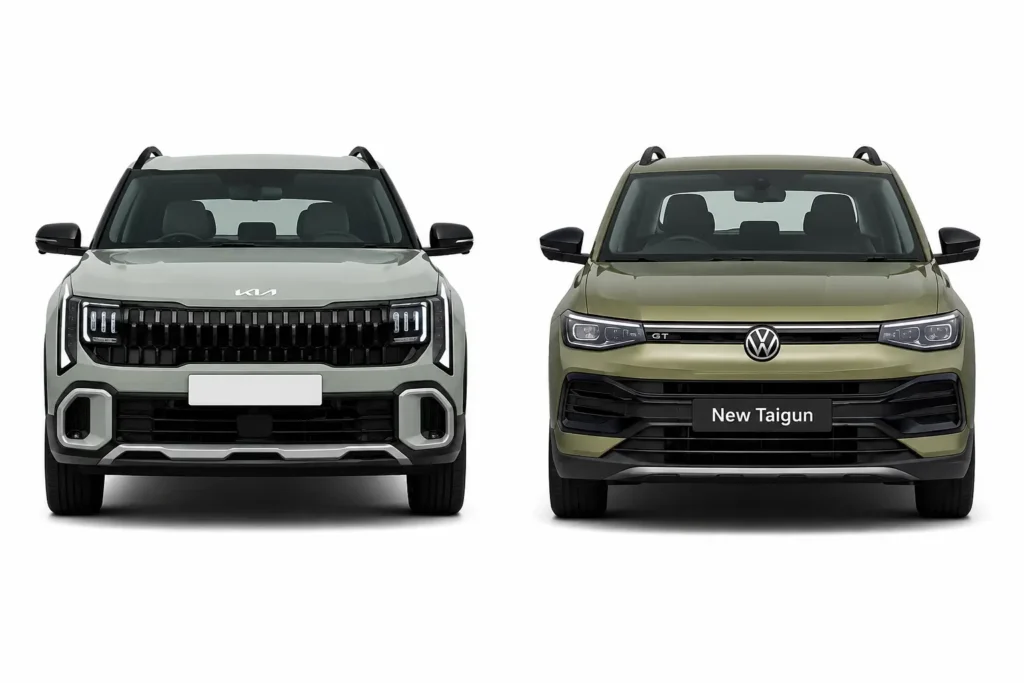
The biggest difference between the Kia Seltos and Volkswagen Taigun becomes visible the moment you look at them from the front.
The Kia Seltos carries a much stronger SUV identity with its upright and muscular stance. Its front fascia is dominated by a large grille that stretches almost across the entire width of the vehicle and integrates seamlessly with the headlamp setup. The slim LED daytime running lights positioned near the outer edge create a modern appearance while enhancing the SUV’s width visually.
The bumper design further strengthens its road presence with chunky body-coloured elements and a broad horizontal air intake. The silver finish on the lower section adds contrast and gives the Seltos a rugged character. Overall, the front profile feels aggressive and premium at the same time.
The Volkswagen Taigun takes a completely different route. Instead of trying to appear bold, it focuses on delivering sophistication and clean proportions. The slim LED headlamps are connected through an LED light strip that flows into the illuminated Volkswagen logo, creating a premium visual effect.
Unlike the Seltos, the Taigun keeps its grille subtle and shifts more attention toward the lower intake section. Depending on the variant, buyers get either chrome detailing or darker sporty accents. The GT Plus variants further add exclusivity through GT badging. The overall design feels elegant, mature, and distinctly European.
Side Profile
Also Read: Skoda-VW Sales Breakup April 2026 – Kylaq, Kushaq, Kodiaq, Taigun, Virtus
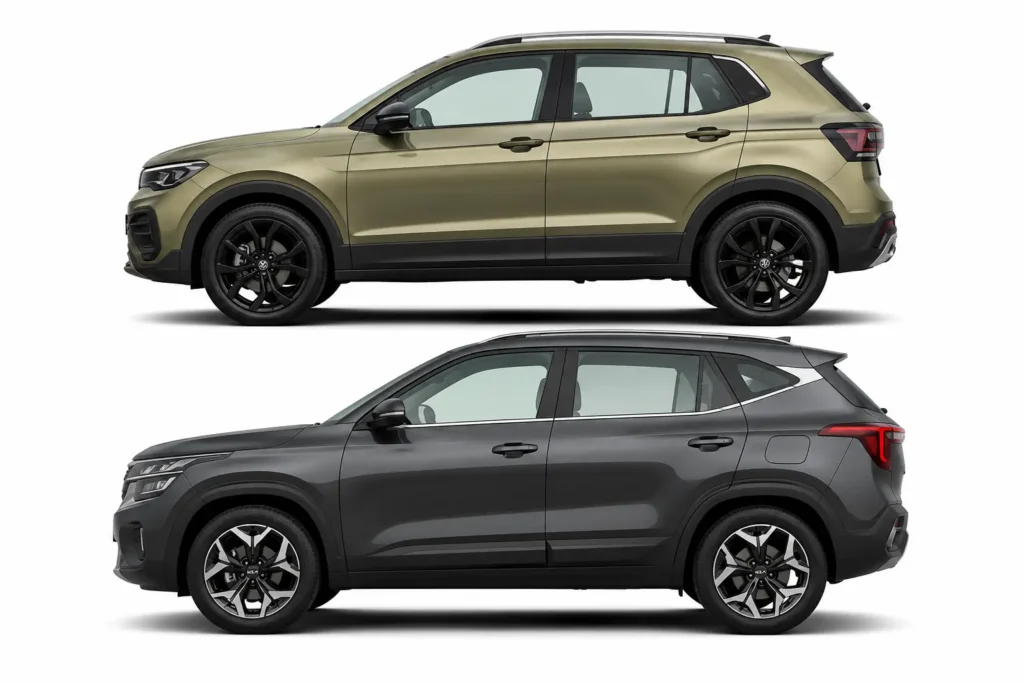
Looking at both SUVs from the side clearly shows their contrasting personalities. The Kia Seltos follows a more expressive design approach. The side profile is packed with multiple styling elements including pronounced body lines, heavy piano black wheel arch treatment, contrasting cladding, and a floating roof effect created near the C-pillar.
The roof rails and flush-type door handles further elevate the premium appeal. Its large alloy wheels also contribute significantly to the sporty appearance, featuring intricate geometric patterns that make the SUV look dynamic even while standing still.
The Volkswagen Taigun, meanwhile, keeps things minimal and balanced. Instead of adding numerous visual elements, Volkswagen relies on proportions and subtle detailing to create a premium impression. The cleaner body surfaces and restrained styling give the Taigun a timeless look that may age better over time.
Rear Design
Also Read: SUV Craze in Danger? 5 Upcoming Sedans From VW to Honda That Could Change the Game
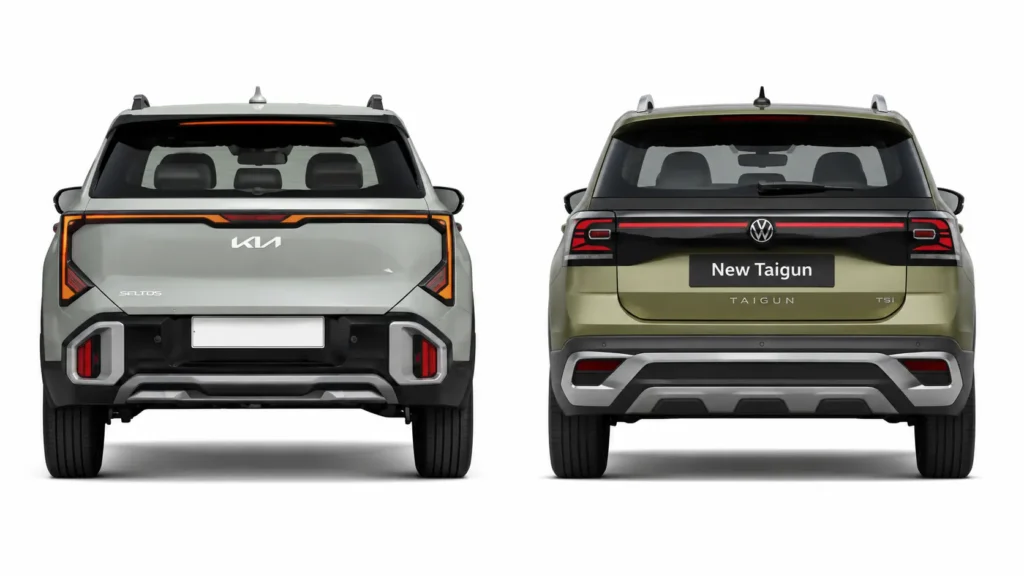
At the rear, both SUVs adopt several modern design trends but execute them differently. The Kia Seltos and Volkswagen Taigun both feature connected LED tail lamps, roof-mounted spoilers, shark-fin antennas, and contrasting lower bumper elements. However, their personalities remain distinct.
The Seltos continues its premium and sporty theme through glossy black detailing across the rear section. These elements make the SUV look more premium and visually rich. However, such finishes may require extra care over long-term ownership to maintain their appearance.
The Taigun’s rear design feels cleaner and more understated. One standout element is the illuminated Volkswagen logo which creates a premium effect during night driving. The overall design remains simple yet sophisticated without appearing overly dramatic.
Interior Design
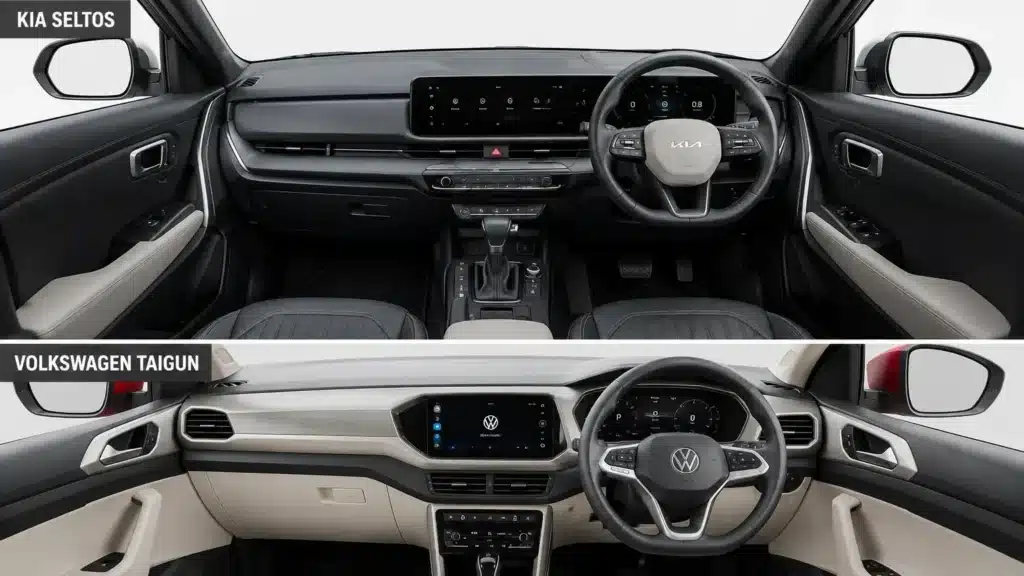
The contrast between both SUVs becomes even more noticeable once you step inside. The Kia Seltos cabin is clearly designed to impress buyers with modern technology and visual appeal. The dashboard layout feels futuristic with a wide integrated screen setup that immediately creates a premium atmosphere.
The layered dashboard design, premium finishes, and ambient lighting contribute to making the cabin feel upscale. The overall experience inside the Seltos is focused on luxury, technology, and visual excitement.
The Volkswagen Taigun follows a more functional and mature design philosophy. The facelift has retained its layered dashboard architecture, keeping the cabin neat and uncluttered. Depending on the variant, buyers can choose between a dual-tone theme or an all-black sporty layout.
The touch-based climate control panel adds modernity, while the separate housing for the infotainment system and digital instrument cluster creates a structured appearance. In GT Plus variants, elements like red ambient lighting and aluminium-finished pedals add a sportier character.
While the Taigun may not deliver the same immediate wow factor as the Seltos, its cabin feels clean, premium, and built around everyday usability.
Kia Seltos vs Volkswagen Taigun: Features Comparison
| Feature | Kia Seltos | Volkswagen Taigun |
|---|---|---|
| Infotainment Display | 10.25-inch Touchscreen | 10.1-inch Touchscreen |
| Digital Driver Display | 10.25-inch Fully Digital Cluster | 10.25-inch Digital Cockpit |
| Sound System | Bose Premium Audio | Premium Audio System |
| Connected Car Tech | Available | Available |
| Wireless Android Auto & Apple CarPlay | Yes | Yes |
| Wireless Charger | Yes | Yes |
| Climate Control | Dual-Zone Automatic AC | Automatic Climate Control |
| Ventilated Front Seats | Yes | No |
| Powered Driver Seat | Yes | Yes |
| Panoramic Sunroof | Yes | No (Single-Pane Sunroof) |
| Ambient Lighting | Multi-Colour Ambient Lighting | Ambient Lighting (Variant Based) |
| Seat Upholstery | Leatherette | Leatherette |
| Front Seat Cooling | Yes | No |
| 360-Degree Camera | Yes | No |
| Heads-Up Display (HUD) | Yes | No |
| Air Purifier | Yes | No |
| ADAS | Level-2 ADAS | Not Available |
| Adaptive Cruise Control | Yes | No |
| Lane Keep Assist | Yes | No |
| Blind Spot Monitoring | Yes | No |
| Front Parking Sensors | Yes | No |
| Rear Camera | Yes | Yes |
| Airbags | Up to 6 | Up to 6 |
| Electronic Stability Control | Yes | Yes |
| TPMS | Yes | Yes |
| Drive Modes | Multiple Modes | Multiple Modes |
| Engine Options | NA Petrol / Turbo Petrol / Diesel | TSI Petrol |
| Transmission Options | MT / iMT / CVT / DCT / AT | MT / Automatic |
| Category | Winner |
|---|---|
| Cabin Technology | Kia Seltos |
| Comfort Features | Kia Seltos |
| Safety Tech | Kia Seltos |
| Premium Feel | Tie |
| Driving Experience | Volkswagen Taigun |
| Overall Feature Package | Kia Seltos |
The Kia Seltos clearly wins on outright features and technology with additions like Level-2 ADAS, panoramic sunroof, ventilated seats, HUD, air purifier and 360° camera.
The Volkswagen Taigun keeps things simpler, focusing more on solid build quality, clean interiors and a driver-focused experience rather than loading the cabin with features.
When it comes to design, there is no absolute winner because both SUVs target different tastes. The Kia Seltos feels more modern, muscular, and premium with stronger road presence and visual drama. The Volkswagen Taigun focuses on elegance, simplicity, and timeless European styling. If you want attention and modern appeal, the Seltos stands out. If you prefer sophistication and understated premium design, the Taigun makes a stronger case.