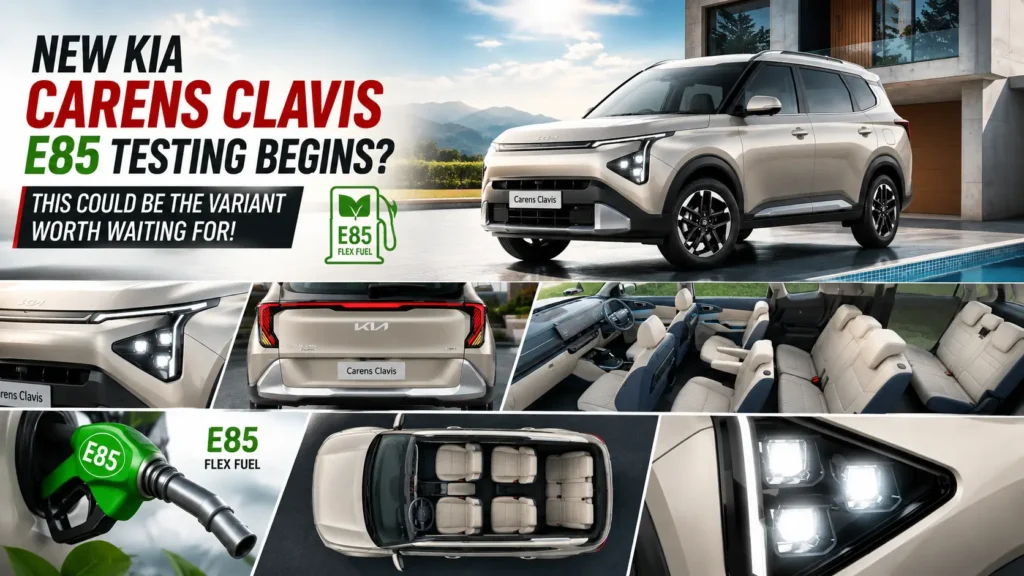
Thinking about booking the newly launched Kia Carens Clavis? You may want to slow down for a moment. Fresh spy shots of a camouflaged test vehicle believed to be linked to the Kia Carens Clavis E85 have surfaced online, and they are raising an interesting question among buyers and industry observers alike. Why would Kia continue testing a model so soon after its market introduction unless there was something more in the pipeline? That single question has turned an otherwise routine sighting into one of the more closely watched developments surrounding the MPV.
The speculation becomes even more interesting because the test vehicle is believed to be connected to a potential E85 flex-fuel program. Kia has not officially confirmed such a development, but the possibility alone is enough to attract attention. As manufacturers continue exploring different routes toward cleaner and more sustainable mobility solutions, flex-fuel technology is increasingly being discussed alongside hybrids and electric vehicles. If Kia is indeed evaluating an E85-compatible version of the Carens Clavis, it could position the MPV as one of the more future-focused products in its category.
For buyers, this is not merely a technical story about fuel compatibility or emissions regulations. It is potentially a long-term ownership story. The Carens Clavis already enters the market with a strong mix of practicality, technology, comfort, and premium appeal. If Kia is preparing an alternative-fuel version behind the scenes, some prospective customers may understandably wonder whether the model currently on sale represents the complete picture or simply the first chapter of a broader product strategy.
Also Read:- Centre Waives Excise Duty on E22-E30 Petrol to Eliminate Double Taxation
Why Is Kia Testing The Carens Clavis Again?
The timing of these spy shots is what makes them particularly noteworthy. Automotive manufacturers usually spend years testing a vehicle before launch and then focus their attention on production ramp-up, deliveries, and customer feedback. When a freshly launched model continues to appear in testing conditions, it naturally sparks speculation about what additional work may still be underway.
There are several plausible explanations. Kia could be validating future powertrain options, conducting emissions-related development work, testing software calibrations, or evaluating alternative-fuel compatibility for future regulatory requirements. At this stage, none of those possibilities have been officially confirmed. However, continued testing activity suggests there may be more happening behind the scenes than what has been publicly revealed.
Kia has also demonstrated in the past that it is willing to adapt products to changing market conditions and regulatory environments. With ethanol-based fuels becoming an increasingly important part of the industry’s long-term roadmap, it would not be surprising to see manufacturers proactively evaluate flex-fuel solutions even before customer demand becomes widespread.
But here’s the interesting part: manufacturers rarely continue highly visible road testing without a specific objective.
What An E85 Flex-Fuel Carens Clavis Could Mean For Buyers
An E85-compatible vehicle is designed to operate using fuel blends containing up to 85 percent ethanol. Supporting such fuel requires specific engineering changes, including modifications to engine calibration, fuel-system components, software management, and durability testing. This is not the type of update that can be introduced through a simple software tweak or cosmetic refresh. It requires meaningful development work and long-term validation.
For buyers, the biggest attraction of flex-fuel technology is future readiness. As ethanol adoption gradually expands, a vehicle capable of operating on higher ethanol blends may offer greater fuel flexibility over the course of ownership. While infrastructure development will ultimately determine how useful that capability becomes, many buyers appreciate having options rather than being restricted to a single fuel pathway.
The concept becomes even more relevant for MPV owners. Family vehicles are often kept for longer periods than many other vehicle types, which means future adaptability can become an important consideration. A potential flex-fuel Carens Clavis would not necessarily change the vehicle’s core strengths, but it could add another layer of long-term appeal for buyers thinking several years ahead.
Advanced Buyer Impact Snapshot
| Buyer Question | Current Kia Carens Clavis | Potential Kia Carens Clavis E85 | Why It Matters |
|---|---|---|---|
| Fuel Compatibility | Standard Petrol | Petrol + E85 Ethanol Blend Support | Greater long-term flexibility |
| Future Readiness | Strong | Potentially Stronger | Better alignment with evolving regulations |
| Running Cost Potential | Dependent On Petrol Prices | Could Benefit From Ethanol Availability | Ownership economics may improve |
| Technology Appeal | High | Higher | Adds a meaningful differentiator |
| Family-Car Practicality | Excellent | Expected To Remain Excellent | Core strengths remain intact |
| Long-Term Ownership Appeal | Strong | Potentially Stronger | Future-focused positioning |
| Buyer Interest Level | High | Very High | Creates additional market curiosity |
| Wait Or Buy? | Strong Option Today | Worth Monitoring Closely | Depends on purchase timeline |
Also Read:- Suzuki Just Made Family Travel More Interesting: New 8-Seater Hybrid Debuts
The Carens Clavis Already Has A Strong Foundation
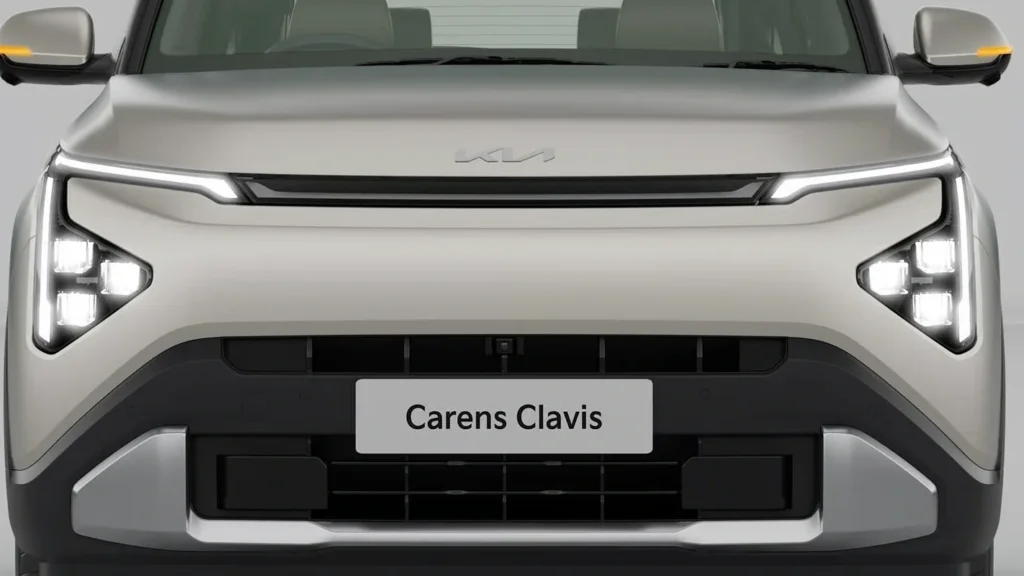
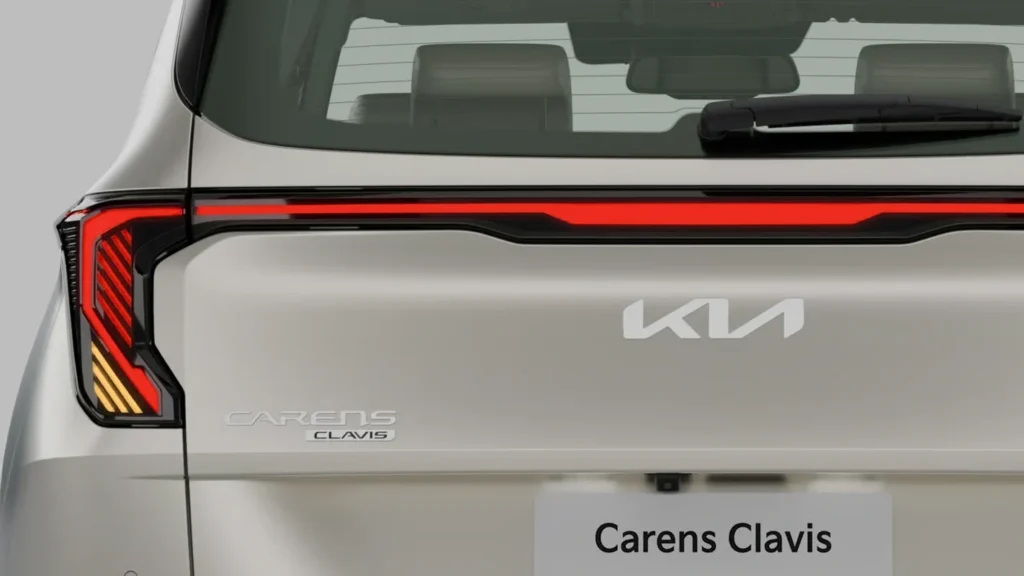
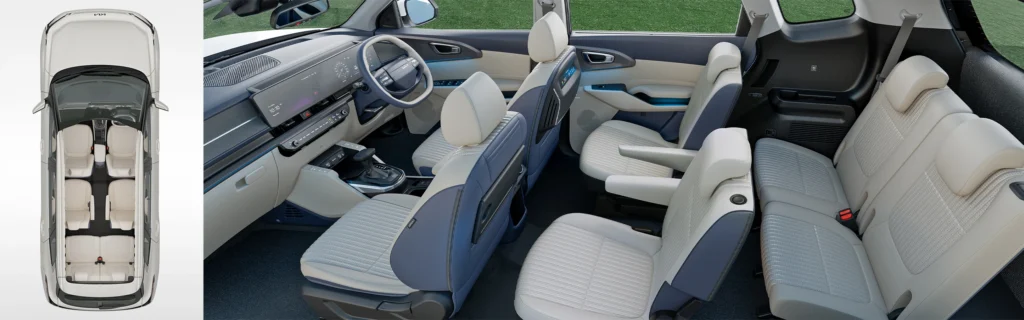
What makes this development particularly interesting is that the Carens Clavis does not actually require a major upgrade to remain competitive. The MPV already offers a premium cabin experience, advanced connected technology, multiple seating configurations, and a feature list that places it among the more sophisticated products in its segment. Even without a flex-fuel variant, it enters the market as a highly complete package.
The spacious cabin remains one of its biggest strengths and continues to be a major reason buyers are considering the model. Families looking for a practical daily commuter that can also handle long-distance travel, weekend trips, and regular multi-passenger duties already have a compelling option. The design, equipment levels, comfort, and overall ownership proposition ensure that the current model remains highly relevant regardless of what future variants may arrive. That is precisely why the E85 speculation is generating attention. Buyers are not discussing it because the current vehicle feels incomplete. They are discussing it because a flex-fuel version could add another meaningful advantage to an already strong product.
Could It Gain An Advantage Over Rivals?
The family-car segment is becoming increasingly competitive, with manufacturers constantly searching for ways to differentiate their products. Most rivals focus on larger screens, connected features, safety packages, premium interiors, and styling upgrades. Those elements are important, but they are also becoming increasingly common across the market.
If Kia eventually introduces an E85-compatible Carens Clavis, it could gain a unique talking point against competing MPVs and three-row family vehicles. Even buyers who never regularly use E85 fuel may appreciate the flexibility and future-ready image associated with such technology. In a segment where products often compete on similar specifications and feature lists, differentiation itself can become a significant advantage.
This does not mean a flex-fuel version would instantly transform the segment overnight. However, it could strengthen the Carens Clavis’ positioning among buyers who value innovation, long-term ownership planning, and the ability to adapt to changing fuel landscapes.

Should You Buy Now Or Wait?
The answer depends largely on your purchase timeline. Buyers who need a family vehicle immediately should not postpone their decision solely because of speculation surrounding a potential future variant. The current Carens Clavis already delivers the practicality, comfort, technology, and safety features that most family buyers expect, making it a strong choice in its own right.
However, the equation changes for buyers whose plans extend several months into the future. The continued testing activity suggests Kia may still be evaluating additional opportunities for the model. Whether those efforts ultimately result in an E85-compatible version remains uncertain, but the possibility is significant enough to justify attention.
For customers interested in future-ready technologies, this is exactly the type of development worth monitoring. Waiting may not be necessary for everyone, but buyers who are not in a hurry may prefer to see how Kia’s plans evolve before making a final commitment. The newly surfaced test mule may ultimately prove to be routine validation work, but it has succeeded in creating an important conversation around the Carens Clavis. Why is Kia testing the MPV again so soon after launch, and what exactly is being evaluated behind the scenes?
Until official details emerge, the E85 flex-fuel theory remains speculation rather than confirmation. Yet the possibility aligns closely with the broader direction of the Indian automotive industry, where manufacturers are increasingly exploring alternatives beyond conventional petrol and diesel powertrains.
If Kia eventually introduces an E85-compatible Carens Clavis, it could become one of the most future-focused variants in its category while giving buyers an additional reason to consider the MPV. For those planning a purchase later rather than sooner, keeping a close eye on Kia’s next move may prove to be the smarter decision.